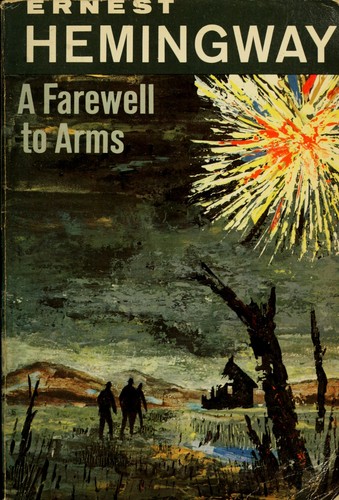
The Book in Brief
American Frederic Henry serves as an ambulance lieutenant with the Italian army during World War I. His surgeon friend Rinaldi introduces him to British nurse Catherine Barkley, who is grieving a fiancé killed in battle. Their courtship begins half playfully as the front prepares another offensive.
A shell kills the driver Passini and badly wounds Frederic. In a Milan hospital he undergoes surgery and Catherine joins the nursing staff; their affair deepens during his recovery, and she becomes pregnant. Frederic returns to duty after his convalescent leave is revoked.
The Italian defeat at Caporetto forces a chaotic retreat. Frederic shoots at engineers who refuse to help free the ambulances, Aymo is killed by Italian fire, and Bonello deserts. Battle police seize Frederic and begin executing officers, but he jumps into the Tagliamento and escapes on a freight train.
Frederic reunites with Catherine in Stresa. Warned that he will be arrested, they row across Lake Maggiore into Switzerland and live quietly in the mountains before moving to Lausanne for the birth. Their son is stillborn, Catherine dies from hemorrhage, and Frederic walks alone to the hotel in the rain.
Important Characters
Frederic Henry: The American first-person narrator and Italian ambulance lieutenant who deserts after Caporetto.
Catherine Barkley: A British nurse whose performed courtship with Frederic develops into an intense partnership.
Rinaldi: Frederic's brilliant, sexually boastful surgeon friend, increasingly worn down by the war.
The priest: A gentle messmate whose faith, Abruzzi home, and seriousness contrast with the officers' cynicism.
Helen Ferguson: Catherine's Scottish friend, protective of her and skeptical of Frederic's promises.
Passini, Aymo, Bonello, and Piani: Ambulance drivers whose different deaths, choices, and loyalties define the retreat.
Miss Van Campen: The hospital superintendent who distrusts Frederic and cancels his leave after finding the bottles.
Count Greffi: An elderly diplomat whose billiards game with Frederic opens a late conversation about age, love, and war.
Chapter-by-Chapter Summary
The headings and sequence follow the complete 41-chapter Project Gutenberg edition.
Chapter I
Frederic describes the Italian front through river, mountains, marching troops, mud, failed offensives, and a cholera outbreak that kills seven thousand soldiers.
Chapter II
The following year brings limited victories and life in Gorizia, where the officers mock the priest and urge Frederic to spend his leave in Italy's pleasure cities rather than the Abruzzi.
Chapter III
Frederic returns from leave and reunites with Rinaldi, who reports on the hospital and his interest in Catherine Barkley. Their joking establishes the officers' defensive, sexually charged routine.
Chapter IV
Rinaldi takes Frederic to meet Catherine and Helen Ferguson. Catherine speaks of the fiancé killed before they could marry, while Frederic begins pursuing her without yet treating the courtship seriously.
Chapter V
Frederic visits Catherine again between military duties. She slaps him when he pushes for a kiss, then kisses him, and the couple begins the romantic game that will soon exceed its original pretense.
Chapter VI
After two days at the posts, Frederic tells Catherine he loves her while privately recognizing the performance. Her absence later leaves him unexpectedly lonely, suggesting that the game has already changed him.
Chapter VII
Frederic tours mountain posts, helps a soldier trying to escape duty with a hernia, and drinks with the drivers. Returning too late to see Catherine, he feels the hollowness of the front without her.
Chapter VIII
Orders send Frederic's ambulances toward a night attack. He stops to see Catherine, who gives him a Saint Anthony medal before he drives into the darkening combat zone.
Chapter IX
While the drivers eat in a dugout, an Austrian shell kills Passini and tears open Frederic's legs and head. He is carried through successive aid stations as the attack continues around him.
Chapter X
Rinaldi visits Frederic at the field hospital, jokes to keep control of his fear, and promises medals and Catherine. Their banter cannot conceal the seriousness of the wounds.
Chapter XI
The priest visits and talks with Frederic about the Abruzzi, love, fear, and the difference between lust and a selfless devotion Frederic does not yet understand.
Chapter XII
Frederic is prepared for evacuation while wounded men are treated and one dies behind a screen. A crowded train finally carries him away from the front toward Milan.
Chapter XIII
At the American hospital in Milan, confused staff initially lack a room and proper orders for Frederic. Miss Gage helps settle him, and he sleeps as the city brightens.
Chapter XIV
Frederic wakes to find Catherine at the hospital, and their reunion makes the affair openly mutual. They arrange the privacy allowed by nursing shifts and his confinement.
Chapter XV
Conservative doctors want to wait months before operating, but the confident Dr. Valentini examines the X-rays and schedules surgery for the next morning.
Chapter XVI
On the night before the operation, Catherine stays with Frederic and the couple speak as if they are already married. Their intimacy mixes tenderness, obedience, and fear of separation.
Chapter XVII
Frederic recovers from surgery with help from Miss Gage and Ferguson. Catherine returns after night duty, and seeing her feels like reunion after a long journey.
Chapter XVIII
Once mobile, Frederic rides through Milan with Catherine and spends nights with her in the hospital. Their private routine turns convalescence into a temporary domestic life.
Chapter XIX
War news and social encounters intrude on the Milan summer, especially the boastful decorated officer Ettore Moretti. Catherine's distress draws Frederic back from public bravado to their private bond.
Chapter XX
At the horse races, insider manipulation and changing odds make even leisure feel compromised. Frederic and Catherine leave the group to be alone, then recognize their need for other people as well.
Chapter XXI
Autumn arrives, the front summons Frederic back, and Catherine reveals that she is pregnant. They refuse blame and try to fit the uncertain child into their promise to remain together.
Chapter XXII
Miss Van Campen discovers Frederic's stock of empty liquor bottles and accuses him of deliberately causing jaundice. She cancels the convalescent leave that might have extended his time with Catherine.
Chapter XXIII
Before Frederic's midnight train, he and Catherine walk through rainy Milan and rent a hotel room for their last hours. Their imagined future home competes with the immediate certainty of departure.
Chapter XXIV
Frederic and Catherine descend to the station and struggle through a crowded train farewell. He secures space only by having a porter hold a seat and begins the return to war alone.
Chapter XXV
Back in Gorizia, Frederic finds a weary Rinaldi amid muddy autumn conditions. Rinaldi's drinking, sexual jokes, and fear of illness reveal how much the war has eroded him.
Chapter XXVI
Frederic walks with the priest in mist and hears his conviction that the war will end because even the victors are exhausted. Their conversation offers hope without evidence.
Chapter XXVII
The Austrian-German breakthrough begins, and Frederic is ordered to withdraw the ambulances and abandoned equipment. He, Piani, Bonello, and Aymo join the retreat from the Bainsizza.
Chapter XXVIII
The convoy crawls through rain, darkness, refugees, guns, and blocked roads. Frederic turns onto smaller routes, but the vehicles remain trapped inside the collapsing army.
Chapter XXIX
When the ambulances bog down, hired engineers refuse Frederic's order to help; he shoots at them, and Bonello kills a wounded man. The group abandons the vehicles and continues on foot.
Chapter XXX
Italian soldiers mistakenly shoot Aymo, and Bonello later deserts in hopes of becoming a prisoner. At the Tagliamento, battle police seize Frederic for interrogation and summary execution, so he jumps into the river.
Chapter XXXI
Frederic lets the river carry him beyond the guards, struggles ashore, and crosses the Veneto by back roads and rail lines. The retreat has stripped him of command, companions, and official identity.
Chapter XXXII
Hidden beneath canvas on a freight car, Frederic declares a private separate peace with the war. He thinks only of reaching Catherine and considers where they might go together.
Chapter XXXIII
Frederic drops from the train in Milan, receives civilian clothes and help from the singer Simmons, and learns that Catherine has gone to Stresa. He travels there under a borrowed ordinary appearance.
Chapter XXXIV
Frederic finds Catherine with Ferguson, who angrily condemns their unmarried situation before relenting. Reunited, the couple begin living openly together while avoiding news of the army.
Chapter XXXV
In Stresa, Frederic plays billiards with the aged Count Greffi and discusses love, belief, and the war. The civilized conversation forms a calm pause before flight.
Chapter XXXVI
A bartender warns Frederic that police plan to arrest him in the morning. He wakes Catherine, borrows a boat, and rows into a storm toward the Swiss side of Lake Maggiore.
Chapter XXXVII
Frederic rows through the night while Catherine rests and briefly takes the oars. They land in Switzerland, satisfy the border authorities, and enter a hotel with legal refuge at last.
Chapter XXXVIII
The couple live in a wooden mountain house above Montreux, walking, reading, and preparing for the baby. Their isolation creates happiness but also heightens Frederic's fear of losing Catherine.
Chapter XXXIX
Winter settles in as Frederic grows a beard and Catherine prepares her body and hair for motherhood. They imagine life after the birth while clinging to the present domestic world.
Chapter XL
In early spring they move to Lausanne to be near the hospital. Catherine's labor approaches, giving their remaining days together an urgent sense that time is accelerating.
Chapter XLI
Catherine endures a prolonged, dangerous labor; a Caesarean delivers a stillborn boy, and repeated hemorrhages kill her despite treatment. Frederic cannot say goodbye in any meaningful way and walks back to the hotel in the rain.
Ending Explained
What happens to the baby?: The boy is delivered by Caesarean after a long obstructed labor but is already dead.
Why does Catherine die?: She suffers repeated internal hemorrhages after the operation, and the doctors cannot stop them.
Does Frederic get a final conversation with her?: No. She briefly speaks before worsening, then loses consciousness; his attempt to be alone with her body provides no emotional revelation.
What does the rain mean at the end?: Rain has carried Catherine's fear of death throughout the novel. Frederic's solitary walk literalizes the loss without turning the weather into a comforting message.
Themes and Motifs
War and abstraction: Public words such as glory and sacrifice collapse against bodies, mud, traffic, and arbitrary death.
Love as shelter: Frederic and Catherine build a private language and temporary home against institutions they cannot control.
Performance and sincerity: Their courtship begins as mutual acting and becomes real without ever losing its rituals and evasions.
Chance: Shells, retreat, pregnancy, borders, and hemorrhage repeatedly defeat the expectation that skill or virtue determines outcomes.
Weather: Rain, snow, heat, and seasonal change carry threat and time more reliably than official chronology.
Content Notes
Includes war violence, graphic injury, death, alcohol, sex, pregnancy, stillbirth, Caesarean delivery, fatal hemorrhage, desertion, summary executions, killing of prisoners or noncompliant soldiers, grief, and period ethnic language.
About the Book
Best for: readers who like understated prose, war fiction without speeches, and love stories that refuse consolation. Narrative shape: 41 chapters — front, hospital, retreat, flight, and the Swiss ending. Central contrast: the private language two people build versus the war and chance that keep entering it. Overall assessment: 5/5 for control, momentum, and devastation. Source-checked scope: 41 distinct reading units in Project Gutenberg eBook #75201; no front matter was counted as narrative content.
Primary text: Ernest Hemingway, A Farewell to Arms, Project Gutenberg eBook #75201. The complete text contains 41 numbered chapters across five books. The review, plot account, ending analysis, and every structural recap in this guide were checked against that edition.
Selection evidence: Project Gutenberg Top 100 EBooks in the last 30 days — rank #36 with 89,518 downloads in the August 3, 2026 snapshot. Books already completed in the preceding batches were excluded.