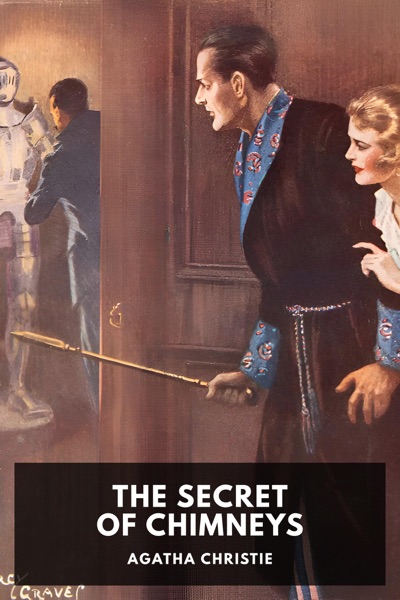
First published in 1925, The Secret of Chimneys blends a country-house murder with international intrigue, stolen jewels, secret identities, and romantic adventure. The novel begins far from the drawing room, giving Anthony Cade a pair of apparently separate errands and then drawing both into the political weekend at Chimneys. That wide opening tells the reader what kind of Christie this is: fast, expansive, and more interested in audacious complications than in keeping every suspect seated around one tidy clue table.
Anthony and Virginia are the book's greatest source of energy. Their banter is brisk without making either character merely comic, and their willingness to improvise gives the plot permission to become increasingly improbable. Superintendent Battle works in the opposite register. His calm attention, refusal to advertise his conclusions, and ability to notice when people are telling attractive lies make him an effective anchor amid the masks and melodrama.
The central mystery is deliberately overstocked: two murders, a vanished body, a stolen manuscript, coded letters, a missing diamond, competing political factions, a false detective, a false governess, and an heir who is not dead after all. Christie handles the accumulation with clarity, but readers looking for the tight evidentiary design of her best-known Poirot novels may find the final sequence depends heavily on impersonation, coincidence, and information held back by Anthony. The solution is satisfying chiefly because the separate adventures finally lock together, not because a reader could confidently deduce every identity from the clues alone.
The comedy remains unusually durable, especially Lord Caterham's horror of hospitality and George Lomax's talent for turning every inconvenience into a matter of state. Some social, ethnic, and national descriptions are plainly dated, and several labels used casually in the 1925 text are offensive now. With that warning, the novel remains a buoyant example of Christie's early thriller mode: crowded, playful, romantic, and carried by personality as much as puzzle construction.