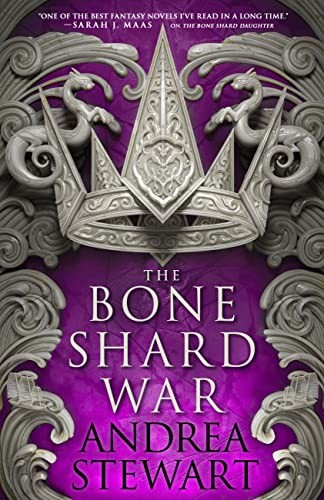
The Bone Shard Emperor turns a mystery into a crisis of rule: Lin can abolish the tithe and smash the constructs, but she cannot make governors or rebels trust the woman who inherited Shiyen’s palace. The sequel is at its best treating reform as a fight over institutions rather than a benevolent decree.
Every day Jovis spends earning Lin’s trust produces better intelligence for the people trying to depose her.
Jovis supplies the tension. He serves as captain of the emperor’s guard while reporting to the Shardless Few, and the arrangement rots from the inside: every day he spends earning Lin’s trust produces better intelligence for the people trying to depose her. Ranami and Phalue offer the alternative — leadership built on compromise instead of secrecy, and one of the genre’s more grown-up marriages.
The mythology finally opens up. The white swords, the returning Alanga, and the revelation of what bonding with an ossalen actually does give the series a direction beyond palace intrigue, and make Lin and Jovis simultaneously indispensable and frightening to everyone around them.
The faction count and the constant travel make for a crowded middle act; several journeys could be shorter.
The ending lands because nearly every ally turns out to have a limit. Ragan’s betrayal, Nisong’s serpent army, and Gio’s revelation as the ancient Alanga Dione all arrive at once — and Jovis, having tried to hold two incompatible loyalties, ends the book cast out by Lin and chasing the syndicate that has stolen Mephi.