Finding another series like The Wheel of Time is harder than finding another long fantasy series. Robert Jordan's achievement is not merely fourteen volumes, thousands of named characters, or enough invented history to fill a university archive. The series begins with the intimacy of a village story and keeps expanding until private fears, old songs, political grudges, magical institutions, and the fate of reality occupy the same narrative.
The best comparison therefore depends on what a reader wants to recover. It may be the farm boy discovering that history has chosen him, the ensemble separating and growing along different paths, the gendered institutions of magic, the ancient enemy mistaken for legend, the patient accumulation of cultures, or simply the pleasure of living in one secondary world for several million words.
This list ranks opening novels rather than entire bibliographies, but every selection begins a multi-volume epic. Priority goes to series that provide long-form development, multiple viewpoints, substantial worldbuilding, and a story larger than the first book. Some are close descendants of Jordan. Others reproduce one part of the experience while changing the tone, morality, or level of difficulty.
10
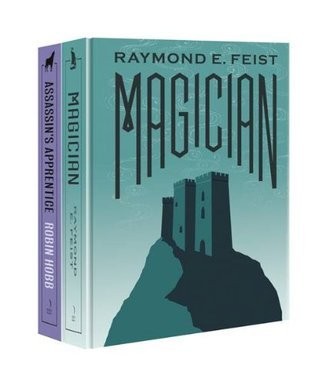
Magician: Apprentice
Raymond E. Feist · The Riftwar Saga · 1982 as the first half of Magician
Series Status The original saga is complete
Wheel of Time Similarity 3.5 out of 5
Best for Readers who loved Rand, Mat, and Perrin leaving the Two Rivers but want a faster and more traditional adventure.
Know before you start In the United States, the original novel Magician is commonly divided into Magician: Apprentice and Magician: Master.
Pug is an orphan raised in the castle of Crydee, where he becomes apprentice to the magician Kulgan. His friend Tomas begins on another path, and both are swept into a war when invaders arrive through a magical rift from the world of Kelewan. A local coming-of-age story becomes an interplanetary conflict involving courts, armies, alien cultures, and powers the young protagonists barely understand.
The resemblance to The Wheel of Time begins with expansion. Pug and Tomas leave familiar roles, separate, and become central to forces larger than the western kingdom that raised them. Feist also shares Jordan's interest in apprenticeship: power is not merely discovered but taught, tested, and shaped by institutions with incomplete knowledge.
The difference is density. Magician: Apprentice is leaner, more direct, and less interested in the accumulation of daily custom. Characters can feel archetypal, and the prose moves past psychological complication that Jordan might explore for several chapters. The world also carries the recognizable imprint of tabletop roleplaying and earlier fantasy traditions.
Its simplicity remains a virtue. Readers exhausted by doorstoppers may appreciate a series that delivers humble beginnings, magical education, siege warfare, separated friends, and a widening world without requiring a glossary before the first battle.
9
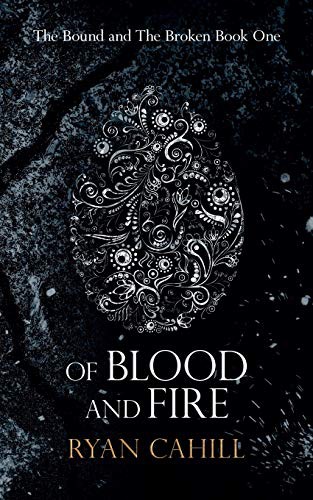
Of Blood and Fire
Ryan Cahill · The Bound and the Broken · 2021
Series Status Ongoing
Wheel of Time Similarity 4 out of 5
Best for Readers who want a contemporary series with classic moral stakes, dragons, friendship, and increasingly large battles.
Know before you start The opening is deliberately traditional. The later volumes are longer, darker, and substantially broader.
Calen Bryer expects a life defined by his village until the arrival of strangers connects Milltown to a war stretching across centuries. Dragons, elves, imperial oppression, lost orders, ancient magic, and buried identity rapidly pull Calen and his companions into a much larger world.
Ryan Cahill openly works with classic epic-fantasy materials. The village beginning, young ensemble, awakening power, hidden history, and returning danger will all feel familiar to Jordan readers. The series grows sharply after the first volume, adding viewpoints, nations, magical lore, and battles until the apparently conventional opening becomes the foundation for a much larger conflict.
The first book is the obstacle. Its influences remain close to the surface, the prose occasionally explains what readers have already understood, and several characters initially occupy recognizable roles rather than surprising ones. Readers who require immediate originality may stop before the series begins separating itself from its models.
For those who continue, the scale and confidence increase dramatically. Of Blood and Fire is best understood as a promise: a modern independent epic willing to begin with the old shapes of dragons, villages, and lost legacies because it intends to build something enormous from them.
8
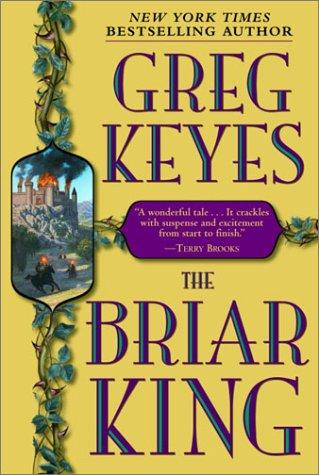
The Briar King
Greg Keyes · The Kingdoms of Thorn and Bone, Book 1 · 2003
Series Status Complete in four volumes
Wheel of Time Similarity 4 out of 5
Best for Readers who want the multi-viewpoint architecture of The Wheel of Time in a darker and more compact series.
Know before you start The violence and supernatural imagery move closer to horror than Jordan usually does.
The legendary Virgenya Dare once freed humanity from the Skasloi, but the victory left a curse behind. More than two thousand years later, rebellious Princess Anne Dare, royal knight Neil MeqVren, monk Stephen Darige, forester Aspar White, and composer Leoff Ackenzal become entangled in an awakening supernatural crisis and a conspiracy against the royal family.
This is one of the closest overlooked matches for Jordan's ensemble method. The characters begin in separate social worlds and pursue immediate problems without understanding their place in the larger pattern. Old stories turn into current dangers, travel reveals cultural divisions, and the reader gradually sees connections the characters cannot.
Keyes moves faster than Jordan and brings horror closer to the surface. The forests, saints, monsters, and ancient powers have an earthy strangeness, while the political plot produces consequences early. The series is also compact enough that every major viewpoint must keep contributing to the central movement.
That compression can make development feel abrupt, especially near the conclusion of the quartet. The world never acquires the inexhaustible social detail of the Westlands. Even so, The Briar King offers prophecy, royal conflict, scholarship, wilderness travel, music, monsters, and a complete story in four substantial books.
7
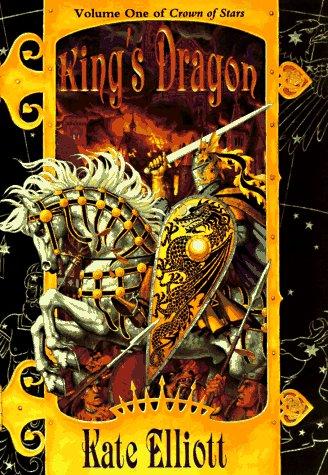
King's Dragon
Kate Elliott · Crown of Stars, Book 1 · 1997
Series Status Complete in seven volumes
Wheel of Time Similarity 4 out of 5
Best for Readers who loved Jordan's politics, religious factions, historical cycles, and enormous supporting cast.
Know before you start Liath's early storyline contains prolonged abuse and coercive control.
Liath is an enslaved young woman protecting forbidden knowledge inherited from her father. Alain is a foundling whose visions and uncertain origin pull him toward war. Around them, the kingdom of Wendar struggles against invasion, dynastic conflict, church authority, noble ambition, and supernatural forces rooted in a much older history.
Kate Elliott matches Jordan's interest in how culture governs behavior. Religion, inheritance, literacy, gender, labor, and feudal obligation are not background notes; they determine what characters can imagine doing. The series also develops through many viewpoints whose understanding of the same event may differ according to class and belief.
The comparison is especially strong for readers who enjoyed the White Tower, the Children of the Light, Andoran succession, and the political consequences of prophecy. Elliott's institutions feel older than the protagonists and resistant to the idea that a single chosen figure can correct them.
The tone is harsher. Abuse, enslavement, religious persecution, and warfare receive sustained attention, and the alternate-medieval setting lacks Jordan's broader range of conspicuously distinct national aesthetics. The magic is mysterious rather than systematized. What it offers instead is one of epic fantasy's richest examinations of power at every social level.
6
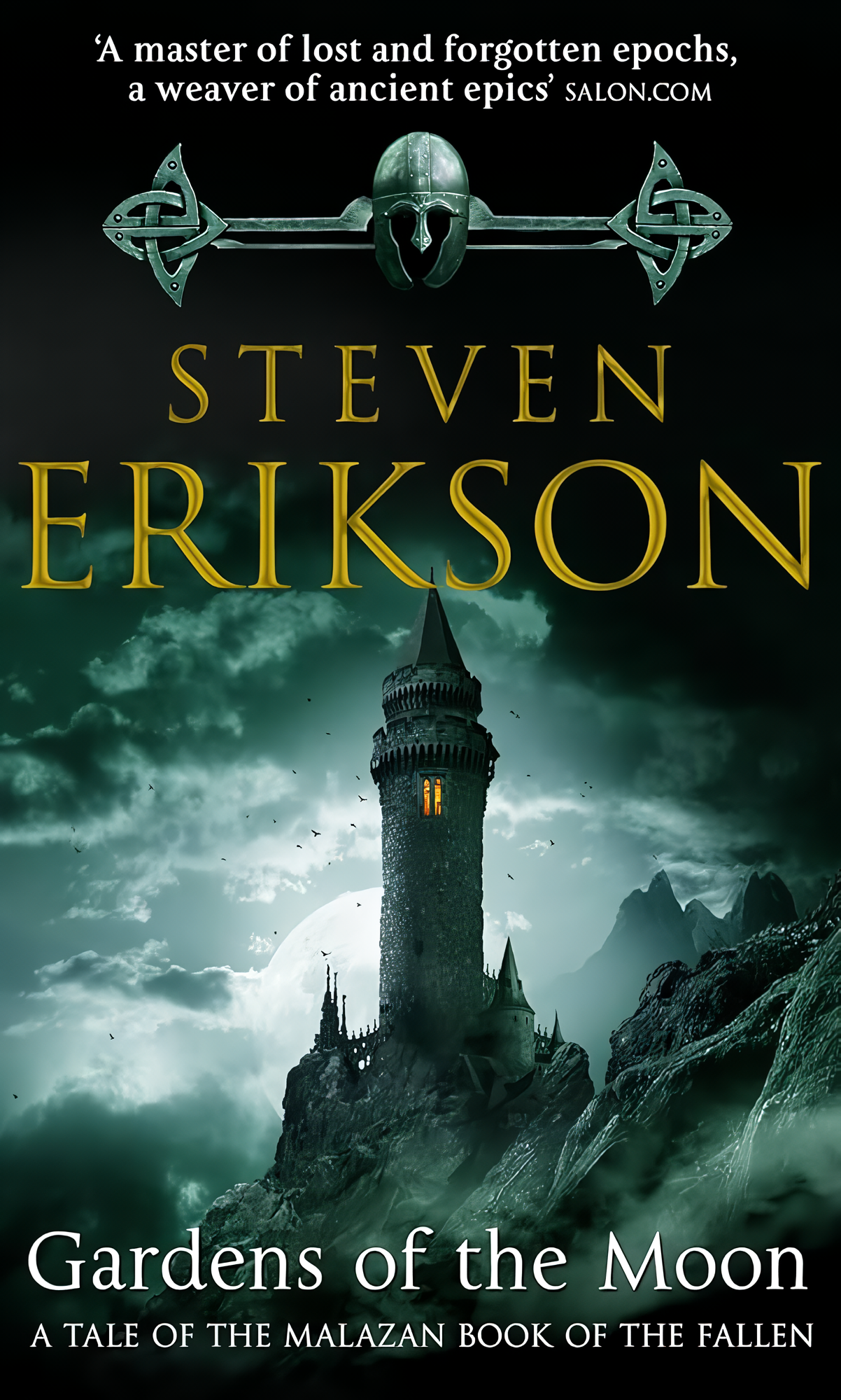
Gardens of the Moon
Steven Erikson · Malazan Book of the Fallen, Book 1 · 1999
Series Status The ten-volume core sequence is complete
Wheel of Time Similarity 3.5 out of 5
Best for Readers who want the scale and ancient history of Jordan's final volumes with almost no introductory guidance.
Know before you start Confusion is part of the design. Deadhouse Gates changes continents and introduces another large cast before the series begins revealing its full architecture.
The Malazan Empire turns from the conquered city of Pale toward Darujhistan while soldiers, assassins, mages, thieves, ancient beings, and gods pursue competing plans. The reader enters after the empire has already changed rulers, fought campaigns, created enemies, and accumulated internal betrayals. Nobody pauses to explain the world because nobody believes they are standing at its beginning.
Erikson rivals and sometimes exceeds Jordan in scale. Civilizations extend across hundreds of thousands of years, divine powers intervene directly, military units develop their own cultures, and apparently minor figures can become essential several books later. The core series is long, complete, and supported by additional novels from Erikson and Ian C. Esslemont.
The reading experience is almost the opposite of The Eye of the World. Jordan begins with sheltered characters who need explanations; Erikson begins with professionals who already know more than the reader. Emotional attachment arrives through observation rather than orientation. Good and evil are replaced by empires, traumas, loyalties, and temporary alliances.
Readers who loved the vast history, Forsaken schemes, enormous cast, and late-series convergence of The Wheel of Time may find Malazan irresistible. Readers who loved the Two Rivers warmth and gradual introduction may find it hostile. Gardens of the Moon is included for magnitude, not comfort.
We reviewed this: read our full review of Gardens of the Moon →
5
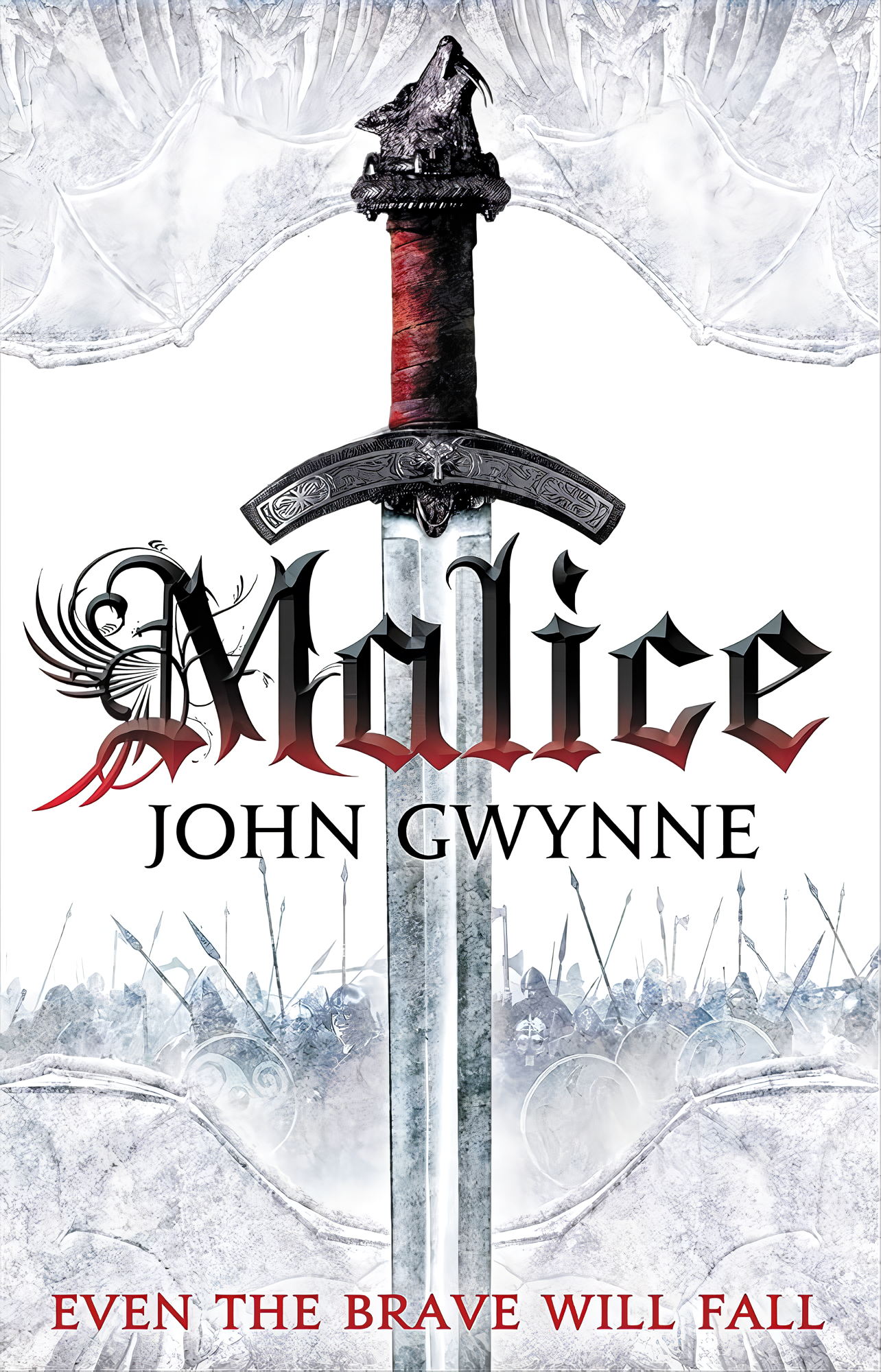
Malice
John Gwynne · The Faithful and the Fallen, Book 1 · 2012
Series Status Complete in four volumes, with a completed sequel trilogy
Wheel of Time Similarity 4 out of 5
Best for Readers who loved Perrin's loyalty, Lan's warrior ethos, the Borderlands, large battles, and clear emotional stakes.
Know before you start The animal violence and deaths of beloved companions can be difficult, and the series grows increasingly brutal.
Corban is a blacksmith's son growing up in the fortress of Dun Carreg while kingdoms maneuver toward a prophesied war between champions. Ancient giants, hidden agents, ambitious rulers, warrior bands, and supernatural powers gradually enter a story that initially feels focused on family, training, friendship, and the desire to become capable.
The opening resembles Jordan in its patience. Corban spends time learning, failing, competing, and forming loyalties before the prophecy fully claims the plot. Other viewpoints reveal that no single village can contain the coming conflict. Gwynne steadily moves pieces into position, then lets the final section convert preparation into catastrophe.
The series becomes more battle-driven than The Wheel of Time. Shield walls, duels, raids, sieges, animal companions, and personal loyalties dominate, while the politics remain comparatively direct. Gwynne's moral universe has complications, but it ultimately retains a strong heroic center.
The first half of Malice can feel overly familiar and slow. Its characters require time before their individual voices emerge, and the prophecy uses traditional language without Jordan's extensive destabilization of chosen-one mythology. The payoff is momentum: once the series accelerates, it rarely returns to the quiet scale of Dun Carreg.
We reviewed this: read our full review of Malice →
4
The Curse of the Mistwraith
Janny Wurts · The Wars of Light and Shadow, Book 1 · 1993
Series Status Complete in eleven volumes
Wheel of Time Similarity 4 out of 5
Best for Readers who loved prophecy, hidden history, moral misdirection, long payoffs, and the Pattern's pressure on individual choice.
Know before you start The first novel is dense even by epic-fantasy standards. It rewards reading for implication rather than speed.
Half-brothers Lysaer and Arithon are brought to Athera because their combined powers of light and shadow may defeat the Mistwraith that has smothered the world's sunlight. Their success produces a curse of enmity that turns difference into hatred and personal conflict into an epoch-spanning war.
Janny Wurts shares Jordan's fascination with incomplete knowledge. Prophecy, magical orders, inherited obligation, public reputation, and manipulated history shape choices across generations. Characters act on truths that are locally convincing and catastrophically partial. The apparent opposition of light and shadow becomes a trap for both the people of Athera and the reader.
The series rewards attention on the scale of The Wheel of Time. Images, decisions, and minor figures acquire significance many volumes later. Magic carries metaphysical, ecological, and ethical consequences rather than functioning as a neutral weapon. With Song of the Mysteries, the entire eleven-volume design is now complete.
The barrier is prose. Wurts writes in long, compressed sentences that demand slower reading, and the narrative refuses easy moral alignment. There is less casual humor, less domestic relief, and no equivalent to the Two Rivers ensemble guiding readers into the world. This is the recommendation for Jordan readers who want difficulty, causality, and rereading rather than familiarity.
3
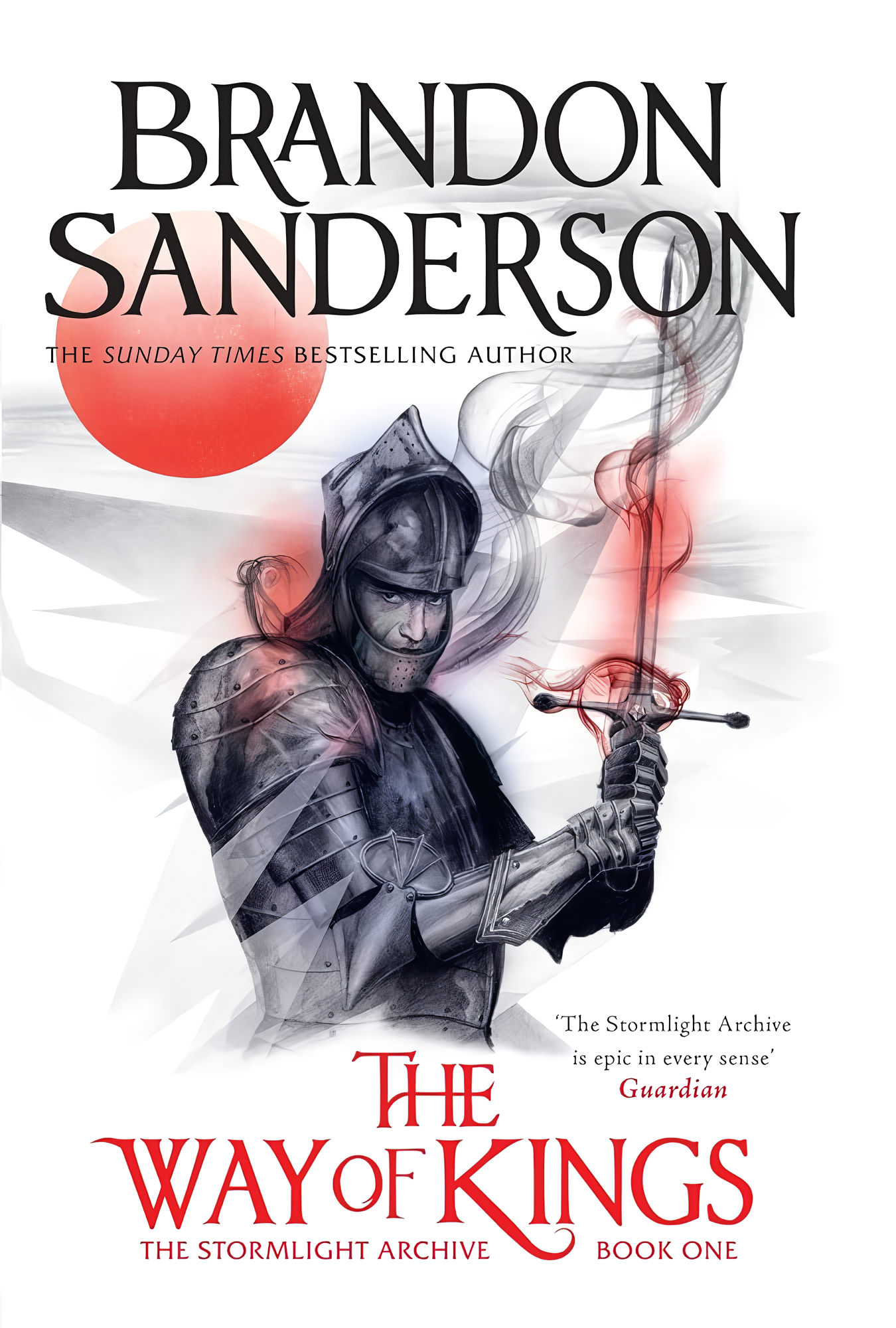
The Way of Kings
Brandon Sanderson · The Stormlight Archive, Book 1 · 2010
Series Status The first five-volume arc is complete; a second arc is planned
Wheel of Time Similarity 4.5 out of 5
Best for Readers who loved the One Power, the Forsaken, magical oaths, enormous climaxes, and theorizing between volumes.
Know before you start The Way of Kings spends hundreds of pages establishing separate lives before the main connections become visible.
On the storm-scoured world of Roshar, enslaved soldier Kaladin, scholar and heretic Jasnah Kholin, artist and thief Shallan Davar, and highprince Dalinar Kholin approach the return of powers and enemies their society remembers only through broken religion. Shardblades, highstorms, spren, ancient oaths, and a war on the Shattered Plains make the setting far stranger than Jordan's opening countryside.
Sanderson completed The Wheel of Time after Robert Jordan's death, but the resemblance extends beyond authorship. Both series use prophecy, magical orders, extensive interludes, multiple cultures, hidden history, and characters forced into identities larger than their private ambitions. The Knights Radiant provide the same pleasure as watching channelers discover Talents and institutional roles.
The differences are equally important. Sanderson's magic is more rule-driven, his plots are engineered around explosive final sequences, and his characters often articulate their psychological struggles in contemporary language. Roshar begins alien and gradually becomes legible, whereas the Westlands begin familiar and gradually reveal their strangeness.
No ongoing series offers a more obvious destination for readers who want another massive commitment with maps, theories, secret organizations, ancient betrayals, and spectacular convergence. The first five books form a major arc, but the complete ten-volume plan remains a project for the future.
We reviewed this: read our full review of The Way of Kings →
2
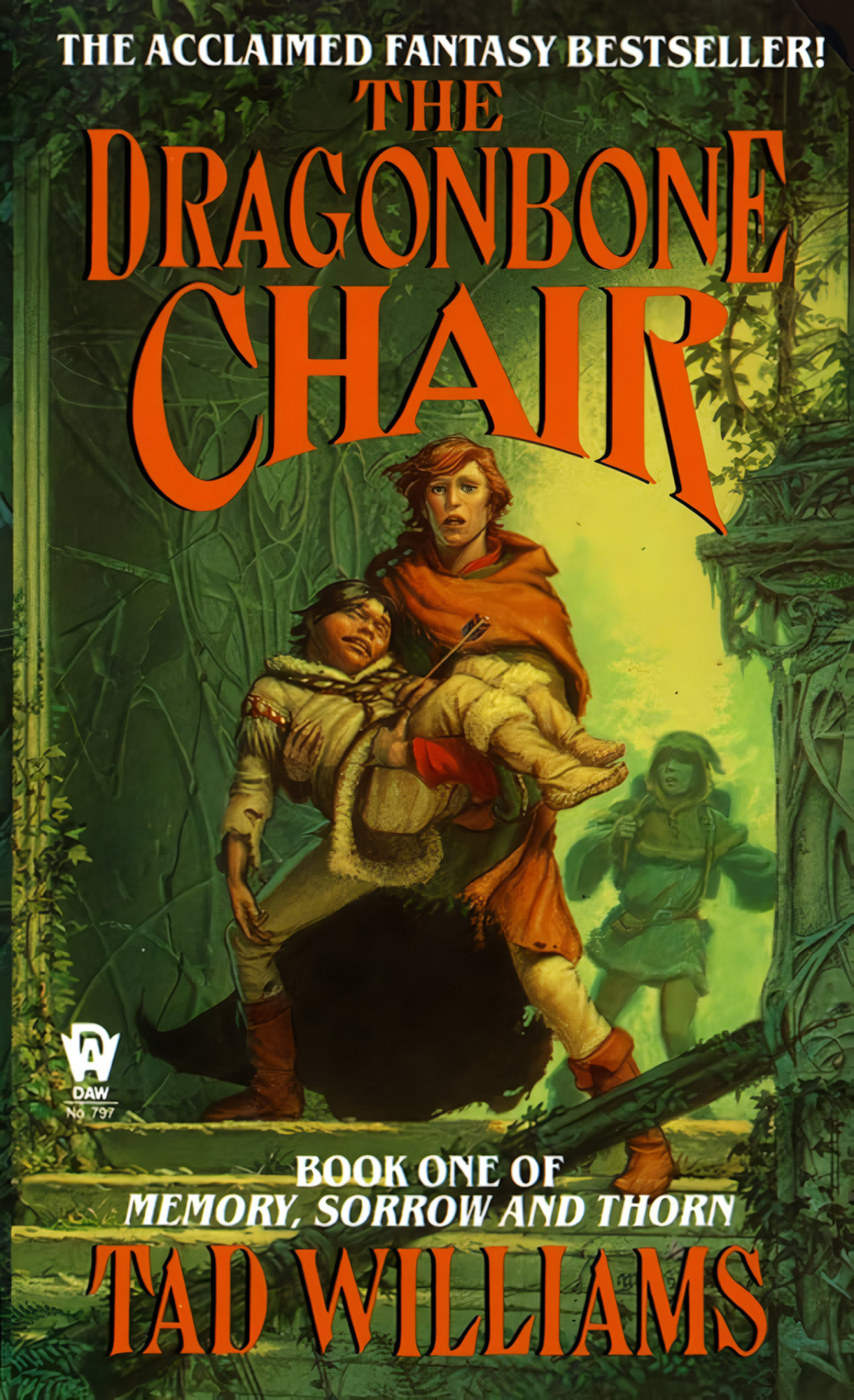
The Dragonbone Chair
Tad Williams · Memory, Sorrow, and Thorn, Book 1 · 1988
Series Status The original trilogy and later Osten Ard sequel sequence are complete
Wheel of Time Similarity 4.5 out of 5
Best for Readers who loved the Two Rivers beginning, long maturation, ancient sorrow, travel, songs, and a world revealed patiently.
Know before you start The slow opening is not a temporary mistake. Williams builds attachment through routine before destroying it.
Simon is a kitchen boy in the immense castle of the Hayholt, more interested in avoiding work and listening to Doctor Morgenes than in the politics of King John's declining reign. When Elias inherits the throne and the priest Pryrates gains influence, Simon discovers that ancient powers and old grievances are entering the kingdom through the failures of the present.
Tad Williams offers the closest match for Jordan's patience. Simon does not become impressive on schedule. He is frightened, ignorant, selfish, loyal, observant, and slow to understand the history through which he moves. His growth matters because the books remember the kitchen boy even when the world has grown large enough to contain armies and immortal enemies.
The series also shares the movement from apparently conventional fantasy into historical complication. The Sithi are not merely noble elves, legends are politically useful distortions, and the weapons named Memory, Sorrow, and Thorn carry meanings no single faction entirely controls. Multiple viewpoints gradually transform a boy's escape into a continental war.
The opening is slower than The Eye of the World, and the magic remains mysterious rather than becoming a system the reader can measure. Readers who need action within the first hundred pages may struggle. Those who loved Jordan's road chapters, songs, weather, ruins, dreams, and the sense that history has been waiting beneath ordinary life may find the ideal successor.
We reviewed this: read our full review of The Dragonbone Chair →
1
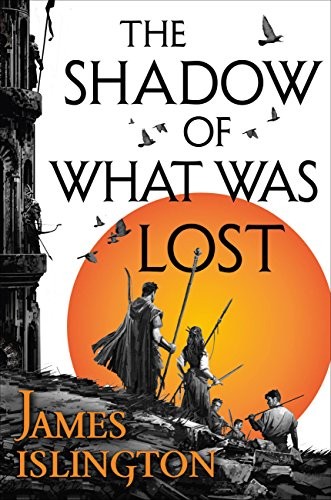
The Shadow of What Was Lost
James Islington · The Licanius Trilogy, Book 1 · 2014; later published by Orbit
Series Status Complete in three volumes
Wheel of Time Similarity 5 out of 5
Best for Readers who want the closest combination of young companions, prophecy, ancient evil, magical institutions, hidden identity, and long-planned revelations.
Know before you start The first book uses familiar genre shapes. Its originality becomes clearer as the trilogy reveals the machinery beneath them.
Davian studies at a school for the Gifted in a society that defeated and bound its magic users after a civil war. He cannot properly control Essence, yet he begins displaying abilities associated with the outlawed Augurs—powers involving foresight, time, and the manipulation of possibility. An attack sends Davian, Wirr, and Asha onto different paths while the boundary containing an ancient enemy begins to fail.
No other modern series reproduces as many of Jordan's central pleasures in so compact a form. Young companions separate, hidden identities matter, prophecy is both true and dangerously misunderstood, magical talents differ, political institutions fear the people they need, and an ancient war has been preserved through biased memory. Even Michael Kramer's audiobook narration provides an immediate bridge for listeners.
Islington's strongest idea is determinism. If the future can be known, what does choice mean? If a person commits an atrocity under conditions he no longer remembers, where does responsibility reside? Time travel, memory, identity, and prophecy become parts of one carefully constructed plot rather than isolated forms of spectacle.
The trilogy cannot match Jordan's cultural breadth or character texture. Dialogue is sometimes functional, secondary figures can feel designed around plot requirements, and the pace leaves less room for the domestic detail that makes the Westlands feel inhabited. What it gains is completion. The final volume resolves an extraordinary number of planted questions and gives the trilogy one of modern epic fantasy's most satisfying endings.