The Book in Brief
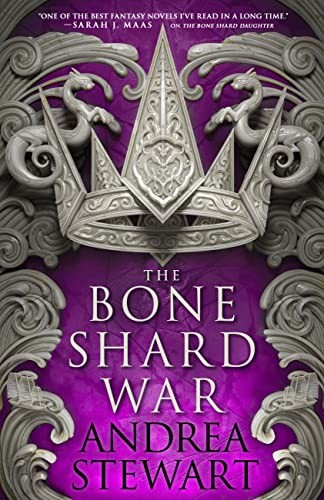
Two years on, Lin rules a shrinking empire while Dione’s Shardless Few, Ragan, Nisong and the slaver Kaphra all move against her — and Jovis, believed gone, is being controlled through commands carved into his flesh. Lin hunts seven pale swords capable of stopping rogue Alanga; Jovis fights Kaphra’s control with Mephi’s help; Ragan kills the island of Riya from inside its witstone mines, revealing that the islands are themselves full-grown ossalen that sink when they die. As the factions converge on Imperial Island, Lin concludes that preserving the Sukai throne would only perpetuate the war, and abdicates in favor of a representative government under Ranami. Jovis kills Ragan in the witstone mines beneath the palace and is mortally wounded doing it; Lin places his body in Shiyen’s memory machine, whose liquid heals him at the cost of his memories.
Important Characters
Lin Sukai: The last Sukai emperor, learning that saving the people may require ending her own institution.
Jovis: An Alanga and former smuggler forced into service through bone commands.
Mephi: Jovis’s ossalen partner and the relationship that survives attempts to reduce him to a controlled weapon.
Ranami: A leader whose experience as rebel and governor’s partner prepares her for council government.
Ragan: A rogue Alanga willing to sink islands in pursuit of power and revenge.
Nisong / Sand: A constructed claimant struggling to separate her own life from the memories used to create her.
Dione and Kaphra: The ancient Alanga rebel and the Ioph Carn crime boss — separate enemies whose methods both reproduce the coercion they claim to oppose.
What to Remember from the Previous Book
Lin defeated Ragan’s immediate attack; Nisong’s construct army was smashed and she sought out Ragan only afterward. Gio revealed himself as Dione, an ancient Alanga leading the Shardless Few, while the Ioph Carn seized Mephi and drew Jovis into their trap. Ranami discovered that her adopted daughter Ayesh had bonded with an ossalen. The empire survived the battle with its legitimacy weaker and every faction now aware that ossalen bonds were returning Alanga power.
Two Years of Fracture
Chapter 1
Nisong and Ragan move through the islands while their alliance strains under incompatible ambitions.
Chapter 2
Lin holds Imperial Island but receives obedience from governors only when force or fear leaves no alternative.
Chapter 3
Jovis wakes under Kaphra’s control, with commands in his body turning resistance into pain.
Chapter 4
Mephi remains close enough to preserve Jovis’s sense of self even when his actions are compelled.
Chapter 5
Lin learns more about the pale swords and commits to finding them before Ragan does.
Chapter 6
Ranami attempts to build civilian support while Phalue undertakes dangerous work away from Nephilanu.
Chapter 7
Nisong’s memories of Shiyen pull against Sand’s desire for a life not organized around the dead emperor.
Chapter 8
Dione presents the collapse of Lin’s rule as liberation while continuing to make decisions alone.
Chapter 9
A sword lead forces Lin to negotiate with people harmed by the dynasty she still represents.
Chapter 10
Jovis looks for gaps in Kaphra’s commands and hides those moments from his captor.
Chapter 11
Ragan tests his power on land and makes the threat of another sinking immediate.
Chapter 12
The ossalen’s growth suggests that the map of the empire has always been more alive than its rulers knew.
Chapter 13
Lin’s allies argue over whether saving the dynasty and saving the population remain the same goal.
Chapter 14
Ranami begins imagining a council that would survive after any single Alanga or emperor is gone.
Chapter 15
A recovered sword provides leverage but no assurance that its user will remain morally different from Ragan.
Chapter 16
The factions leave the opening search with more power and less possibility of negotiated peace.
The Pale Swords
Chapter 17
Lin follows a second sword trail while governors use her absence to reconsider their loyalties.
Chapter 18
Jovis performs a mission for Kaphra and turns small acts of delay into the only resistance available.
Chapter 19
Nisong encounters evidence that her remembered marriage was part of Shiyen’s pattern of possession.
Chapter 20
Ragan treats Nisong as a useful claimant rather than the partner she hoped to become.
Chapter 21
Phalue’s mission exposes the ordinary communities every elite faction expects to absorb its losses.
Chapter 22
Ranami holds Nephilanu through blockade and hostage-taking, strengthening the case for shared rule.
Chapter 23
Lin learns that the swords were designed within an older conflict whose categories no longer fit the present.
Chapter 24
Dione’s long memory gives him strategic advantage but also makes current people resemble pieces in an unfinished old war.
Chapter 25
Jovis and Mephi coordinate around the literal wording of Kaphra’s commands.
Chapter 26
A sword changes hands through betrayal, proving that possession cannot substitute for alliance.
Chapter 27
Nisong briefly acts from Sand’s values and recognizes that compassion is evidence of a self beyond copied memory.
Chapter 28
Ragan sinks Riya, killing thousands and demonstrating the cost of treating islands as instruments.
Chapter 29
Lin survives the disaster with fewer forces and a clearer sense that imperial preservation is becoming impossible.
Chapter 30
Jovis witnesses the sinking while unable to intervene freely, deepening his determination to break control.
Chapter 31
The survivors redirect toward Imperial Island, where every remaining claim will be decided.
Chapter 32
The sword quest ends as a military advantage but a political failure, because no relic can restore trust.
Siege of Imperial Island
Chapter 33
Imperial Island prepares for siege while civilians are trapped beneath competing promises of rescue.
Chapter 34
Lin coordinates pale swords, bone knowledge, and ossalen power without enough people to secure every approach.
Chapter 35
Mephi’s sea serpents drag Kaphra to his death, freeing Jovis from the shards before he can rejoin Lin.
Chapter 36
Nisong arrives beside Ragan but increasingly refuses the role his campaign assigns her.
Chapter 37
On Nephilanu, Ranami takes command of the remaining Shardless Few rather than wait for imperial rescue.
Chapter 38
Phalue returns to Nephilanu to find her wife and daughter free, and a partnership changed by separation and loss.
Chapter 39
Dione presses his demand for an end to the dynasty but underestimates resistance to his own hidden rule.
Chapter 40
The city’s defenses fail in stages, exposing how dependent the capital remained on systems Lin dismantled.
Chapter 41
Mephi creates an opening that lets Jovis reclaim part of his agency.
Chapter 42
Lin recognizes that every attempt to keep the throne makes the population a shield for her title.
Chapter 43
Nisong turns against the assumption that copied memories require her to repeat Shiyen’s marriage and empire.
Chapter 44
Kaphra’s command structure begins to break as Jovis exploits conflict between orders.
Chapter 45
Ranami presents a council as an immediate governing mechanism rather than an abstract postwar ideal.
Chapter 46
Lin abdicates and transfers authority, ending the Sukai dynasty before an enemy can claim it.
Chapter 47
The act deprives Nisong’s campaign of its clearest political object while preserving her personal grievance.
Chapter 48
Battle continues after the abdication because Ragan wants domination rather than dynastic correction.
Chapter 49
Jovis pursues Ragan below the island, accepting that stopping him may cost the life he has just reclaimed.
The Island’s Heart
Chapter 50
Jovis follows Ragan into the structures that sustain the island and separates their conflict from the civilian battlefield.
Chapter 51
Lin fights to keep survivors alive without the authority she once believed necessary for action.
Chapter 52
Ranami’s council begins governing during crisis, proving legitimacy through practical coordination.
Chapter 53
Nisong confronts the accumulated harm produced by living as someone else’s remembered wife.
Chapter 54
Ragan attempts to destroy the island rather than accept a future he does not control.
Chapter 55
Jovis beheads Ragan in the witstone mines, taking a mortal wound as he lands the blow.
Chapter 56
The wound kills Jovis, completing the helper’s arc he repeatedly tried to deny.
Chapter 57
Lin places Jovis in Shiyen’s memory machine, which heals his body but strips the memories that connected his sacrifices into a known identity.
Chapter 58
Nisong returns to Sand and chooses a future not organized around Lin’s throne or Shiyen’s love.
Chapter 59
Thrana begins her slow growth into an island, revealing a geography built on the suppression of living things.
Chapter 60
Ranami formalizes a council from the ruins and makes reconstruction a shared political task.
Chapter 61
Lin withdraws from power as the Council finds its footing, keeping responsibility without inherited supremacy.
Chapter 62
Jovis lives without recognizing the history Lin remembers, making reunion a new relationship rather than a reward.
Chapter 63
Lin and Jovis choose to begin again, closing the trilogy on recovery without restoration.
Ending Explained
Lin’s abdication is the trilogy’s real political resolution: killing Ragan stops one catastrophe, but ending the Sukai claim removes the throne that kept converting private identity into public war. Jovis survives without his memories, a deliberate inversion of Lin’s condition at the start of book one — and the ending refuses to hand him back as an unchanged prize, requiring Lin to respect the person he is instead of demanding the history she wants. The ossalen becoming islands reveals that the empire’s supposedly inert territory was made of suppressed life all along, so rebuilding has to be ecological, magical and constitutional at once.
Themes and Analysis
Abdication and responsibility. Lin learns that surrendering office can be an act of leadership when the office itself perpetuates conflict.
Memory without ownership. Sand and the altered Jovis show that remembered history cannot give another person a claim over the present self.
Coercion across factions. Bone commands, imperial authority, and Dione’s secret direction reveal similar structures beneath rival ideologies.
Rebuilding living systems. The new council and new islands replace static empire with relationships that require continued consent.
Content Notes
This book contains large-scale war and island destruction, coercive bodily control and imprisonment, major-character death and memory loss, body horror and mass civilian casualties.