The Book in Brief
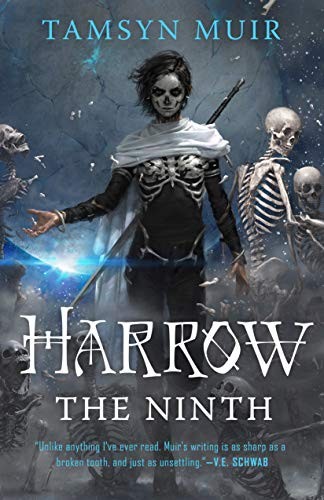
Harrow wakes as an incomplete Lyctor in the Emperor’s service, remembering Ortus — not Gideon — as her cavalier, while someone repeatedly tries to kill her and a false history of Canaan House plays out in her head. Aboard the Mithraeum, the surviving Lyctors prepare for a Resurrection Beast as Harrow follows instructions left by her pre-Lyctor self. The false Canaan House proves to be a River bubble haunted by the Sleeper — Commander Wake, Gideon’s mother — and during the assault Gideon wakes in Harrow’s body. Mercy and Augustine expose John’s founding lie about Lyctorhood; John kills Mercy, Augustine drags the station into the River, and Harrow retreats into a mental Locked Tomb rather than displace Gideon.
Important Characters
Harrowhark Nonagesimus: A new Lyctor whose self-inflicted memory surgery structures the entire novel.
Gideon Nav: Harrow’s sacrificed cavalier, absent from memory but eventually present in Harrow’s body.
Ianthe Tridentarius: A fellow new Lyctor, rival, collaborator, and unpredictable survivor.
John Gaius: The Emperor and necromantic god, whose account of the Resurrection begins to collapse.
Augustine and Mercy: Ancient Lyctors whose rivalry conceals shared knowledge about John’s deception.
Pyrrha Dve: Gideon the First’s cavalier, secretly surviving within his body.
Commander Wake: Gideon’s mother, haunting Cytherea and Harrow’s River bubble.
Abigail Pent and Ortus Nigenad: The dead Fifth House necromancer and Harrow's Ninth cavalier who help Harrow understand and defend her constructed memory.
What to Remember from the Previous Book
At Canaan House, Gideon and Harrow entered the Emperor’s Lyctor trials. Gideon sacrificed herself so Harrow could absorb her soul and survive. Harrow became a Lyctor, but the Emperor could not recover Gideon’s body. Harrow then altered her own brain so thoroughly that even Gideon’s name became inaccessible.
Prologue
Harrow faces a Resurrection Beast aboard the Mithraeum while fractured narration makes clear that her memory and identity have been deliberately altered.
Parodos
Fourteen months before the Emperor's murder, Harrow sits on the Ninth House watching her cavalier Ortus read the summons to Canaan House, announcing that the apparent past is a constructed version of events.
Act One
Chapter 1
Harrow’s new life aboard the Emperor’s ship is defined by nausea, weakness, and a memory in which Gideon never existed.
Chapter 2
Letters written by Harrow’s earlier self impose rules she cannot explain, including instructions about Ianthe and the sword.
Chapter 3
The narration returns to a false Canaan House where Ortus accompanies Harrow and familiar events occur incorrectly.
Chapter 4
John explains the approaching Resurrection Beast and the danger it poses to every Lyctor.
Chapter 5
Harrow meets the Saint of Joy, whose friendliness never quite conceals her capacity for violence.
Chapter 6
A River lesson exposes Harrow’s inability to leave her body safely and makes her dependence on others humiliating.
Chapter 7
Teacher’s altered Canaan House lectures add clues that the remembered past is being staged for a purpose.
Chapter 8
The Saint of Patience treats Harrow as a curiosity while testing how much of Lyctorhood she truly possesses.
Chapter 9
Cytherea’s preserved corpse becomes the focus of Harrow’s dread, obsession, and unexplained nightly precautions.
Chapter 10
Harrow stabs the corpse and discovers that death has not made Cytherea’s body inert.
Act Two
Chapter 11
Gideon the First attacks Harrow under orders, beginning a pattern of assaults she cannot survive through normal Lyctoral skill.
Chapter 12
Under Mercymorn's caustic tutelage, Harrow murders another planet and dives into the River to destroy its newborn revenant — a drill her incomplete Lyctorhood makes nearly lethal.
Chapter 13
The false Canaan House produces impossible arrivals that expose its growing instability.
Chapter 14
Ianthe’s damaged arm becomes a technical problem through which Harrow proves her necromantic precision.
Chapter 15
John recounts fragments of Harrow’s conception and the Ninth House crime that created her from two hundred children.
Chapter 16
Mercy examines Harrow and recognizes anomalies she refuses to explain openly.
Chapter 17
The old Lyctors discuss their cavaliers in ways that reveal grief has survived ten thousand years of denial.
Chapter 18
Gideon the First attacks again, and Harrow’s survival depends on reflexes she does not consciously understand.
Chapter 19
Canaan House memories admit more dead guests and increasingly resemble a contested afterlife rather than recollection.
Chapter 20
Harrow begins to suspect that the missing center of her mind is an intentional defense rather than ordinary trauma.
Act Three
Chapter 21
Camilla’s and Palamedes’ bodies are carried into the Canaan House mortuary with their faces destroyed at point-blank range, and the surviving houses close ranks around Abigail’s investigation of the Sleeper.
Chapter 22
Harrow encounters Palamedes in the River and learns that souls can persist without the forms Lyctoral doctrine predicts.
Chapter 23
Cytherea’s body walks, confirming that another intelligence is using the corpse.
Chapter 24
Harrow turns a communal meal into a bone-based attempt to kill Gideon the First from inside his own body.
Chapter 25
The soup plan fails to end the threat but proves Harrow can weaponize minute necromantic preparation.
Chapter 26
Coronabeth’s false-history appearance exposes longing and rivalry inside the Canaan House bubble.
Chapter 27
Silas’s death destabilizes the group and demonstrates that events in the bubble can have genuine spiritual stakes.
Chapter 28
Harrow reconstructs Ianthe’s arm while tying their alliance to secrets neither woman can safely reveal.
Chapter 29
A letter and Harrow’s own behavior point toward a forbidden name her mind automatically destroys.
Chapter 30
A drunken Lyctoral dinner loosens every tongue, and between toasts to dead cavaliers Ianthe and Augustine begin plotting against Ortus the First.
Act Four
Chapter 31
Mercy and Augustine revive an old plan whose sexual absurdity masks a serious attempt to test John’s vulnerability.
Chapter 32
Gideon the First’s attack ends differently when Harrow saves him, complicating the simple role of assassin and victim.
Chapter 33
Harrow meets Camilla in the physical world and reaches Palamedes through the River, confirming that her false memories conceal real survivors.
Chapter 34
Palamedes recognizes the damage in Harrow’s soul and understands that another person should be present within her.
Chapter 35
The false Canaan House fills with monsters and gunfire as the Sleeper takes direct control of the scenario.
Chapter 36
Abigail organizes the dead into an investigation, treating Harrow’s mind as a place whose rules can be discovered.
Chapter 37
The Emperor’s companions speak of A.L., the lost figure whose connection to John remains dangerous.
Chapter 38
A body beneath the bed and other repeated images connect Harrow’s private horror to Wake’s occupation of Cytherea.
Chapter 39
Heralds begin to breach the Mithraeum while Ianthe prepares the procedure Harrow requested before erasing Gideon.
Epiparodos
The second displaced frame clarifies that Harrow’s false Canaan House history is a defensive mental structure, not an alternate account readers should accept literally.
Act Five
Chapter 40
Harrow moves through alternate versions of her life that imagine different meetings with the person she cannot name.
Chapter 41
The scenarios collapse as Abigail forces the group to distinguish fantasy, memory, and the Sleeper’s intrusion.
Chapter 42
Harrow finally remembers Gideon and understands that she damaged herself to keep Gideon’s soul from being consumed.
Chapter 43
The Herald assault overwhelms the Mithraeum and separates bodies from souls at the worst possible moment.
Chapter 44
Abigail proposes an exorcism that will let the dead confront Wake inside Harrow’s mental Canaan House.
Chapter 45
Mercy studies Gideon’s eyes in Harrow’s body and recognizes proof about John, Wake, and perfect Lyctorhood.
Chapter 46
Gideon fights the Heralds for Harrow's survival in her borrowed body until Mercymorn turns on her — a duel cut short when Cytherea's walking corpse shoots Mercy and stalks away.
Act Five, concluded
Chapter 47
The dead confront the Sleeper, and Commander Wake’s identity links the haunting to Gideon’s conception.
Chapter 48
Ortus summons the legendary Matthias Nonius, turning his lifelong devotion to poetry into effective courage.
Chapter 49
Wake is expelled from Harrow’s bubble while Gideon navigates the physical battle in Harrow’s body.
Chapter 50
Mercy and Augustine confront John with evidence that he lied: cavaliers need not die for complete Lyctorhood.
Chapter 51
John survives Mercy’s attempt to destroy him, kills her, and faces Augustine’s effort to drag the Mithraeum through a stoma.
Chapter 52
Pyrrha reveals that she, not Gideon the First, has survived in his body; Ianthe saves John from the River.
Chapter 53
Harrow refuses to consume or erase Gideon and rests inside a mental Locked Tomb, beside the sword and a fictitious magazine.
Epilogue
An unnamed young woman lives with Camilla’s circle, exercises with a sword, and waits for a remembered identity the novel intentionally withholds.
Ending Explained
Harrow’s failure to return is protection, not defeat: with Gideon in control of their shared body, she chooses a psychic refuge rather than complete the absorption she mutilated her own brain to prevent. The Lyctoral revelation overturns John’s founding claim — perfect Lyctorhood can preserve the cavalier, so the first generation’s sacrifices were never inevitable, and Mercy and Augustine’s rebellion is ten thousand years of manipulated grief coming due. The epilogue withholds the young woman’s identity, but its details tie her to Camilla’s group and to a body-soul problem the next book exists to explain.
Themes and Analysis
Grief as architecture. Harrow does not merely repress Gideon; she rebuilds language and memory around the loss.
Unreliable form. Second person and false chronology reproduce Harrow’s damaged perception instead of simply concealing a twist.
Divine authority and lies. John’s immortality depends on a history his oldest followers were never allowed to understand.
Love without possession. Harrow’s decisive choice is to preserve Gideon as a person rather than use her as fuel.
Content Notes
This book contains body horror, dismemberment and gore, suicidal ideation, profound grief, psychological manipulation, memory alteration, religious imagery, death and possession.