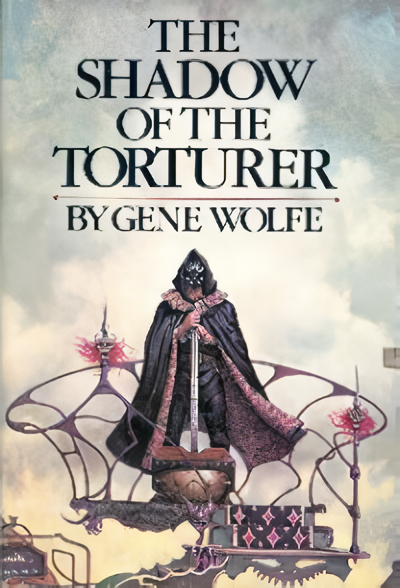
Gene Wolfe opens The Shadow of the Torturer with a narrator who claims perfect memory and immediately gives the reader reasons to doubt him. Severian remembers details, but memory is not the same as honesty. He chooses what to describe, delays explanations, revises his judgments, and treats emotional interpretation as though it were physical evidence. The novel's first mystery is therefore not its dying sun, buried technology, or labyrinthine city. It is the distance between what Severian says and what his own account allows us to infer.
Severian is raised by the guild formally called the Seekers for Truth and Penitence. Torture is not an aberration in his world but an institution with apprenticeship, ritual, professional ethics, and bureaucratic purpose. Wolfe refuses the easy reassurance of making Severian secretly modern in his values. He can show mercy, loyalty, vanity, tenderness, cruelty, and profound self-deception without becoming a simple spokesman for the reader. His moral development begins inside the habits that formed him.
The world of Urth appears medieval because Severian lacks the conceptual vocabulary to describe its technology. Towers may be grounded spacecraft, paintings may depict extraterrestrial exploration, monsters may be engineered beings, and religious relics may possess powers that invite both scientific and supernatural explanations. Wolfe does not pause to translate the setting into a technical manual. He asks readers to perform archaeology while the narrator walks past the evidence.
That method produces an extraordinary atmosphere. Nessus feels immense, exhausted, and layered with civilizations that no living person fully understands. The Matachin Tower, the House Azure, the rag shop, the Botanic Gardens, the dueling ground, and the Wall belong to one city but operate like separate realities. Space, memory, theater, and dream repeatedly overlap. The result is not vagueness for its own sake; it is a world in which history has become too deep for ordinary categories.
Thecla supplies the book's central wound. Severian's attachment to an aristocratic prisoner draws him into a conflict between personal compassion and the guild's oath. Yet even this relationship is not presented cleanly. Affection, erotic fascination, class difference, professional power, and political manipulation coexist. When Severian gives Thecla a knife with which to end her suffering, the act is mercy, betrayal, and a decisive claim about whose authority matters.
The second half becomes a strange picaresque. Agia's schemes, Dorcas's unexplained emergence from a lake, the avern duel, Agilus's execution, and Dr. Talos's play can feel disconnected on a first reading. They are connected less by conventional plot mechanics than by recurring questions about masks, performance, resurrection, and identity. People play roles imposed by guild, class, desire, or prophecy, then discover that the performance has consequences beyond intention.
Wolfe's principal weakness is difficulty of a kind that can resemble withholding. Important transitions occur between chapters, ordinary objects receive archaic names, and Severian often understands more or less than he admits. Women are frequently filtered through his desire and classified by beauty, availability, or mystery. The narration may expose his limitations, but exposure does not always make the experience comfortable. Readers seeking immediate clarity or emotional transparency may find the book chilly and evasive.
For readers willing to participate, that evasiveness becomes the achievement. Objects acquire hidden histories, casual statements invite rereading, and apparent miracles remain open to multiple explanations without becoming meaningless. The Shadow of the Torturer is not merely a novel with an unreliable narrator; it is a novel about interpretation as a moral act. The reader must decide what to believe, what Severian cannot see, and what he may be arranging for us.
The volume ends abruptly because it is the first movement of a larger work. Severian has left the guild and nearly escaped Nessus, but the political, metaphysical, and personal questions have only begun. As an independent novel it is intentionally incomplete. As an entrance to The Book of the New Sun, it is one of science fantasy's most demanding and rewarding doors.