The Book in Brief
Severian, an apprentice in the torturers' guild, sneaks through the necropolis with other boys after swimming in the River Gyoll. He witnesses the outlaw Vodalus and his companions robbing a grave. When volunteer guards attack, Severian saves Vodalus, kills a man, and receives a gold coin bearing the Autarch's face. The encounter makes Vodalus the secret emblem of a life beyond the guild.
Years later, Severian meets the aristocratic prisoner Thecla and becomes her companion. She is being held to pressure her half-sister Thea, who is Vodalus's lover. Severian falls in love with Thecla, but the guild eventually tortures her. He smuggles a knife into her cell, allowing her to kill herself. Rather than execute Severian and damage the guild's reputation, the masters exile him to serve as lictor in the distant city of Thrax. Master Palaemon gives him the executioner's sword Terminus Est.
While crossing Nessus, Severian meets Dr. Talos and the giant Baldanders, then enters a rag shop owned by the twins Agia and Agilus. Agia covets Terminus Est and engineers a duel by disguising herself as an armored challenger. She accompanies Severian to obtain an avern, the deadly plant used in the duel. Their carriage crashes into an altar belonging to the Pelerines, and a sacred gem called the Claw of the Conciliator disappears.
In the Botanic Gardens, Severian and Agia pass through environments whose illusions may bend perception, space, or time. Severian falls into a lake and emerges with Dorcas, a young woman with no clear memory of her past. Hildegrin, a servant of Vodalus, rows them to the shore where the averns grow. At the Sanguinary Field, Severian fights Agilus and survives despite being struck by the plant. He wakes in a military lazaret and learns the truth of the twins' plot.
Agilus is condemned for the scheme, and Severian performs his first public execution. Agia escapes after confronting him. Severian and Dorcas leave together, and he discovers the stolen Claw hidden among his belongings, apparently planted there by Agia when the Pelerines searched her. The gem produces a mysterious vision of a vast building above the city.
Severian and Dorcas join Dr. Talos, Baldanders, and the transformed waitress Jolenta for a theatrical performance. Severian dreams of his dead master Malrubius and the dog Triskele. In the morning the worshipful and unsettling Hethor attaches himself to the group. They approach the immense Wall of Nessus, meet the partly mechanical Jonas, and are caught in the violent disorder around the opening gate. The book stops at the threshold, with Severian's exile only beginning.
Important Characters
Severian: Narrator, raised an apprentice of the torturers' guild and raised to journeyman before his exile. He claims perfect memory, but his omissions, interpretations, and contradictions make him an unreliable guide to his own life.
Thecla: An aristocratic prisoner held because of her connection to Thea and Vodalus. Severian becomes emotionally and sexually attached to her and ultimately gives her the means to die.
Vodalus: Revolutionary leader opposed to the Autarch. Severian saves him in the necropolis and idealizes him as an alternative source of loyalty.
Thea: Thecla's half-sister and Vodalus's companion. Her political choices make Thecla useful as a hostage.
Master Palaemon: Elder master of the guild, nearly blind and more compassionate than Master Gurloes. He gives Severian Terminus Est and arranges his exile to Thrax.
Master Gurloes: Head of the torturers. He protects the guild's institutional survival and supervises Thecla's treatment.
Agia: Clever, impoverished twin who tries to obtain Terminus Est through deception. She becomes Severian's guide, betrayer, and enemy.
Agilus: Agia's twin brother. He fights Severian in the avern duel and is later executed by him.
Dorcas: A young woman who emerges from the lake in the Botanic Gardens with little memory. She becomes Severian's companion and lover.
Dr. Talos: A brilliant, theatrical man traveling with Baldanders. He recruits performers, manipulates appearances, and seems less ordinary than he first appears.
Baldanders: A giant who travels with Dr. Talos and plays monstrous roles in their performances. His relationship with Talos remains unexplained.
Jolenta: A waitress recruited by Talos and transformed into a woman of extraordinary beauty, apparently through his intervention.
Hildegrin: An agent of Vodalus whom Severian first sees in the necropolis. He rows Severian, Agia and Dorcas across the Lake of Birds to the averns.
Hethor: A shabby, erratic traveler who becomes devoted to Severian after seeing the play. His strange speech hints at experience aboard star-faring vessels.
Jonas: A traveler met near the Wall of Nessus. His damaged body appears partly mechanical.
Spoiler Warning: The summaries below reveal Thecla's death, Severian's exile, the twins' deception, Agilus's execution, and the identity of the relic hidden in Severian's belongings.
Chapters I–IX
Chapter I: Resurrection and Death. After swimming in the Gyoll, Severian, Drotte, Roche, and Eata enter the necropolis to return to the Citadel. They interrupt a clash between volunteer guards and grave robbers led by Vodalus. Severian instinctively fights for Vodalus, kills a guard, and saves the rebel's life. Vodalus rewards him with a gold chrisos, creating a secret loyalty Severian carries back into the guild.
Chapter II: Severian. Severian describes his orphaned childhood among the torturers and the strange mixture of fear, routine, and play that shaped the apprentices. He recalls nearly drowning when the roots of water plants trapped him in the river. His friends pull him free, but the experience of crossing the border between life and death remains attached to his memory of the necropolis.
Chapter III: The Autarch's Face. Back in the Matachin Tower, Severian returns to the guild's work and examines Vodalus's coin. The beautiful profile does not depict the rebel, as Severian initially imagines, but the Autarch whom Vodalus opposes. The mistake reveals how little Severian understands the political world that has suddenly entered his life. He hides the coin and begins to idealize Vodalus from within the guild's confinement.
Chapter IV: Triskele. Severian finds a badly injured dog discarded near the animal keepers and secretly nurses it. He names the animal Triskele and forms one of his earliest relationships based on care rather than duty. During the dog's disappearance Severian meets Valeria in an isolated part of the Citadel. Triskele eventually vanishes, leaving Severian with a memory of compassion and loss that later returns in dream.
Chapter V: The Picture-Cleaner and Others. As captain of the apprentices, Severian prepares for the Feast of Holy Katharine. An errand takes him into the Citadel's picture galleries, where he meets the aged cleaner Rudesind and sees images that imply forgotten voyages beyond Urth. Rudesind directs him deeper into the curators' domain to deliver a message and collect books, moving Severian from the guild's practical darkness into an older labyrinth of knowledge.
Chapter VI: The Master of the Curators. Severian meets the blind librarian Master Ultan and his apprentice Cyby. Ultan describes the immeasurable library and discusses the loneliness of guilds that recruit abandoned children into closed traditions. The message requests books for the noble prisoner Thecla. Severian carries the volumes away, unaware that the errand is leading him toward the act that will end his life in the Citadel.
Chapter VII: The Traitress. Severian brings food and books to Thecla in the oubliette. Her beauty, intelligence, and aristocratic confidence captivate him. Master Gurloes explains that she is being held because her half-sister Thea has joined Vodalus and instructs Severian to befriend her while reporting anything useful. The guild's political assignment turns personal almost immediately.
Chapter VIII: The Conversationalist. Severian and Thecla spend increasing time in conversation, discussing death, belief, memory, and the House Absolute. Their exchange gives Thecla relief and gives Severian access to a social and intellectual world beyond the guild. Later Roche takes Severian into the city to complete an unofficial part of his education, leading him toward the Echopraxia and the House Azure.
Chapter IX: The House Azure. At the brothel, women imitate noblewomen whose appearances are known through public images. Severian chooses the woman styled as Thecla but discovers that resemblance cannot reproduce identity. The episode joins desire to performance and political surveillance: even intimacy is shaped by the public faces of the powerful. Severian returns to the real Thecla more deeply entangled in his fascination.
Chapters X–XVIII
Chapter X: The Last Year. During the final year of his apprenticeship, Severian's relationship with Thecla becomes intimate. She teaches him, teases him, and hopes for release while understanding that hope may be another instrument of torment. The masters offer Severian the theoretical freedom to leave the guild before elevation, but the guild is the only family and identity he knows. He chooses to remain and receives its final instruction.
Chapter XI: The Feast. The guild celebrates Holy Katharine with ritual, sword dance, elevation, and feasting. Severian becomes a journeyman and performs the symbolic execution at the center of the ceremony. The pageantry transforms violence into sacred tradition and confirms his professional identity. After the celebration he wakes in the private quarters of a journeyman, officially admitted to the adult order.
Chapter XII: The Traitor. Thecla is finally subjected to the guild's devices and returned to her cell in unbearable suffering. Severian smuggles a small knife to her, allowing her to open her veins and die. His mercy violates the central oath of his profession: the guild serves the sentence exactly and does not alter a client's fate. Severian waits for discovery, knowing he has become a traitor to the institution that made him.
Chapter XIII: The Lictor of Thrax. Master Gurloes and Master Palaemon confront Severian. Public execution would expose the guild's failure, so they choose exile. Severian must travel north to Thrax and serve its archon as lictor, combining the offices of jailer, torturer, and executioner. Palaemon provides a letter of introduction and attempts to preserve both the guild's reputation and Severian's life.
Chapter XIV: Terminus Est. Palaemon gives Severian the executioner's sword Terminus Est, a superbly balanced blade with a hollow, mercury-filled core and separate edges for beheading men and women. Severian says farewell to the masters and apprentices and leaves the Matachin Tower. His professional clothing marks him as an object of fear, while the sword makes his identity visible even outside the guild.
Chapter XV: Baldanders. Unable to find lodging, Severian forces his way into an inn and shares a room with the enormous Baldanders and the energetic Dr. Talos. Talos recruits him for a play and takes command of the morning with theatrical confidence. At breakfast he also recruits the waitress, foreshadowing her later transformation into Jolenta. Severian separates from them, intending to continue toward Thrax alone.
Chapter XVI: The Rag Shop. Severian enters a secondhand shop to buy a brown mantle that will conceal his fuligin guild cloak. The twins Agia and Agilus own the shop and immediately recognize the value of Terminus Est. Their apparent poverty sharpens their desire for the sword. Severian refuses to sell it, and Agia presents herself as a helpful guide through the city.
Chapter XVII: The Challenge. A masked, armored hipparch enters the shop and challenges Severian to a duel. Severian believes the encounter may be an indirect attempt by the authorities to kill him without publicly involving the guild. The chosen weapon is the avern, a lethal flower that must be obtained from the Botanic Gardens. Agia offers to lead Severian there, while secretly controlling the challenge she pretends merely to explain.
Chapter XVIII: The Destruction of the Altar. Agia provokes a reckless race between hired carriages. Their vehicle crashes into and destroys the Pelerines' roadside altar. During the confusion the sacred Claw of the Conciliator disappears, and the priestesses search Agia. She is released because the relic is not found on her. Severian and Agia continue toward the gardens without realizing how permanently the accident has altered his journey.
Chapters XIX–XXVII
Chapter XIX: The Botanic Gardens. The gardens contain immense environments that reproduce distant places and may use more than illusion. Severian and Agia move through landscapes whose inhabitants seem unaware that they are exhibits. The experience establishes Father Inire's gardens as a machine for manipulating perception, distance, and perhaps time. Severian cannot determine where ordinary architecture ends and another reality begins.
Chapter XX: Father Inire's Mirrors. Agia explains stories about Father Inire's paired mirrors, devices said to create pathways through the multiplication of reflected images. The garden's strangeness gives the tale physical plausibility. Severian begins to understand that objects described as magic may be technologies inherited without adequate explanation, although the distinction between scientific device and wonder remains unstable.
Chapter XXI: The Hut in the Jungle. Severian and Agia enter a jungle environment and meet a man living in a primitive hut. The setting resembles an ancient or contemporary Earth displaced inside far-future Nessus. The resident treats his world as complete, while Severian interprets it through his own limited assumptions. The scene makes the garden a museum whose specimens may be places and people rather than plants.
Chapter XXII: Dorcas. Near the lake called the Lake of Birds, Severian becomes separated from firm ground and falls into water associated with the burial of the dead. He nearly drowns again, repeating the novel's opening pattern of death and emergence. When he reaches the shore, he brings with him a young woman who appears to have risen from the lake.
Chapter XXIII: Hildegrin. The confused woman calls herself Dorcas but remembers almost nothing. Hildegrin, whom Severian recognizes from Vodalus's party in the necropolis, appears in the gardens and helps retrieve the avern. His presence confirms that Vodalus's network extends into places controlled by the Autarch. Severian conceals his earlier encounter, while Agia recognizes that Dorcas has complicated her plans.
Chapter XXIV: The Flower of Dissolution. Hildegrin rows them across, and it is Agia who explains how the avern kills through its mobile, clawlike leaves and talks Severian through picking one without being struck. The flower becomes both weapon and image of Severian's situation: beauty arranged around sudden death. Dorcas stays with Severian and Agia as they leave the gardens for the Sanguinary Field.
Chapter XXV: The Inn of Lost Loves. At an inn near the dueling ground, Severian, Agia, and Dorcas eat while waiting for evening. A mysterious note warns Severian not to trust one of the women, but it does not identify which. Agia encourages suspicion of Dorcas. The warning succeeds because Severian lacks enough knowledge to test it and because his desire makes both women difficult for him to judge clearly.
Chapter XXVI: Sennet. The group watches a sennet, a ceremonial mounted procession that displays the violent pageantry of Nessus. Severian prepares for the duel while the field fills with spectators, fighters, and soldiers. Ritual again converts killing into public entertainment. Agia withdraws toward the role she has secretly assigned herself, and Dorcas remains frightened for Severian.
Chapter XXVII: Is He Dead?. Severian faces the armored challenger using the avern. He is wounded and loses consciousness, but his own flower strikes the opponent and sends the field into chaos. Spectators assume Severian has died. His survival may result from chance, training, or an influence connected to the relic already hidden among his possessions, though the narrative does not settle the cause.
Chapters XXVIII–XXXV
Chapter XXVIII: Carnifex. Severian wakes in a military lazaret, stripped of his equipment and uncertain what happened. Dorcas has kept watch and guarded Terminus Est. He learns that his opponent was Agilus and that the duel was part of the twins' attempt to kill him and steal the sword. The apparent title or rank "Agilus" resolves into the name of the man Severian must now confront professionally.
Chapter XXIX: Agilus. Declared fit to work, Severian visits the condemned Agilus. Agia is with her brother, and the twins reveal more of their deception. Agilus demands release as a boon, but Severian cannot or will not grant it. Agia uses desire, accusation, and desperation in an effort to change his decision, then leaves Severian to prepare for the first formal execution of his career.
Chapter XXX: Night. Before the execution, Severian and Dorcas move through the charged atmosphere around the field. Their emotional and physical intimacy deepens as both seek comfort against death and uncertainty. Severian reflects on professional duty and the difference between lawful killing and mercy. The coming act is both routine according to his training and inseparable from his personal conflict with Agia.
Chapter XXXI: The Shadow of the Torturer. Severian publicly beheads Agilus with Terminus Est. Agia's cry rises from the crowd, and Severian performs the rituals required after execution. He and Dorcas leave under cover of darkness. While examining his belongings, Severian finds the Claw of the Conciliator, apparently planted on him by Agia during the altar disaster. The relic emits light and accompanies a vision of a vast structure hanging above Nessus.
Chapter XXXII: The Play. Severian and Dorcas encounter Dr. Talos, Baldanders, and the now beautiful Jolenta preparing a performance. Severian is drawn into the play, which mixes comedy, myth, cosmic history, and political danger. Baldanders's monstrous role turns the performance chaotic, but Talos converts disorder into spectacle. Afterward the troupe camps together outside rather than returning to the city.
Chapter XXXIII: Five Legs. During the night Severian dreams of Master Malrubius and Triskele, whose three legs combine with the dead master's two to give the chapter its title. Malrubius questions him about authority, attachment, and forms of government. When Severian wakes, the figures are gone but their presence feels more substantial than an ordinary dream, leaving open whether memory, vision, or visitation has occurred.
Chapter XXXIV: Morning. At dawn the troupe divides the proceeds and prepares to leave. Jolenta's extraordinary beauty contrasts with the awkwardness beneath its surface, implying that Talos has altered more than her clothing. The travelers approach the vast Wall of Nessus as the gate opens for traffic. Their movement gathers momentum toward a threshold between the decaying capital and the wider Commonwealth.
Chapter XXXV: Hethor. The shabby and stammering Hethor attaches himself to Severian, speaking with obsessive admiration and hints of voyages beyond Urth. The group also meets Jonas, whose body appears partly artificial. At the crowded gate, Severian strikes a driver who abuses Dorcas, and violence erupts amid animals, wagons, and travelers. The narration ends in the confusion of passage, with Severian not yet truly beyond the city.
Ending Explained
The novel does not resolve Severian's journey because it is structurally the first quarter of The Book of the New Sun. Its local arc is his separation from the guild. He begins as a boy whose only identity comes from the Matachin Tower and ends at the Wall with a sword, a relic, companions, enemies, and loyalties the guild cannot contain.
The Claw's arrival makes accident indistinguishable from selection. Agia seems to have hidden it on Severian to avoid being caught with the stolen relic, yet its possible role in Dorcas's emergence and Severian's survival suggests that the apparently convenient hiding place may belong to a larger pattern. Wolfe postpones any firm explanation of whether the Claw is miraculous, technological, symbolic, or some combination.
Severian's reliability remains the deeper unresolved ending. He narrates from a later position and knows outcomes the reader does not. His chapter titles, omissions, and retrospective claims arrange events into a meaningful progression. The question is not merely whether individual statements are false. It is what kind of person Severian wants this history to prove he became.
Unresolved Questions
What is the Claw of the Conciliator, and did it cause any of the apparent resurrections or survivals?
Who is Dorcas, and how long had she been in the lake before Severian pulled her out?
Why does Severian claim perfect memory while presenting events so selectively?
What does Vodalus truly want, and why does Severian idealize him with so little evidence?
Who or what are Dr. Talos and Baldanders, and how did Talos transform Jolenta?
Was the visit from Malrubius and Triskele a dream, memory, technological projection, or supernatural encounter?
What is Hethor's history among the stars, and why does he attach himself to Severian?
Why is Jonas partly mechanical, and what does his body reveal about Urth's past?
What political purpose lies beneath Dr. Talos's play?
How will Severian's mercy toward Thecla shape his conduct as the lictor of Thrax?
About the Book
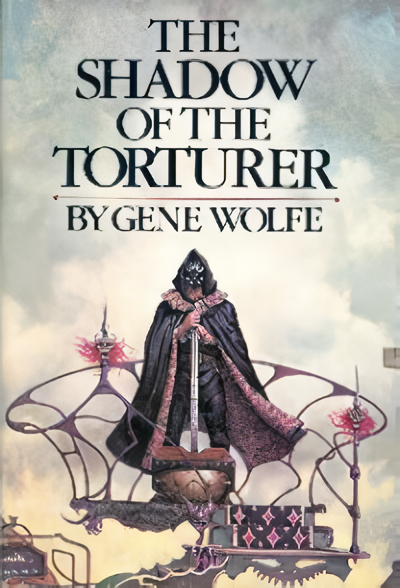
Simon & Schuster published The Shadow of the Torturer in May 1980. It is the first of four volumes Wolfe wrote as a continuous work called The Book of the New Sun, followed by The Claw of the Conciliator, The Sword of the Lictor, and The Citadel of the Autarch. The Urth of the New Sun later served as a coda.
The novel won the World Fantasy Award and the British Science Fiction Association Award and was a finalist for the Nebula Award. This article follows the standard 35-chapter English-language text and treats the volume as an intentionally incomplete part of the larger sequence.