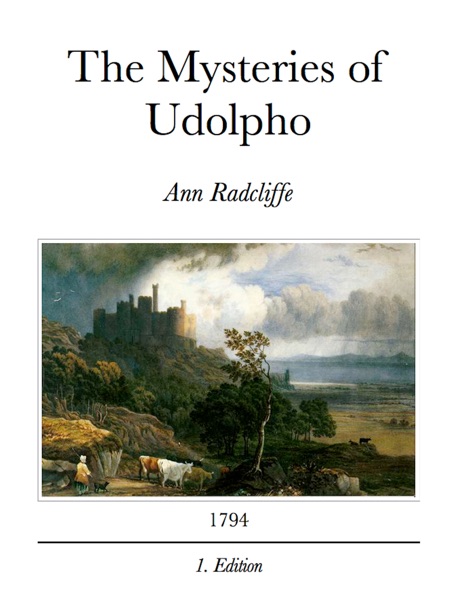
The Mysteries of Udolpho is famous for dark passages, veiled objects, mysterious music, and a persecuted heroine, but its emotional foundation is established before the castle appears. Emily St. Aubert's life at La Vallée, her bond with her parents, and her love of landscape make home and cultivated feeling tangible values. Udolpho frightens because it violently removes her from that moral and aesthetic world.
Radcliffe's method is suspense through partial information. Doors, rumors, distant voices, interrupted documents, and mistaken sightings continually invite supernatural explanations, while Emily's reason struggles against a highly responsive imagination. The eventual natural explanations do not simply cancel the fear; they show how criminals exploit obscurity and how grief makes the mind vulnerable to patterns it cannot yet verify.
The novel is very long and often pauses for travel description, poetry, and secondary histories. Those delays can frustrate readers seeking modern thriller pacing, but they also create its distinctive rhythm of expansion and enclosure. Mountains and seacoasts open the self toward sublimity, while Montoni's architecture and coercion try to reduce people to property.
Emily's virtue sometimes conforms to restrictive eighteenth-century ideals of feminine delicacy, yet she repeatedly withstands isolation, refuses forced marriage, protects legal rights, and survives without adopting Montoni's hardness. Her final happiness depends not on feeling less, but on learning when feeling reveals truth and when it requires evidence.