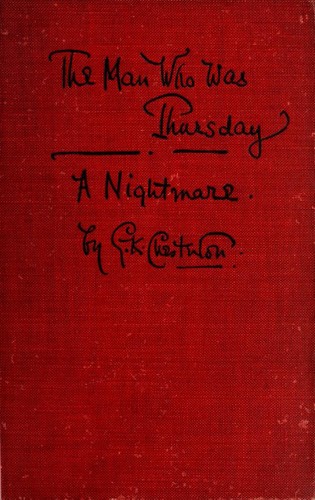
The Man Who Was Thursday is often introduced as a detective fantasy, but its real structure is a sequence of reversals. Gabriel Syme infiltrates an anarchist council, then discovers one apparent enemy after another is also a police detective. Each revelation turns danger into absurd fellowship while making the council's unseen president, Sunday, more incomprehensible.
Chesterton's London is visually unstable: sunsets resemble apocalypses, respectable streets conceal underground rooms, and pursuit expands through France before becoming a pageant. The exaggeration is the point. Syme experiences ordinary existence as a miraculous order constantly threatened by chaos.
Syme experiences ordinary existence as a miraculous order constantly threatened by chaos.
The politics are caricature rather than analysis. Anarchism represents metaphysical disorder, and the police are recruited defenders of creation. Readers looking for realistic ideology will find the book evasive, but readers open to dream logic will find its comic momentum unusually disciplined.
The ending refuses a single key. Sunday seems to be police chief, creator, persecutor, host, and mystery at once. Gregory's accusation about suffering prevents the finale from becoming an easy celebration of authority.