The Book in Brief
Lik-Rifa moves to dominate Vigrið while the surviving warbands gather around Ulfrir and the powers still able to oppose her. Orka opens the book in chains, tortured by the rat-god Rotta for Ulfrir's whereabouts, and fights her way back toward the son who escaped without her; Varg holds to the Bloodsworn as losses make every remaining bond weightier; Elvar leads while accepting that Ulfrir is an ally with a will of his own. Campaigns across land and sea burn away the refuges, former enemies unite against a common subjugation, and the climactic battle sets gods, Tainted warriors and human shield walls against the dragon. Lik-Rifa is defeated at terrible cost, and the survivors choose their communities over the identities imposed on them.
Important Characters
Orka: A mother and warrior seeking to secure Breca’s future rather than merely avenge the past.
Varg: A Bloodsworn warrior whose final choices complete his movement from bondage to chosen belonging.
Elvar: A leader forced to turn possession of divine power into a difficult alliance.
Breca: Orka’s son, whose god-touched importance makes him both target and participant.
Ulfrir: The wolf god and principal counterweight to Lik-Rifa.
Lik-Rifa: The dragon god whose promised order depends on conquest and submission.
Glornir and Vol: The Bloodsworn leaders carrying the warband through its final losses.
Biórr and Guðvarr: Figures whose earlier betrayals and self-interest continue to shape the war’s personal consequences.
What to Remember from the Previous Book
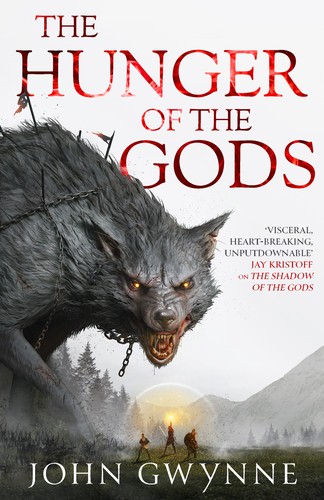
The Fury of the Gods directly follows The Hunger of the Gods. The new volume assumes the earlier relationships, betrayals and world rules are already familiar. The book opens with a prose recap, "What Has Gone Before," placed ahead of chapter one.
Chapters 1–18: Gathering the Survivors
Chapters 1–4. The survivors count their losses and identify the forces still able to oppose Lik-Rifa.
Chapters 5–8. Orka works at her bonds and her captors' patience, with Breca somewhere beyond reach.
Chapters 9–11. Varg helps the Bloodsworn rebuild its fighting strength and emotional cohesion.
Chapters 12–15. Elvar negotiates with Ulfrir and discovers the limits of command over a god.
Chapters 16–18. News from across Vigrið turns scattered resistance into the beginning of a campaign.
Chapters 19–38: Alliances Under Pressure
Chapters 19–22. The coalition seeks ships, warriors and god-touched allies before Lik-Rifa can isolate them.
Chapters 23–26. An old rivalry threatens cooperation at the moment united action becomes essential.
Chapters 27–30. Varg undertakes a dangerous mission that proves his place among the Bloodsworn.
Chapters 31–34. Orka balances military necessity against the immediate duty to protect Breca.
Chapters 35–38. Elvar accepts that alliance with Ulfrir requires consent, risk and shared purpose.
Chapters 39–58: The Road to Lik-Rifa
Chapters 39–42. The allied companies move into territory controlled by the dragon god’s followers.
Chapters 43–46. A rescue or reconnaissance effort reveals the scale of the army waiting for them.
Chapters 47–50. The Tainted become decisive participants rather than prizes claimed by opposing sides.
Chapters 51–54. A betrayal collapses part of the coalition’s plan and forces improvised leadership.
Chapters 55–58. The viewpoint groups survive a costly engagement and continue because retreat offers no safety.
Chapters 59–76: War of Gods and Mortals
Chapters 59–62. The first major clash combines shield-wall tactics with destructive divine power.
Chapters 63–66. Varg chooses solidarity when fear and old hierarchy invite him to protect only himself.
Chapters 67–69. Elvar and Ulfrir coordinate despite the resentment built into their relationship.
Chapters 70–73. Orka confronts an enemy tied directly to Breca’s abduction and the death surrounding it.
Chapters 74–76. The allies gain ground at a price that makes victory feel increasingly like survival.
Chapters 77–93: The Last Battle and Its Cost
Chapters 77–79. The remaining forces enter the final confrontation with Lik-Rifa.
Chapters 80–82. Personal reckonings unfold inside the wider battle and close long-running betrayals.
Chapters 83–85. The gods’ struggle reaches a point where mortal choices determine which power can prevail.
Chapters 86–88. A major sacrifice breaks the apparent certainty of Lik-Rifa’s victory.
Chapters 89–91. The dragon god falls, leaving the survivors to confront grief rather than immediate celebration.
Chapters 92–93. Orka, Varg and Elvar choose the lives and communities they will carry beyond the war.
Ending Explained
Lik-Rifa’s defeat belongs as much to the mortal coalition as to Ulfrir — the saga’s argument is that gods set the scale of the crisis while ordinary loyalties decide whether resistance holds. The principal arcs close through choice: Varg can belong without being owned, Elvar can lead without pretending power carries no moral debt, and Orka can imagine motherhood as more than pursuit and vengeance. The casualties stay permanent, and that refusal to restore everyone lost keeps the victory from canceling the trilogy’s violence — remembrance becomes part of the survivors’ new identity.
Themes and Analysis
Freedom and Chosen Oaths. Varg’s arc distinguishes voluntary loyalty from the obedience forced on a thrall.
The Mortality of Gods. Divine beings are immense but not morally superior or beyond consequence.
Coalition. Victory depends on people who distrust one another accepting a common danger.
Grief as Memory. The dead remain present through the practices and promises of those who survive.
Leadership Without Ownership. Elvar learns that durable authority cannot rest entirely on capture and coercion.
Content Notes
This book contains sustained graphic warfare, deaths of major characters, threats to children, enslavement, coercive religion, animal violence, gore and traumatic grief.