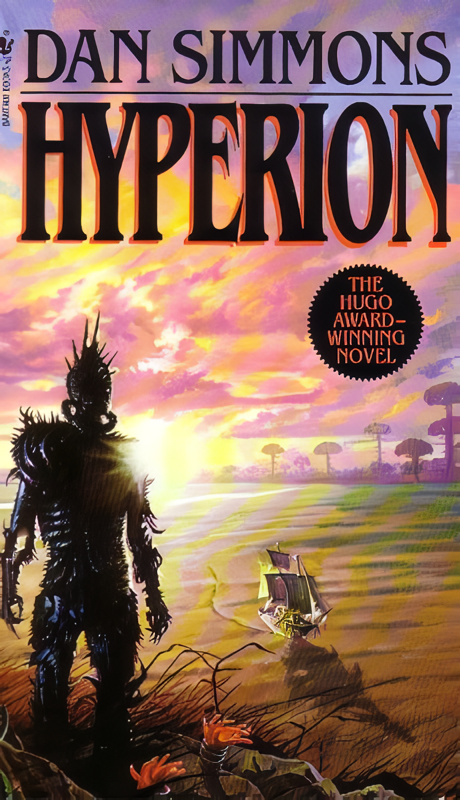
The abrupt ending makes Hyperion the first half of a larger narrative rather than a conventionally complete quest novel. The pilgrims have finished explaining themselves, but the pilgrimage has not reached its answer. The Fall of Hyperion continues the crisis and resolves many of the questions about the Tombs, the war, and the TechnoCore.
Their song is comic, frightened, and defiant. Like the travelers in The Wizard of Oz, the pilgrims approach a figure onto which they have projected incompatible hopes. The Shrike may be less a wish-granting god than the center of a system manipulating their desires. Singing together does not guarantee survival, but it establishes that they will not let the pilgrimage reduce them to six competing sacrifices.
The Consul's confession also changes the frame. The crisis is not something that merely happened to the pilgrims; one of them helped cause it. He betrayed the Hegemony to the Ousters, then shot the Ouster scouts when they came and triggered the device himself, so his revenge served neither side and endangered worlds that never consented to it. The group continues with him because every tale has revealed some mixture of guilt and victimhood. No pilgrim arrives morally pure.