Hadrian's proposal matters because it rejects the empire's preferred categories. The Cielcin are enemies, the Chantry is truth, and a noble's duty is obedience. By treating prisoners as possible speakers and ruins as possible evidence, he makes interpretation an act of political rebellion.
The journey to Vorgossos also repeats Hadrian's original escape in a more mature form. He again leaves a powerful household for an uncertain destination, but this time he does not travel alone and does not imagine departure itself will solve his identity. His companions come from the arena, the court, and Valka's scholarship. The voyage carries the accumulated consequences of Emesh with it.
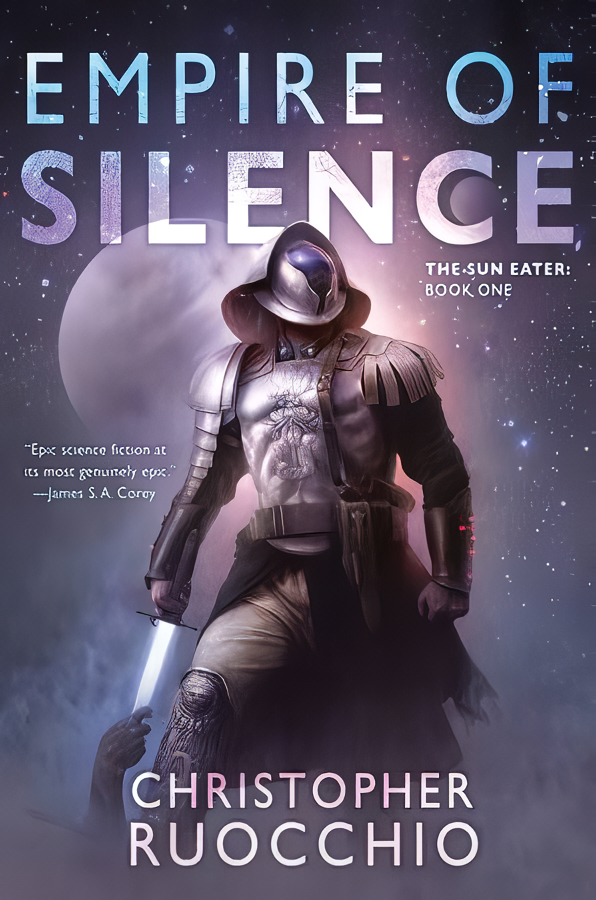
Sir Olorin's highmatter sword is both weapon and recognition. Hadrian has not yet earned the grand titles announced by the memoir, but someone connected to powers beyond the immediate imperial court has judged him worth investing in. The gift pulls his private story into galactic politics.
Most importantly, the reader knows the peace mission cannot prevent the catastrophe. Hadrian will become the Sun Eater. The point is not that his hope is naïve; it is that the man later capable of annihilation once risked everything on communication. The distance between those two choices is the story the rest of the series must explain.