The Book in Brief
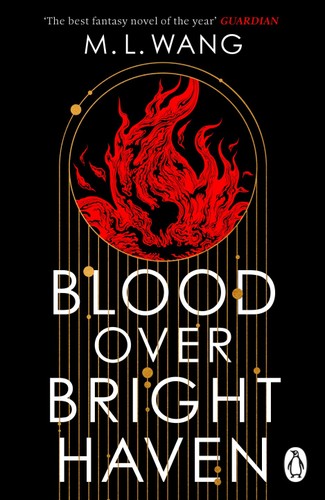
The novel follows Sciona’s rise into the High Magistry and her partnership with Thomil. Their research proves that Tiran’s magic redirects life from outside the city, causing the Blight that destroys Kwen communities. The Magistry has concealed this extraction behind religion and technical secrecy. When reform proves impossible, Sciona uses the system against itself and dies breaking its power, while Thomil and Carra survive with knowledge that may make a different future possible.
Important Characters
Sciona Freynan: the first woman admitted as a highmage, brilliant and deeply invested in the system that excludes her.
Thomil: a Kwen survivor whose knowledge exposes the human cost hidden inside Tiranish magic.
Carra: Thomil’s niece, survivor of the Crossing and embodiment of the future he is trying to protect.
Archmage Bringham: Sciona’s longtime mentor and patron, later revealed to have always known what Tiran’s magic consumes.
Sciona’s family: beneficiaries of her success who resist the truths that would make that success morally costly.
Chapter 1: A Field of Flowers
Thomil carries young Carra through the Blight into Tiran after the rest of their Kwen family dies during the Crossing.
Chapter 2: A Woman Wanting
Sciona prepares for the High Magistry examination, determined to become its first female highmage despite open institutional contempt.
Chapter 3: Freynan the First
Sciona’s brilliant practical examination wins her the robe and title, but her examiners make clear that admission will not mean acceptance.
Chapter 4: Just a Joke
At the Magistry, male colleagues treat Sciona as a joke and use custom, workspace and social exclusion to reduce her achievement.
Chapter 5: Just a Drink
Sciona drinks with colleagues and discovers that apparent friendliness can conceal humiliation and a campaign to keep her professionally isolated.
Chapter 6: Suited to Serve
To humiliate her, Sciona’s colleagues assign the Kwen janitor Thomil as her lab assistant instead of a qualified mage, creating an unwilling partnership across Tiran’s racial hierarchy.
Chapter 7: Web Weaver
Sciona develops ambitious spellwork while Thomil’s intelligence and practical insight begin contradicting her assumptions about Kwen inferiority.
Chapter 8: Rune Reader
Thomil learns to read spellographs and identifies patterns that Sciona’s formal education has taught her not to question.
Chapter 9: Witch’s Well
Investigation of the magical grid leads them toward the forbidden source of Tiran’s power and the religious stories used to conceal it.
Chapter 10: Far Afield
Work outside the protected center exposes the physical relationship between Tiran’s prosperity, the Blight and Kwen suffering.
Chapter 11: Common Cursework
Sciona tests ordinary spells and discovers that energy is not created by mapping; it is redirected from living sources elsewhere.
Chapter 12: Death of the Divine
The pair realize that celebrated Tiranish magic kills distant people, animals and landscapes, turning divine progress into systematic extraction.
Chapter 13: The Alchemy of Energy
Sciona’s technical understanding of spell power expands, but accepting it would implicate her career, family and every achievement she values.
Chapter 14: Cold the Crossing
Thomil recounts the Crossing and the deaths that brought him and Carra to Tiran, making the cost of magic personal and undeniable.
Chapter 15: The Truth
Sciona confirms the hidden mechanism and understands that the Magistry has preserved the truth through restricted knowledge and theological control.
Chapter 16: The Taking
Renthorn corners Sciona in the library and Thomil intervenes; to save him from the mages’ retaliation, Sciona publicly fires him, proof that the institution will protect the system rather than reform it.
Chapter 17: Girl Talk
Sciona tries to confide in women close to her, but gender solidarity fails when comfort and racial hierarchy are placed at risk.
Chapter 18: Feast and Family
A family gathering exposes how completely Sciona’s relatives value her exceptional status only when it does not threaten Tiran’s moral story.
Chapter 19: Mage’s Mirror
Confronted with her own reflection in the institution, Sciona accepts that individual success inside an exploitative system cannot count as liberation.
Chapter 20: Made Monstrous
The Magistry brands Sciona and Thomil dangerous, using racist and sexist narratives to convert whistleblowers into monsters.
Chapter 21: Damsel and Demon
Sciona moves from seeking recognition to planning destruction of the magical infrastructure, while Thomil weighs justice against the lives at risk.
Chapter 22: Hope in Hellfire
Their final plan uses the Magistry’s own power against it; hope depends on exposing truth even when no clean, harmless remedy exists.
Chapter 23: Out of Oblivion
Sciona sacrifices herself to break the system and reveal its cost, leaving Thomil and Carra alive to carry the truth into an uncertain future.
Ending Explained
Sciona’s final act is both atonement and attack. She cannot return the lives consumed by Tiran or remove her own complicity, but she can make continued ignorance impossible. Her death prevents the ending from becoming a simple story of personal enlightenment. Thomil and Carra inherit possibility rather than safety: the old system is damaged, the truth is exposed, and the people most harmed by it must decide what justice can be built afterward.
Themes and Analysis
Institutional sexism. Sciona's every achievement is doubled by the labor of proving she deserves the room she is standing in, and the Magistry's courtesy never quite conceals that it would prefer her gone.
Colonial extraction. Tiran's prosperity is literally siphoned from the Kwen beyond its walls, making the city a machine for converting other people's lives into comfort.
Knowledge controlled as power. The Magistry guards its magic as scripture and technical secret at once, because an institution that owns the truth can decide who is allowed to suffer for it.
Complicity and moral awakening. Sciona's horror is sharpened by the fact that she built her career inside the system she comes to condemn, and the novel refuses to let her — or the reader — off that hook.
Sacrifice without moral purity. Her final act is atonement and attack at once; it damages the system without cleansing her, and the book insists that is the most honest ending available.
Content Notes
This book contains racism, sexism, mass death, child endangerment, colonial violence, magical body horror and suicide/sacrificial death.