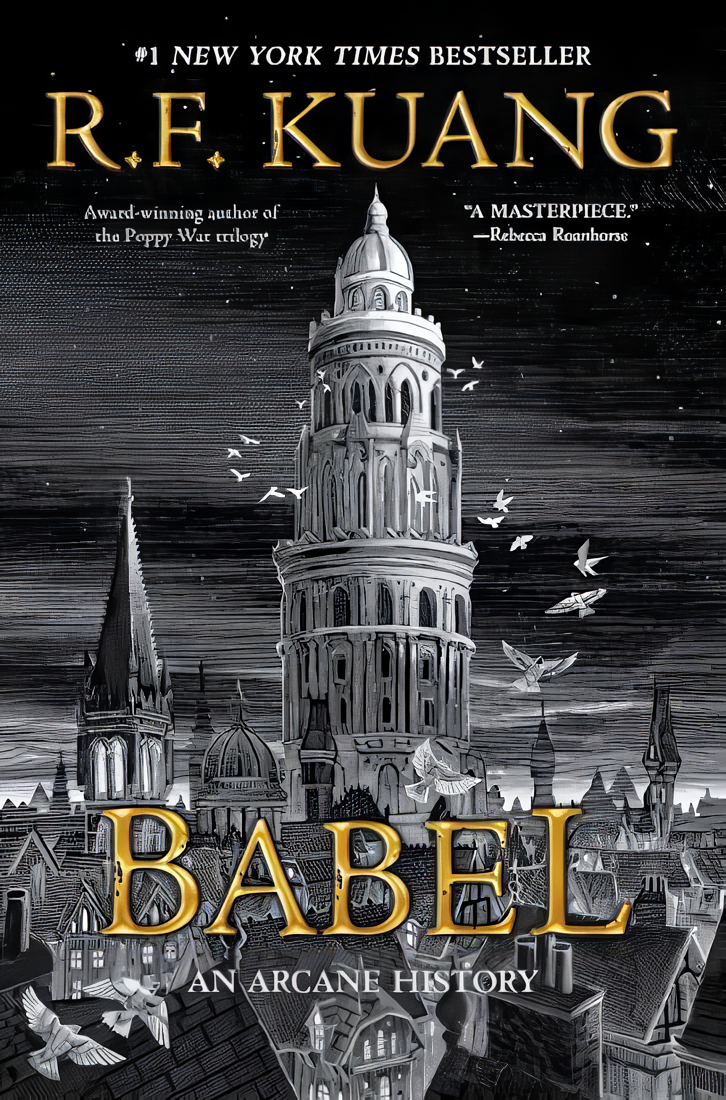
Robin destroys Babel by exploiting a contradiction at the heart of translation. The word "translate" refers both to carrying meaning across languages and to the impossibility of carrying it across without change. Engraved as a match-pair, that contradiction makes silver consume itself. By distributing the bars through the tower, the remaining strikers create a chain reaction that destroys Babel and the resonance system connected to it.
The immediate objective is strategic. Britain depends on Babel's stored silver, scholarship, and resonance rods for transport, industry, communications, weapons, and naval power. Their destruction makes the planned war with China far more difficult and gives colonized nations time to resist. The ending does not promise that Britain will abandon empire. Knowledge survives elsewhere, officials can rebuild, and military power existed before Babel. Robin buys an interruption rather than permanent liberation.
His death is also personal. Robin has come to believe that the institution which shaped him can be defeated only by consuming him with it. He is motivated by genuine political necessity, but also by guilt over Lovell, Ramy, Griffin, the civilians killed during the strike, and his earlier betrayals. Victoire recognizes that distinction. She accepts the need to destroy Babel but refuses Robin's belief that her own life has no claim on her.
That choice makes the epilogue essential. If every revolutionary dies in the tower, the state can reduce the uprising to criminal madness. Ibrahim's account escapes with Abel, while Victoire preserves a living memory of the revolt and remains capable of joining future resistance. Robin's sacrifice removes a weapon from the empire; Victoire's survival protects the meaning of what happened.
The final return of Robin's forgotten Chinese name completes his emotional arc. Lovell renamed him, trained him, and made English achievement the condition of safety. Babel then transformed his multilingual identity into imperial property. At death, the voice of his mother represents a self that existed before those institutions claimed him. The novel deliberately withholds the name from the reader, preserving it from one final act of translation and possession.