Where The Fifth Season left us
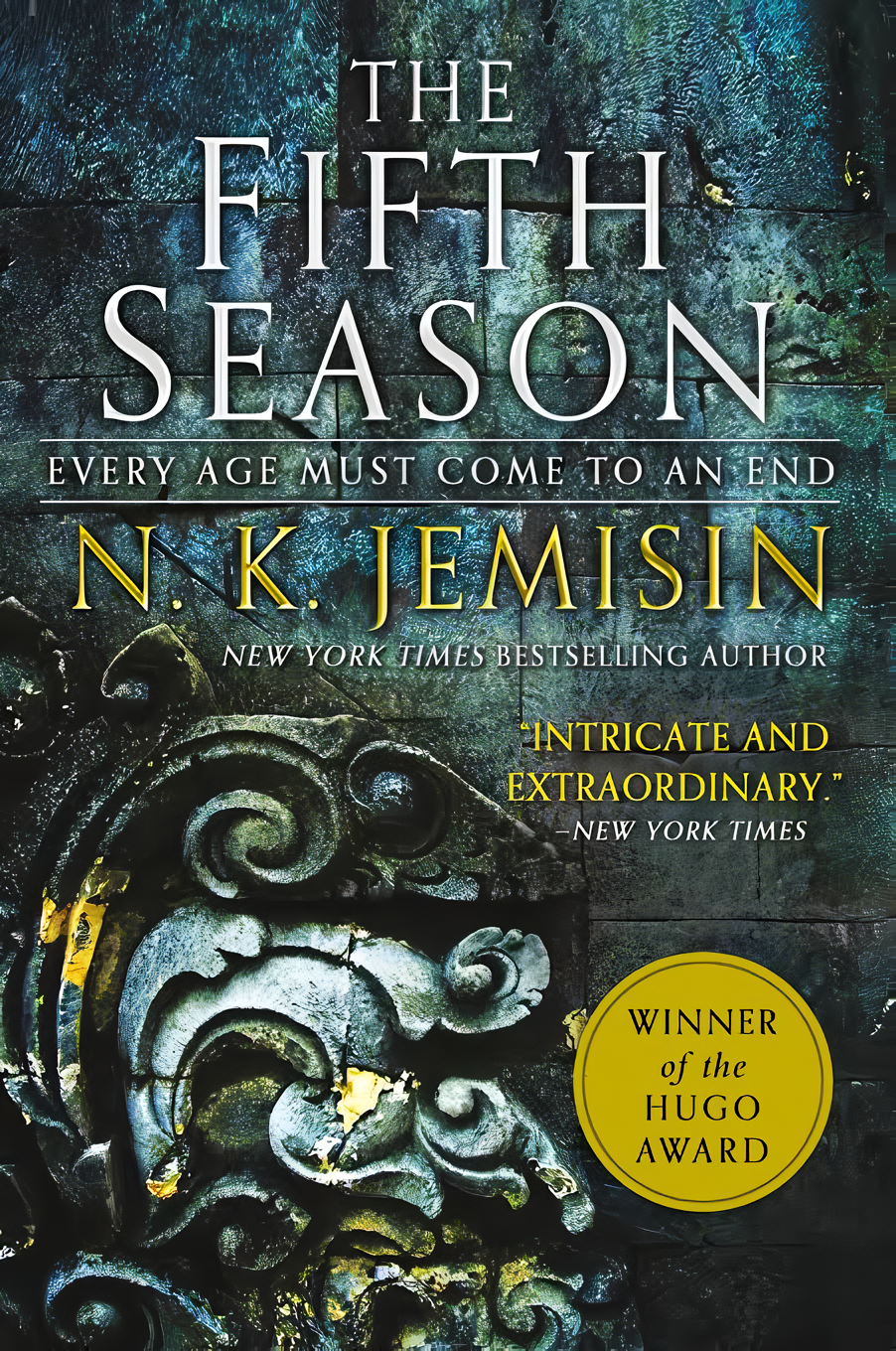
The Fifth Season ended by pulling its central rug: the three women we'd been following — Damaya the frightened girl, Syenite the resentful Fulcrum orogene, and Essun the grieving mother — are one woman at three points in a single, battered life. The book closed with Essun arriving at Castrima, a comm built inside an enormous hollow geode and led, astonishingly, by an out orogene named Ykka. There she found Alabaster — her old mentor, lover, and the most powerful orogene alive — slowly turning to stone. He confessed that he had deliberately torn the continent open at Yumenes, triggering the apocalyptic Season now smothering the world, and asked Essun a question that reframed everything: had she ever heard of the thing called a moon?
We also learned who had been narrating Essun's story in that unnerving second person: Hoa, the strange pale child who accompanied her, revealed to be a stone eater — one of the ancient, statue-like beings who move through rock and eat stone. And hanging over all of it was the wound that set Essun walking in the first place: her husband Jija, discovering their toddler son Uche was an orogene, beat him to death and fled south with their daughter Nassun.
The Obelisk Gate picks up in that exact moment — and finally lets us follow Nassun.
How the book is structured
Where The Fifth Season braided three timelines, The Obelisk Gate runs two present-day threads side by side:
- Essun's thread, told in the same intimate second person, because Hoa is telling Essun her own story. Essun stays in Castrima, learns from the dying Alabaster, and reckons with a comm on the edge of civil war.
- Nassun's thread, told in third person, following Essun's roughly ten-year-old daughter south to a place called Found Moon. A handful of chapters also enter the point of view of Schaffa, the Guardian who once trained Damaya and now looms over Nassun.
The novel runs twenty numbered chapters broken up by four short interludes in Hoa's voice, with no prologue and no epilogue — it opens cold on "Nassun, on the rocks" and ends on "Nassun, faceted." The dedication sets the key: to those who have no choice but to prepare their children for the battlefield.
The two threads are not synchronized in time. Nassun's story starts on the day Uche dies and then leaps roughly a year ahead; Essun's picks up where book one stopped. The timelines only click into the same moment at the very end.
Important Characters
Essun: The orogene protagonist, who spends the book inside the geode comm of Castrima, learning from the dying Alabaster while still intent on finding her daughter. She masters the silver threads of magic, and at the climax opens the Obelisk Gate, petrifying every living person in Rennanis at the cost of her right arm turning to stone.
Nassun: Essun's roughly ten-year-old daughter, a prodigy perhaps more naturally gifted than her mother, taken south by her father in search of a supposed cure for orogeny. At Found Moon she blossoms under Schaffa's care, annihilates the Antarctic Fulcrum, turns her murderous father to stone, and ends the book drawn toward Steel's plan to crash the Moon into the world.
Alabaster: Essun's onetime mentor and lover, the most powerful orogene alive, who tore the continent open at Yumenes and is now calcifying piece by piece. He passes on the truth about magic, Father Earth, the lost Moon, and the Obelisk Gate, then dies stopping Essun's rampage on the night Castrima turns on itself.
Schaffa: The Guardian who once trained Essun, his memory mostly erased after he nearly drowned at Meov, now the founder of Found Moon at the comm of Jekity. The corestone in his skull carries Father Earth's will and keeps urging him to kill Nassun, yet his tenderness toward the girl is real and he becomes her fiercest protector.
Hoa: The stone eater who narrates Essun's story, still wearing the shape of a strange pale child when the book opens. After the gray envoy leaves him dismembered, he regrows inside a crystal cocoon and emerges as a figure of black marble, then repeatedly saves Essun during the Battle of Castrima.
Jija: Essun's husband and Nassun's father, who beat his toddler son Uche to death upon learning the boy was an orogene, then fled south with Nassun chasing a rumored cure. Never able to love the daughter he actually has, he finally attacks her with a knife, and she turns him to stone with the sapphire obelisk.
Steel: A wholly gray stone eater who delivers Rennanis's terms to Castrima while carrying Hoa's severed arm, demanding the comm's orogenes be given up to die. He later applauds Nassun's destruction of the Antarctic Fulcrum and begins steering her toward dropping the Moon onto the Earth to end all suffering.
Ykka: Castrima's leader, an orogene living openly, who ropes Essun onto the comm's ruling council. She executes Cutter with her own hands to defuse a mob, puts Rennanis's offer to a comm-wide vote, and during the battle teaches Essun the cooperative art of yoking orogenes together into one network.
Tonkee: The eccentric geomest who holes up in Castrima's ancient control room, where she grabs a rusted iron needle that burrows into her arm. Essun can only save her by using magic to amputate the limb.
Antimony: The stone eater who attends the dying Alabaster, consuming each part of him as it turns to stone. After his death she bears his body away, leaving Essun his rings and word that the onyx is the key, and she remakes him as a stone eater of pale alabaster.
Lerna: Castrima's healer, to whom Hoa carries the unconscious Essun after the battle and the opening of the Gate. Hoa quietly admits to Lerna that Essun will insist on chasing after Nassun.
Uche: Essun's toddler son, beaten to death by Jija upon the discovery that he was an orogene, the killing that set Essun walking. His death launches both threads, driving Essun's search northward while Nassun's story begins on the very day he dies.
Eitz: The oldest orogene boy at Found Moon. When he tries to wake Nassun from a nightmare while she is connected to an obelisk, she lashes out reflexively and turns him to stone, deepening the rift between her and Jija.
The Essun Thread — Castrima, Alabaster, and the Obelisk Gate
Settling in, and the question of the moon
Essun's story resumes with Alabaster's two questions still hanging: can she summon an obelisk, and does she know what a moon is. Sent up to Castrima's surface (which requires her to negotiate with Ykka, who promptly ropes her onto the ruling council), Essun reaches for the obelisks — and instead of the modest topaz Alabaster expected, the massive onyx answers her call. It's the first sign that her raw capacity outstrips even his expectations.
Essun keeps insisting Castrima is just a waystation on the road to finding Nassun, but she sinks roots anyway: she can live here without hiding what she is. She's pressed into training the comm's untrained orogene children, using the same brutal Fulcrum methods that were used on her — and that she used on Nassun. Alabaster is contemptuous; he thinks she's wasting the little time he has left. That time is short: every time he uses his power, more of him calcifies, and the stone eater Antimony consumes the pieces. But what he teaches cracks the whole magic system open.
Orogeny versus magic — the deeper power
Alabaster's central lesson: orogeny and "magic" are not the same thing. Orogeny — the Fulcrum's discipline of sensing and redistributing heat, pressure, and motion by reaching down into the earth — is only the surface. Beneath it lies magic: threads of silvery energy running through every living thing, through the earth, and through the obelisks, connecting all of it. Reaching up to the obelisks and working those silver threads is a fundamentally more powerful and more dangerous mode. Far to the south, Nassun is discovering the same silver on her own, without anyone to name it for her — a quiet, devastating rhyme.
Alabaster finally tells his story. After Antimony dragged him into the earth at Meov, she took him through the planet to Corepoint, a dead-civilization city on the far side of the world, built over a bottomless bore-hole drilled toward the core. There he learned the shape of the real conflict: Father Earth is a literal, conscious entity — and its enemy is humanity. Long ago, people drilled into the planet to harvest its power and, in doing so, flung the Moon out of orbit. The Earth has hated humanity ever since, and the Fifth Seasons are its long revenge. The obelisks are leftover machinery from that ancient project.
And here is the plan Alabaster set in motion: linked into a single network — the Obelisk Gate — the obelisks can channel enough power to catch the wandering Moon and return it to orbit, which would finally end the Seasons. Breaking the continent at Yumenes wasn't nihilism; it was step one, generating the raw energy such an act would require. But using the Gate once has crippled Alabaster, so he can't finish it. He needs Essun to become the one who can.
Back in the comm, the danger deepens: Tonkee, the eccentric geomest, holes up in Castrima's ancient control room, and when she grabs one of the rusted iron needles there, it burrows into her arm. Essun saves her only by amputating the limb with magic. Those needles, we come to understand, are kin to the corestone implanted in every Guardian's skull.
The interludes: Hoa unmasked
Between chapters, Hoa's interludes make the frame explicit. He confirms he is the narrator speaking to Essun, and sketches a slow, ancient war with sides only beginning to come into focus. He admits there is a schism among stone eaters — that he is an "old one," that a rival faction has old ones of its own, and that orogenes like Essun are the weapons everyone is fighting over. In one chilling aside, he confesses that in some sense he has already betrayed her, and that her death may be necessary to his aims — even as his attachment to her plainly deepens.
Rennanis, the enemy stone eaters, and Hoa's rebirth
Six months on, the comm's fragile equilibrium collapses. A rival Equatorial comm, Rennanis — conquering its way south during the Season, its offensive backed by a faction of stone eaters opposed to the moon plan — sends an envoy: a completely gray stone eater who materializes inside Castrima holding Hoa's severed arm. His terms are blunt: the stills of Castrima may join Rennanis, but the orogenes must be handed over to die.
Essun finds the rest of Hoa dismembered in her room. She feeds him the last of the strange stones he's carried since book one, and he reconstitutes himself, gestating in a crystal cocoon and emerging in his true form — a figure of black marble, no longer wearing the child's face. Essun recognizes him: he is the stone eater she, as Syenite, glimpsed inside the buried garnet obelisk at Allia years ago. He explains the factional split among stone eaters and confirms the Rennanis-aligned ones want all orogenes — especially her and Alabaster — dead.
The night everything breaks — Alabaster's death
Ykka calls a comm-wide vote on Rennanis's offer, and the night before it, Castrima tears itself apart. An orogene named Cutter kills a still; a mob forms; Ykka executes Cutter herself to defuse it. Then a still woman moves to beat an orogene child — and Essun, seeing Jija and Uche in the tableau, snaps and turns the woman to stone. She's spiraling toward killing everyone in reach when Alabaster intercepts her power to stop her — and the effort finishes him. He turns completely to stone. Antimony collects his body, leaving Essun a final gift: the rings he made for her, and the message that the onyx is "the key."
Essun puts on the rings, takes up Alabaster's spinel obelisk-shard like a knife, and destroys the comm's ballot box with the line that becomes the book's thesis: "No voting on who gets to be people." She has, in effect, made herself Castrima's dictator — and vowed that Alabaster's death will mean something.
The Battle of Castrima and Essun's arm
Essun goes topside to reject Rennanis's terms and is immediately attacked — a Guardian she didn't know the enemy had drives a glass knife into her right arm, scrambling her orogeny; Hoa saves her by pulling her into the ground. As the army invades, Ykka teaches Essun to yoke multiple orogenes into a single network — the natural, cooperative version of what Alabaster once forced on Syenite — and together they drive a plague of boilbugs into the Rennanis soldiers. Then the enemy stone eaters strike, killing orogenes; Hoa again shields Essun and carries her to the surface.
There, holding the onyx, Essun does what Alabaster could not: she opens the Obelisk Gate, yoking a network of obelisks into a single instrument of nearly limitless power. She traps the attacking stone eaters in Castrima's crystals, and then — reaching across half the world — turns every living person in Rennanis to stone at once. In the same planet-wide moment of perception, she catches a trace of Nassun to the south, working her own obelisks: her daughter is alive, and powerful.
The cost is terrible and familiar. Opening the Gate has begun to turn Essun to stone, exactly as it did Alabaster; her right arm becomes solid stone. She passes out, glimpsing among the stone eaters a new one made of pale alabaster — Antimony has remade the dead Alabaster into a stone eater. Hoa carries her below to the healer Lerna. Castrima's geode is wrecked beyond repair, but Rennanis now stands empty of the living and full of food stores, so the comm has somewhere to go. Hoa quietly tells Lerna the truth: Essun will insist on going after Nassun.
The Nassun Thread — Found Moon, Schaffa, and the Death of Jija
On the road with Daddy
Nassun's thread rewinds to the day of Uche's murder. She comes home to find her little brother dead and her father standing over him — and, crucially, Jija does not kill her. Nassun, whose relationship with her harsh mother was already strained, is in some ways relieved to leave with him. But on the road she learns a brutal lesson in survival: Jija is terrified of what she is and could kill her in a flash of revulsion. So she performs. When Alabaster's shockwave hits, she quells it to save them both; when Jija's fear curdles, she looks up at him with wide eyes and calls him "Daddy." Her childhood effectively ends here — her affection toward her father becomes a mask worn to stay alive.
Jija is chasing a rumor: a place called Found Moon where orogeny can be "cured." They travel south for roughly a year through the worsening Season, Nassun icing hostile comms when they threaten the pair. Along the way she independently discovers the silver — the same magic Alabaster is struggling to teach her mother. When bandits ambush them and harpoon Jija, they're saved by, of all people, Schaffa — Essun's old Guardian, who has established Found Moon at a comm called Jekity.
Schaffa, forgotten
Schaffa's own chapters fill the gap. After Syenite shattered the boat at Meov, he was drowning when he let the entity inside his head — the source of a Guardian's power — take over to save him. The bargain cost him most of his memory; he washed ashore knowing little but his name. He drifted south on a half-remembered pull, discovering he could drain life-energy from people (fatal to stills, survivable for orogenes), and eventually founded Found Moon, a makeshift Fulcrum where he and two other "compromised" Guardians shelter — and train — a group of orogene children.
The horror at the center of Schaffa is the corestone: a needle-sized shard of iron at the base of his brain that grants strength, healing, and long life, but also carries the will of Father Earth. Resisting it causes constant pain, which is why Guardians smile so much — the smiling releases something that dulls the agony. Schaffa is fighting his corestone's directives, and his tenderness toward Nassun is real, even as the thing in his head keeps urging him to kill her.
Found Moon and a prodigy
Nassun is the most gifted orogene anyone at Found Moon has seen — quite possibly more naturally talented than her mother ever was. Schaffa takes a special, protective interest, and is haunted to learn that Essun broke Nassun's hand to test her control — the same thing he once did to Damaya. Nassun, for the first time, feels accepted for exactly what she is.
She keeps advancing, working the silver, reaching toward a nearby obelisk. Jija, who still believes she's being cured, grows suspicious and furious when he realizes none of the children are being "fixed." His renewed menace prompts Schaffa to move Nassun fully into Found Moon. Then it turns tragic: asleep and connected to an obelisk during a nightmare, Nassun lashes out when the oldest orogene boy, Eitz, tries to wake her — and turns him to stone. The rift between father and daughter widens toward breaking.
The Antarctic Fulcrum and the stone eater called Steel
Schaffa takes Nassun and another Guardian to the Antarctic Fulcrum, which — against protocol — was never shut down or purged at the Season's start. When the orogenes there refuse to submit, Schaffa begins killing their leaders; Nassun, outside and overcome with hatred, draws on the sapphire obelisk and turns the entire Fulcrum's population to stone. A survivor's words hand her a bitter revelation: her mother was cruel to her because the Fulcrum's cruelty had broken Essun first. On the way back she meets a gray stone eater she names Steel — the same envoy who menaced Castrima — who applauds the massacre and shows he has some power over the corestone in Schaffa's head.
Nassun's love for Schaffa drives her toward a dangerous mercy: she practices healing, then offers to remove the corestone that tortures him. Schaffa refuses — without it he'd lose his power, age, die, and be unable to protect her. She nearly does it against his will, then holds back.
Killing Jija, and Steel's offer
The two threads finally align. Nassun senses her mother's use of the Obelisk Gate far to the north and knows Essun is alive. Steel returns. And Jija comes for his daughter one last time, a knife in hand, unable to live with what she is. In the book's most heartbreaking beat, Nassun realizes there is no version of herself her father can love — he only wants the "normal" child that never existed — and that his hate cannot be talked down. When he attacks, she calls the sapphire obelisk, shapes it into a blade, and turns him to stone; he shatters. Her father's eye stares up at her from the rubble as Steel begins his recruitment.
Steel tells her the Moon is swinging back toward the world, that with the Gate she could nudge it, and he frames the choice in the language of total despair — that she'll kill everything she loves eventually, so why not end all suffering forever by bringing the Moon down onto the Earth. Nassun, hollowed out by a mother who hurt her, a father who tried to murder her, and a world that despises her, is exactly the vulnerable child such an argument is built for. The book leaves her leaning toward yes.
What the Ending Sets Up
By the last page, both mother and daughter can open the Obelisk Gate — and they want opposite things with it. Essun, carrying on Alabaster's plan, means to catch the Moon and restore it, to end the Seasons and, she hopes, save the world and her daughter. Nassun, guided by Steel toward nihilism, means to bring the Moon down and end everything. They're on a collision course, each learning the Gate independently, separated by half a planet. It's a devastating inversion of the reunion Essun has walked across a dying continent to earn: she's spent two books trying to reach a daughter who may become her enemy.
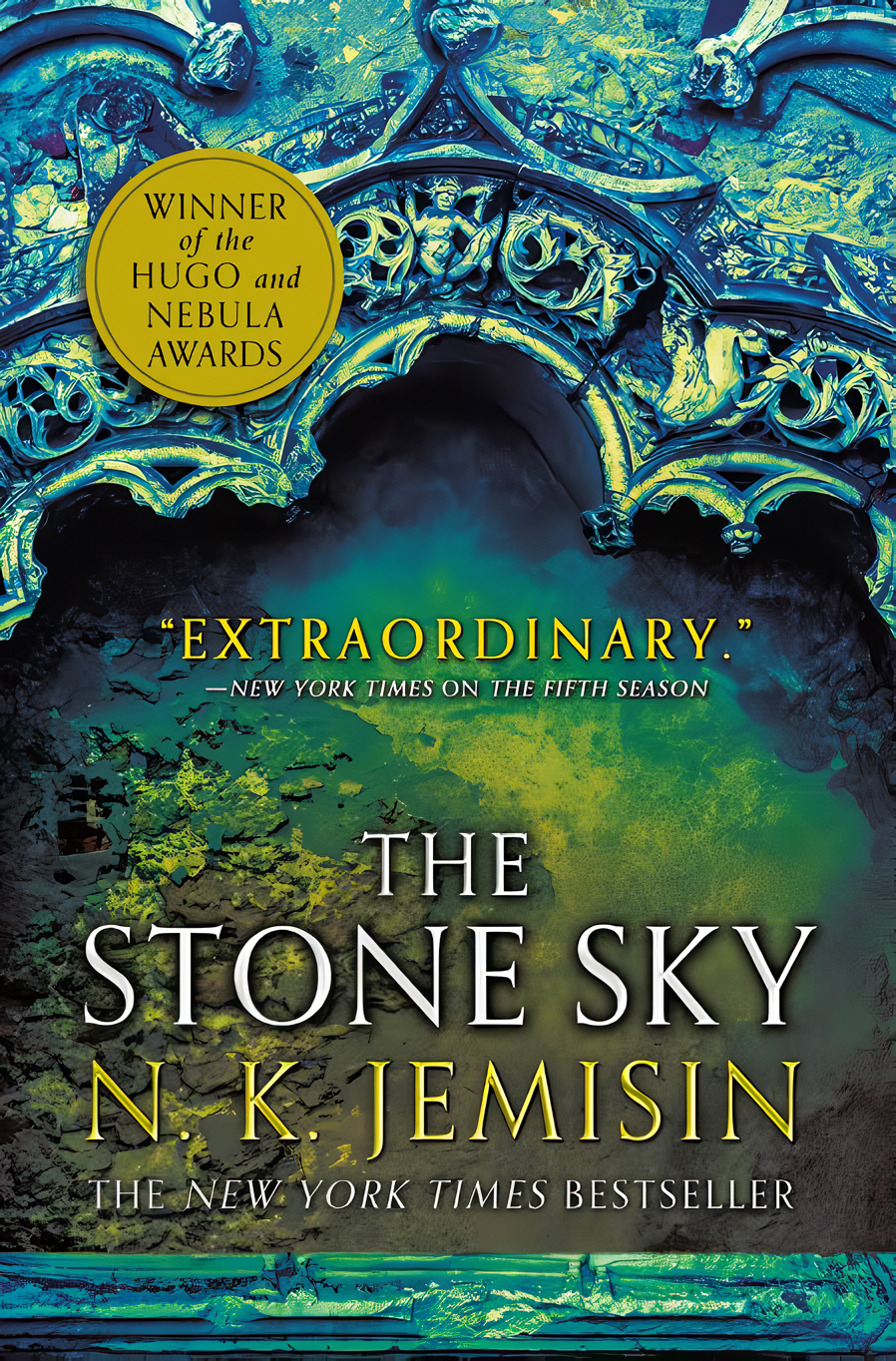
Hoa's interludes also gesture at a much older story — an ancient civilization, a war humanity started, the origin of stone eaters — that the final book, The Stone Sky, will unfold in full.
What the Book Is About
The Obelisk Gate takes the themes of The Fifth Season and turns them at a new angle.
It is, first, a study of how oppression reproduces itself. The trilogy's core allegory — orogenes as a despised, controlled, feared underclass whose gifts are exploited and whose personhood is denied — sharpens here into an examination of mechanism. Essun teaches Nassun and the Castrima children with the same violence the Fulcrum used on her, because it's the only pedagogy she was ever given. "No voting on who gets to be people" is the book's flat refusal of the logic that usefulness earns humanity.
It is a book about motherhood and its mirror. Book one was a mother searching for her child. Book two puts the daughter's point of view beside the mother's — and it plays as an indictment. From Nassun's side, Essun's protective harshness reads as abuse. The two women are becoming terrifyingly alike — both prodigies, both killers on a massive scale, both able to work the Gate — and are being aimed at each other. Jemisin refuses the sentimental version: a mother's love here is real and it can be a wound.
The most morally vertiginous relationship in the book is between an orogene child and the Guardian built to control her kind. Schaffa is a man who has murdered children, who once broke Essun's hand, whose head is colonized by a hostile god — and who genuinely, protectively loves Nassun, offering her the acceptance her parents couldn't. That his love is the best thing in her life, and that her susceptibility to it was manufactured by her own family's failures, is exactly the kind of knot Jemisin refuses to cut.
And the book asks, more directly than book one dared, whether the world deserves saving. With Father Earth revealed as a wronged, conscious victim and the Seasons reframed as justified revenge, the question sharpens: does a civilization built on genocide and enslavement have any right to continue? Essun says save it; Steel says burn it; Nassun isn't sure. That question — not a battle — is the real cliffhanger.
About the Book
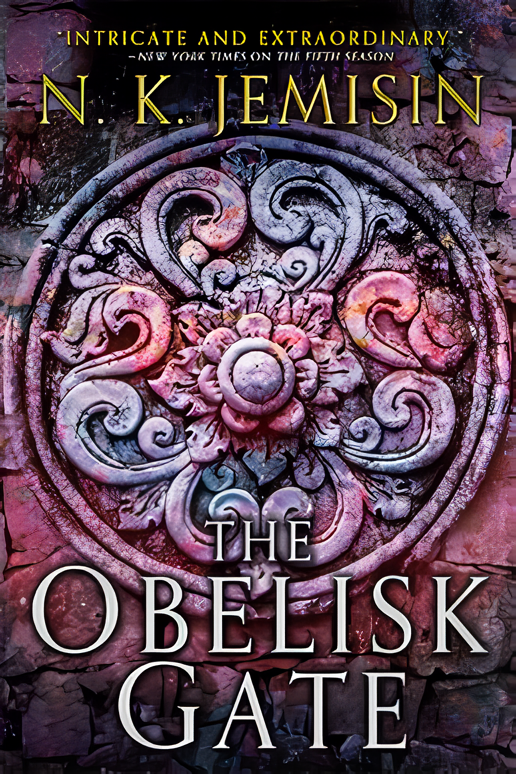
The Obelisk Gate is the second volume of N.K. Jemisin's Broken Earth trilogy, published August 16, 2016 by Orbit Books (448 pages), between The Fifth Season (2015) and The Stone Sky (2017). It won the 2017 Hugo Award for Best Novel — the second of Jemisin's three consecutive Best Novel Hugos. With the trilogy as a whole she became the first author to win the category in three consecutive years, and the first to win for all three books in a single trilogy. The Obelisk Gate was also a Nebula Award finalist.
Critical reception was strong, though some reviewers felt the middle volume slowed the trilogy's momentum, trading the structural fireworks of The Fifth Season for a more sedentary, setup-heavy story. The counter-view, widely shared, is that it is one of the rare middle books that deepens rather than treads water — the magic system, the cosmology, and the mother-daughter tragedy all expand here.
The trilogy concludes with The Stone Sky (2017), which brings Essun and Nassun's collision to a head, reveals Hoa's ancient origins in full, and resolves the question of the Moon. Jemisin has since become one of the defining voices in contemporary speculative fiction and a 2020 MacArthur Fellow.
Fair warning: the book contains the on-page death of a parent at a child's hands, child abuse, and sustained depictions of systemic violence, and that it is very much a middle volume — it assumes book one and sets up book three rather than standing alone.