Setting the Stage
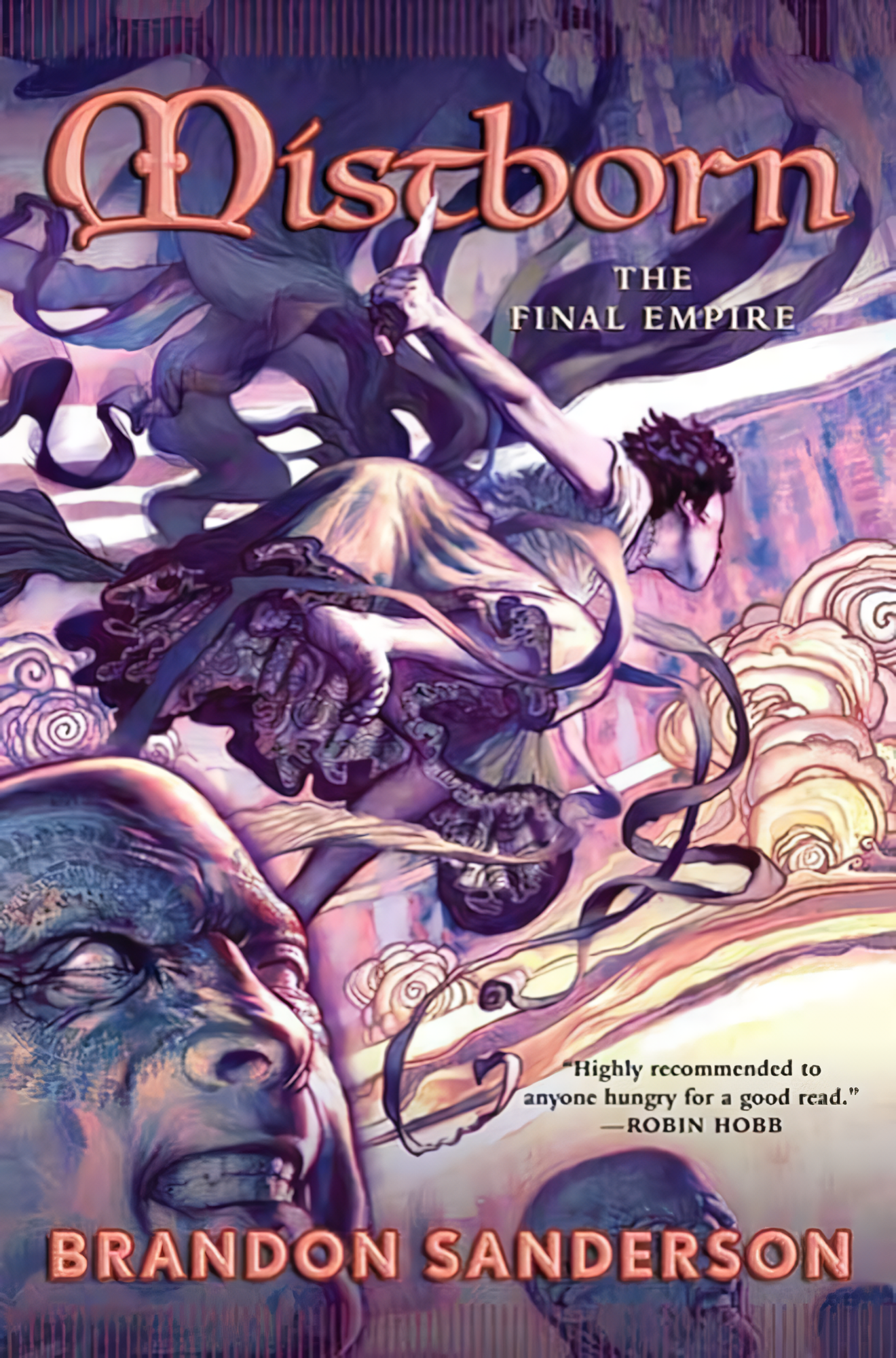
The Final Empire is Brandon Sanderson's second published novel and the book that launched the Mistborn saga and, with it, the larger Cosmere — Sanderson's interconnected shared universe of fantasy worlds. The premise is a deliberate inversion of classic epic fantasy: a thousand years ago, the prophesied Hero of Ages confronted a world-ending evil called the Deepness, and seemingly won. He then declared himself the immortal Lord Ruler and ground the world under his heel for the next millennium. The sun is red. Ash falls from the sky daily. Brown weeds are the only plants left. At night, a strange supernatural mist blankets the land, and the terrified peasantry — the skaa — refuse to leave their hovels.
Into this world Sanderson drops a heist crew, a half-skaa street urchin, and the audacious idea of robbing a god.
How the book is structured
The novel runs 541 pages in the original Tor hardcover, 38 numbered chapters plus a Prologue and Epilogue, divided into five named Parts:
Important Characters
Vin: A distrustful half-skaa street thief whose subtle Luck turns out to be full Mistborn power. Recruited by Kelsier, she infiltrates noble society as Lady Valette Renoux, and in the climax the mists themselves fuel her Allomancy as she rips the Feruchemical bracelets from the Lord Ruler's wrists and kills him with a wooden spear.
Kelsier: The famed Survivor of Hathsin, a charismatic Mistborn crewleader who plans to topple the empire by sparking a house war, stealing the atium reserve, and killing its god. He trains Vin, wrecks the crystal beds at the Pits, and deliberately lets the Lord Ruler strike him down in public, making his own martyrdom the spark of the skaa uprising.
The Lord Ruler: The immortal tyrant who has held the world for a thousand years and is worshipped as the Hero of Ages. He is really Rashek, the Terris packman who murdered the true hero Alendi at the Well of Ascension; an impossible combination of Mistborn and Feruchemist, he survives on stored youth until Vin tears his metalminds away.
Sazed: A calm Terrisman steward who is secretly both a Feruchemist and a Keeper, one of the order preserving the faiths the empire tried to erase. He tutors Vin in etiquette and religion, helps translate the logbook that reveals the Lord Ruler's origin, and risks everything to break her out of the Ministry's cells.
Elend Venture: The awkward, book-loving heir to Luthadel's most powerful house, who defies both court convention and his father. His growing bond with Vin unsettles everything she believed about nobles, and after the empire's fall he is named the new ruler of Luthadel.
Marsh: Kelsier's hard, embittered brother, a former Seeker who once led the skaa rebellion. He infiltrates the Steel Ministry as a spy, is presumed dead after an apparent Inquisitor attack, and reappears at the climax forcibly remade into an Inquisitor, yet still on Vin's side when it matters.
Dockson: Kelsier's best friend and right hand, a non-Allomancer with a gift for logistics who keeps the crew's sprawling operation running throughout the job.
Breeze: A foppish, manipulative Soother who helps recruit and steady the rebel army in the caves. He is the first to say aloud that the crew may be following a man who intends to die.
Hammond: A pewter-burning Thug fond of debating philosophy mid-fight. He spars with Vin during her training and drills the hidden skaa army in the Arguois caverns.
Clubs: A grumpy carpenter and powerful Smoker whose shop conceals the crew's safe house. He signs on after some hesitation and brings his nephew Spook into the crew.
Spook: Clubs's young Tineye nephew, who speaks a nearly indecipherable Eastern street dialect. He helps sharpen Vin's senses and is among the skaa rounded up for the mass execution that Kelsier turns into his final stand.
Yeden: The dour leader of the underground skaa rebellion who hires Kelsier's crew in the first place. Frustrated with the plan's pace, he marches the unready army out of the caverns too soon and dies along with thousands of rebels in a single afternoon.
OreSeur: A kandra bound by sacred Contract who wears the bones of the real Lord Renoux to sponsor Vin's cover in society. After Kelsier's death he appears wearing the Survivor's bones so the skaa believe their hero cannot die, and his Contract passes to Vin.
Shan Elariel: Elend's noble Mistborn betrothed, who moves to assassinate him at Keep Venture. Vin beats her in the book's first atium-against-atium duel by making her own actions unreadable to Shan's foresight, killing her with arrows.
Part One — The Survivor of Hathsin
(Prologue and Chapters 1–8)
Part Two — Rebels Beneath a Sky of Ash
(Chapters 9–15)
Part Three — Children of a Bleeding Sun
(Chapters 16–25)
Part Four — Dancers in a Sea of Mist
(Chapters 26–34)
Part Five — Believers in a Forgotten World
(Chapters 35–38 and Epilogue)
Each chapter opens with an epigraph from a mysterious journal whose authorship is one of the novel's central mysteries. (The reveal: those entries are not the Lord Ruler's. They are from Alendi, the man who was supposed to be the Hero of Ages a thousand years ago — and the Lord Ruler is actually Rashek, Alendi's Terris packman, who killed Alendi at the Well of Ascension and took the power himself.)
The Magic System
Sanderson's reputation for hard, rules-based magic begins here.
Allomancy lets an Allomancer swallow small flakes of pure metal and "burn" them internally for specific powers. Metals must be metallurgically pure; impure alloys poison the Allomancer or fail to ignite. The ability is hereditary and concentrated in the noble bloodlines — the descendants of those who supported the Lord Ruler at his Ascension — though it leaks into the half-skaa population through centuries of noble-on-skaa rape.
A Misting can burn exactly one of the eight base metals. A Mistborn, vanishingly rare, can burn all of them.
The eight base metals come in four push/pull pairs. Iron pulls nearby metals toward you; steel pushes them away (and lets a Mistborn leap and effectively fly by Steelpushing on coins and nails below). Tin enhances all five senses; pewter enhances strength, speed, balance, and toughness. Brass soothes other people's emotions; zinc inflames them. Copper creates a coppercloud that hides Allomancy from detection; bronze lets a user sense other Allomancers burning metals. Mistings named for each ability are called Lurchers, Coinshots, Tineyes, Thugs, Soothers, Rioters, Smokers, and Seekers respectively.
Two higher metals matter here: gold lets a user glimpse a version of their own past self, and atium lets a Mistborn see a few seconds into the future, making them nearly invincible in combat. Atium is mined only at the Pits of Hathsin and is the secret economy of noble-house politics.
Two other magic systems lurk at the edges of this book and become explicit later in the trilogy. Feruchemy is the hereditary Terris art of storing physical and mental attributes — strength, speed, age, memory, weight — inside metal "metalminds" for later withdrawal. Sazed is a Feruchemist. The Lord Ruler, secretly, is the most powerful Feruchemist who has ever lived. Hemalurgy, only hinted at here, steals abilities from one person and grants them to another by driving a metal spike through the heart. It's the secret behind the Steel Inquisitors and the spikes through their eye sockets.
Part One — The Survivor of Hathsin
Overview
The opening movement is a heist-crew assembly story crossed with an oppression-of-the-skaa setup. Sanderson establishes the cruelty of the Final Empire, recruits the team, and reveals that the prickly half-skaa street urchin at the center of everything is far more powerful than she realizes.
Prologue
On a remote plantation in one of the outer dominances, Lord Tresting and an obligator named Kresh look out over the working skaa beneath an ashfall sky. Tresting sees a skaa in the field smiling at him in defiance, but the man vanishes before he can be punished. That night, in the skaa hovels, the same man — Kelsier — sits among the workers, talking to an old skaa named Mennis, mocking the legends about mist, showing the brand scars on his arms that mark him as a survivor of the Pits of Hathsin. When a young skaa girl is dragged to Tresting's manor to be raped, Kelsier walks out into the mists, kills Tresting and his entire household, and burns the manor to the ground. The next morning the skaa learn the truth: a Mistborn — and not just any Mistborn, but the famed Survivor of Hathsin — is in their midst, and he is starting a war.
Chapter 1
In Luthadel, the capital, we meet Vin: a skinny, distrustful teenage half-skaa orphan living in the rat-warren lair of the criminal crewleader Camon. Her older brother Reen abandoned her months earlier, leaving her with a constant whispering memory of his abuse: anyone will betray you, Vin. Vin has what the crew calls "Luck" — a subtle ability to nudge people's emotions that she has used since childhood to help Camon's cons succeed. She accompanies Camon, who is impersonating a nobleman, to a meeting at the Canton of Finance to swindle the Steel Ministry on a transport contract.
Chapter 2
Kelsier returns to Luthadel for the first time in three years and reunites with his best friend and right-hand man, Dockson, a non-Allomancer with a head for logistics. They watch Camon and Vin's follow-up meeting from across the room and confirm that Vin is Soothing — she is a Misting, at minimum. Kelsier resolves to find her. As he leaves, a Steel Inquisitor emerges from the building: a creature with thick steel spikes driven straight through his eye sockets, "seeing" without conventional eyes. The Inquisitors, Kelsier realizes, are also on Vin's trail.
Chapter 3
Back at the lair, Camon flaunts the stolen money, then beats Vin nearly to death when another crewmember rats out her plan to flee. Kelsier and Dockson break in, intimidate the crew, demand Camon's payment as a "tax" for diverting an Inquisitor away from the lair, and order the rest of the thieves to make Camon a beggar. In private, Kelsier gives Vin a vial of metal flakes; she swallows it, and Kelsier walks her through burning each metal one by one. To his quiet delight, she can burn them all. Vin is a Mistborn.
Chapter 4
Kelsier convenes his planned crew at the lair. They are some of the finest underworld Allomancers in Luthadel: Breeze, a foppish, manipulative Soother; Hammond ("Ham"), a Pewter-burning Thug who quotes philosophy mid-fight; Clubs, a grumpy carpenter who happens to be a powerful Smoker; and Yeden, the dour current leader of the underground skaa rebellion, who has hired Kelsier for this job. Kelsier lays out the plan: stir a noble-house war that will tear Luthadel apart from above; recruit a secret skaa army of ten thousand in caves outside the city; rob the Lord Ruler's atium stockpile; collapse the empire's economy; and, in the chaos, kill the Lord Ruler himself. He reveals the Eleventh Metal — a small bar he claims to have found on a Terris pilgrimage, supposedly the Lord Ruler's only weakness.
Chapter 5
Clubs returns, having reconsidered, bringing his tin-burning Tineye nephew Spook, who speaks an indecipherable Eastern street dialect. Kelsier gives Vin her first mistcloak, the iconic tasseled garment of a Mistborn. That night he takes her out into the mists for her first real lesson, walking her through the eight basic metals, and the two of them end the night up on the Luthadel city wall.
Chapter 6
Kelsier brings Vin to the safe house above Clubs's carpentry shop and introduces her to Sazed, a tall, calm Terrisman steward in colorful robes who will accompany her as her servant during the noble-court infiltration. Sazed is more than he appears: he is a Keeper, a secret order of Terris religious historians who have memorized every faith the Lord Ruler tried to stamp out. He is also a Feruchemist.
Chapter 7
Kelsier's brother Marsh arrives — a hard, embittered former Seeker who has spent his life leading the skaa rebellion Kelsier just hijacked. The two argue bitterly about the death of Kelsier's wife Mare, the Pits, and the morality of using Yeden's people as pawns. Marsh agrees to take Yeden's old job: infiltrating the Steel Ministry itself as an obligator-in-training to feed the crew information about the Inquisitors.
Chapter 8
Kelsier begins Vin's Allomancy training in earnest — Steelpushes and Iron pulls off rooftops, sparring with Ham, sensory exercises with Spook, religious tutoring from Sazed. She is introduced to a kandra named OreSeur, a shapeshifting creature bound by sacred Contract who has eaten the bones and assumed the identity of the real Lord Renoux. The fake "Lord Renoux" will sponsor Vin's debut into noble society as his niece, Lady Valette Renoux.
Part Two — Rebels Beneath a Sky of Ash
Overview
The book shifts into its hybrid heist/courtly-intrigue gear. Vin learns to be a Mistborn at night and a noblewoman by day. The crew's twin operations — the skaa army in the caves and the political destabilization of the great houses — go into full swing. And Vin meets the noble boy who will quietly upend everything she thought she knew about Gold society.
Chapter 9
Kelsier takes Vin out of the city to Lord Renoux's estate in Fellise. Along the way she sees her first mistwraith — a writhing, boneless thing in the mists wearing the skeletons of dead animals. Renoux drills her in noble etiquette while Sazed teaches her dance, deportment, and three of the dead religions he carries in his copperminds.
Chapter 10
Kelsier offers Vin three thousand boxings to leave the crew if she wants. She stays — because she is curious, and because, for the first time in her life, no one is hitting her.
Chapter 11
Vin attends her first ball at Keep Venture, the most powerful noble house in the city. She is overwhelmed by the colored glass and the cathedral-like architecture. Her cover is plausible because no one expects a half-skaa Mistborn to be sipping wine in a ball gown.
Chapter 12
At the dinner table she meets Elend Venture, the awkward, book-reading heir to House Venture, who sits down at a state function and brazenly reads a book in front of her. He is charming, careless, badly behaved by court standards, and very obviously not the predatory noble Vin has been taught to expect. She is intrigued, then horrified at herself for being intrigued.
Chapter 13
The crew begins to plant rumors and forge documents calculated to convince each great house that another is secretly raising an army. Meanwhile Kelsier and Yeden recruit skaa fighters into the Arguois caverns outside Luthadel, where Ham drills them in arms. Vin attends a second ball at Keep Tekiel; rumor begins to attach itself to "Lady Valette."
Chapter 14
Kelsier and Vin break into Kredik Shaw — the Lord Ruler's palace — at night. Kelsier kills guards, Vin kills for the first time, and Inquisitors run them down; Vin survives only by burning atium. She Vin notices that he can pierce her coppercloud, an alarming hint that he is something more than a normal Mistborn. She also first feels a strange, low pulsing — like a distant drum — that she cannot identify. It is the Well of Ascension, sleeping under the city, and the trilogy's second book is named for it.
Chapter 15
At a third ball, Vin and Elend have their first long conversation about books and political philosophy. Vin returns to the safe house exhilarated, then immediately disgusted with herself for getting emotionally close to a noble. Sazed gently reminds her that her duty to the crew is to spy, not to despise.
Part Three — Children of a Bleeding Sun
Overview
The book's longest and slowest Part, by Sanderson's own design — intentionally the most character-driven section. The plan grinds forward, the romance ripens, and the foreshadowing about the Lord Ruler's true nature begins to seed.
Chapter 16
The crew settles into rhythm: Breeze and Ham recruit and Soothe rebel skaa in the caves; Marsh sends back reports from inside the Steel Ministry; Kelsier robs noble caravans on the canal routes to fund the war.
Chapter 17
Vin trains with Kelsier in atium use, briefly, and learns there are gaps in the publicly known laws of Allomancy. Kelsier reveals to Sazed in a private conversation that he intends to discover what the Lord Ruler is doing with the colossal amounts of atium being mined from the Pits — because the public stockpile is far smaller than it should be.
Chapter 18
Vin and Elend have their most important early conversation. Elend admits he has spent years discussing political reform with a small group of like-minded young nobles, but that none of them are planning revolution — they are talking. He then politely tells her, on his father's instructions, that he should not be seen with her again, since "Valette" is now politically suspect. The cold dismissal lands harder than she expects.
Chapter 19
Sazed teaches Vin about three religions — the Astalsi sky-color worship, the Truths of the Bennet, and the Valla — and Vin starts asking real questions about belief for the first time. Kelsier returns from a scouting run convinced that the Lord Ruler's palace, Kredik Shaw, is named in Terris, hinting that the immortal emperor's origin is far stranger than the official theology admits.
Chapter 20
The skaa army hits its first crisis: Yeden, frustrated by Kelsier's caution, begins agitating to use the troops sooner. Kelsier resists. Meanwhile, Vin attends another ball and pierces a Soother's coppercloud — something Allomancy is not supposed to allow. She begins to suspect that her bronze ability is exceptionally strong, but tells no one.
Chapter 21
The crew pulls off a major operation: stealing key shipments and forging letters to push House Hasting and House Erikell into open conflict.
Chapter 22
The first house-on-house Mistborn assassinations begin in Luthadel; the streets at night fill with leaping figures in mistcloaks. Vin sees, on a rooftop, the carnage of what a real Mistborn duel looks like.
Chapter 23
Kelsier and Vin visit Marsh in a skaa tenement only to find his blood on the walls and signs of an Inquisitor attack. They assume he is dead. They also find a note he left them claiming Inquisitors have a weakness — but Marsh never learned what it was. Kelsier is shattered; this is the closest thing in the book to him losing control.
Chapter 24
Ham, Breeze, and Dockson hold a quiet philosophical conversation about whether Kelsier is becoming a fanatic. Breeze says, half joking, half not, that they may be following a man who plans to die. The chapter is the first explicit hint that Kelsier's plan includes his own martyrdom.
Chapter 25
Kelsier rides out alone to the Pits of Hathsin and, using his memory of the layout from his imprisonment three years ago, destroys the crystal beds in which atium is grown. It will take the Lord Ruler decades to replace them. The atium economy of the noble houses — already fraying — is now mortally wounded.
Part Four — Dancers in a Sea of Mist
Overview
The book's emotional and narrative pivot. The house war erupts. The skaa army is destroyed. And Kelsier sacrifices himself to make a god out of his own death.
Chapter 26
House Hasting and House Elariel finally attack each other openly. Bodies fall from rooftops in the mists. The crew exults — until they realize the Lord Prelan of the Steel Ministry, Tevidian Tekiel (later revealed as Vin's biological father), has begun an internal purge to consolidate his control.
Chapter 27
Elend, against his father's orders, comes looking for Vin at a final house ball. He tells her he does not care that she may not be who she says she is, and tries to warn her that she's in danger. She rebuffs him to keep him safe — and immediately regrets it.
Chapter 28
Shan Elariel, Elend's noble Mistborn fiancée, attempts to assassinate him in his rooms at Keep Venture. Vin, tipped off by the ball gossip Kliss, reaches Keep Venture's rooftop and engages Shan in an atium-versus-atium duel — the first such fight in the novel. Shan is more experienced, but Vin realizes she can win by making her own future actions unpredictable to Shan's prescient vision, and impales her with arrows. Elend never sees Vin's face; he only knows that a Mistborn saved him.
Chapter 29
Vin returns to the crew bloody and triumphant. The others criticize her for risking the operation to save a noble; she snaps back that they are not the skaa they pretend to be. Kelsier pulls her aside and admits that betrayal by someone you love is the worst pain there is — a quiet aside about his dead wife Mare.
Chapter 30
Elend's father, Straff Venture, tells him Shan was attempting to assassinate him. Elend, in a tense private confrontation, refuses to marry into another noble alliance and effectively breaks publicly with his father for the first time. He still thinks "Valette" is a skaa thief, and is not deterred.
Chapter 31
Yeden, frustrated with what he sees as Kelsier's foot-dragging, marches the unfinished skaa army out of the Arguois caverns prematurely to attack a Ministry garrison. The army is butchered. Yeden is killed. Thousands of skaa rebels die in a single afternoon. The plan is in ruins.
Chapter 32
The crew gathers, devastated. Kelsier is unreadable. He goes out alone into the city to begin a new operation — one he has been planning in secret. He starts spreading the legend of himself among the skaa: that he is the Lord of the Mists, that the mists themselves obey him, that he carries the Eleventh Metal and will bring the Lord Ruler down.
Chapter 33
The Inquisitors round up scores of skaa, including Spook, for a mass execution in the public square outside Kredik Shaw. The Lord Ruler is to preside personally. Kelsier — having staged this confrontation deliberately — walks out into the square.
Chapter 34
The climax of Part Four is one of the most famous sequences in modern fantasy. Kelsier kills an Inquisitor in single combat, bashing him so violently that the back-spikes of his eye-spikes pin him to a cart, then beheads him with obsidian. The Lord Ruler arrives. Kelsier does not flee. The two of them face each other, and the Lord Ruler — bored, contemptuous — strikes him down with a casual touch that no Allomancy can defend against. As he dies, Kelsier speaks to the watching skaa, telling them they cannot kill the one thing the Lord Ruler has never managed to: hope. The Lord Ruler, spears already through his own chest, backhands Kelsier with the killing blow, then pulls one of those spears free and impales him with it. The body is left in the square. And every skaa in Luthadel watches their hero die — and decides that this time, finally, they are going to rise.
Part Five — Believers in a Forgotten World
Overview
A pure climax — what Sanderson and his fans call the Sanderson Avalanche. Inside roughly four chapters, the skaa rebellion ignites, the truth about the Lord Ruler's origin is revealed, Vin becomes the hero of the book, and the Final Empire falls.
Chapter 35
The skaa rise. The crew, in the safe house, opens a sealed packet Kelsier left with OreSeur in case of his death: a map and instructions for Vin, plus the bar of Eleventh Metal. Sazed and Vin work through the logbook he has been translating throughout the book — the same journal whose entries have served as the chapter epigraphs of the entire novel. They realize something staggering: the logbook was written by a man named Alendi, the man the Terris prophecies originally identified as the Hero of Ages, on his journey to the Well of Ascension a thousand years ago. The reader has been reading the supposed hero's diary the entire book. But the Lord Ruler is not Alendi. The logbook also names Alendi's Terris packman — a tall, charismatic, hate-filled young guide called Rashek, who resented the foreign hero he was paid to escort, and who, the implication runs, murdered Alendi at the Well, took the power for himself, and remade the world in his image. The Lord Ruler is Rashek. The Lord Ruler is not even the Hero; he is the Hero's valet.
Chapter 36
Outside, the city burns. A kandra-impersonated "Kelsier" — in fact OreSeur wearing Kelsier's bones, a final piece of Kelsier's plan designed to convince the skaa that the Survivor literally cannot die — appears to the rioting skaa, and the rebellion explodes into a true revolution. Vin slips into Kredik Shaw to confirm what the logbook implies, and burns the Eleventh Metal in the Lord Ruler's audience chamber. She sees an incorporeal shadow of the Lord Ruler — but not of Rashek the conqueror. She sees a younger Rashek, dressed as a Terris packman, before the Ascension. The Eleventh Metal is not a hidden weapon at all; it is a higher metal that shows the past of another person. The "Eleventh Metal" is a clue, not a sword. Kelsier fabricated its battlefield use to give the skaa a story and to give Vin something to follow.
Chapter 37
Vin is captured by Inquisitors before she can act. In the throne room she is forced to swallow aluminum — a never-before-seen metal that scours all other metals from her stomach, leaving her powerless. The Inquisitors use her as evidence in a long-running political dispute between the Canton of Orthodoxy and the Canton of Inquisition: Vin is a skaa Mistborn whose existence proves the obligators have failed at their job. The Lord Prelan Tevidian Tekiel is brought in to answer the charge — and Vin, with nothing left to lose, reveals to the room that Tevidian is her father, the man who fathered her on a skaa woman in violation of the Lord Ruler's own laws. The Lord Ruler hands Tevidian to the Inquisitors, who hack him apart with obsidian. Vin is dragged back to a cell. Then Sazed — who has been impersonating an obligator using a Feruchemical face-stretching trick — breaks her out, alone, willingly putting himself in danger he had every reason to flee.
Chapter 38
Vin returns to Kredik Shaw and confronts the Lord Ruler in his stained-glass throne room. Marsh is there — alive, but transformed. He has been forcibly remade into an Inquisitor: Hemalurgically spiked — and, at the decisive moment, still his own man. The fight that follows is the book's climax. Vin's normal Allomancy is no match. Atium does not work, because the Lord Ruler is also burning atium. And then she does something no one in the Final Empire has ever done before: as her body is failing, the mists themselves flow into her and fuel her Allomancy from outside her body. Using the mist-fueled strength, Vin grabs not the Lord Ruler's neck but his wrists, where he wears two thick metal bracelets she had previously assumed were ornamental. They are his Feruchemical metalminds — the secret to his thousand years of life. She rips them off. Without his stored youth he ages catastrophically in seconds, withers, and falls. Vin drives an ordinary wooden spear through his chest. With his last breath the Lord Ruler warns her that she does not know what she has just released.
Epilogue
The Final Empire is over. Sazed narrates the aftermath, recording Elend's speech and the crew's losses; the romantic payoff is Vin dropping through the skylight of Elend's rooms to find him at his desk. Sazed delivers a quiet eulogy and explains to Vin and Marsh what they now know: that the Lord Ruler was a Terris packman named Rashek; that he was both a Mistborn and a Feruchemist, an impossible combination that allowed him to effectively become a god; that Kelsier transferred OreSeur's kandra Contract to Vin upon his death, so the shapeshifter is now bound to her; and that "Kelsier," played by OreSeur wearing Kelsier's bones, will appear publicly so the skaa believe their Survivor is still walking the world. The book closes with Elend named the new ruler of Luthadel, the crew terrified about their own ability to actually govern a fallen empire, and Vin — for the first time in her life — choosing to stay, rather than run.
What the Book Is About
The Final Empire is fundamentally about hope under tyranny, but Sanderson layers that surface theme with several others that pay off across the trilogy and the broader Cosmere.
The novel is, first, a deconstruction of the Chosen One. Sanderson has said the seed of Mistborn was the question of what would happen if the Dark Lord won, the prophesied savior failed, and a thousand years passed under his rule. The book goes a step further by revealing that the Dark Lord wasn't even the Hero gone bad. He was the Hero's servant, who killed the actual Hero and stole the power. The mythological architecture the reader has been trusting all book turns out to be propaganda, and the journal the reader has been reading turns out to belong to the man who never made it to the throne.
The book is also about trust and betrayal as survival skills. Vin's arc is the spine. She begins literally hearing her brother's voice telling her that everyone she meets will betray her, and ends by staying behind with Sazed in the rubble of the city because she has decided that the way out of being abandoned is not to abandon other people first. Her final line to Elend — you came back — is, by Sanderson's own admission in his published chapter annotations, the most important thing she says in the entire novel.
The book holds faith and propaganda in tension. Sazed carries the religions of a thousand dead peoples in his copperminds and shares one with each crew member, asking them to consider it. Kelsier, by contrast, weaponizes religion deliberately, manufacturing his own apotheosis as a propaganda tool. The book refuses to declare a winner — though Sazed's quiet patience does end up saving Vin in the dungeons.
And the book is about hope as a political weapon. Kelsier's plan to overthrow the empire turns out, by the end, to have always been a plan to make himself into a myth. He is willing to die in the city square because that is how an oppressed people learn that their oppressor can die. The Eleventh Metal is a lie — but it is a useful lie, and Sanderson refuses to be cynical about that.
The deepest pleasure of the book lands on re-read. Every chapter's epigraph is a piece of Alendi's logbook. Every reference to the Deepness, every passing mention that the Lord Ruler was Terris, every odd detail about the mists — it is all a clue. The book rewards anyone willing to come back to it after finishing the trilogy.
Ending Explained
How does The Final Empire end?: Vin confronts the Lord Ruler in his throne room at Kredik Shaw, where her ordinary Allomancy cannot beat him. The mists pour into her and power her from outside her own body, letting her tear the Feruchemical metalminds from the Lord Ruler's wrists; robbed of his stored youth, he withers, and she kills him with a plain wooden spear. The skaa revolution sparked by Kelsier's public death topples the empire, and Elend is named ruler of Luthadel. Vin, who has spent her whole life ready to run, chooses at last to stay.
How does Vin kill the Lord Ruler at the end of The Final Empire?: Her normal Allomancy fails, and atium is useless because the Lord Ruler is burning atium too. As her body gives out, the mists flow into Vin and fuel her power from outside, something never before done in the Final Empire. With that strength she grabs his wrists and rips off the two thick metal bracelets she had assumed were ornamental — his Feruchemical metalminds, the secret of his thousand years of life. He ages catastrophically in moments, and Vin finishes him with an ordinary wooden spear.
Does Kelsier die in The Final Empire?: Yes. Kelsier deliberately stages a confrontation at the mass execution outside Kredik Shaw, kills an Inquisitor in single combat, and lets the Lord Ruler strike him down in front of the watching skaa. His martyrdom was always part of the plan: it turns him into a myth, and the kandra OreSeur later appears wearing Kelsier's bones so the skaa believe their Survivor cannot be killed. The spectacle ignites the uprising that brings down the empire.
Who is the Lord Ruler really in The Final Empire?: He is Rashek, the Terris packman who guided Alendi — the man the prophecies actually identified as the Hero of Ages — a thousand years earlier. Rashek murdered Alendi at the Well of Ascension, claimed the power that should have been the Hero's, and rebuilt the world in his own image. The journal quoted in every chapter epigraph turns out to be Alendi's logbook, not the Lord Ruler's. Rashek was at once a Mistborn and a Feruchemist, a pairing that let him rule as an immortal god.
What happens to Sazed, Marsh, and Elend at the end of The Final Empire?: Sazed, disguised as an obligator through a Feruchemical face-stretching trick, breaks Vin out of her cell alone. Marsh turns up alive in the throne room, forcibly remade into a Steel Inquisitor yet still his own man at the decisive moment. Elend survives the chaos, reunites with Vin when she drops through the skylight of his rooms, and becomes the new ruler of Luthadel — leaving the crew terrified about actually governing a fallen empire.
What does the ending of The Final Empire set up for The Well of Ascension?: With his final breath the Lord Ruler warns Vin that she has no idea what she has just set loose. Vin has also felt a strange distant pulsing beneath the city — the Well of Ascension, the sleeping power that gives the second book its title. Meanwhile OreSeur's kandra Contract has passed to Vin, and the crew must learn to rule the wreckage the Lord Ruler left behind.
About the Book
The Final Empire was published on July 17, 2006 by Tor Books in the United States. The first-edition hardcover runs 541 pages across a Prologue, 38 numbered chapters, an Epilogue, and an Ars Arcanum magic-system appendix. Michael Kramer narrates the standard 2008 Macmillan Audio audiobook; a three-part GraphicAudio full-cast dramatization followed in 2013–2014.
It is Book 1 of the Mistborn original trilogy, retroactively designated Era 1. The complete reading order of the Mistborn saga is:
Era 1 — Original Trilogy
The Final Empire (2006), The Well of Ascension (2007), The Hero of Ages (2008).
Companion novella
Mistborn: Secret History (2016, collected in Arcanum Unbounded). Best read after The Hero of Ages — Sanderson warns that even knowledge of the novella's existence is, in a way, a spoiler.
Era 2 — Wax & Wayne quartet, set roughly three hundred years later in a steampunk-flavored frontier setting: The Alloy of Law (2011), Shadows of Self (2015), The Bands of Mourning (2016), The Lost Metal (2022).
Era 3 — Ghostbloods trilogy, publicly slated to begin in December 2028.
Era 4 — Cosmere space-opera trilogy, planned but undated.
The Final Empire is set on the planet Scadrial and is one of the foundational works of Sanderson's shared Cosmere universe, which also includes The Stormlight Archive (Roshar), Elantris (Sel), and Warbreaker (Nalthis). The Cosmere has a single overarching backstory involving a shattered god called Adonalsium whose sixteen pieces — Shards — are scattered across multiple worlds. Almost none of this is visible in The Final Empire. The Cosmere lore is buried beneath the surface here, to be unearthed in later books.
Adaptations: in January 2026, Apple TV+ acquired rights to the entire Cosmere in what The Hollywood Reporter called an unprecedented deal, with Mistborn slated as a feature-film series and The Stormlight Archive as a streaming TV show. Sanderson confirmed in his weekly YouTube updates that he was writing the Mistborn screenplay personally. Earlier rights deals from Paloppa Pictures and DMG Entertainment had lapsed without a production.
On the content side: The Final Empire contains slavery, on-page violence, references to sexual violence against enslaved women (not depicted on-page), and a tightly controlled "everything-collapses-at-once" climax.