The Book in Brief
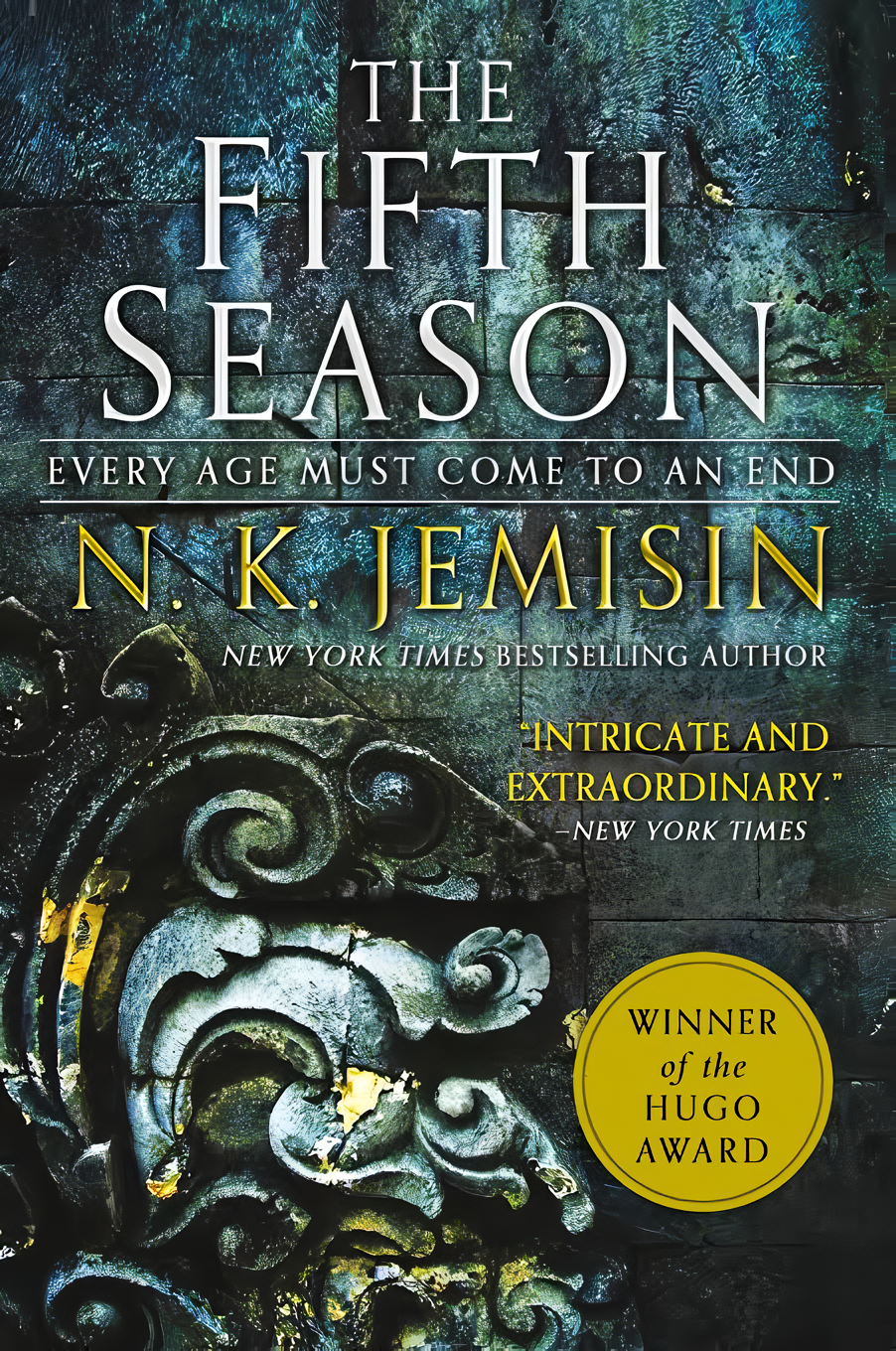
The Fifth Season is the opening novel of N.K. Jemisin's Broken Earth trilogy, published by Orbit Books in August 2015. It won the 2016 Hugo Award for Best Novel — the first of three consecutive Best Novel Hugos Jemisin took home, one for each volume of the trilogy, a feat no author had ever achieved, and the win that made her the first Black author to take the category. It is widely regarded as one of the defining works of twenty-first-century speculative fiction.
It is also a book that refuses to behave like the epic fantasy it superficially resembles. There are no chosen ones marching toward coronation, no kingdoms to reconquer. Jemisin opens with the end of the world and dares you to keep reading — and then tells a story about oppression, grief, motherhood, survival, and rage through a formal trick so audacious that it reorganizes the meaning of everything once you understand it.
Important Characters
Essun: The middle-aged orogene at the heart of the present-day thread, narrated in an intimate second person. When her husband kills their small son and vanishes with their daughter, she walks out of Tirimo into the worst Season in recorded history to find the girl; the novel reveals that she, Syenite, and Damaya are one woman at different points in her life.
Syenite: An ambitious four-ring Fulcrum orogene, the middle stage of the protagonist's life across the book's three threads. Paired with Alabaster on the Allia assignment, she raises a dead obelisk from the seabed, finds freedom and family on Meov, and smothers her own baby rather than let the Guardians take him, afterward burying her past and becoming Essun.
Damaya: A girl from the comm of Palela whose orogeny surfaces at school, the earliest stage of the protagonist's life. Locked in a barn by her frightened parents and collected by the Guardian Schaffa, she endures the Fulcrum's brutal discipline and chooses Syenite as the name she will take when she earns her first ring.
Alabaster: The sole ten-ring orogene still alive and the strongest in the world, bitter and brilliant, who dismantles everything the Fulcrum taught Syenite and fathers her son. He proves to be the unnamed man of the prologue who ripped the continent open to start the Season, and he ends the book dying in Castrima, asking Essun to help him make things worse and whether she has heard of a moon.
Hoa: A strange boy with chalk-white skin who joins Essun on the road and can sense her daughter's trail. He is in truth a stone eater, and the narrator who has been telling Essun her own life back to her throughout the novel.
Schaffa: The Guardian who takes Damaya from her family's barn, courteous, paternal, and terrifying at once; he breaks the bones of her hand to teach her that a Guardian's authority is absolute, insisting he does it out of love. Years later he leads the assault on Meov and reaches for Syenite's baby, forcing the book's most devastating choice.
Jija: Essun's husband, who beats their three-year-old son to death on discovering the boy is an orogene and flees with their daughter. His act opens the novel and sets Essun's entire journey in motion.
Nassun: Essun and Jija's orogene daughter, carried off by her father after her brother's death. Finding her is the purpose that keeps Essun alive and moving across the dying continent.
Tonkee: An unwashed, brilliant geomest without a comm who latches onto Essun's party during the journey. In Castrima, Essun recognizes her as Binof, the Leadership-caste girl who once snuck into the Fulcrum and whom Damaya helped reach the hidden chamber where the obelisks were made.
Innon: A huge, warm feral orogene, raised free and untrained, who leads the island comm of Meov, where orogenes are honored instead of hunted. He becomes the lover of both Syenite and Alabaster, and a Guardian murders him by turning his own orogeny inward.
Ykka: An unbound orogene with the uncanny ability to draw others of her kind toward her. She leads Castrima, a comm built inside a vast crystal geode running on ancient orogene-powered technology, and takes Essun's party in.
Antimony: The stone eater who has silently watched over Alabaster for years. She pulls him down into the earth to save him during the raid on Meov, and at the end she is slowly consuming his body as it turns to stone.
Corundum: Syenite and Alabaster's infant son, born free on Meov. When the Guardians storm the island, Syenite presses her hand over his mouth and nose, choosing his death over a life of enslavement in a node station.
Uche: Essun's three-year-old son, killed by his father Jija for being an orogene. His body on the floor of her home is where the novel begins, and his death propels everything that follows.
The World: The Stillness
The novel unfolds on a single supercontinent, called — with grim irony — the Stillness, because it is anything but still. The land is wracked by constant seismic activity: earthquakes ("shakes") and volcanic eruptions ("blows"). Every few centuries a catastrophe large enough to choke the sky with ash triggers a Fifth Season: an extended apocalyptic winter that can last years, decades, or longer. Civilization in the Stillness is organized entirely around surviving these Seasons.
People live in fortified communities called comms, and each person carries a use-caste — Strongback, Breeder, Innovator, Resistant, Leadership, and others — that defines their function when catastrophe comes. A body of survival wisdom called stonelore, carved into tablets and drilled into every child, encodes the rules for enduring a Season. The dominant power is the Sanzed Equatorial Affiliation — Old Sanze — an empire governed from the great city of Yumenes, which boasts of having survived more Seasons than any civilization in history.
Orogeny and the orogenes
Certain people, called orogenes (and, contemptuously, "roggas"), can sense and manipulate kinetic, thermal, and seismic energy. They can quell an earthquake before it destroys a city — or cause one. When they draw the energy they need, they pull heat from their surroundings, which can flash-freeze people, animals, and objects nearby into ice. This makes them indispensable and terrifying in equal measure. In the Stillness, orogenes are officially classified as less than human. They are feared, hated, enslaved, and frequently murdered — often as children, the moment their power reveals itself.
The Fulcrum, the Guardians, and the nodes
The empire's answer to the orogene "problem" is the Fulcrum, an institution headquartered in Yumenes that captures, trains, and weaponizes orogenes, ranking them by "rings" (from one up to ten) as they master control. Fulcrum orogenes are watched by Guardians, a sinister order of people who can negate an orogene's power, sense them at a distance, and kill them; each carries something implanted in the base of the skull. And scattered across the continent are the node stations, where individual orogenes keep the local earth quiet — a duty whose true nature is one of the novel's most horrifying revelations.
Obelisks and stone eaters
Drifting high above the Stillness are the obelisks: enormous, semi-transparent crystalline structures, miles long, relics of a dead civilization whose technology no one understands. And moving through solid rock as easily as air are the stone eaters: statue-like, near-immortal beings with diamond teeth and unknowable agendas.
How the book is structured
The Fifth Season braids together three point-of-view strands, each apparently a different woman in a different era:
Essun, a middle-aged woman in the present day, whose story is told in the second person — an unusual, intimate, accusatory "you."
- Damaya, a young girl whose orogeny has just been discovered, told in third person.
- Syenite, an ambitious young Fulcrum orogene, told in third person.
The chapters rotate among the three, all in present tense, so they feel simultaneous. They are not. The novel's central revelation is that Damaya, Syenite, and Essun are the same woman at three stages of a single life: Damaya becomes Syenite becomes Essun. Two further reveals land at the same moment: Tonkee, Essun's eccentric travelling companion, is Binof, a Leadership-caste girl from Damaya's timeline; and Hoa, the strange pale boy who joins Essun, is a stone eater — and the "I" who has been narrating Essun's story to her as "you" all along.
The book runs a prologue, twenty-three chapters (whose titles alternate "you…" for Essun, "Damaya…" and "Syenite…" for the other two), two interludes, and appendices including a catalogue of recorded Fifth Seasons.
Prologue: "you are here"
The novel opens with its now-famous invitation to start with the end of the world and get it over with. A framing narrator addresses the reader directly, then narrows to three scenes. In the first, a grieving woman sits beside the body of her small son. In the second, in Yumenes, an unnamed man stands with a stone eater, looks out over the greatest city in the world, reaches into the earth, and rips the continent open along its length, opening a great red rift that will spew ash for years and begin the worst Fifth Season in recorded history. From the start the narrator speaks with intimate, knowing authority — a voice we cannot place until the final pages, and the man who breaks the world is one we will not recognize until then either.
The Essun Timeline
Chapter 1
The "you" is Essun, an orogene who has hidden her nature for a decade in the small southern comm of Tirimo, working as a crèche teacher. She comes home to find her three-year-old son Uche beaten to death on the floor — killed by her husband Jija, who discovered the boy was an orogene. Essun sits with the corpse for two days. When she surfaces, she learns that Jija has fled with their daughter Nassun, who is also an orogene. That gives Essun a reason to keep living: find her daughter.
Chapter 3
Tirimo is in lockdown; sulfur hangs in the air and everyone senses a Season coming. The headman quietly gives Essun a gate pass, but at the gate a townswoman signals for her to be shot. Essun freezes the crossbow bolt in midair and, in a burst of grief and fury, loses control, killing several townspeople by leeching the heat from their bodies. She walks out into the beginning of the end of the world.
The road (Chapters 5, 7, 10, 13). Essun is joined by Hoa, a boy with chalk-white skin and icewhite eyes who seems to know where Nassun is and can sense orogenes. Later they meet Tonkee, a filthy, brilliant, commless geomest who attaches herself to them. When a kirkhusa — a normally docile pet turned predator in the Season — attacks, Hoa lets it bite him and turns the beast instantly to solid stone: the first hard proof he is not what he appears. They cross a devastated landscape of terrified refugees, and Essun learns to trust Hoa to lead her toward her daughter.
Castrima (Chapters 15, 18, 21). Hoa eventually loses Nassun's trail at a place where too many orogenes cluster together and blur the signal: Castrima. At first it seems a dead comm, but its leader, an unbound orogene named Ykka who can somehow summon other orogenes toward her, brings them below ground. The real Castrima is built inside a colossal geode, a cathedral of glowing crystals whose air and water run on ancient orogene-powered technology — proof that a lost civilization once treasured the very people Sanze enslaves. Settling in, Essun recognizes that Tonkee is Binof, the Leadership girl she helped as a child, and that Hoa is a stone eater, which he admits plainly, saying only that he likes her.
The Damaya Timeline
Chapter 2
In the northern comm of Palela, a girl named Damaya huddles in her family's barn, where her parents have locked her since her orogeny surfaced at school. They keep her in the cold, half-believing the myth that orogenes don't feel it, and treat her as a monster. A pale, courteous, terrifying man arrives: Schaffa, a Guardian. Damaya assumes he's a slaver come to buy her. Instead he has come to take her to the Fulcrum.
The road and the grits (Chapters 6, 11). On the long journey to Yumenes, Schaffa is warm and paternal — and, when Damaya insists she can control her own power, he breaks the bones in her hand to prove she cannot rely on her orogeny to protect her, and that a Guardian's authority over an orogene is absolute. He tells her he does it because he loves her. It is the defining horror of her childhood, the template of "love" fused with control that will echo through her entire life. At the Fulcrum she becomes a "grit," a young untrained orogene living under brutal, rigid discipline where friends are forbidden and children are polished like weapons.
Chapter 17
A year in, an odd girl slips among the grits: Binof, not an orogene at all but the daughter of a powerful Leadership family, who has snuck in to find something hidden at the Fulcrum's heart. Damaya helps her, and using orogeny to find concealed doors they reach a vast chamber with a six-sided socket at its center — later understood to be where the obelisks were made. A Guardian catches them and seems seized by another consciousness, ranting about someone angry who wants communion. Schaffa kills the compromised Guardian, tearing something out of the back of her skull — a glimpse of the sinister machinery inside every Guardian. Damaya's trespass forces her first ring test at once. She tells Schaffa she has already chosen the name she'll take if she passes: Syenite. With that, the two timelines silently touch — the child has named the woman.
The Syenite Timeline
Chapter 4
Years later, Syenite is a four-ring Fulcrum orogene, ambitious and frustrated by her rank. She is assigned to travel to the coastal comm of Allia to clear its harbor of a coral blockage — and, unstated but unmistakable, to conceive a child with the orogene accompanying her: Alabaster, the only living ten-ringer, the most powerful orogene in the world. Alabaster is bitter, brilliant, traumatized, and openly contemptuous of the system. They loathe each other. They set out anyway, having joyless sex nightly while Alabaster methodically dismantles everything the Fulcrum taught her about orogeny, history, and stonelore.
The node station (Chapter 8). On the highroad, Alabaster insists they detour to a nearby node station, and here the novel delivers its most sickening revelation. Inside they find the staff dead and, in the node chair, the "maintainer": a small, naked, hairless child, limbs atrophied, kept alive by tubes and wires, lobotomized so that it quells every tremor by pure instinct. The Fulcrum's node maintainers are orogene children — the ones deemed too dangerous to train — mutilated into living seismic dampers. This one has been sexually abused; the spontaneous eruption Alabaster sensed was its final, agonized reaction. Syenite finally understands, in her body, what "rogga" means: that to the world, she is a thing.
Allia and the obelisk (Chapters 9, 12, 14). In Allia, Alabaster is poisoned nearly to death and saves himself only by purging the toxin with orogeny at a molecular level. Syenite must clear the harbor alone. Beneath the coral she finds an enormous dead obelisk on the seabed, with what appears to be a dead stone eater trapped inside it. When she reaches for it, it responds and rises. The contact marks them, and the Fulcrum dispatches a Guardian to kill them both. As the Guardian is about to kill her, Syenite instinctively seizes the obelisk's power. It detonates: the dormant volcano beneath Allia erupts, the city is annihilated, and she blacks out.
Meov (Chapters 16, 19). She wakes on Meov, an island comm carried there by Antimony, a stone eater who has quietly attended Alabaster for years. The Meovites live by fishing and piracy — and, astonishingly, they honor orogenes, making them leaders rather than killing them. Their de facto leader is Innon, a huge, warm "feral" — an untrained orogene who grew up free. Both Syenite and Alabaster fall for him, and the three form a loving household. Syenite bears Alabaster's son, Corundum ("Coru"), and for the first time in her life she is free and unafraid. The Fulcrum believes them dead in Allia's eruption.
The Convergence
Chapter 20
Two years on, restless, Syenite joins Innon on a raid and returns to ruined Allia, where she seals the still-erupting magma chamber. As the ship departs she glimpses a lone Guardian on the shore, watching. The Fulcrum now knows they're alive.
Chapter 22
Three weeks later, Guardian ships descend on Meov. Alabaster walls the harbor and sinks ships, but when cannons open on him, Antimony drags him bodily down into the earth to save him — his last act is to make Syenite promise the Guardians will never take Coru. The ships break through. A Guardian murders Innon by turning his orogeny inward and tearing him apart. Then Schaffa appears — greeting Syenite by name, confirming that Damaya and Syenite are one — and reaches for her baby. Rather than let Coru be enslaved, lobotomized, wired into a node, Syenite presses her hand over her son's mouth and nose and smothers him, choosing his death over that life. In her grief and rage she seizes an amethyst obelisk and unleashes a cataclysm that destroys the ships and kills most of the attackers and many fleeing islanders alike. Here the narrator finally names himself: Hoa. He was drawn to her the moment she touched the obelisk's power, found her floating unconscious in the sea, and watched over her; ten years later he introduced himself as she left Tirimo. Syenite survived, made her way to the mainland, buried every self she had been, and started over in Tirimo as Essun.
Chapter 23
In Castrima's infirmary, Essun is told an old friend wants to see her. It is Alabaster — and he is dying, his body slowly turning to stone, that stone visibly being eaten by the attending Antimony. He greets her as Syenite; she insists her name is Essun now, because Essun is the identity that is also Nassun's mother. Then the last pieces fall: Alabaster is the unnamed man from the prologue. He is the one who tore the continent open, using the obelisks and the node maintainers, whom he has released and who are now all dead, to begin this Fifth Season. He says the horror of the world justified it — that sometimes the only sane response to an irredeemable system is to break it completely. He tells her he understands why she killed Corundum, and that he will never forgive her for it. And he asks for her help — not to repair what he's done, but to make it worse. Calling her by all three of her names, he leans in and asks whether she has ever heard of something called a moon. The novel ends there.
The interludes and appendices deepen the frame: one interlude notes that the people of the Stillness have stopped looking at the sky and no longer notice what is missing from it — the earliest hint that a long-lost moon is the key to everything.
What the Book Is About
The Fifth Season is, first, about oppression as the engine of a civilization.
The orogenes are Jemisin's central instrument. Feared for an innate capacity they did not choose, classified as legally non-human, exploited for the very power that makes them hated, controlled through indoctrination and calibrated violence, they are an unmistakable allegory for anti-Black racism and the machinery of slavery, while also generalizing to any group a society decides is less than human. Jemisin has connected the book's genesis to the protests over the police killing of Michael Brown, and the novel's dedication reads: "For all those who have to fight for the respect that everyone else is given without question." Crucially, the oppression is systemic rather than the work of cartoon villains: Schaffa genuinely loves Damaya even as he breaks her hand; the node children are tortured not from sadism but because the empire finds it useful.
The book's spine is a mother's love pushed to unbearable extremes. Essun hunts for Nassun across a dying world; Syenite kills Coru rather than surrender him to slavery, an act that consciously echoes Toni Morrison's Beloved. Jemisin refuses to let this be either simply heroic or simply monstrous. It is a wound the trilogy keeps pressing.
Where much fantasy treats anger as a flaw to be mastered, The Fifth Season treats a woman's rage — at grief, at injustice, at a world built to break her — as legitimate, even generative. Alabaster's decision to end the world, and his invitation for Essun to make it worse, poses the trilogy's central question: is a civilization founded on this much cruelty worth saving, or should it be torn down so something else can begin?
And the book is about the act of witness. The relentless "you" implicates the reader in Essun's grief and choices, and its eventual explanation — that a near-immortal being who loves her is telling her her own life back to her — recasts the entire novel as an act of memory. The technique has been widely discussed since.
Ending Explained
How does The Fifth Season end?: The final chapters reveal that Damaya, Syenite, and Essun are a single woman shown at three different stages of her life, and that Hoa, the stone eater travelling with Essun, is the voice that has been narrating her story. In Castrima, Essun is taken to see a dying Alabaster, his body turning to stone and being eaten by the stone eater Antimony. Alabaster admits he is the man from the prologue who tore the continent open and started the terrible Fifth Season. He asks Essun to help him make it worse, and the novel closes with his question about whether she has ever heard of a moon.
Who broke the world in The Fifth Season?: The unnamed man who stands over Yumenes in the prologue and rips the continent open is Alabaster, the only living ten-ringer and the father of Syenite's child. Using the obelisks and the node maintainers he had freed, he opened a great red rift that will pour ash into the sky for years, beginning the worst Fifth Season ever recorded. He tells Essun that the world's horror justified the act, and that a system so cruel deserved to be destroyed rather than repaired.
How are Damaya, Syenite, and Essun connected in The Fifth Season?: They are one woman at three points in her life. Damaya, the girl the Guardian Schaffa takes to the Fulcrum, chooses Syenite as the name she will bear after her first ring test; years later, after the Guardians destroy everything she loves on Meov, Syenite buries every identity she has held and starts over in the comm of Tirimo as Essun. The rotating present-tense chapters make the three lives feel simultaneous when they are actually sequential. A second reveal lands alongside it — Essun's companion Tonkee is Binof, the Leadership girl Damaya once helped inside the Fulcrum.
Why does Syenite kill her son Corundum in The Fifth Season?: When Guardian ships storm Meov, a Guardian kills Innon by twisting his orogeny inward, and Schaffa reaches for the baby. Rather than let Coru be taken, lobotomized, and wired into a node like the Fulcrum's child maintainers, Syenite presses a hand over his mouth and nose and smothers him, preferring his death to that existence. In her grief and rage she seizes power from an amethyst obelisk, and the resulting cataclysm destroys the ships and kills most attackers along with many fleeing islanders. Alabaster later tells her he understands why she did it — and that he will never forgive her.
Who is Hoa really in The Fifth Season?: Hoa, the strange pale boy who attaches himself to Essun on the road, is a stone eater, and he is also the narrator of the whole novel — the voice addressing Essun as you. He was drawn to Syenite when she first touched an obelisk's power, found her unconscious in the sea after Meov fell, and watched over her for the ten years before introducing himself outside Tirimo. His nature shows early when he turns an attacking kirkhusa to stone, and in Castrima he admits what he is, explaining only that he likes her.
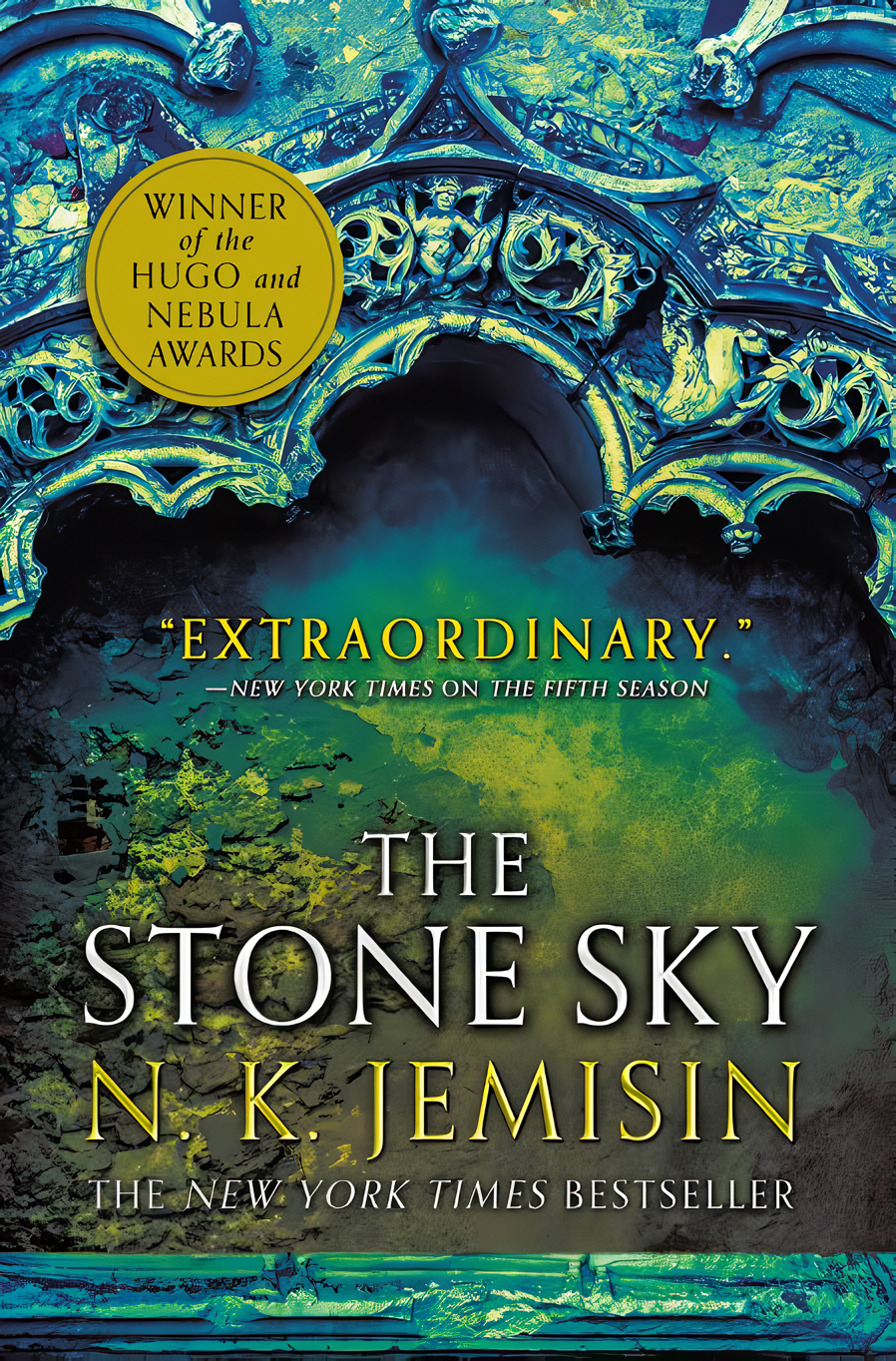
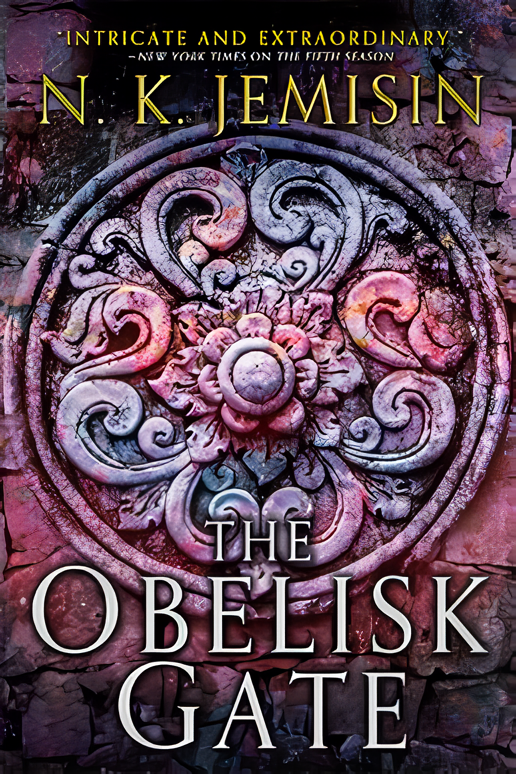
What does the ending of The Fifth Season set up for The Obelisk Gate?: Essun still has not found Nassun, the daughter Jija carried off after beating their son Uche to death. Alabaster's dying request that she help him make the world worse, and his final question about a moon, are left hanging as the book ends. An interlude observes that people of the Stillness never look up anymore and miss what is absent overhead — an early hint that a vanished moon matters enormously. The story continues in The Obelisk Gate and The Stone Sky.
About the Book
The Fifth Season was published by Orbit Books in August 2015, the first volume of the Broken Earth trilogy, followed by The Obelisk Gate (2016) and The Stone Sky (2017). Each book won the Hugo Award for Best Novel, in 2016, 2017, and 2018 respectively — making N.K. Jemisin the first author ever to win the Best Novel Hugo three years running, and the first to win for every book in a single trilogy. The Fifth Season was also a finalist for the Nebula Award and the World Fantasy Award.
Jemisin, trained as a counseling psychologist, had previously written the Inheritance and Dreamblood books; the Broken Earth trilogy vaulted her to the front rank of the field, and she received a MacArthur Fellowship in 2020. The trilogy is frequently discussed alongside the legacy of Octavia Butler and Ursula K. Le Guin.
A screen adaptation has had a long, stalled history. TNT announced a TV series in 2017 that collapsed; in 2021 Sony's TriStar Pictures acquired film rights to the whole trilogy in a seven-figure deal, with Jemisin writing the screenplay herself and Michael B. Jordan's Outlier Society producing. Jemisin confirmed in 2023 that she had turned in a first script, but as of 2026 no director or cast has been announced. The book's second-person narration and interlocking timelines are widely considered a formidable challenge to adapt.
The Fifth Season is not a comfortable book. It begins with a dead child and ends with a dying man asking a grieving mother to help him break the world further. But it is a profound one — a novel that uses the furniture of epic fantasy to interrogate power, cruelty, and endurance, and that rewards a second reading, when every "you" and every quiet clue reveals how completely Jemisin was telling the truth all along. The book contains the on-page death of children, sexual abuse, and sustained depictions of systemic violence.