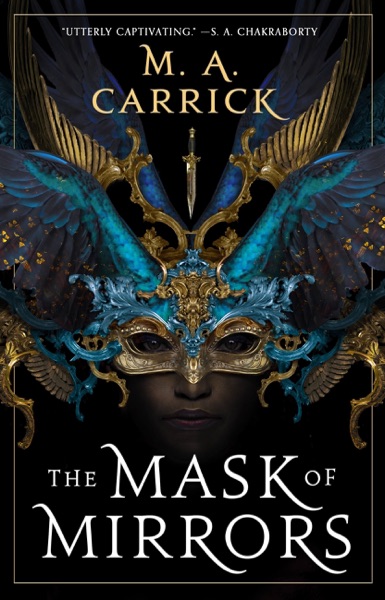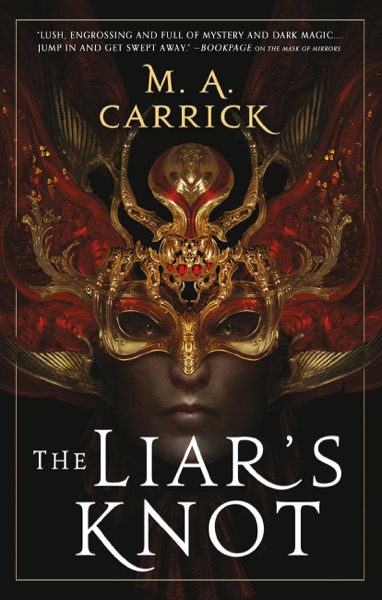
The Book in Brief
Letilia returns to blackmail Ren, keeping up in public the invented claim that Ren is her daughter rather than her former servant. Ren tries to secure a public future with Grey through a courtship contest — until Letilia exposes her real identity and Donaia expels her from House Traementis. As Ren, Grey and Vargo investigate the remaining medallions and the corruption around the Wellspring, political rebellion, family revelation, Vargo’s bond with Alsius and Tanaquis’s magical work all converge. The three enter the Great Dream and the labyrinth beneath the city, confront the medallions’ makers, and break the system rather than claim it — leaving Nadežra facing a settlement that recognizes Vraszenian claims instead of restoring the old order.
Important Characters
Ren: A former con artist whose identities become publicly known, forcing her to seek belonging without controlling the story.
Grey: Ren’s partner and a former Rook, negotiating love, family, and political responsibility outside the inherited mask.
Vargo: The trio’s strategist, confronting Alsius, Iascat, and the family history hidden inside his abilities.
Tess: Ren’s found sister and seamstress, who opens her own shop and demands a future not organized only around Ren’s crises.
Letilia: The real Traementis exile, using Ren’s deception as leverage on the family she abandoned.
Tanaquis: The scholar whose understanding of numinatria is essential to breaking the medallion system.
Donaia and Giuna: The Traementis women whose response to Ren’s truth determines whether chosen kinship can survive fraud.
What to Remember from the Previous Book
Ren, Grey, and Vargo stopped Ghiscolo and the Praeteri, but the medallions could not be destroyed. Each member of the trio became bound to one. Grey gave up the Rook’s hood to save Ren, and Vargo’s connection to Iascat and his altered origins moved into the open.
Prologue
The city’s older history and the medallions’ unfinished design establish that Nadežra’s present crisis is the latest turn in a repeating pattern.
Exposure
Chapter 1
Giuna’s coming-of-age ball is disrupted by Letilia’s return and her immediate recognition of Ren.
Chapter 2
Ren uncurses Letilia, handles new threats, and faces a courtship challenge designed around public legitimacy.
Chapter 3
Grey resumes Rook-like action, meets Vraszenian leaders, and survives a river attack that exposes a hidden connection.
Chapter 4
Tanaquis patterns the medallion problem while Ren manages a secret lover, social politics, and a decoy threat.
Chapter 5
Giuna’s romance and a numinat announcement show ordinary futures continuing beneath the larger crisis.
Chapter 6
Register manipulation and a journey into dream reveal that an admired figure is present where no one expected.
Chapter 7
The courtship trial accelerates as Faella reveals information that changes the stakes for Ren and Grey.
Chapter 8
A Fingers reunion and rescue operation uncover Branek’s plan and loosen another criminal hold on the city.
Chapter 9
Grey’s past and the final courtship trial collide, and Ren’s concealed truth becomes impossible to contain.
Truth and Revolution
Chapter 10
The morning after exposure leaves Ren with consequences that clever language cannot repair.
Chapter 11
Family revelations and a confrontation with Mirscellis begin assembling the medallions’ true history.
Chapter 12
Ren challenges Laročja while the trio searches for soul fragments needed to undo the bindings.
Chapter 13
A social war destroys Vargo’s standing as Alsius, prisoners, and a failed rescue expose the larger plot.
Chapter 14
After the failure, the city produces substitute Rooks while the protagonists prepare a more exact repair.
Chapter 15
Vargo learns he is not cursed in the way assumed, and the Ordeal of the Dream opens another route inward.
Chapter 16
Ren faces Letilia and multiple forms of family while political rebellion moves from rumor to plan.
Chapter 17
A wedding binds Ren and Grey publicly, even as blood, brotherhood, and a surprise proposal complicate the celebration.
Chapter 18
Following a zlyzen into an apparently empty district reveals how the remaining conspiracies connect.
The Great Dream
Chapter 19
Rebellion breaks out, the Cinquerat fractures, and the trio returns from Old Island with unstable allies.
Chapter 20
An impulsive rescue escapes Old Island and forces a private negotiation with Koszar.
Chapter 21
The Black Rose is unmasked as the protagonists hand off roles, set diversions, and kill one major plot.
Chapter 22
Hostage negotiations and difficult homecomings cut old threads while exposing further family abuse.
Chapter 23
Vargo’s family connections surface as ghosts, grandmothers, and burned cards alter several relationships.
Chapter 24
A treaty and rehearsal prepare the Great Dream while returned zlyzen make the ritual immediately dangerous.
Chapter 25
Knotted plots converge, Zlatsa acts, and evidence of insanity finally reveals the last hidden design.
Chapter 26
The Great Dream draws the trio into the Wellspring, where repeated visions must be understood rather than merely defeated.
Chapter 27
Inside the labyrinth, farewells, sibling reunion, Tanaquis’s fate, and Vargo’s inheritance resolve the medallions’ long cycle.
Epilogue
At the Gawping Carp, the survivors gather in a deliberately ordinary space, showing that chosen family—not a restored elite order—is the trilogy’s final institution.
Ending Explained
Ren’s public exposure ends any hope of controlling her own narrative, which is exactly why the restored relationships matter: Donaia, Giuna and Grey get to choose her with full knowledge rather than under management. The medallions are destroyed outright at the Wellspring rather than claimed, denying any faction the total power Kaius Rex assembled — and Tanaquis nearly keeps one, losing a hand for it. And the Gawping Carp epilogue places the future among friends, lovers, former criminals, scholars and family, with the new Setterat seated and the city’s central community no longer running on a shared lie.
Themes and Analysis
Truth and chosen family. Belonging becomes durable only after others gain the freedom to respond to Ren’s deception.
Colonial memory. The Great Dream returns suppressed history as an active force that the present settlement must address.
Repair versus restoration. The finale prefers altered relationships and negotiated power to rebuilding an idealized past.
Shared interpretation. The trio survives because no single magical, social, or criminal framework can explain the whole crisis.
Content Notes
This book contains political rebellion and magical violence, blackmail, family abuse and public humiliation, kidnapping and dream horror, colonial oppression and grief.