How the Book Is Structured
Bury Our Bones in the Midnight Soil braids three women's stories across nearly five hundred years.
María — a copper-haired girl in Santo Domingo de la Calzada, Spain, who in 1532 becomes a vampire, kills her maker, and lives the next five centuries under a stolen name: Sabine.
Charlotte "Lottie" Hastings — a country gentlewoman who in 1827 is hunted, courted, and turned by Sabine in London, and who has spent two centuries running from her.
Alice Moore — a Scottish first-year at Harvard in 2019 Boston, whose one-night stand with a purple-haired stranger called Lottie ends with her waking up dead.
The novel runs around 535 pages and is structured in roughly nineteen numbered Parts rather than discrete sections named after the women. The three timelines are interleaved chapter by chapter through most of the book; Charlotte's full backstory arrives later than the other two, deliberately, so that the reader has already lived with Sabine and Alice before learning the shape of the wound between them. The book's central image — borrowed from a vampire-poem the older characters know — is that to be turned is to be buried in the midnight soil, planted shallow and watered deep, to grow back as a feral rose.
A note on the magic system: vampires in this world are not called vampires on the page. The word the older ones use is feral roses. They can walk in muted daylight but burn in direct sun. Their hearts are the killing point — destroy the heart and they collapse to ash. Grave dirt sickens them and pins them down. Silver wounds. They can read human minds and shield their own from other roses. They can mark territory psychically. They can "promise" things to one another in a way that becomes binding magic — a vow you cannot literally break, even when you desperately want to. And they rot from the inside out across the centuries: the human feelings — empathy, tenderness, mercy — slough away first, leaving only the hunt.
What follows walks the story chronologically across the three women, with the modern Boston frame holding the others.
Important Characters
Alice Moore: A Harvard first-year from Scotland who crossed an ocean to outrun her sister's suicide, only to wake without a heartbeat after a 2019 party hookup. Deceived into believing that destroying her maker will bring her back to life, she kills both Sabine and Lottie, and the novel closes on her walking through nighttime Boston, still undead, choosing to keep going.
Charlotte Hastings: A fierce country gentlewoman exiled to London after falling for her best friend, then courted and turned by Sabine in 1827 and bound by a vow never to harm her maker. She spends two centuries fleeing a woman who murders everyone she loves, and as the purple-haired Lottie she baits Alice into killing Sabine, a betrayal Alice answers with a silver hairbrush through her heart.
Sabine: Born María, a copper-haired girl of Santo Domingo de la Calzada who escaped a brutal marriage by accepting a widow's dark gift, drained her maker to ash, and took her name. Across five centuries she perfects the long, cruel hunt, turns Charlotte in London, spends two hundred years leaving red roses on the graves of Charlotte's lovers, and dies in a Boston penthouse with a shard of shale driven through her heart.
Ezra: A kind feral rose who runs a Boston coffee shop and has been Charlotte's one steady friend since 1961. He recognizes the newly risen Alice at a glance, sedates her before her hunger can kill anyone, and reunites her with Lottie.
Catty: Alice's volatile older sister, a dreamer who ran away at seventeen and later died in Glasgow by walking into the path of a car. Her final voicemail is the prayer Alice replays, and the pinch of her grave dirt in Alice's pendant becomes part of the poison that brings Lottie to her knees.
Jack: A much older feral rose Charlotte meets after her turning, who explains the rot, the slow loss of human feeling that eventually claims all of their kind. He once ended his own maker at that maker's request, and though he cannot help Charlotte kill Sabine, he gives her a name for what is happening to her.
Matteo: An ancient rose who has psychically claimed the whole of Venice, and who teaches Sabine to mark territory and to draw a hunt out over weeks instead of feeding like a starving animal. After the death of his mortal lover Alessandro he turns a lookalike fledgling with disastrous results, then leaves for the Americas hollowed out by grief.
Alessandro: Matteo's mortal lover, a Venetian painter who chooses never to be turned, asking whether life means anything when death never balances it. His quiet refusal and natural death break Matteo and show Sabine what endless time eventually costs.
Hector: One of the first feral roses Sabine meets, in Seville in 1542, who names her kind for her and recites the verse about bones planted in midnight soil. His arrogance drives him to hunt clergy in a stolen priest's disguise, and a mob burns him and Renata alive for it.
Renata: Hector's companion, who teaches Sabine to shield her mind and extracts a vow that Sabine will not leave them, revealing that a promise between roses is literal, binding magic. She dies nailed into a coffin beside Hector when their luck runs out.
Penny: The young woman Charlotte risks loving in 1994 New York, until Sabine turns her as a so-called gift on their anniversary. Charlotte ends her with a silver-handled hairbrush to spare her what is coming, the same object Alice later uses on Charlotte herself.
Giada: A young artist's model with whom Charlotte finds a careful happiness in 1950s Rome. Sabine, unable to cross their threshold uninvited, catches Giada outside, breaks her neck, and marks the step with one red rose.
Ysabel: María's maid at the Guzmán estate and the viscount's illegitimate half-sister. She is the first woman María quietly loves, though the feeling does not appear to be returned.
Viscount Andrés de Guzmán Olivares: The older nobleman María marries as an escape from her village, who proves violent from the first night and sees his wife only as a vessel for a son. The newly turned María kills him in his bed and rides away from the burning estate wearing her maker's name.
María — Spain, 1521–1542
Overview
The book's earliest timeline establishes the rules of the world and gives us the woman who will become its monster. As a child in Santo Domingo de la Calzada, María meets a veiled widow gathering herbs at the edge of the village and is marked by her without quite understanding why. As a young woman she engineers her own marriage to a viscount as an escape route, discovers that the marriage is a worse cage than the village, and accepts the widow's offer to be remade. The transformation goes too far, the widow dies, and the girl walks out of the ash wearing her maker's name.
1521
Ten-year-old María, a wild copper-haired child the village treats as a curiosity, watches a veiled widow gather herbs near the church on the pilgrim road. A storm breaks; a townsman drops dead; the widow vanishes. María never forgets her.
1529
Now nineteen, María scouts the men passing through Santo Domingo and selects one — Viscount Andrés de Guzmán Olivares, more than a few years her senior. She lets him believe the courtship is his idea. Her parents are relieved.
The journey to the estate
Andrés reveals himself on the road: he views María as a vessel for a son, and his sexual demands are violent from the first night. María, who has secretly learned the widow's herbcraft, begins using tinctures to prevent pregnancy.
The estate
María bonds with her maid Ysabel, who is Andrés's illegitimate half-sister. María falls quietly in love with her; Ysabel does not seem to feel the same. When Andrés's parents — the count and the cruel countess — arrive, they treat María like a peasant who has married above her station. The countess is openly hostile.
The widow returns
The widow, who now keeps an apothecary in León under the assumed name Madame Boucher, reappears in María's life. María visits her often, drawn to a woman who lives free of any man's control. Andrés grows jealous and forbids the visits. María sneaks out anyway.
The turning
Sabine asks María if she is ready to be free. María says yes. Sabine reveals what she is, bites María's throat, drains her almost to death, and offers her own wrist in exchange. María drinks — and cannot stop. She drains Sabine to ash before either of them understands what is happening.
The fire
Still hungry, María returns to the estate, kills Andrés in his bed, kills the count, and watches the countess fall to her death fleeing the flames as the house burns. Her old life is ash by morning. She rides out under her maker's name. María is dead. Sabine rides east.
Sabine — Wandering Centuries, 1542–1823
Overview
Sabine spends three centuries learning what she is. She finds and loses two vampire families — Hector and Renata in Spain; Matteo and Alessandro in Venice — and each one teaches her a piece of the craft and then breaks. By the time she reaches England in the 1820s she has refined herself into a hunter who savors prolonged pursuit, can read and shield minds, can claim territory, and can no longer feel the human softnesses she once had. She has begun to rot inside, and she knows it.
Seville, 1542
Sabine meets Hector and Renata, older feral roses who name her kind for her and recite the verse that gives the book its title: Bury my bones in the midnight soil, plant them shallow and water them deep, and in my place will grow a feral rose. They teach her the rules — heart and fire are death, grave dirt is a trap, the sun must be muted — and how to shield her thoughts from other roses. They take her to sea with them, hunting port to port. Renata extracts a promise from Sabine that she will not leave; Sabine discovers the promise is literal.
The church
Hector grows arrogant and starts hunting clergy. He kills a priest, takes his robes, and walks the trio into a parish in disguise. A survivor raises a mob; Hector and Renata are nailed into coffins and burned alive. Sabine escapes through a graveyard, dragged half-immobile by grave dirt, the promise to Renata broken only by Renata's death.
Venice, 1679
Sabine meets Matteo, an ancient who has claimed the entire city psychically, and his mortal lover Alessandro, a painter who has chosen never to be turned. Matteo allows her to stay if she follows his rules; in return he teaches her to mark territory, to hunt in plain sight, and to savor a kill across weeks of pursuit rather than tear into a victim like a starving animal. She comes to love them both, in the cold way she can still love.
Alessandro
Years pass. Alessandro ages and his lungs fail. Matteo begs to turn him; Alessandro refuses. Is it life, he asks, if there is never death to balance it? He dies in his bed. Matteo collapses into a grief Sabine cannot reach.
Giovanni
Months later, Sabine returns to find a new fledgling installed in Alessandro's old studio — a man named Giovanni who looks startlingly like the dead lover. Matteo has turned him to ease the loss. Giovanni is hungry and unstable and goes on a public killing spree that ends with a mob burning him in a piazza. Matteo, hollowed out, sails for the Americas. Sabine moves on.
Across Europe and North Africa
Sabine drifts through cities, refining her hunts. Matteo's lessons take. She learns to fast for weeks, to enthrall a household, to choose her victim out of a season's worth of debutantes and stalk her like a long, slow game. The human feelings keep peeling away. She begins to know it.
London, 1823
Sabine arrives in England and learns the rules of the ton — the season, the marriage market, the way unmarried girls are paraded. She poses as a young Spanish widow and inserts herself into the upper rooms of London society. She is here to hunt.
Charlotte — England, 1827, and After
Overview
Charlotte Hastings is the book's emotional keystone. A bright, fierce country girl whose love for her best friend gets her exiled to London for "polish," she is the perfect quarry for the bored, rotting Sabine. The maker-fledgling bond between them is the longest, sickest love story in the novel, and Charlotte's two centuries of running from it shape almost everything that follows. Her storyline arrives in the back half of the book, after the reader has watched Sabine become what she is and watched Alice be wrecked by what Sabine made.
The countryside
Charlotte grows up on her family's estate beside her best friend Jocelyn Lewis and her older brother James. She and Jocelyn cross from friendship into something more on a long summer afternoon in the fields. James catches them. Jocelyn is married off to James to bury the scandal. Charlotte, ruined for the country, is sent to London to be "polished" by her aunt Amelia Hastings.
The ball, 1827
At Charlotte's first season Sabine — copper-haired, widowed, magnetic, openly free — picks her out of the room. Charlotte, who has just lost the only person she ever loved to her own brother, is undone by the sight of a woman who answers to no one.
The courtship
Sabine cultivates Charlotte across months: lessons, walks, late visits. She tells Charlotte she sees her, that she does not have to marry a man, that there is another road. Charlotte falls in love. Sabine asks her to promise — I will never hurt you — and Charlotte does. Neither of them yet understands what the promise will mean.
The turning
Sabine turns Charlotte. The first months are euphoric — two women, a city at night, no rules. Then Charlotte begins to see what Sabine actually is. The hunts get worse. The cruelty Sabine has spent centuries refining starts to land on people Charlotte cares about. Charlotte realizes she is bonded to a maker who is hollowing out faster than she can keep up with, and she is bound by her vow not to hurt her.
Jack
Charlotte meets a much older feral rose named Jack, who tells her about the rot — that all of them lose the human feelings eventually, that some are further along than others, that his own maker once asked him to end him when the rot got bad enough, and Jack still cannot talk about the night he did it. He cannot help Charlotte kill Sabine, but he gives her the language for what is happening.
Escape, and Rome in the 1950s
Charlotte flees England. After more than a century of hiding she finds, in Rome in 1953, a careful love with a young artist’s model named Giada. Sabine, who has been hunting her the entire time, finds the apartment, cannot enter the threshold uninvited — and meets Giada outside. She snaps Giada's neck and leaves a single red rose on the step. The promise binds Charlotte from chasing her. She runs again.
Boston, 1961
Charlotte reaches Boston and meets a kind feral rose named Ezra, who runs a coffee shop and keeps an ear to the ground for her. He becomes her one constant for the next sixty years. He listens for Sabine's name in the city and hears nothing — but every woman Charlotte loves in those decades disappears, and a red rose marks each grave. Charlotte flees west into isolation.
New York, 1994
Charlotte tries one more time. She rents a small place with a young woman named Penny and lives quietly for four months. On their anniversary she comes home and finds Penny risen as a feral rose — Sabine has turned her "as a gift." Charlotte takes a silver-handled hairbrush off the dresser and ends Penny on the floor of the apartment to spare her what she knows is coming. She makes a new vow to herself: never more than one night, never anyone she could love. She keeps a ledger of names in the back pages of one of Penny's books.
Boston, 2019
Charlotte — now going by Lottie, hair dyed purple — has been keeping that vow for twenty-five years. She picks Alice at a college party for the same reason she picks any girl: a single bright night and out the door before dawn.
Alice — Boston, 2019
Overview
The modern frame is Alice's. A Scottish first-year at Harvard who came across an ocean to escape her sister Catty's suicide and her own anxiety, Alice goes to one party trying to be a different girl for one night and wakes up dead. Her storyline carries the present-day plot: trying to work out who turned her, finding Ezra, finding Lottie, and ultimately being weaponized against the woman who made them both.
Scotland
Alice's mother died when she was small. Her father remarried; her stepmother Eloise gave her a gold pendant on the wedding day with a pinch of her mother's grave dirt inside. Her older sister Catty was the volatile one — the runaway, the dreamer who left home at seventeen and refused to come back — and who left Alice a last voicemail before stepping in front of a car in Glasgow. Alice has been small inside that loss ever since. The pendant now also carries a pinch of Catty's grave dirt. She still listens to Catty's last voice note like a prayer.
Harvard, 2019
Alice has applied to Harvard partly as an offering to her dead mother. She arrives in Boston anxious, homesick, and determined to be someone new for at least one night. She forces herself out to a party.
The party
A woman with purple curls — who introduces herself as Lottie — picks her out of the room. They hook up in Alice's dorm. In the morning Lottie is gone. So is Alice's heartbeat.
The first day
Alice wakes to a sun that hurts and an emptiness in her chest where breath should be. She thinks she is sick. By the time the hunger arrives she knows she is not. She has no idea what she is.
The hunt for answers
Alice retraces her steps through the city trying to find Lottie. She wanders into a small coffee shop and meets the owner — Ezra. He recognizes what she is at a glance and recognizes who must have made her. He tells her, gently, that Lottie would never have done this. Alice does not believe him. He sedates her to keep her from killing anyone in her hunger and brings Lottie to her.
The truth
Lottie tells Alice the whole story — Maria, Sabine, the centuries, Penny, Giada, the red roses on every grave. She did not turn Alice. Sabine did, after Lottie left the dorm. The pattern is the same as it has been for a hundred and fifty years: anyone Lottie touches, Sabine reaches for. The difference, this time, is that Sabine did not kill Alice. She turned her. Lottie does not know why yet.
The plan
Lottie tells Alice — and this is the lie that drives the rest of the book — that the maker-bond is fresh enough that if Alice kills Sabine in the next few days, the bond will break and Alice will return to life. Lottie cannot kill Sabine herself; the old promise still holds. Alice can. Alice agrees.
The club
Lottie dresses Alice in black, takes her to a club where Sabine is hunting, and tells her to keep her thoughts fixed on Lottie like a song so Sabine cannot read what they're really doing. When Lottie steps away, Alice panics, bites a stranger, and pulls back in horror. Sabine appears from the crowd, snaps the bitten girl's neck, compels Alice, and takes her up to her penthouse.
The Penthouse
The climax sits in a single room. Sabine has put on chainmail under her dress, knowing what's coming. She has poured a glass of blood for Alice — a kindness intended as bait — and tells Alice the truth Lottie won't: this whole thing is Lottie's fault, every dead girl in two centuries is a love letter Sabine has been writing to a fledgling who will not come home. She wants Alice to help her trap Lottie one last time. Alice, knowing the chainmail covers Sabine's heart, plays along.
She poisons the glass of blood by tipping in dirt from her own pendant — her mother's grave dirt, Catty's grave dirt — and offers it. Sabine refuses; she only drinks from the source. Alice excuses herself to the shower. She breaks a shard of shale off the bathroom wall and waits. Sabine joins her in the steam and removes the chainmail. Alice turns in her arms and drives the shard through her heart. The oldest predator in the book smiles as she goes — pleased, almost, that the girl had it in her — and crumbles to ash.
Alice waits in the apartment, hand pressed to her chest, listening for the heartbeat Lottie promised would come back. It does not. The elevator chimes. Lottie steps out with two more wineglasses and a softness in her face Alice has never been allowed to see.
Everything will be okay, Lottie tells her. The worst is over now.
Alice realizes, in a slow cold rush, that she is still dead. The maker-bond was never going to break. Lottie has known the whole time. Lottie has been bringing women into her life and burying them for two hundred years to keep Sabine away from herself; what she did with Alice was the same play she has run since Penny. Lottie was going to kill her. She did the same thing to Penny with a silver hairbrush in a New York apartment in 1994.
Alice lets Lottie drink the poisoned glass. Lottie tastes the grave dirt on the second sip and drops to her knees. Alice takes the silver-handled hairbrush out of her own bag — she has been carrying it since she found it in Lottie's things — and drives it through Lottie's heart. She repeats Lottie's last line back to her as Lottie crumbles: Everything will be okay. The worst is over now.
The Last Walk
Alice leaves the penthouse with the empty pendant warm against her chest. She crosses a lobby she does not remember and walks into the Boston night. The sounds of the city register against the silence inside her ribs. She touches the pendant — her mother is gone, Catty is gone, and she is still here. She replays Catty's voice note. Before it ends, her father calls from Scotland — early morning at home, late night in Boston. She tells him she is walking back from the library. He insists on staying on the line. She lies that everything is fine and listens to him breathe across an ocean.
When the call ends she keeps walking. She paces her steps to where her breath would be if she still had any. She is undead. She is hungry. She is the only one left. The book ends on her decision to keep going.
What the Book Is About
The trio is not a love triangle. It is a chain of harm. Sabine made María into Sabine; Sabine made Charlotte into Lottie; Lottie made Alice into what she is by drawing Sabine's attention to a girl in a dorm. Each generation passed the rot on without meaning to — or meant to, and lied about it. The book's argument is that women who have been denied freedom by their world will tear out their own throats to take it, and that the cost of that taking is paid forward forever, mostly by other women. Maria became Sabine because the only door out of Andrés's house was the widow's. Charlotte became Lottie because Sabine was the only woman in 1827 London who would look at her and say yes. Alice became Alice because Lottie picked her at a party.
The book is also, very deliberately, about queer women being allowed to be the monster. Sabine is not a metaphor for the predatory lesbian; she is the actual one. Lottie is not punished for loving women; she is punished for hiding from a much older woman she loved first. Alice does not get a redemption — she gets a fanged second life and the long road ahead. Schwab has said, in interviews, that the book began as a coming-out story and grew teeth from there.
Ending Explained
How does Bury Our Bones in the Midnight Soil end?: Alice destroys both of the vampires who shaped her fate. In Sabine's penthouse she drives a shard of shale through Sabine's heart in the shower, then waits for the returned heartbeat Lottie promised, and it never comes. Realizing that Lottie lied about the maker-bond and meant to kill her just as she once killed Penny, Alice lets Lottie drink blood poisoned with grave dirt and stakes her with a silver-handled hairbrush. She walks out into the Boston night still undead and alone, and chooses to keep going.
How does Alice kill Sabine in Bury Our Bones in the Midnight Soil?: Sabine comes prepared, wearing chainmail beneath her dress to guard her heart, the one place a feral rose can be destroyed. Alice first tips the grave dirt from her pendant into a poured glass of blood, but Sabine refuses it because she feeds only from the source. Alice then slips away to the shower, snaps a shard of shale off the wall, and waits; when Sabine steps into the steam and sheds the chainmail, Alice spins in her embrace and puts the shard through her heart. Sabine crumbles to ash smiling, almost pleased the girl had the nerve.
Why does Alice kill Lottie?: Lottie told Alice that killing Sabine while the maker-bond was fresh would break it and bring Alice back to life; that lie powers the whole plan. When Sabine is ash and no heartbeat returns, Alice understands the bond was never going to break and that Lottie knew all along. For two hundred years Lottie has drawn women close and then buried them to keep Sabine away from her own door, and she ended Penny exactly this way in New York in 1994. Knowing she was meant to be next, Alice poisons Lottie's wineglass with grave dirt and drives the silver hairbrush through her heart.
Was Lottie going to kill Alice?: Yes. Lottie had spent two centuries bringing women into her orbit and burying them to shield herself from Sabine, and she ran the same play on Alice that she once ran on Penny, whom she killed in a New York apartment with a silver hairbrush. Sabine tells Alice as much in the penthouse, describing every dead girl of the past two centuries as a love letter to a fledgling who would not come home. When Lottie steps off the elevator with two wineglasses and soft reassurances, Alice strikes first.
Does Alice become human again at the end?: No. Her heartbeat never returns after Sabine's death, because the maker-bond cannot actually be broken; the promise of restored life was Lottie's invention. Alice finishes the book undead and hungry, the last of the three women standing. Her closing choice is simply to keep going.
What happens to Alice in the final scene?: Alice leaves the penthouse and walks into the Boston night, the emptied pendant warm at her chest, her mother and Catty both gone. She replays Catty's last voicemail, and her call from her father in Scotland interrupts it; Alice tells him, untruthfully, that all is well, and stays on the line listening to his breathing across the ocean. When the call is over she keeps walking, pacing her steps to the rhythm her breath would keep if she still had one, and decides to go on.
About the Book
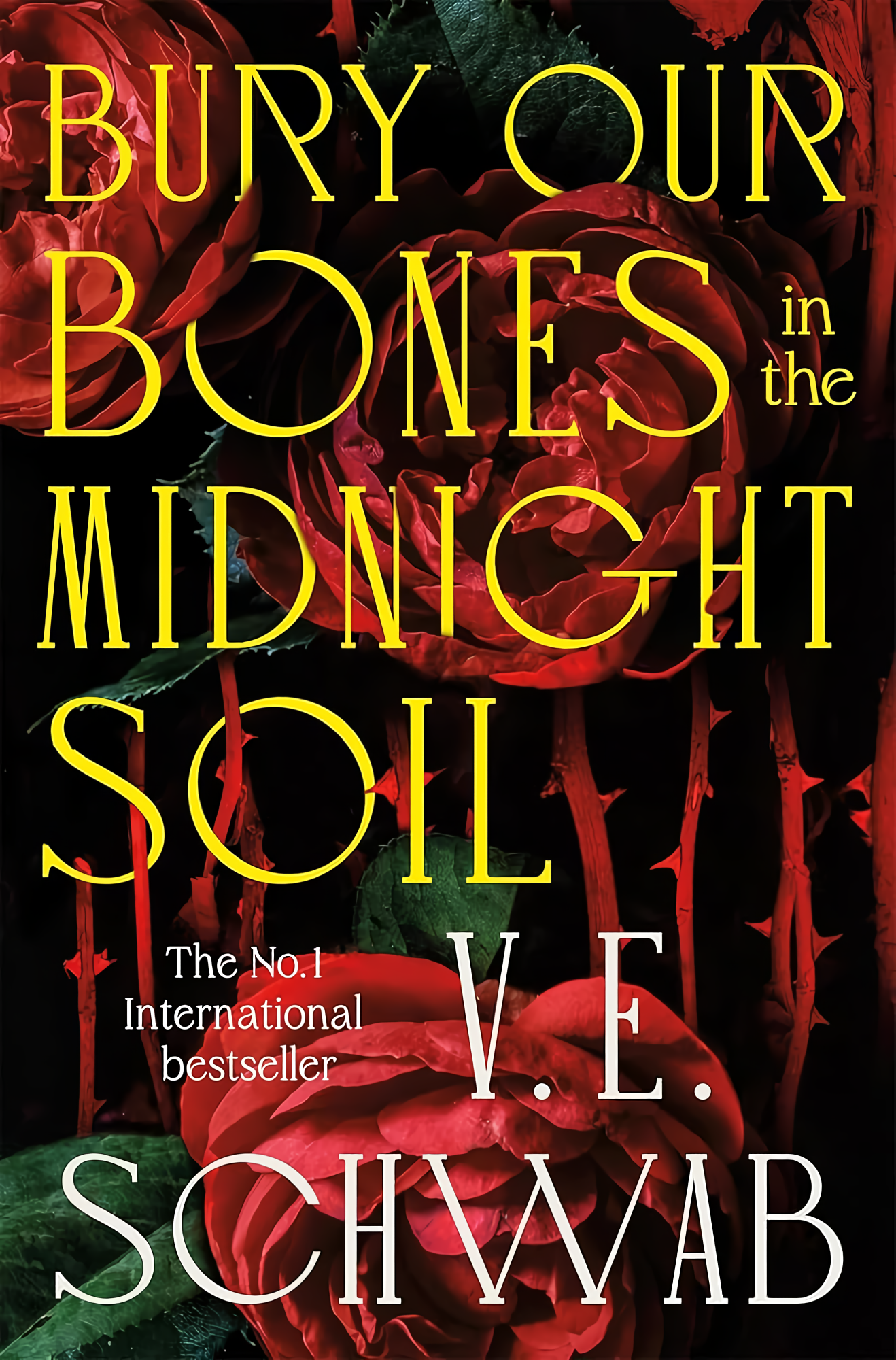
Bury Our Bones in the Midnight Soil is V.E. Schwab's first standalone novel since The Invisible Life of Addie LaRue (2020). It was published on June 10, 2025 by Tor Books in the United States and by Tor UK in the United Kingdom, in a hardcover of roughly 535 pages with cover art by Peter Lutjen. The audiobook is narrated by three readers, one per timeline: Julia Whelan, Katie Leung and Marisa Calin.
The novel debuted at #1 on the New York Times, USA Today, and Sunday Times bestseller lists, and was the Indie Next List's #1 pick of June 2025. It went on to win the 2025 Goodreads Choice Award for Readers' Favorite Fantasy and a Libby Book Award for Best Fantasy, and was nominated for the Audie Award for Fantasy. It is a standalone — no sequel has been announced — though Schwab has confirmed in interviews that the book began as a deeply personal coming-out story.
V.E. Schwab (also published as Victoria Schwab) is the #1 New York Times bestselling author of more than twenty books, including The Invisible Life of Addie LaRue, the Shades of Magic trilogy beginning with A Darker Shade of Magic, the Villains series beginning with Vicious, the Cassidy Blake middle-grade series, and the Threads of Power trilogy. She lives between Edinburgh and Nashville.
Content notes for readers: Bury Our Bones contains on-page sexual violence, domestic abuse, suicide of a sibling, addiction-coded vampire feeding, child death (offscreen), graphic violence, and a number of brutal kills of women by women. It is also explicit in places. If any of those are hard reads, go in prepared.