Lee Cronin’s The Mummy began streaming on HBO Max on July 3, 2026 after its spring theatrical release, giving the classic monster a fresh horror-first search wave. Existing “books like The Mummy” pages mostly chase the 1999 film’s romantic adventure. This list targets a thinner and darker intent: fiction about bodies, tombs and artifacts brought across a boundary they were meant to remain behind.
The 2026 film centers a missing daughter who returns changed after contact with a 3,000-year-old sarcophagus, so this ranking includes domestic return horror as well as literal archaeological digs. Every book links ancient material to present consequence. Scholars, climbers, tourists or relatives may open the door, but discovery never remains professionally contained.
Higher positions combine credible expedition or research detail with supernatural escalation and moral consequence. Lower entries may be adventure-forward, Gothic, or only adjacent to archaeology. The list excludes cozy Egyptological mysteries and emphasizes adult horror.
Selection note. Books are ranked for ancient remains, forbidden excavation, scholarly or family obsession and the past becoming physically dangerous in the present. A generic curse without material discovery was not enough.
10
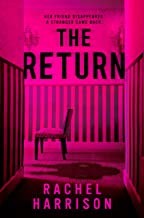
The Return
Rachel Harrison · 2020
Story engine A missing woman returns after two years and reunites with friends at an isolated hotel, visibly changed
Closest Lee Cronin’s The Mummy connection Love and denial make a group welcome someone whose body may no longer contain the person they lost
Main difference Contemporary friendship horror with no excavation, tomb or ancient scholarship
Best for Readers who want female friendship, isolated-hotel tension, body horror and a contemporary standalone.
Julie vanished without explanation and was presumed dead. When she returns with no clear account of her absence, four longtime friends gather at a themed hotel to reconnect. Elise notices changes in Julie’s appearance, appetite and behavior that the others explain away, turning the reunion into a conflict between loyalty and evidence.
Harrison is the closest match to the 2026 film’s domestic center. The frightening object is not a sarcophagus but the returned loved one whom grief has made everyone desperate to accept. Friendship history functions like an archive: each woman interprets the present through the person Julie used to be. It closes the list because archaeology is absent, but the changed-return premise is too exact to ignore.
The book takes position #10 because it is the strongest domestic companion to Cronin’s film and the weakest literal excavation match.
Know before you start. The novel includes eating-disorder imagery, body horror, grief, toxic friendship and graphic violence.
9
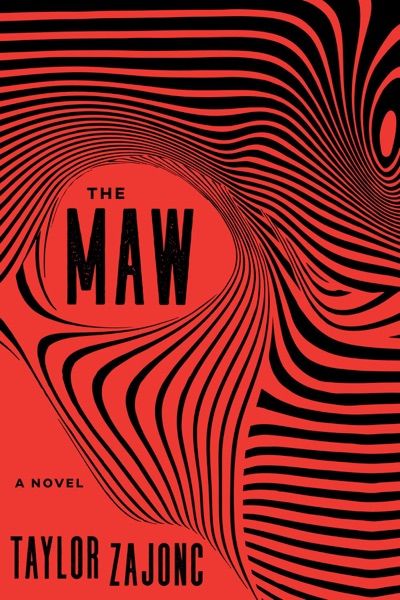
The Maw
Taylor Zajonc · 2018
Story engine A secret expedition enters an enormous Tanzanian cave system and encounters evidence capable of rewriting human origins
Closest Lee Cronin’s The Mummy connection Professional ambition and competing agendas drive explorers deeper than safety or ethics justify
Main difference A science-adventure survival novel with ambiguous horror and no supernatural curse
Best for Readers who want caving, lost expeditions, survival science and a thriller that flirts with horror.
Historian Milo Luttrell is invited to join a billionaire-funded team exploring a vast unmapped cave. Seven specialists descend with different goals and incomplete information. Weather, injury and conflict trap them thousands of feet below ground, where discoveries about an earlier expedition and human history make retreat as dangerous as continuing.
Zajonc uses the expedition team as a pressure chamber. Expertise enables descent but cannot create trust among people selected by a secretive patron. The cave preserves knowledge rather than an undead body, yet the moral pattern is archaeological horror: discovery is framed as worth any cost until the people paying that cost object. It is a good bridge for readers who prefer plausibility to possession.
The book takes position #9 because its field detail is strong, while the absence of a literal ancient evil places it near the bottom.
Know before you start. The novel includes claustrophobia, injury, death, cannibalism themes and prolonged underground peril.
8
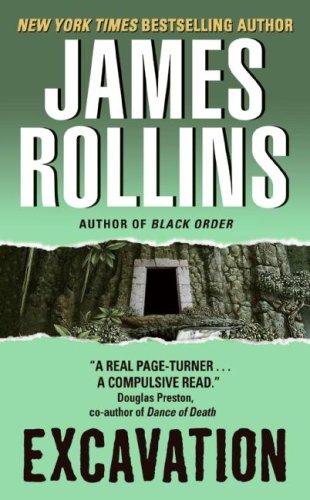
Excavation
James Rollins · 2000
Story engine An archaeological team enters an Incan site containing lethal traps, strange technology and a dangerous substance
Closest Lee Cronin’s The Mummy connection Scholarly discovery becomes a containment crisis shaped by institutional ambition and a buried civilization
Main difference A pulp adventure thriller whose horror is secondary to traps, pursuit and speculative science
Best for Readers who want Incan ruins, traps, expedition teamwork, secret history and blockbuster pacing.
Professor Henry Conklin leads students into a concealed Andean complex while his nephew Sam becomes trapped below with other members of the team. The chambers contain mummies, mechanisms and evidence that challenges accepted history. Outside interests pursue the discovery, while the material at its center proves capable of transforming the stakes.
Rollins delivers the tactile pleasures of archaeological adventure—maps, chambers, artifacts and competing interpretations—then accelerates them into techno-horror. The team’s expertise matters, but spectacle repeatedly wins over atmosphere. It ranks eighth because it resembles the adventurous Mummy tradition more than Cronin’s domestic terror, yet readers wanting excavation to remain central will find it satisfying.
The book takes position #8 because it is the fastest archaeological thriller, though the horror is pulpy.
Know before you start. The novel includes death traps, mummies, violence, body transformation and dated cultural framing.
7
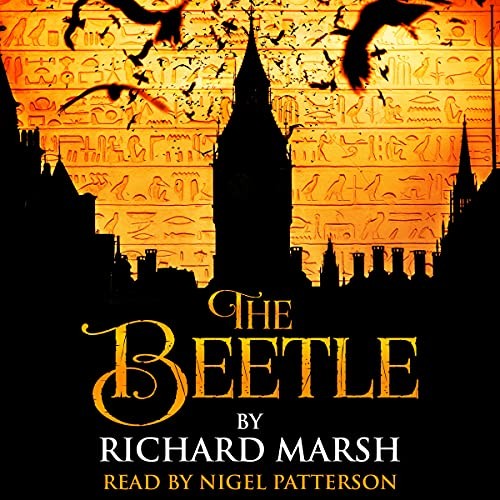
The Beetle
Richard Marsh · 1897
Story engine A shape-changing figure linked to an Egyptian cult pursues a British politician and those around him
Closest Lee Cronin’s The Mummy connection Imperial intrusion returns to London through a body that resists stable identity and classification
Main difference A sensational Victorian novel whose racism and gender panic are central to its construction
Best for Readers studying Victorian Gothic, imperial-return narratives and the literary history of mummy horror.
Multiple narrators recount encounters with a mesmerist known as the Beetle, whose pursuit of politician Paul Lessingham connects to a secret Egyptian religious order. The figure invades homes, controls minds and shifts appearance, while the investigators’ accounts reveal as much about British fear as about the threat itself.
Marsh’s novel was once more commercially successful than Dracula and offers a key pre-cinematic form of Egyptian return horror. The Beetle weaponizes the colonizer’s fear that stolen knowledge and violence will cross back into the metropolis. Its instability anticipates Cronin’s emphasis on changed bodies. Modern readers must recognize that the horror is also built from racist and transphobic anxieties.
The book takes position #7 because its historical importance is substantial, but its prejudices prevent a higher position.
Know before you start. The novel contains racism, xenophobia, gender panic, hypnosis, sexual threat and dated language.
We reviewed this: read our full review of The Beetle →
6
Ramses the Damned: The Mummy
Anne Rice · 1989
Story engine An immortal Egyptian ruler awakens in Edwardian England after his tomb is opened
Closest Lee Cronin’s The Mummy connection Excavation moves an ancient consciousness into a modern household where desire and history cannot be contained
Main difference Romantic historical fantasy with sensual melodrama rather than sustained horror
Best for Readers who want Egypt, immortality, historical romance, sensual Gothic atmosphere and a continuing series.
Archaeologist Lawrence Stratford discovers the tomb of Ramses II and an elixir associated with immortality. After Lawrence’s death, his daughter Julie inherits the mummy and the secrets around it. Ramses awakens, enters London society and pursues both Julie and unfinished passions connected to Cleopatra.
Rice treats the mummy as a person displaced by collectors rather than a bandaged mechanism of revenge. Ramses’ knowledge and desire make modern owners confront the arrogance of assuming the past is inert. The novel connects family inheritance, recovered body and dangerous longing directly, though its romance and luxury produce a much softer experience than Cronin’s possession horror.
The book takes position #6 because it is the best adult mummy-centered novel for readers who want the returned figure to speak.
Know before you start. The book includes murder, sexual content, colonial attitudes, age-gap dynamics and melodrama.
5
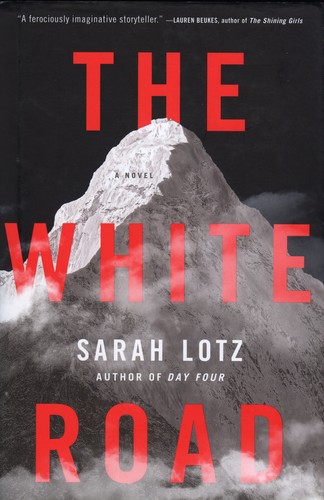
The White Road
Sarah Lotz · 2017
Story engine A content creator enters a deadly cave and later climbs Everest, where preserved bodies and a pale figure follow him
Closest Lee Cronin’s The Mummy connection Adventure tourism turns human remains into landmarks until the dead appear to answer the gaze
Main difference A mountaineering ghost story split between underground and high-altitude expeditions
Best for Readers who want cave horror, Everest survival, media criticism and an unreliable haunting.
Simon Newman accompanies a reckless guide into Cwm Pot to film corpses for a website. After surviving, he accepts an Everest expedition designed to generate more traffic. On the mountain, bodies used as route markers and the apparition of a woman in white blur trauma, haunting and the ethics of turning death into content.
Lotz updates tomb violation for the attention economy. Simon does not excavate artifacts; he extracts images and stories from remains that cannot consent. Caves and Everest become opposite versions of the same sealed world, both preserving bodies and amplifying obsession. The supernatural ambiguity makes the novel less creature-driven than The Mummy, but its moral logic is exact.
The book takes position #5 because its preserved bodies and exploitative gaze provide the most contemporary thematic match.
Know before you start. The novel includes graphic corpses, climbing deaths, panic, exploitation and ambiguous mental illness.
4
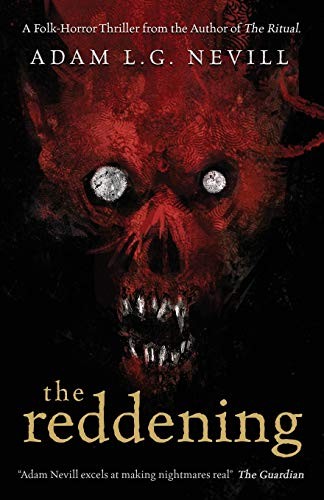
The Reddening
Adam Nevill · 2019
Story engine Discoveries in coastal caves connect prehistoric remains to a violent modern cult
Closest Lee Cronin’s The Mummy connection Excavation, folklore and landscape expose an ancient continuity beneath respectable local life
Main difference A sprawling British folk-horror novel with multiple viewpoints and contemporary crime
Best for Readers who want British caves, cults, prehistoric ritual, investigative women and sustained dread.
After a cave yields evidence of ancient ritual violence, journalist Kat and grieving widow Helene become drawn toward the Devon coast. Disappearances, music and a local family’s power suggest that the find has not uncovered a dead culture. It has disturbed a living practice capable of absorbing outsiders.
Nevill makes archaeology socially dangerous. Scientific evidence attracts media, collectors and opportunists while local knowledge remains deliberately opaque. The prehistoric past does not return as one resurrected creature; it persists through appetite, ceremony and control of land. The slow accumulation of details rewards readers who want the curse to extend beyond a single tomb.
The book takes position #4 because it is the strongest folk-horror expansion of the archaeological premise.
Know before you start. The book includes graphic violence, animal harm, abduction, drug use, body horror and a deliberately long buildup.
3
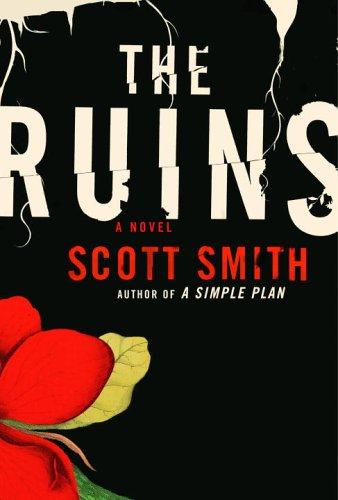
The Ruins
Scott Smith · 2006
Story engine Tourists searching for an archaeological dig become trapped on a Mayan site by a predatory organism
Closest Lee Cronin’s The Mummy connection A casual visit to disturbed ruins turns ancient place, biological threat and human arrogance into one enclosure
Main difference Relentlessly bleak survival horror with minimal scholarship and no mummy
Best for Readers who want escalating isolation, body horror, ruthless pacing and a standalone with no supernatural exposition.
Four American tourists join others in rural Mexico to locate a missing traveler at a dig. Villagers force them to remain on a vine-covered hill, and the group gradually understands that the vegetation is intelligent, imitative and impossible to contain. Limited water and mutual distrust make every attempted solution worse.
Smith strips archaeological horror to trespass and consequence. The visitors know almost nothing about the site, yet assume mobility and explanation are their rights. The organism uses voices and bodies, transforming the ruin into a trap that remembers intrusion. There is no comforting curse lore to decode; material contact is enough. That severity makes the novel a superb horror-first companion to Cronin’s film.
The book takes position #3 because its site-based dread is unmatched, though it favors survival over research.
Know before you start. The novel includes extreme body horror, self-mutilation, suicide, death and an unrelentingly bleak tone.
2
The Jewel of Seven Stars
Bram Stoker · 1903
Story engine Egyptologists attempt to resurrect Queen Tera using artifacts gathered from her tomb
Closest Lee Cronin’s The Mummy connection Scholarly obsession brings an ancient ruler into an English home where family, body and collection become inseparable
Main difference An Edwardian Gothic novel with dated colonial assumptions and two historically different endings
Best for Readers who want classic Gothic Egyptology, occult ritual, haunted collections and literary history.
Barrister Malcolm Ross is summoned after Egyptologist Abel Trelawny is found unconscious under mysterious attack. Trelawny’s house contains a mummy, lamps, weapons and the seven-pointed jewel associated with Queen Tera. His daughter Margaret appears increasingly connected to the queen as the group prepares a ritual intended to restore ancient life.
Stoker helped define the modern mummy story as a collision between excavation and domestic space. The collection is not passive décor; each removed object completes a system whose purpose the collectors only partly understand. Margaret’s identity becomes the contested site of return. The novel’s gender and imperial framing require critique, but its influence and eerie research atmosphere remain undeniable.
The book takes position #2 because it is the foundational archaeological-return novel, placed second because its age complicates accessibility.
Know before you start. The book includes colonialism, racial stereotypes, grave removal, threatened possession and ambiguous treatment of female agency.
1
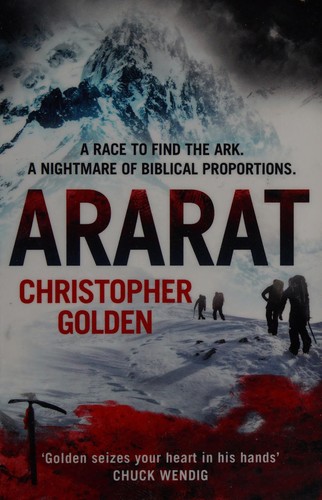
Ararat
Christopher Golden · 2017
Story engine An expedition enters a newly exposed chamber on Mount Ararat and finds a horned corpse inside an ark
Closest Lee Cronin’s The Mummy connection Scholarship, faith and containment collapse as an ancient body exerts influence over a trapped team
Main difference A snowbound ensemble possession novel tied to Noah rather than Egypt
Best for Readers who want a remote expedition, biblical archaeology, storms, ensemble suspicion and a complete story.
An earthquake reveals a cave on Mount Ararat containing what may be Noah’s Ark. Adventurer-documentarians Adam and Meryam join archaeologists, officials and clergy racing to authenticate the site. The discovery of a nonhuman corpse inside a sealed coffin changes the expedition from historical sensation to siege as weather closes the mountain.
Golden balances field logistics with supernatural uncertainty. Languages, religious claims, national authority and media ambition all shape how the find is handled before anyone accepts danger. The corpse is both artifact and active contaminant, making the excavation site a temporary institution that cannot agree on what it owes the dead. Its snowbound escalation offers the cleanest modern version of a cursed tomb being opened.
The book takes position #1 because it is the strongest full-length union of excavation procedure, sealed remains and possession horror.
Know before you start. The novel includes possession, murder, graphic violence, religious conflict and claustrophobia.