The Hunger Games have never been only a punishment. Panem turns punishment into programming: costumes, interviews, sponsors, assigned narratives, and a winner expected to embody the Capitol's preferred meaning of survival. Sunrise on the Reaping returns to the Second Quarter Quell, when twice the usual number of children are selected and young Haymitch Abernathy learns how completely a person's private life can be edited into state entertainment. Lionsgate's film adaptation is scheduled for November 20, 2026.
The most revealing dystopian competitions do not merely place characters in danger. They place danger before an audience. Governments and corporations convert suffering into proof that the system is exciting, fair, necessary, or impossible to resist. Contestants acquire brands. Viewers receive rules that let them experience complicity as fandom. Even rebellion may be edited into a better season of the same show.
This ranking emphasizes novels in which institutions make a public ritual from human risk. Some offer literal broadcasts; others use trials, beauty ceremonies, courtship, or forced survival to demonstrate power. Similarity to Haymitch's experience matters more than resemblance to Katniss's arena alone: these are stories about people forced to perform a version of themselves while the system decides which parts the audience is allowed to see.
10
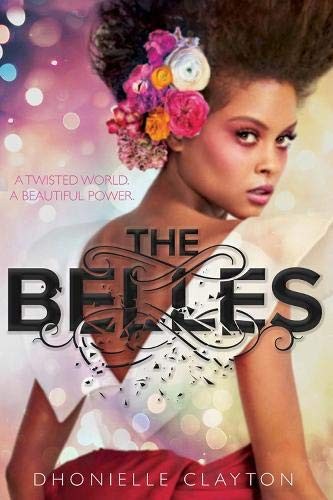
The Belles
Dhonielle Clayton · 2018
Spectacle Girls with the power to alter appearance are displayed, ranked, and assigned to serve a beauty-obsessed court
Closest Sunrise on the Reaping connection A ruling class converts gifted young people into glamorous public property
Main difference Court fantasy centered on beauty labor rather than a lethal arena
Best for Readers who want lush YA fantasy, palace intrigue, dangerous beauty standards, and a heroine awakening to institutional exploitation.
Know before you start The novel includes body manipulation, racism by allegory, abuse, torture, disordered eating themes, sexual harassment, and violence against young women.
In Orléans, most people are born gray and depend on the Belles to change their hair, skin, features, and bodies. Camellia Beauregard has trained to be chosen as the palace's favorite, believing the position will let her become the finest Belle of her generation. Selection instead reveals a court where beauty is political currency and the person performing transformation has little authority over what powerful clients demand.
Clayton captures the machinery surrounding spectacle: the preparation, presentation, rankings, gossip, and appetite for novelty. Belles appear privileged because their captivity is luxurious. Their clothes and access make exploitation look like distinction, while competition discourages them from recognizing a shared condition. The public celebrates their gifts without questioning who controls their use.
It ranks tenth because its violence is largely courtly and private rather than a mass survival broadcast. The connection to Panem lies in aesthetic control. Before a tribute enters the arena, stylists turn a frightened child into a consumable symbol. Camellia inhabits the other side of that transaction and learns that the beauty industry serving power also devours its workers.
9
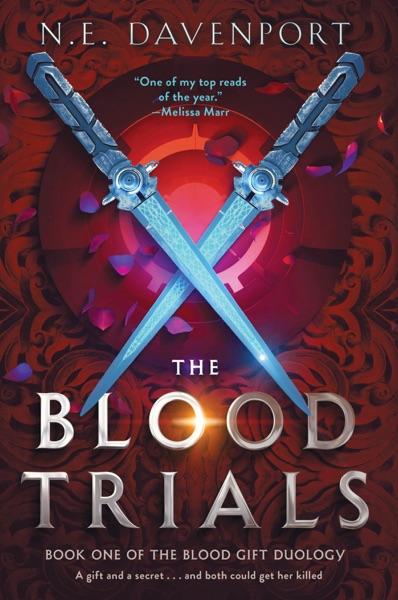
The Blood Trials
N. E. Davenport · 2022
Spectacle Elite military candidates endure public trials designed to prove loyalty and eliminate weakness
Closest Sunrise on the Reaping connection A young competitor must conceal dangerous knowledge while an institution controls the story told about her performance
Main difference Adult science fantasy with military training, blood magic, and a revenge mystery
Best for Readers who want a furious heroine, deadly military trials, science fantasy, revenge, and explicit confrontation with systemic racism.
Know before you start The novel includes graphic violence, racism, misogyny, grief, murder, torture, hazing, and a high level of profanity.
Ikenna Amari abandons her military ambitions after the suspicious death of her grandfather, a revered commander. When she learns he may have been murdered, she enters the Praetorian Trials to find the people responsible. The competition tests candidates through lethal physical and strategic exercises while Ikenna hides the illegal blood gift inherited from her people.
The trials claim to identify merit, but their standards are shaped by a society already prepared to read Ikenna as angry, undisciplined, and racially inferior. Success does not erase that prejudice. It makes her more visible to officials who can reinterpret excellence as threat. Like a tribute, she must perform for judges whose neutrality is part of the propaganda.
The book ranks ninth because its audience is institutional rather than a nation watching from home. It earns a place for understanding the political uses of evaluation. A trial can produce legitimate skill while remaining structurally dishonest. Ikenna's task is not merely surviving the test; it is surviving the official explanation of what her survival means.
8
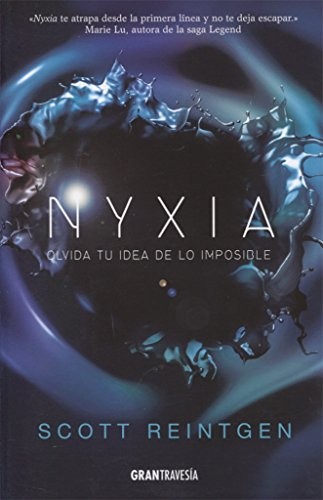
Nyxia
Scott Reintgen · 2017
Spectacle A corporation recruits teenagers to compete for places on a lucrative off-world mining mission
Closest Sunrise on the Reaping connection Young contestants receive manufactured opportunity while sponsors profit from making them rivals
Main difference A spaceship training competition driven by corporate secrecy rather than state punishment
Best for Readers who want an accessible YA science-fiction competition, a diverse cast, shifting alliances, and corporate conspiracy.
Know before you start The book includes injury, death, medical exploitation, grief, economic coercion, bullying, and a mission whose full risks are deliberately concealed.
Emmett Atwater accepts an offer from Babel Communications because the money could transform his family's life and pay for his mother's medical care. He and other teenagers travel toward the planet Eden while competing for a limited number of mining positions. Their training is monitored, scored, and repeatedly altered by executives who know far more about the mission than the recruits do.
Babel sells coercion as mobility. The contestants technically volunteered, but their financial circumstances make refusal largely theoretical. Rankings turn friendship into risk, and the promise of wealth encourages each teenager to treat corporate judgment as objective. Emmett must decide when solidarity is morally necessary and when it may cost the future he entered the program to secure.
It ranks eighth because the competition is not primarily public entertainment. Its Panem connection is sponsorship: powerful adults create artificial scarcity, attach life-changing rewards, and observe young people adapting to rules designed for corporate benefit. The contestants' authentic emotions then become another resource Babel can measure and exploit.
7
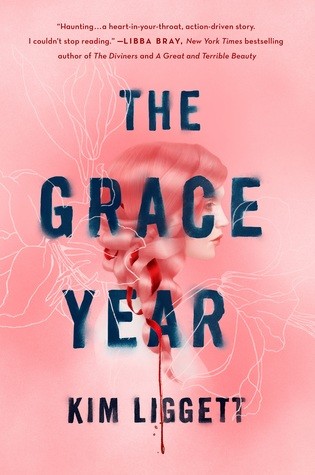
The Grace Year
Kim Liggett · 2019
Spectacle Sixteen-year-old girls are exiled for a year so their community can ritualize fear of female power
Closest Sunrise on the Reaping connection A deadly tradition maintains social obedience by turning selected young people against one another
Main difference Survival horror without cameras, sponsors, or a central game authority inside the exile
Best for Readers who want feminist dystopia, wilderness survival, social horror, and a closed community built on ritualized misogyny.
Know before you start The novel includes graphic violence, misogyny, body mutilation, suicide, starvation, abuse, child marriage, and girls turning violently against one another.
In Garner County, girls approaching marriage are said to possess dangerous magic. During their grace year, they are sent beyond the settlement to release it before returning to become wives, laborers, or outcasts. Tierney James enters the year skeptical of the story and quickly learns that the ritual's greatest weapon is not the wilderness. It is the expectation that the girls will police, punish, and mythologize one another.
The county hides the grace year while displaying its consequences. Scarred survivors and bodies returned in pieces teach younger girls what resistance costs. Men can describe the system as natural because female violence appears to confirm every warning. The ritual creates the behavior used to justify the ritual.
It ranks seventh because there is no viewing audience in the conventional sense. Its political spectacle takes place across generations: a community stages disappearance, return, marriage, and silence as proof of its own worldview. Haymitch likewise enters an arena whose rules are only one part of the punishment; the larger purpose is teaching everyone at home how a person is expected to break.
6
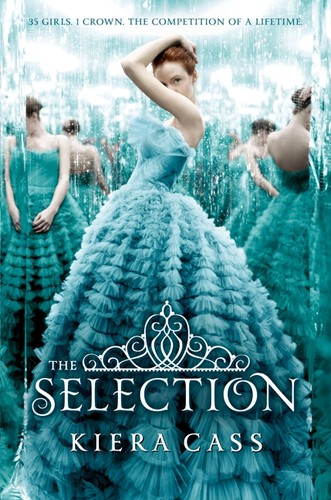
The Selection
Kiera Cass · 2012
Spectacle Thirty-five girls compete in a televised royal courtship intended to stabilize a caste-divided monarchy
Closest Sunrise on the Reaping connection A young woman is styled, interviewed, and assigned a public romance while political unrest remains outside the frame
Main difference A comparatively light romantic dystopia rather than a survival story
Best for Readers who want romance, palace competition, accessible YA dystopia, and media management without relentless violence.
Know before you start Expect a love triangle, rigid caste inequality, rebel violence, family pressure, public scrutiny, and a lighter political treatment than other books on this list.
America Singer belongs to a lower caste and enters the Selection largely because participation could help her family. Chosen to live at the palace, she becomes one of the young women presented to the country as potential wives for Prince Maxon. Cameras, dresses, etiquette, and elimination ceremonies transform marriage into national reassurance.
The competition's apparent frivolity is its political purpose. Citizens receive a story about romance and merit while the caste structure and rebel attacks become background complications. Contestants gain material comfort and visibility but must surrender control over how their emotions are edited. Even reluctance can be converted into an appealing character trait.
It ranks sixth because the stakes are less brutal and the series often embraces the fairy tale it critiques. Yet it provides one of the clearest parallels to the pre-arena Hunger Games apparatus. America learns, as tributes do, that survival may depend on giving the audience a coherent person to support—and that the public person can begin making claims on the private one.
5
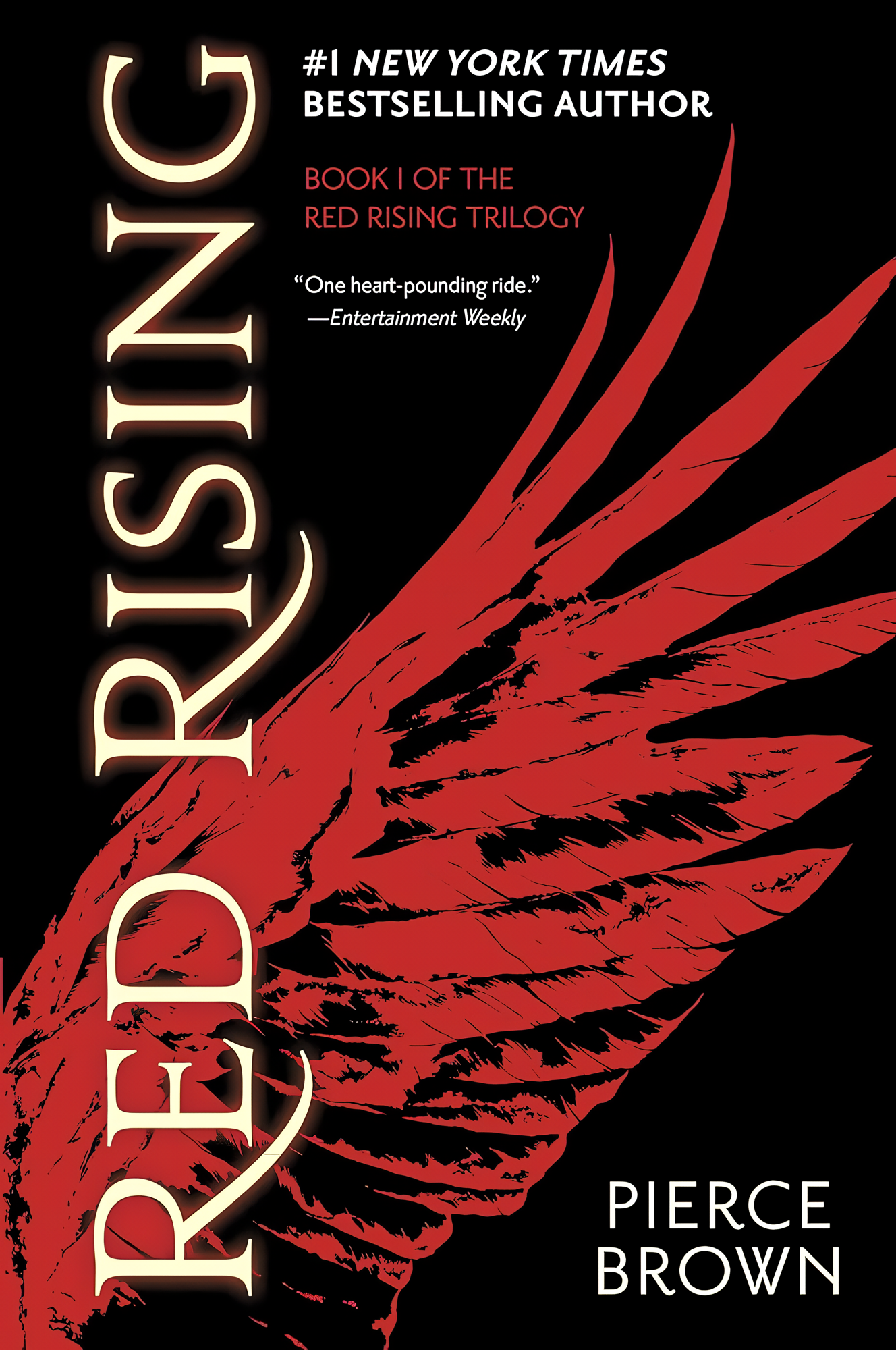
Red Rising
Pierce Brown · 2014
Spectacle Elite students fight a supervised war game that identifies the next generation of rulers
Closest Sunrise on the Reaping connection A competitor conceals his real identity while patrons turn adolescent brutality into leadership credentials
Main difference A revenge-driven space opera whose protagonist infiltrates the ruling class
Best for Readers who want fast space opera, class revolt, military games, shifting alliances, and a protagonist performing loyalty to his enemy.
Know before you start The novel includes slavery, execution, graphic violence, sexual violence, torture, grief, body alteration, and a strongly hierarchical social world.
Darrow is a Red miner who believes his labor helps terraform Mars. After learning that humanity already lives on the surface and his people are kept underground as slaves, he is surgically remade as a Gold. To enter the ruling caste, he must survive the Institute, where students form armies, conquer territory, and brutalize one another under the eyes of Proctors and powerful sponsors.
The Institute presents violence as education. Its observers intervene selectively, reward dominance, and treat suffering as evidence about who deserves command. Darrow must appear Gold enough to win while privately remembering why he entered. Every alliance therefore has two audiences: the people beside him and the rebellion waiting for the person he promised to remain.
It ranks fifth because it shares the arena's pace while adding Haymitch's burden of hidden resistance. Darrow discovers that breaking the intended rules can still produce excellent entertainment for elites seeking an exceptional candidate. A system may tolerate rebellion when it can rename rebellion charisma and recruit the rebel into management.
We reviewed this: read our full review of Red Rising →
4

The Running Man
Stephen King · 1982 under the name Richard Bachman
Spectacle An impoverished man becomes the target of a national game show in which viewers are paid to report or kill him
Closest Sunrise on the Reaping connection Producers construct an enemy for the audience while a contestant tries to speak beyond the edit
Main difference A compressed adult chase thriller focused on poverty, pollution, and mass media
Best for Readers who want a lean dystopian chase, angry class politics, media satire, and constant forward movement.
Know before you start The book includes child illness, poverty, racism, state violence, murder, hostage-taking, mass casualties, and dated language.
Ben Richards needs money for his sick daughter and enters the Games Network's brutal programming system. Assigned to The Running Man, he must remain alive while professional Hunters pursue him across the country. Each day he mails recorded messages to the network, earning money for his family while providing the show with material it can edit and broadcast.
King makes the audience part of the pursuit. Citizens can profit by reporting Ben, while the network controls the information that determines whether they see a desperate father or a dangerous criminal. Ben's movement through neglected neighborhoods exposes a country whose entertainment system converts inequality into evidence that the poor are disposable.
It ranks fourth because its media logic is brutally close to Panem. The producers do not merely record a hunt; they manufacture the social conditions that make the hunt seem deserved. Like Haymitch, Ben realizes that the most dangerous act may be addressing viewers without accepting the role written for him.
3
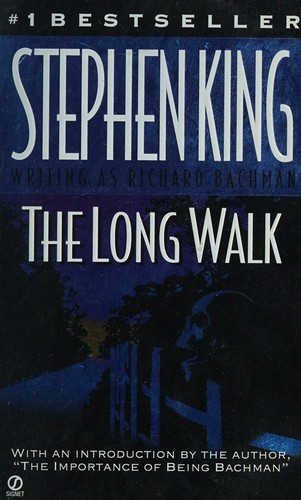
The Long Walk
Stephen King · 1979 under the name Richard Bachman
Spectacle One hundred boys walk under armed guard until only one remains alive
Closest Sunrise on the Reaping connection A national tradition turns adolescents into celebrities while rules reduce death to procedure
Main difference An austere alternate-America horror novel with almost no setting beyond the road
Best for Readers who want minimalist psychological horror, intense male friendship, endurance, and a competition reduced to its cruelest rules.
Know before you start The novel includes prolonged adolescent death, suicide, gun violence, psychological collapse, sexual discussion, and an intentionally repetitive physical ordeal.
Ray Garraty joins ninety-nine other boys in the annual Long Walk. They must maintain the required pace; warnings accumulate, and after the final warning a walker receives his "ticket." Crowds line the route, broadcasters report progress, and the winner will receive whatever he wants for the rest of his life. The promise is so enormous that no one can define it clearly.
The novel's horror comes from repetition. Death is not a twist but a rule applied with bureaucratic consistency. As exhaustion strips away the walkers' public personas, friendship becomes both comfort and liability. Spectators cheer because the event's continuity makes individual suffering feel temporary, one more dramatic beat before attention moves up the road.
It ranks third because few books capture the psychological endurance of an arena so completely. Garraty experiences the same distortion that shapes tributes: strangers believe visibility makes them know him, while the people dying beside him become more real than the nation claiming to honor their courage. The walk reveals that spectacle does not hide death. It teaches viewers how to look directly at death without recognizing responsibility.
2
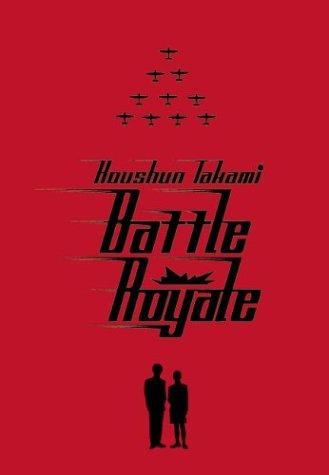
Battle Royale
Koushun Takami · 1999 in Japan; 2003 in English translation
Spectacle A school class is forced into a government death program designed to produce fear and distrust
Closest Sunrise on the Reaping connection The state weaponizes young people's relationships and makes survival serve as proof of its total authority
Main difference The Program is political terror rather than a heavily produced national broadcast
Best for Readers who want the most direct lethal-game comparison, a huge cast, relentless action, and an uncompromising authoritarian setting.
Know before you start The novel contains extremely graphic teenage violence, sexual assault, suicide, bullying, child abuse, authoritarianism, and many on-page deaths.
In an authoritarian version of Japan, forty-two students from the same class wake on an island wearing explosive collars. The rules are simple: they must kill one another until one remains, and any attempt to avoid the game will activate the collars. Shuya Nanahara, Noriko Nakagawa, and the experienced Shogo Kawada search for a way out while classmates respond with panic, strategy, loyalty, or violence.
Takami gives nearly every student enough interior life to make the government's abstraction fail. The Program depends on turning "a class" into a manageable statistic and convincing participants that trust is irrational. The novel repeatedly restores the private history behind each death, showing friendships and humiliations the state treats as disposable inputs.
It ranks second because the political function of the game is even more explicit than its entertainment value. The regime wants citizens to believe that solidarity will collapse under pressure. Haymitch's Quarter Quell pursues the same objective through a more polished broadcast. Both systems fear not exceptional fighters but ordinary people who decide another person's life remains real after the rules declare it expendable.
1
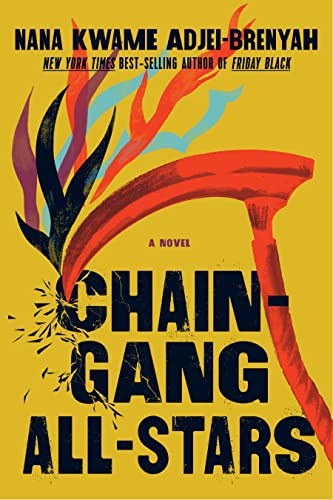
Chain-Gang All-Stars
Nana Kwame Adjei-Brenyah · 2023
Spectacle Incarcerated people fight televised death matches for corporate profit and the possibility of freedom
Closest Sunrise on the Reaping connection Sponsors, commentators, merchandise, audience affection, and state violence turn captive people into consumable characters
Main difference An adult near-future satire rooted directly in the American prison-industrial complex
Best for Readers who want literary dystopia, unforgettable fighters, abolitionist politics, media critique, and emotional depth alongside brutal action.
Know before you start The novel includes graphic combat, incarceration, racism, suicide, torture, sexual violence references, corporate exploitation, and repeated deaths.
Loretta Thurwar and Hamara "Hurricane Staxxx" Stacker are lovers, teammates, and the leading stars of Criminal Action Penal Entertainment. Incarcerated competitors called Links travel between arenas and kill opponents before paying crowds. Thurwar is approaching the freedom promised after three undefeated years, but her value to the program grows as the official end of her captivity approaches.
Adjei-Brenyah never lets exciting combat detach from the institution selling it. Commentators invent narratives, fans debate favorites, brands attach themselves to weapons, and protest becomes content circulating beside promotional material. Viewers can oppose cruelty in theory while developing intimate preferences about the people required to perform it.
It ranks first because it is the clearest adult counterpart to Panem's media machine. Thurwar and Staxxx know that their relationship, resistance, and pain will be packaged regardless of what they intend. The system's most obscene achievement is not making audiences enjoy violence. It is making them feel that attention to the contestants is a form of care.
Which Political-Spectacle Dystopia Should You Read First?
Choose Chain-Gang All-Stars for the strongest match to the Capitol's complete entertainment system. Its fighters have fan bases, sponsors, branded weapons, and carefully maintained public narratives, while freedom remains a prize controlled by the people earning money from captivity. Choose Battle Royale for the closest arena premise and the most expansive account of how classmates respond to forced distrust.
Read The Long Walk for psychological endurance and The Running Man for media manipulation at chase-thriller speed. Red Rising is the best option if you want a larger series and a protagonist infiltrating the class that designed the game. The Grace Year offers the strongest closed-community critique, even without cameras.
For less graphic entry points, begin with The Selection or The Belles. Nyxia turns economic desperation into a corporate recruitment contest, while The Blood Trials uses military evaluation to show how institutions can call prejudice merit.
Political spectacle does not ask an audience to ignore suffering. It asks the audience to interpret suffering through official rules. A dead contestant becomes eliminated. A coerced performance becomes ambition. A relationship becomes a storyline. Once the vocabulary is accepted, viewers can feel sympathy without questioning the institution that arranged the pain.
Chain-Gang All-Stars ranks first because it makes that vocabulary impossible to overlook. Its audience knows the fighters' names, preferences, weapons, and romances while remaining insulated from the fact that knowing a captive is not the same as recognizing captivity. That is also the enduring terror of Sunrise on the Reaping: the Capitol does not erase a tribute's humanity. It acquires the rights to broadcast it.