The Backrooms movie arrived in theaters on May 29, 2026, carrying one of the internet's most durable nightmares into a feature film: fluorescent rooms, institutional carpet, no reliable exterior and the suspicion that an ordinary wall has opened into a place built for nobody. Its theatrical story follows a therapist entering that otherworldly dimension while searching for a missing patient, but the larger attraction remains architectural. The building is not merely haunted. Space itself has stopped honoring human expectations.
Plenty of recent recommendation pages collect novels associated with liminal horror. This list takes a narrower route with less search competition: books in which an endless building, impossible room or expanding interior performs substantial narrative work. A vaguely eerie hotel is not enough. Doors must change destinations, basements must exceed the houses above them, or a familiar commercial environment must reveal an internal world that cannot be mapped.
The ranking includes novels and novellas because impossible architecture often works best at concentrated length. Horror dominates, but fantasy, satire and philosophical fiction appear when their spaces create the right estrangement. The highest entries make exploration central and allow the building to alter memory, identity or narrative form. Lower selections may spend less time mapping corridors, yet each captures the essential Backrooms fear: the surroundings look designed, but whatever designed them did not have your comfort—or perhaps your species—in mind.
Selection note. This list rewards architecture that is physically impossible, narratively important and difficult to escape. It is not a general collection of haunted houses or “liminal vibes.” Several books use experimental forms, and the content notes identify where typography, generated text or fragmented narration may affect accessibility.
10
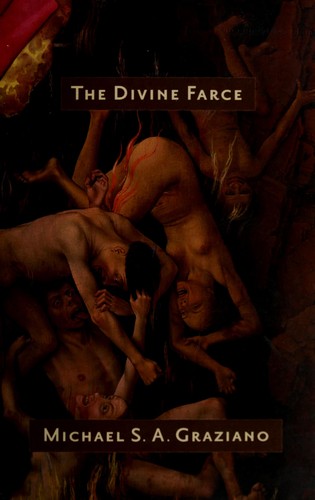
The Divine Farce
Michael S. A. Graziano · 2009
Impossible space Three strangers begin eternity crushed together inside a dark concrete stall too small for them to sit
Closest Backrooms connection An anonymous institutional enclosure becomes an entire reality whose purpose and limits must be inferred from almost nothing
Main difference A surreal, unexpectedly humane afterlife fable rather than a chase through corridors
Best for Readers who want a very short philosophical nightmare, afterlife speculation, absurdity, companionship under pressure and a surprising emotional turn.
Sage, Rose and Henry exist in darkness with liquid food arriving from above and waste leaving through a grate below. They cannot move away from one another, identify a guard or locate a door. Time erodes ordinary social boundaries before changes in the enclosure suggest that the stall may be only the first part of a much stranger system.
Graziano begins with less space than the Backrooms rather than more. The effect is similarly disorienting: functional surfaces imply design, but explanation never arrives with them. It ranks tenth because the physical journey expands beyond the opening premise and the novella's deepest interest is human adaptation. Its macabre setup eventually supports an argument about solidarity, making it the most hopeful entry here without ever making the environment reasonable.
Know before you start. The novella includes extreme confinement, bodily waste, death, despair and grotesque imagery. Its surreal logic matters more than literal world-building.
9
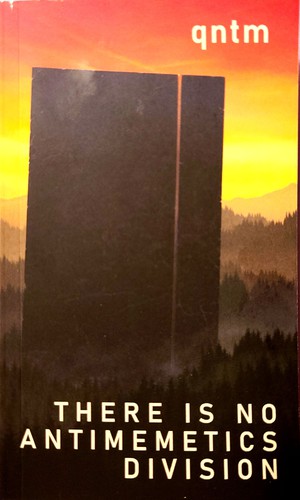
There Is No Antimemetics Division
qntm · 2025 in its expanded traditional edition, following an earlier online sequence
Impossible space A secret organization operates through facilities and conceptual zones threatened by entities the mind cannot retain
Closest Backrooms connection Rooms, personnel and entire incidents can become inaccessible not through locked doors but because awareness of them is being erased
Main difference High-concept science-fiction horror about information hazards rather than one continuous maze
Best for Readers who want SCP-adjacent fiction, secret agencies, recursive problems, cosmic horror, conceptual monsters and a puzzle that rewards close attention.
The Foundation's Antimemetics Division fights threats that resist memory and transmission. An observer can survive an encounter yet lose the fact that anything happened. Files, mnemonics and deliberately constructed procedures help agents work around the holes, but the enemy can attack the institutional memory on which those procedures depend.
The book ranks ninth because its geography is fragmented across interlocking episodes. Its spaces become impossible through cognition: a hallway may be physically present and still unreachable if the idea of entering it cannot survive long enough to guide action. That makes the experience unusually close to online Backrooms lore, where levels, entities and records are always less stable than the documentation suggests. The 2025 edition expands and reimagines material first published online rather than functioning as a simple reprint.
Know before you start. The book includes memory loss, suicide, death, body horror, institutional collapse and disorienting gaps. Its structure is episodic and deliberately withholding.
8
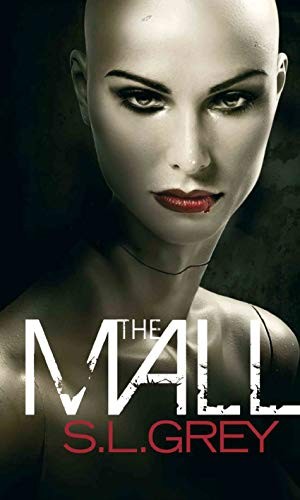
The Mall
S. L. Grey · 2011
Impossible space Service corridors beneath a Johannesburg shopping center descend into the Downside, a distorted retail world with no trustworthy exit
Closest Backrooms connection Fluorescent commercial space repeats past the point of usefulness while signage and customer-service language become actively hostile
Main difference Grotesque consumer satire with alternating narrators and a populated mirror society
Best for Readers who want South African horror, hostile malls, consumer satire, unpleasant protagonists forced to cooperate and the beginning of a loose trilogy.
Rhoda loses the child she was supposed to watch while visiting the mall for drugs. She forces bookstore employee Dan to help search after closing, and the two follow corridors, service areas and threatening messages farther below the public building. The route deposits them in a version of the mall where stores, workers and shoppers obey rules that literalize exploitation and consumption.
Written by Sarah Lotz and Louis Greenberg under a shared name, the novel is strongest when concrete back-of-house detail becomes impossible by degrees. Dan and Rhoda are abrasive, frightened companions rather than professional explorers, and their alternating voices make cooperation feel precarious. It ranks eighth because the Downside develops into social dystopia instead of remaining an empty maze. For retail Backrooms imagery, it was strikingly early.
Know before you start. The book includes addiction, child endangerment, racism, graphic violence, body horror, animal cruelty, sexual threat and extremely grotesque commercial imagery.
7
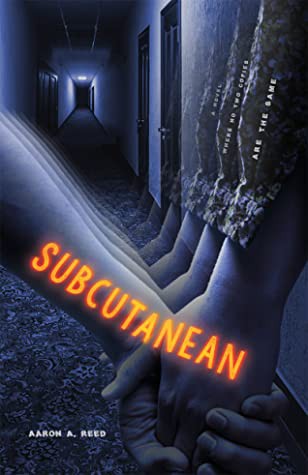
Subcutanean
Aaron A. Reed · 2020
Impossible space A staircase beneath a college student's bed opens into a basement that keeps generating corridors, rooms and incompatible versions of itself
Closest Backrooms connection Ordinary domestic access leads directly into a beige, repetitive and effectively endless interior whose layout cannot stabilize
Main difference A queer relationship drama published in individually generated textual variants
Best for Readers who want queer horror, college friendship, procedural experimentation, parallel possibilities and a book whose physical edition participates in the premise.
Orion lives with his best friend Niko in an old off-campus house and wants their intimacy to become something more. Discovering the basement appears to offer a secret adventure they can share. Instead, the Downstairs extends beyond every plausible boundary, and exploration exposes alternate possibilities in both the space and their relationship.
Reed built the novel so printed copies can contain different wording, details and even scene variations assembled from a large master text. That production method does not turn it into a gimmick detached from the plot; it makes every copy a neighboring passage through the same unstable architecture. The book ranks seventh because its emotional focus and generated variation sometimes diffuse the spatial horror. Its literal secret basement is nevertheless one of the purest matches on the list.
Know before you start. The novel includes confinement, injury, relationship distress, self-destructive behavior and psychological deterioration. Different copies may not match online summaries or a friend's edition exactly.
6
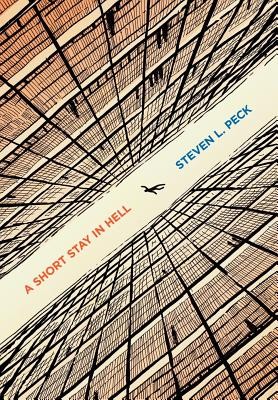
A Short Stay in Hell
Steven L. Peck · 2009; republished by Strange Violin Editions in 2012
Impossible space Hell is a library vastly larger than the observable universe, containing every possible book of a fixed length
Closest Backrooms connection Repeated rooms and shelves reduce human time, distance and individuality to almost meaningless scales
Main difference A philosophical afterlife novella inspired by the Library of Babel rather than modern liminal architecture
Best for Readers who want existential horror, mathematical scale, a quick novella, afterlife speculation and melancholy that grows long after the final page.
Soren Johansson, a Mormon geologist, dies and learns that Zoroastrianism was the correct religion. His temporary punishment is to locate the one volume containing a perfect account of his life. The library has food, living quarters and books in abundance. It also has a combinatorial scale so enormous that “temporary” becomes more frightening than ordinary ideas of eternity.
Peck uses plain narration to make numbers emotionally comprehensible. Soren forms relationships, develops search methods and traverses vertical distances that destroy any intuitive sense of duration. It ranks sixth because the structure is purposeful and its residents know the exit condition. That knowledge offers little comfort. Like the Backrooms, the library makes recognizable architecture terrifying by repeating it beyond the scale on which a human life can matter.
Know before you start. The book includes suicide, fatal falls, death, hopelessness, religious disillusionment and vast spans of suffering. The prose is accessible even when the concept is severe.
5

Horrorstör
Grady Hendrix · 2014
Impossible space An IKEA-like furniture superstore opens after hours into a historical prison and a showroom designed for punishment
Closest Backrooms connection A standardized, windowless commercial maze becomes lethal when employees remain after the public-facing rules shut down
Main difference A fast horror comedy packaged to resemble a retail catalog
Best for Readers who want accessible horror, workplace satire, a single-night plot, visual book design and gruesome set pieces delivered with dark humor.
Something has been damaging merchandise overnight at the Cleveland ORSK store. Manager Basil persuades Amy and Ruth Anne to join an overnight inspection, while two other employees arrive with plans to document paranormal activity. The store's carefully controlled route gives way to spaces associated with the institution that once occupied the site, and the language of customer satisfaction merges with older ideas about discipline.
Hendrix understands why a furniture showroom is already liminal: the bedrooms and kitchens resemble homes while forbidding anyone to live in them. Product diagrams become more disturbing as the novel progresses, allowing the book's design to participate in the trap. It ranks fifth because the supernatural history eventually explains more than a Backrooms purist may want. Its mixture of retail repetition, employee precarity and spatial entrapment remains exceptionally effective.
Know before you start. The book includes torture, suicide, graphic injury, body horror, confinement and exploitative employment. Some visual jokes and catalog pages are less effective in audio.
4
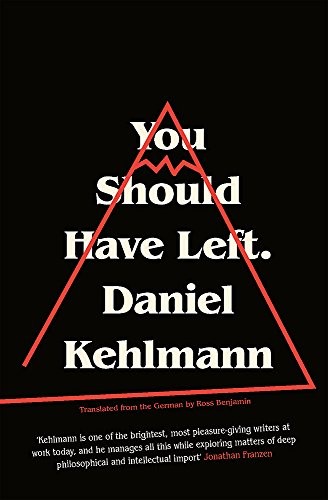
You Should Have Left
Daniel Kehlmann · 2016 in German; 2017 in English translation
Impossible space A rented mountain house develops angles, distances and rooms that contradict its exterior dimensions
Closest Backrooms connection Measurement confirms that the building is wrong, but recognizing the geometry does not reveal a safe route out
Main difference A compressed family and marriage nightmare recorded in a screenwriter's notebook
Best for Readers who want a one-sitting architectural nightmare, unreliable notes, family tension, impossible measurements and an ambiguous ending.
A writer retreats to an isolated house with his wife and young daughter, hoping to finish a screenplay. His notes move between creative frustration, jealousy and observations about the building. A wall appears too long. A room does not fit. Dreams and waking passages begin to exchange details, while local warnings arrive too late to establish whether the family has ever occupied the same version of the house.
Kehlmann's novella ranks fourth because it wastes no time. Domestic resentment makes the narrator unreliable before the geometry turns overtly impossible, so the reader cannot cleanly separate supernatural intrusion from emotional collapse. The house is smaller than the Backrooms, but that compression intensifies the same fear: if an interior contains more space than its boundaries allow, leaving through the door may be only another way of moving deeper inside.
Know before you start. The book includes marital conflict, infidelity anxiety, child endangerment, disturbing dreams and confinement. Its brevity and ambiguity may frustrate readers seeking a full explanation.
3
The Way Inn
Will Wiles · 2014
Impossible space An interchangeable chain hotel and conference complex extends into a self-contained system of corridors, service logic and corporate hospitality
Closest Backrooms connection Anonymous rooms designed to feel familiar become impossible to locate within any meaningful outside world
Main difference British corporate satire led by a cynical conference surrogate rather than straightforward survival horror
Best for Readers who want liminal hotels, corporate dystopia, dry British humor, unreliable self-awareness and a gradual turn from realism into cosmic architecture.
Neil Double attends business conferences on behalf of clients who want notes and contacts without the inconvenience of being present. He likes budget hotels because standardized rooms remove surprise and obligation. At a conference for the conference industry, a mysterious woman and an unusual Way Inn branch expose the menace inside that preference. The reassuring sameness begins to feel less like convenience than enclosure.
Wiles ranks third because he recognizes the Backrooms before naming them: airport lounges, exhibition halls and chain rooms form a geography experienced by millions yet attached to almost nowhere. Neil is not initially desperate to escape anonymity; he has built a career from it. When the hotel reveals deeper intentions, his complicity gives the spatial horror satirical force. The system does not need to abduct someone who has already chosen frictionless repetition.
Know before you start. The novel includes misogyny from the narrator, sexual content, violence, confinement and a slow opening immersed in conference culture before the surreal elements dominate.
2
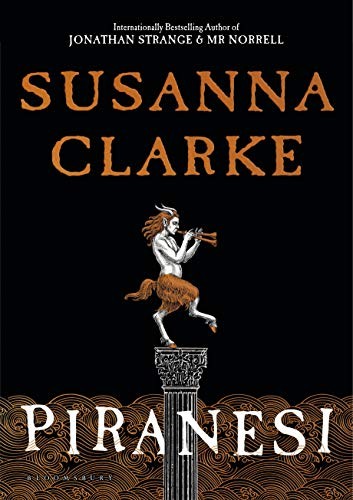
Piranesi
Susanna Clarke · 2020
Impossible space The House is an apparently infinite sequence of marble halls filled with statues, birds, clouds and ocean tides
Closest Backrooms connection A solitary resident maps repeating rooms and records their rules while evidence suggests his understanding of the place has been manipulated
Main difference Luminous fantasy and mystery whose architecture can inspire reverence as well as fear
Best for Readers who want the most beautiful option, journal narration, memory mystery, classical imagery, solitude and a concise standalone.
Piranesi believes the House is the World. He catalogs its halls, tends its dead and meets the Other on a regular schedule. His journals preserve tide tables and observations with scientific care. When messages and an unfamiliar person disturb the pattern, gaps in memory make the map into evidence of a life he does not know he lost.
Clarke transforms endless architecture into a complete ecology. The House is dangerous, especially when tides rise, but it is not merely a hostile trap. Piranesi's attention grants beauty and dignity to spaces another character treats as an instrument. It ranks second because that generosity differs from the Backrooms' grime and menace. For methodical exploration, lost identity and the question of whether escape is the only valid relationship with an impossible place, it is unmatched.
Know before you start. The novel includes abduction, memory manipulation, confinement, death, exploitation and references to depression. Its first section requires comfort with unexplained terminology.
1
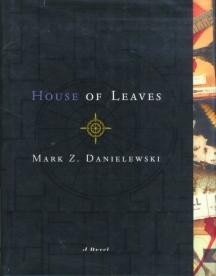
House of Leaves
Mark Z. Danielewski · 2000
Impossible space A family's house contains a dark hallway and labyrinth larger than the building's exterior, while the book containing its story becomes another maze
Closest Backrooms connection Exploration teams attempt to measure an expanding, lightless interior whose corridors, stairs and dimensions change without human logic
Main difference An experimental nested novel told through manuscripts, footnotes, typography and competing narrators
Best for Readers who want the definitive impossible-building novel, extreme formal experimentation, unreliable documents, expedition horror and a book that rewards slow rereading.
Photojournalist Will Navidson discovers that his Virginia house is slightly larger inside than outside. The discrepancy grows into a hallway, then a vast black labyrinth documented by cameras and explored with equipment and a team. That supposed documentary, The Navidson Record, reaches the reader through a scholarly manuscript assembled by Zampanò and annotated by Johnny Truant, whose own life deteriorates as he handles the material.
Danielewski makes form behave like architecture. Footnotes lead into footnotes, text narrows or scatters across pages, and layers of narration refuse a single secure account. The house offers almost none of the objects that make normal rooms intelligible. Its smooth walls and changing dimensions turn the urge to map into obsession, while the family drama ensures that spatial distance also measures emotional rupture.
It ranks first because both setting and reading process reproduce the Backrooms' deepest effect. Documentation promises control but generates more passages. The explorers can record footage, take measurements and name rooms without discovering a reason the space exists. Every account becomes another level, and the possibility that parts are fabricated does not make the fear less architectural.
Know before you start. The novel includes suicide, addiction, sexual content, animal death, mental illness, violence, confinement and typographic passages that can be difficult for screen readers or audio adaptation.
Which Impossible-Building Book Should You Read First?
Where to start. Start with House of Leaves for the fullest and most demanding exploration of impossible interior space. Choose Piranesi if you want an infinite building with beauty, readable prose and an emotionally satisfying mystery. The Way Inn is the strongest match for anonymous hotels and corporate liminality.
Read You Should Have Left for a rapid one-night experience, or Horrorstör for accessible workplace horror whose physical design adds to the joke. A Short Stay in Hell delivers the largest scale in the fewest pages. Subcutanean is the pure secret-basement option, especially for readers intrigued by its unique-copy construction.
Choose The Mall for a populated retail nightmare and There Is No Antimemetics Division for an institutional maze made from missing knowledge. Finish with The Divine Farce when you want confinement to lead somewhere unexpectedly humane.
Impossible-building fiction works because architecture ordinarily reassures us. A room has dimensions, a hallway connects known points and an exit remains where a plan says it should be. Once those agreements fail, every practical action becomes philosophical. Measuring the wall cannot help if space is not obligated to remain the same between measurements.
House of Leaves ranks first because its labyrinth infects every layer used to document it. Piranesi imagines a more beautiful relationship with endlessness, while The Way Inn discovers the nightmare already latent in places designed to be interchangeable. Together, these books offer more than a yellow-wallpaper aesthetic. They make the central Backrooms fear physical: you have not merely lost the route home; you have entered a structure in which “home” may no longer be a valid direction.