Ranked · Sports Fiction
The Top 10 Adult Books About Underdog Teams and Second-Chance Coaches Like Ted Lasso
by E. M. Larkin
A ranked guide to unlikely managers, overlooked players, local clubs, quiet captains, damaged confidence, humane leadership, and teams that change their coaches
Ted Lasso returns on August 5, 2026 with Ted taking on a second-division women's football team. The change of squad refreshes the premise without abandoning what made the series travel far beyond sports audiences: a coach rebuilding his own life by helping a group of underestimated people believe that improvement is possible. Wins matter, but they are rarely the whole score.
This is therefore not a list of generic soccer novels or celebrity memoirs. It is a reading guide to underdog teams, unlikely coaches, leadership under pressure and adults who receive a second chance in a place nobody expects to matter. Some selections are warm and comic. Others test the Lasso philosophy by showing abusive sporting cultures, failed appointments or communities whose devotion to winning harms the people asked to perform.
Fiction and nonfiction appear together because the series itself moves easily between workplace comedy, team drama and practical ideas about leadership. The highest-ranked books combine a vulnerable community, an improbable sporting assignment and a coach or mentor who must change alongside the players. Lower entries isolate one part of the experience: quiet captaincy, redemptive baseball, the seduction of a football town or the catastrophe of a manager who cannot adapt.
Selection note. This is an adult reading list, and “like” refers to team dynamics, coaching and renewal rather than constant optimism. Several books are nonfiction; two are intentionally dark counterexamples that show what belief and competition can become when a community loses perspective.
10
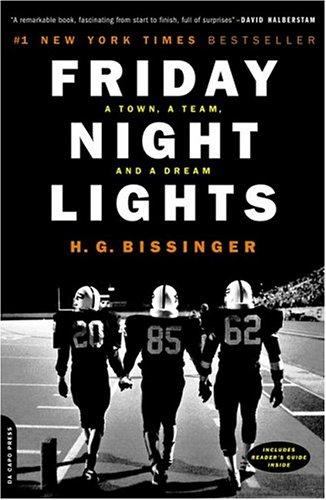
Friday Night Lights
H. G. Bissinger · 1990
Team and setting The 1988 Permian High School Panthers in Odessa, Texas
Closest Ted Lasso connection A sports team becomes the place where an entire community projects its identity, grievances and need for hope
Main difference Investigative nonfiction about high-school football, racial division and crushing pressure rather than a restorative workplace comedy
Best for Readers who want immersive sports journalism, American social history, football culture and a serious examination of what a town asks from its team.
Bissinger spent a season in Odessa following players, coaches, families and residents as Permian pursued another Texas championship. The resulting book looks beyond games to the oil economy, school priorities, segregation and the enormous expectations imposed on teenage athletes. Coach Gary Gaines is important, but the subject is the system surrounding him.
It ranks tenth because the mood is almost an inversion of Ted Lasso. The show imagines a team culture becoming healthier through attention to people; Friday Night Lights documents a culture that treats people as fuel for the team. That contrast makes it valuable. Anyone moved by Richmond's influence on its neighborhood will recognize the emotional power of local sport, while seeing why leadership cannot be measured only by a scoreboard.
Know before you start. The book includes racism and racist language, academic neglect, injury, economic hardship, intense pressure on minors and criticism of real individuals and institutions.
9
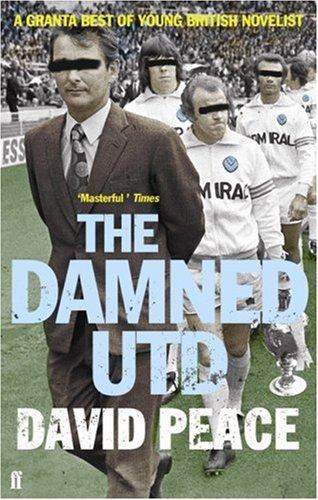
The Damned Utd
David Peace · 2006
Team and setting Brian Clough's disastrous 44 days managing Leeds United in 1974
Closest Ted Lasso connection A charismatic outsider enters a club with a powerful inherited culture and must earn the trust of players loyal to his predecessor
Main difference A dark fictionalized portrait of obsession, resentment and managerial failure
Best for Readers who want British football history, experimental interior narration, managerial psychology and a deliberately abrasive counterpoint to uplifting sports stories.
Peace imagines Clough's furious interior voice as the successful Derby County manager takes control of a Leeds squad he had publicly condemned. The new job brings status, but Clough arrives without his trusted partner Peter Taylor and cannot stop fighting old grievances. His methods, the dressing room and the institution reject one another almost immediately.
The novel ranks ninth as the list's clearest anti-Lasso. Ted's lack of technical knowledge works because curiosity, humility and a coaching staff compensate for it. Peace's Clough believes force of personality can conquer a hostile club while his isolation makes adaptation harder. The book is useful precisely because it refuses the fantasy that charisma alone can heal a team. It shows how quickly belief becomes self-mythology when nobody trusted remains close enough to challenge the coach.
Know before you start. This is a novel about real people, not a neutral history. It includes harsh language, alcohol abuse, anxiety, conflict and contested portrayals that generated public and legal criticism.
8
The Resisters
Gish Jen · 2020
Team and setting An underground baseball league in a stratified future AutoAmerica
Closest Ted Lasso connection A gifted young player and her improvised community use sport to build confidence, belonging and resistance against a system designed to dismiss them
Main difference Dystopian science fiction about surveillance, inequality and automation rather than professional football
Best for Readers who want speculative sports fiction, a father-daughter relationship, class satire, baseball strategy and an underdog story with political stakes.
Gwen is an exceptional pitcher born into the “Surplus” population, people pushed onto land that floods while the privileged “Netted” class occupies higher ground. Her father narrates how the family and their neighbors create baseball facilities from what the system leaves them. When Gwen's talent attracts official attention, opportunity arrives entangled with assimilation and control.
Jen makes coaching a family and community practice rather than one person's job. Adults teach technique, preserve joy and try to protect players from institutions eager to own whatever they produce. It ranks eighth because the allegory can be broad and the team spends less time together than Richmond. Yet it shares the series' faith that play creates a language through which disregarded people can see themselves differently.
Know before you start. The novel includes systemic oppression, surveillance, environmental collapse, illness, family separation and loss. Its invented vocabulary requires an adjustment period.
7
Shoeless Joe
W. P. Kinsella · 1982
Team and setting A baseball diamond built in an Iowa cornfield for players history has left behind
Closest Ted Lasso connection Radical belief creates a second chance for athletes and adults burdened by unfinished relationships
Main difference Magical realism organized around baseball ghosts and one man's private quest
Best for Readers who want baseball mythology, magical realism, father-and-son emotion, American landscape and a gentle novel about acting on impossible faith.
Ray Kinsella hears a voice telling him to build a field. He obeys despite financial risk, and Shoeless Joe Jackson appears with other members of the banned 1919 Chicago White Sox. Further instructions send Ray across the country in search of writer J. D. Salinger and former player Archie Graham, drawing strangers into a project whose purpose only gradually becomes clear.
There is no conventional coach, but Ray performs the role Ted often occupies: he protects a space in which other people can recover a possibility they thought was gone. His optimism can look irrational, and the cost falls partly on a patient family. The book ranks seventh because the team functions as a visitation rather than an ongoing workplace. Its emotional center—the hope that play can repair an old absence—remains unmistakably compatible.
Know before you start. The story includes financial peril, grief, family estrangement and a fictionalized version of a real living author. It differs substantially from its film adaptation, Field of Dreams.
6
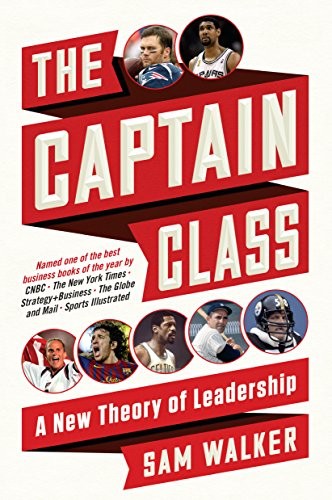
The Captain Class
Sam Walker · 2017
Team and setting Sixteen elite teams from different sports, eras and countries
Closest Ted Lasso connection Leadership emerges through emotional labor, practical intervention and trust rather than speeches or celebrity
Main difference An argument-driven work of nonfiction about dominant teams, not underdogs or second chances
Best for Readers who want leadership research, comparative sports history, team psychology and practical ideas that extend beyond football.
Walker spent years trying to identify the greatest teams in sports history and the trait they shared. His answer was not the best coach, biggest payroll or most transcendent star. It was a particular kind of captain: persistent, sometimes abrasive, willing to perform unglamorous work and more interested in the team's behavior than personal image.
The book ranks sixth because its teams are winners by definition, which runs against this list's underdog emphasis. Its account of leadership, however, explains much of Ted Lasso's ensemble structure. Ted is not the sole source of Richmond's culture; captains, assistants and players enforce it in moments he cannot reach. Walker's framework offers a useful vocabulary for considering why a quiet act from a teammate may matter more than a coach's polished address.
Know before you start. The case-study method compresses complicated histories into one thesis, and readers may dispute the selection criteria or the weight placed on captains.
5
The Art of Fielding
Chad Harbach · 2011
Team and setting The Westish College Harpooners, a small-school baseball team in Wisconsin
Closest Ted Lasso connection A mentor builds an overlooked player and team until confidence, pressure and private relationships begin to pull the group apart
Main difference A long literary campus novel whose crises extend well beyond the season
Best for Readers who want literary fiction, baseball detail, college life, mentorship, queer relationships and an ensemble whose failures matter as much as its victories.
Mike Schwartz recognizes extraordinary defensive talent in the slight, anxious Henry Skrimshander and recruits him to Westish. Years of disciplined work turn Henry into a prospect and the Harpooners into contenders. Then one errant throw injures a teammate and breaks Henry's automatic confidence. Mike, catcher Owen Dunne, college president Guert Affenlight and Guert's daughter Pella become part of the unraveling.
Harbach understands that mentorship can mix generosity with possession. Mike gives Henry a future but also invests his own identity in the result. The slump cannot be solved by repeating instructions because it expresses pressures the team's success concealed. It ranks fifth for capturing a central Ted Lasso truth: performance problems are often relationship problems, and a coach who wants to help must know where encouragement ends and another person's autonomy begins.
Know before you start. The novel includes depression, an age- and power-imbalanced relationship, sexual content, injury, alcohol and long stretches away from baseball.
4
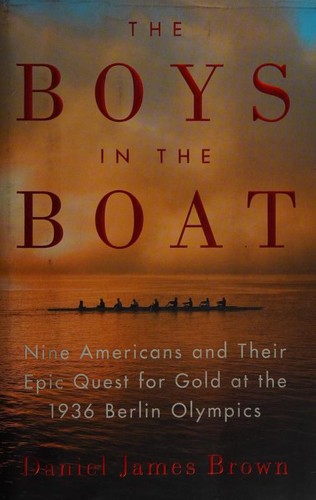
The Boys in the Boat
Daniel James Brown · 2013
Team and setting The University of Washington rowing crew that competed at the 1936 Berlin Olympics
Closest Ted Lasso connection Athletes from modest backgrounds become extraordinary by trusting a boat, a coach and one another more than individual glory
Main difference Historical nonfiction shaped by Depression hardship and the propaganda stage of Nazi Germany
Best for Readers who want propulsive narrative history, an unmistakable underdog, rowing craft, Depression-era America and a complete season culminating on a world stage.
Brown centers Joe Rantz, whose unstable childhood makes self-reliance feel safer than dependence. At Washington he enters a rowing program where synchronization is not a metaphor: eight athletes must surrender individual rhythm to make the shell move. Coach Al Ulbrickson, boatbuilder George Pocock and the crew struggle to find the combination capable of challenging wealthier eastern schools and Europe's state-supported teams.
The book ranks fourth because its central transformation is from guarded individuals into collective motion. Ulbrickson is not Ted—he is distant, severe and constrained by his era—but the coaches gradually learn which crew can trust itself. Joe's second chance arrives through a team that makes dependence a strength. The Olympic context supplies enormous stakes without erasing the daily labor behind them.
Know before you start. The book includes childhood abandonment, poverty, injury, death, Nazi spectacle and some reconstructed scenes and dialogue typical of narrative nonfiction.
3
The Miracle of Castel di Sangro
Joe McGinniss · 1999
Team and setting A tiny Abruzzo football club playing its first season in Italy's second division
Closest Ted Lasso connection An American outsider enters a close football culture and becomes emotionally invested in an improbable team's survival
Main difference Reported nonfiction whose author is an observer, not the coach, and whose season includes tragedy, corruption and disillusionment
Best for Readers who want Italian football, a true underdog season, locker-room access, small-town life and a narrative containing both comic warmth and real darkness.
McGinniss moves to Castel di Sangro after the club's astonishing promotions carry it into Serie B. He follows the players, manager Osvaldo Jaconi, supporters and owners through a season when mere survival against larger clubs feels miraculous. The access captures training-ground humor and tactical anxiety, but the book also records devastating loss and the author's increasingly adversarial relationship with club leadership.
No book here more closely reproduces the experience of arriving from America and slowly learning what football means to a small community. It ranks third because the outsider is writing rather than coaching, and readers should remain alert to his judgments. That limitation is part of the value. Affection for a team does not confer perfect understanding of its culture, a lesson Ted must repeatedly learn whenever optimism meets local history.
Know before you start. The book includes fatal accidents, grief, allegations of corruption and match manipulation, coarse language and a narrator whose interventions and conclusions remain controversial.
2

How Steeple Sinderby Wanderers Won the F.A. Cup
J. L. Carr · 1975
Team and setting An amateur village football club that enters and somehow wins England's F.A. Cup
Closest Ted Lasso connection Eccentric leadership, overlooked players and local loyalty turn an implausible squad into a coherent team
Main difference A very short mock history told through documents and retrospective narration
Best for Readers who want British comic fiction, football folklore, a true Cinderella run, deadpan narration and a novel short enough to finish in a sitting.
Steeple Sinderby Wanderers begin with no reasonable path to national glory. A new manager, a schoolteacher and a collection of players with occupations far removed from professional football approach the competition with peculiar seriousness. Their methods confound established clubs, and the narrator assembles the run as if preserving an important chapter of village history.
Carr's dry comedy comes from treating the impossible as an administrative problem. The team succeeds through observation, role clarity and indifference to the assumptions that govern elite football. It ranks second because its warmth, English setting and underdog ascent create an immediate kinship with Richmond. The miniature scale limits psychological depth, but it also makes the book a perfect one-evening prescription for viewers who miss the show's combination of tactical oddity and communal belief.
Know before you start. The period voice and mock-documentary structure create emotional distance, and some social attitudes reflect the 1970s. The football is whimsical rather than rigorously realistic.
1
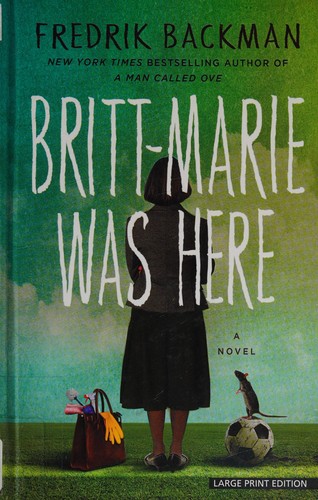
Britt-Marie Was Here
Fredrik Backman · 2014 in Swedish; 2016 in English translation
Team and setting A neglected youth football team in the economically wounded Swedish town of Borg
Closest Ted Lasso connection A socially awkward adult accepts an unlikely coaching role and finds a second life by taking an underestimated team seriously
Main difference The coach is a 63-year-old woman with no football expertise, and the story is as much about leaving a marriage as winning games
Best for Readers who want the closest emotional match, an older heroine, small-town renewal, youth football, found family and humor moving steadily toward catharsis.
Britt-Marie has spent decades arranging her life around her husband and the conviction that proper order can prevent disaster. After the marriage collapses, she needs work and arrives in Borg, a town whose businesses and public services have largely disappeared. A recreation-center job makes her responsible for local children who insist that what they need is a football coach.
She begins judgmental, literal and profoundly lonely. The children do not require effortless inspiration; they require an adult who shows up, notices what has been taken from them and refuses to treat their town as already dead. Coaching gives Britt-Marie a role that cannot be performed through cleaning or politeness alone. She must risk embarrassment, tolerate disorder and choose a future not defined by usefulness to one man.
The novel ranks first because team and coach receive the same second chance. Borg's players build confidence as Britt-Marie recovers desire, and neither transformation depends entirely on a championship. Backman's sentiment can be pronounced, but the underlying idea is exact: belief becomes credible when it is expressed through persistent attention to people whom the wider world has stopped seeing.
Know before you start. The book includes infidelity, emotional neglect, bereavement, economic decline, family dysfunction, violence and danger involving children. It is connected to My Grandmother Asked Me to Tell You She's Sorry but can stand alone.
Which Underdog-Team Book Should You Read First?
Where to start. Start with Britt-Marie Was Here for the closest combination of an accidental coach, a disregarded football team and mutual renewal. Choose How Steeple Sinderby Wanderers Won the F.A. Cup if you want English football comedy in its most concentrated form. The Miracle of Castel di Sangro is the immersive nonfiction option, complete with the exhilaration and discomfort of an American outsider entering a small club.
Read The Boys in the Boat for a large historical underdog narrative, or The Art of Fielding for a literary account of confidence failing inside a college team. The Captain Class offers the most portable leadership framework. Shoeless Joe and The Resisters use speculative elements to make sport a vehicle for recovery or resistance.
Save The Damned Utd and Friday Night Lights for the shadows. They are not comfort reads, but both reveal why empathy, distributed leadership and concern for the person beyond the player are more than pleasant additions to a successful team.
The best team stories do not argue that encouragement guarantees victory. They show why shared effort can make a meaningful life even when a league table remains indifferent. A coach can clarify roles and create safety, but the team becomes real only when players begin carrying that culture for one another.
Britt-Marie Was Here ranks first because its coach needs the assignment as much as the children do. Steeple Sinderby supplies the delicious fantasy of the impossible cup run, while Castel di Sangro records the complicated reality behind one. Together, these books extend the central promise of Ted Lasso: people can change a club by believing in it, but the more important transformation is the club teaching them how to belong.