Steven Spielberg's Disclosure Day arrived in theaters in June 2026 and reached digital rental in July with a premise built for the current UFO moment. A meteorologist and a cybersecurity expert become involved in revealing evidence that governments and powerful institutions have concealed the truth about extraterrestrial life. The title names the event conspiracy stories usually postpone: the day secrecy stops being sustainable and the public must decide what to do with information it has spent decades imagining.
UFO fiction operates differently from an alien-invasion novel. The object in the sky is only the first mystery. The second is who already knows what it is. Military programs, private aerospace companies, intelligence agencies and scientific committees create layers of explanation between witnesses and truth. Sometimes the secrecy protects a frightened public. More often it protects the people who have converted extraordinary knowledge into strategic advantage.
This ranking favors novels in which first contact and institutional concealment are inseparable. Some use recognizable flying saucers, abductions and restricted facilities. Others build the conspiracy around an alien signal, a buried spacecraft or a biological sample. The closest matches combine whistleblowers, government files and the difficult politics of public revelation. All ten ask the question behind Disclosure Day: if the truth is world-changing, does anyone have the right to choose the day the world receives it?
Selection note. The ranking prioritizes concealed contact rather than invasion alone. The strongest matches place ordinary witnesses or reluctant insiders between extraterrestrial evidence and institutions determined to control it. Lower entries broaden “UFO conspiracy” to secret scientific response, a buried craft and the logistical problem of voluntary disclosure.
10
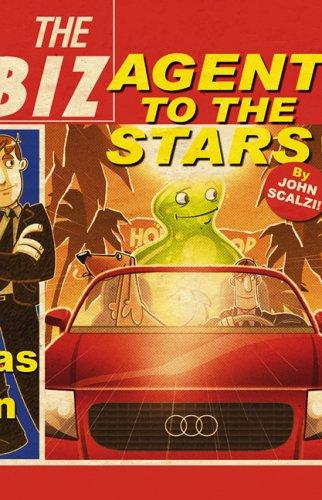
Agent to the Stars
John Scalzi · 1999 online; first print edition published in 2005
Hidden truth A friendly alien species has already reached Earth and secretly hired Hollywood representation
Closest Disclosure Day connection The entire plot concerns how and when proof of alien life should be presented to the public
Main difference A warm satirical comedy rather than a paranoid chase thriller
Best for Readers who want comedy, Hollywood satire, benevolent aliens, public relations and an optimistic counterweight to institutional paranoia.
Hollywood agent Tom Stein expects difficult clients, but not the Yherajk. The aliens are intelligent and peaceful; they are also gelatinous, communicate partly through smell and resemble the monsters in decades of human entertainment. They conclude that first contact is an image problem and ask Tom to plan a revelation that will not trigger panic or violence.
Scalzi reverses the moral temperature of disclosure fiction without abandoning its central dilemma. Information can be true and still fail if people encounter it through the wrong image. Tom's work with celebrity, publicity and narrative becomes a form of planetary diplomacy. It ranks tenth because no government is hunting the whistleblower, but it offers the list's clearest thought experiment about disclosure as a designed public event rather than a file simply uploaded.
Know before you start. The novel includes death, Holocaust memory, body merging and late-1990s celebrity stereotypes, but its overall tone is light and humane.
9
The Tommyknockers
Stephen King · 1987
Hidden truth A writer uncovers a buried spacecraft whose influence quietly transforms an entire Maine town
Closest Disclosure Day connection Physical evidence of alien presence exists in plain soil while outsiders remain unable to see how completely local reality has changed
Main difference Addiction-shaped small-town horror replaces government files and an organized campaign for public truth
Best for Readers who want a long small-town horror novel, a buried UFO, grotesque inventions, addiction allegory and an escalating sense of communal wrongness.
Bobbi Anderson trips over metal protruding from the woods near Haven and begins excavating what appears to be an enormous alien ship. The craft accelerates invention while changing bodies, minds and relationships. Bobbi's friend Jim Gardener is partially resistant and increasingly aware that the technological miracles celebrated by the town are symptoms of possession.
King treats secrecy as a collective intoxication. The townspeople do not merely hide the ship; they become incapable of evaluating what it asks them to sacrifice. It ranks ninth because formal government conspiracy arrives late, but the buried-craft premise and the fear of a community reorganized around alien knowledge make it a strong horror companion to the cleaner public stakes of Disclosure Day.
Know before you start. The novel includes addiction, suicide, child endangerment, animal death, body horror, domestic violence and King's intentionally excessive late-1980s style.
8
The Andromeda Strain
Michael Crichton · 1969
Hidden truth A military satellite returns with an extraterrestrial microorganism that kills almost everyone in a desert town
Closest Disclosure Day connection A secret government program forces scientists to determine whether public safety and national security can be separated
Main difference Procedural biological containment rather than intelligent UFO contact
Best for Readers who want scientific procedure, a short classic thriller, laboratories, diagrams, outbreak investigation and institutional systems under pressure.
After a satellite falls near Piedmont, Arizona, a recovery team finds the town dead except for an infant and an elderly man. A small group of scientists is summoned to Wildfire, an underground laboratory designed for extraterrestrial contamination. Their investigation reconstructs the organism's behavior while automated systems and military assumptions create additional risks.
Crichton makes secrecy feel architectural. Levels, protocols, clearance and fail-safes control who may know what happened, but they also narrow the questions scientists are permitted to ask. It ranks eighth because the alien presence is microbial, yet few novels better dramatize the machinery a government would activate before acknowledging that something nonhuman has arrived.
Know before you start. The book includes mass death, infant medical testing, animal testing, seizure, biological threat and scientific explanations that reflect 1960s knowledge.
7
The Spaceship Next Door
Gene Doucette · 2015
Hidden truth A silent spaceship has stood behind a military perimeter outside a Massachusetts town for three years
Closest Disclosure Day connection Alien evidence is publicly visible, but official control of access prevents visibility from becoming understanding
Main difference Small-town humor and a teenage guide create a lighter adventure
Best for Readers who want a strange small town, a visible UFO, government agents, brisk pacing, humor and a series that continues beyond the initial mystery.
When the ship lands in Sorrow Falls, the world panics and then adjusts. It does not open, communicate or move. The Army maintains a perimeter, tourists visit and residents incorporate the impossible object into daily geography. A man posing as a journalist recruits sixteen-year-old Annie Collins, who knows everyone in town and recognizes what official observers miss.
Doucette identifies an appealing paradox: disclosure has technically occurred, yet the central truth remains concealed because no one knows what the object is doing. Annie's local knowledge becomes more useful than clearance or credentials. It ranks seventh as a direct, readable match for the tension between public spectacle and restricted interpretation, though its humor and young protagonist make it less paranoid than Spielberg's thriller.
Know before you start. The novel includes a teenage protagonist, family illness, violence, death, invasion imagery and tonal movement from comedy into large-scale danger.
6
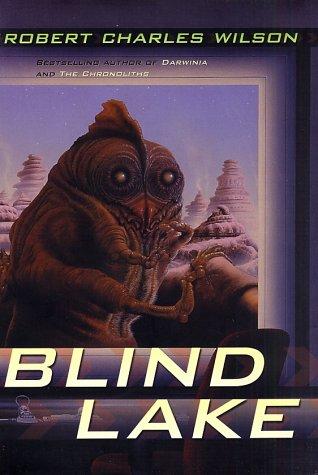
Blind Lake
Robert Charles Wilson · 2003
Hidden truth Quantum computers allow scientists to observe an alien civilization, but the machines will not explain how they produce the images
Closest Disclosure Day connection A restricted research facility controls world-changing evidence while an unexplained lockdown makes every official statement suspect
Main difference Remote observation replaces a UFO physically present on Earth
Best for Readers who want thoughtful first contact, a research facility, family drama, mysterious quarantine, artificial intelligence and gradual conceptual tension.
At the Blind Lake installation, scientists watch an individual alien on a distant planet with extraordinary detail. The images are generated by systems whose evolving internal logic human operators cannot fully inspect. Then the facility is sealed without explanation. Researchers, families and journalists inside must determine whether the quarantine responds to an external threat, the computers or something in the observations themselves.
Wilson builds conspiracy from epistemology. The evidence is abundant, but no one can independently verify how it was obtained. Institutional secrecy therefore protects both national research and an uncomfortable fact: the experts presenting the truth do not entirely understand their own instrument. It ranks sixth for turning disclosure into a problem of trust, interpretation and machine-mediated contact.
Know before you start. The pacing is measured; the novel includes parental conflict, emotional abuse, confinement, scientific rivalry, threats to children and ambiguous contact.
5
His Master's Voice
Stanisław Lem · 1968 in Polish; first English translation published in 1983
Hidden truth A secret American project gathers scientists to decode an apparent message carried by cosmic neutrinos
Closest Disclosure Day connection Government officials control extraterrestrial evidence while hoping it can be converted into strategic power before it becomes public knowledge
Main difference A philosophical memoir about failed interpretation rather than an action conspiracy
Best for Readers who want philosophical science fiction, scientists arguing about evidence, government secrecy, information theory and ambiguity that is the point rather than a missing ending.
Mathematician Peter Hogarth joins a classified project after a repeating pattern suggests intentional communication from space. Scientists from different disciplines generate theories, models and experiments, but the project's military sponsors remain particularly interested in whether the signal can produce a weapon. Every apparent breakthrough exposes assumptions the researchers imported into the message.
Lem is skeptical not of extraterrestrial intelligence but of human confidence. A genuine signal may still be indecipherable because scientists, bureaucracies and nations interpret it through incompatible needs. It ranks fifth because it offers the most rigorous version of the question beneath disclosure: what exactly can officials reveal when even the people with clearance cannot agree on what the evidence means?
Know before you start. The novel is essayistic and intellectually dense; it includes Cold War weapon research, institutional cynicism and very little conventional action.
4
The Three-Body Problem
Cixin Liu · 2008 in Chinese; English translation published in 2014
Hidden truth A message sent during the Cultural Revolution creates secret contact with a civilization whose arrival will reshape Earth's future
Closest Disclosure Day connection Knowledge of extraterrestrial life divides insiders into factions long before governments can present a coherent public response
Main difference A civilization-scale trilogy with hard-science speculation rather than a contemporary UFO pursuit
Best for Readers who want hard science fiction, enormous ideas, secret societies, scientific mystery and a completed trilogy that radically expands its scale.
Nanotechnology researcher Wang Miao becomes involved in an investigation of scientist deaths, a mysterious countdown and an immersive game based on a world with chaotic suns. The path leads to Ye Wenjie's past at a remote radio installation and to organizations that have interpreted alien contact as salvation, conquest or an opportunity to abandon faith in humanity.
Liu treats disclosure as geopolitics and religion at once. The secret does not unite its keepers; it gives existing grievances a cosmic object. It ranks fourth because its first contact emerges through signals rather than craft in the sky, but its nested organizations, scientists, military investigators and competing attitudes toward revelation provide one of the genre's largest answers to the premise.
Know before you start. The book includes Cultural Revolution violence, suicide, murder, political persecution, scientific exposition and characterization that can feel secondary to ideas.
3
Sekret Machines: Chasing Shadows
Tom DeLonge and A. J. Hartley · 2016
Hidden truth Witnesses across decades encounter advanced craft connected to secret military, intelligence and aerospace programs
Closest Disclosure Day connection UFO sightings, government insiders, restricted technology and a struggle over controlled revelation form the entire thriller apparatus
Main difference A sprawling multimedia-conspiracy novel that intentionally blurs fiction with claims drawn from alleged real events
Best for Readers who want the purest military-UFO conspiracy, global timelines, pilots, classified projects and a thriller that invites debate about where fiction ends.
The novel follows intersecting characters including skeptical journalist Timika, pilot Alan, heiress Jennifer and Second World War prisoner Jerzy. Their experiences with impossible technology gradually converge on projects and institutions designed to keep each witness from seeing the full historical pattern. The book's creators present the fiction as informed by stories from military and intelligence contacts.
No ranked selection uses the recognizable vocabulary of modern UAP conspiracy more completely: test ranges, pilots, aerospace secrecy, compartmentalization and craft whose performance exceeds public technology. It ranks third because the 700-page structure is uneven and readers may reject its reality-adjacent framing. As a fictional analogue to Disclosure Day's hidden program, however, it is exceptionally direct.
Know before you start. The novel is long, includes war violence, death, government coercion and factual claims that should not be treated as independently verified evidence.
2
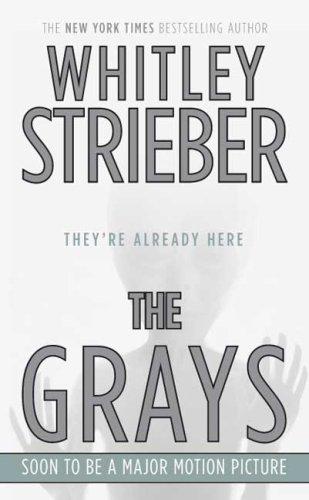
The Grays
Whitley Strieber · 2006
Hidden truth Government personnel have maintained a secret relationship with the Grays while competing agendas push the arrangement toward crisis
Closest Disclosure Day connection Officials struggle to preserve a decades-old alien secret as individuals inside and outside the program force the truth toward exposure
Main difference Abduction horror and spiritual speculation make the contact more disturbing and less conventionally optimistic
Best for Readers who want Grays, abduction lore, government programs, spiritual uncertainty and a novel written from inside modern UFO culture.
Strieber builds a fictional system around familiar UFO mythology: small gray beings, missing time, abductees, military custodians and officials who believe secrecy prevents social catastrophe. Colonel Michael Morax works to maintain the hidden order, while other characters experience the program not as national security but as bodily violation and manipulation.
The novel ranks second because it goes directly behind the imagined curtain. Rather than asking whether the government knows, it asks what years of concealment would do to the people administering contact and to those denied any control over their involvement. Its worldview is stranger and more credulous than Spielberg's humanism, but readers seeking deep-state UFO fiction will find the closest traditional match.
Know before you start. The book includes abduction, medicalized bodily violation, child endangerment, death, conspiracy claims and deliberate ambiguity between science fiction and belief.
1
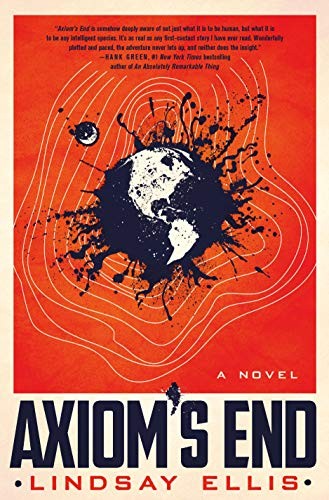
Axiom's End
Lindsay Ellis · 2020
Hidden truth The United States government has concealed contact with extraterrestrial beings while pursuing a prominent leaker
Closest Disclosure Day connection A whistleblower's family, classified evidence and an ordinary person able to communicate with an alien collide in a fight over public truth
Main difference Alternate 2007 and intensive alien-language work give the story a more intimate, character-driven focus
Best for Readers who want the closest overall match, a modern protagonist, government conspiracy, alien communication, alternate recent history and a completed two-book sequence.
Cora Sabino wants distance from her estranged father, Nils Ortega, whose leaks about government misconduct have made the family famous and vulnerable. When alien events erupt across California, Cora encounters an extraterrestrial being she calls Ampersand and becomes valuable to agencies that have hidden far more than Nils could prove. Communication requires trust between beings whose bodies, histories and assumptions barely align.
It ranks first because nearly every element of Disclosure Day's search opportunity is present: a public-interest leak, institutional pursuit, concealed contact, frightening craft, contested evidence and a protagonist caught between family history and nonhuman truth. Ellis also examines what disclosure articles often skip—translation. Before humanity can decide what the aliens mean, someone must survive the process of understanding what they are actually saying.
Know before you start. The novel includes parental abuse, government coercion, violence, death, alien captivity, anxiety and a complicated bond with a dangerous nonhuman being.
Which UFO-Conspiracy Novel Should You Read First?
Where to start. Choose Axiom's End for the closest modern match: whistleblowers, classified contact, government pursuit and an ordinary woman forced to communicate with a dangerous alien. Choose The Grays if you want the traditional deep-state mythology of abductions, secret programs and officials preserving a decades-old arrangement.
Read Chasing Shadows for military aircraft and UAP lore, or The Three-Body Problem for a much larger secret-contact story with global factions. His Master's Voice is the strongest choice when the scientific and philosophical difficulty of interpreting the evidence matters more than action.
For a contained facility mystery, start with Blind Lake or The Andromeda Strain. The Spaceship Next Door is lighter and more accessible, while The Tommyknockers turns the buried UFO into maximalist small-town horror. Choose Agent to the Stars when you want the rare first-contact novel in which the aliens themselves are carefully planning disclosure.
The most durable UFO conspiracy is not that authorities possess one decisive photograph. It is that extraordinary knowledge would be distributed unevenly through systems already designed to classify, monetize and weaponize information. The secret becomes powerful not only because of what it proves, but because some people have been allowed to plan around it for years.
Axiom's End ranks first because it places a human translator directly between alien reality and the institutions claiming ownership of it. The Grays most fully inhabits classic concealment mythology, while Chasing Shadows turns modern UAP vocabulary into a global thriller. Together, the books suggest that disclosure is not a finish line. It is the beginning of a fight over who gets to explain what everyone has finally seen.