Netflix's I Will Find You turns two familiar thriller nightmares into one unusually efficient hook. David Burroughs is serving a life sentence for murdering his three-year-old son, Matthew. He cannot remember committing the crime, but grief and a mountain of evidence have worn down his certainty. Then his former sister-in-law arrives with a recent photograph that appears to show Matthew alive. If the child survived, David is innocent—and the official account of his family's destruction was constructed to keep him from asking the right questions.
The 2026 adaptation became a major Netflix success because it never forces viewers to choose between emotional stakes and forward motion. It has a prison story, a fugitive story, a missing-child mystery, a conspiracy and a parent driven by a hope that may be crueler than despair. The best read-alikes do something similar. They make innocence difficult to prove, turn public suspicion into a second antagonist and place an endangered family member just beyond the protagonist's reach.
This ranking therefore favors thrillers in which a disappearance and an accusation feed each other. Not every protagonist escapes from prison, and not every missing child is presumed dead. The closest matches combine a family mystery with institutional failure, media judgment or a desperate investigation the authorities no longer want conducted. All ten move quickly, but the strongest understand that exoneration cannot restore the years a false story has already taken.
Selection note. The ranking rewards the particular engine behind I Will Find You: a family member believed dead, an official story that may be false, and a protagonist forced to investigate while other people question his or her innocence. Books lower on the list emphasize one side of that equation—abduction, accusation or a race against the justice system—rather than all three at once.
10
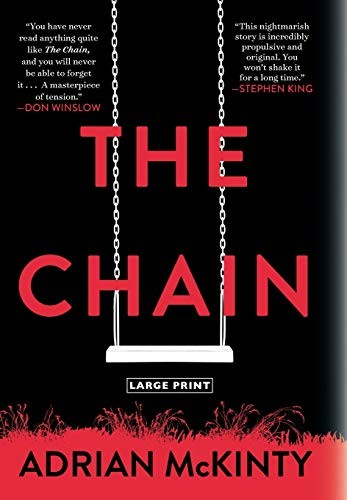
The Chain
Adrian McKinty · 2019
Central nightmare A mother must help abduct someone else's child before her own daughter will be released
Closest I Will Find You connection A parent becomes a criminal because the system controlling the child has designed every choice in advance
Main difference The accusation is real, even though the parent acts under coercion
Best for Readers who want relentless pacing, a high-concept premise, ordinary people under coercion and a parent who turns fear into strategy.
Rachel Klein receives a call telling her that thirteen-year-old Kylie has been kidnapped. Paying a ransom is only half the demand. Rachel must select another child, carry out a second abduction and wait until that new victim's family continues the chain. Going to the police may kill Kylie, while obeying makes Rachel part of the machinery she needs to destroy.
McKinty replaces David's wrongful conviction with a more immediate moral trap. Rachel knows exactly what crime she is being forced to commit, and the kidnappers understand that parental love can function as both leverage and camouflage. The novel ranks tenth because there is no mystery about whether Kylie is alive, but its velocity and its refusal to offer a clean choice make it an excellent match for the adaptation's desperation.
Know before you start. The novel includes child abduction, threats against children, violence, cancer, financial pressure and parents forced to harm other families.
9
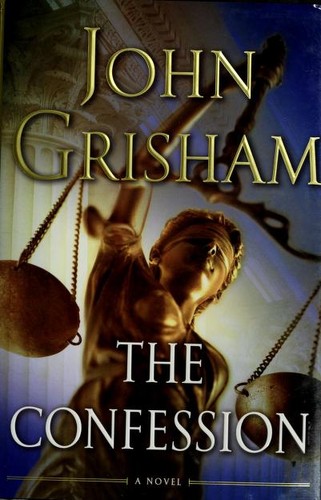
The Confession
John Grisham · 2010
Central nightmare An innocent man is hours from execution when another man claims responsibility for the missing teenager's murder
Closest I Will Find You connection Authorities defend a completed prosecution even when new evidence makes the official story unstable
Main difference A legal and political race replaces a fugitive parent's personal investigation
Best for Readers who want a legal thriller, death-row urgency, prosecutorial politics and an angry examination of how certainty survives contrary evidence.
Dontaé Drumm was convicted of murdering high-school student Nicole Yarber despite the absence of her body. Nine years later, convicted sex offender Travis Boyette tells a Kansas minister that he killed Nicole and can reveal where she was buried. Boyette is ill, unreliable and reluctant to sacrifice his remaining freedom; the execution calendar is far more decisive than the truth.
Grisham focuses on the institutional momentum behind a wrongful conviction. Prosecutors, judges, politicians and commentators have professional or emotional investments in the verdict, so evidence becomes one more object to manage. It ranks ninth because the condemned man is less active than David Burroughs, but the novel captures the frightening asymmetry between constructing a conviction and dismantling one before time expires.
Know before you start. The book includes racism, coerced confession, sexual violence, child murder, capital punishment and detailed political conflict.
8
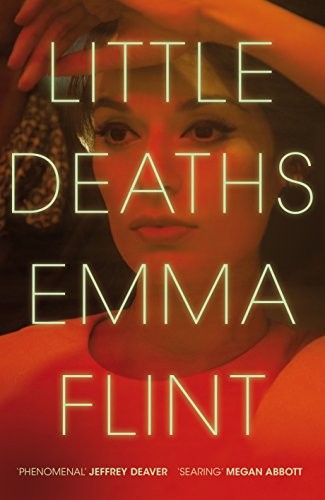
Little Deaths
Emma Flint · 2017
Central nightmare Two children disappear, and their mother is judged as much for violating expectations of grief as for the evidence against her
Closest I Will Find You connection Public certainty hardens around a parent before the full story of the missing children is known
Main difference A slow, literary historical crime novel inspired by a real 1960s case
Best for Readers who prefer psychological depth, historical New York, media criticism, moral ambiguity and crime fiction based on social observation.
In Queens in 1965, Ruth Malone wakes to find her two young children missing from their apartment. Their bodies are later discovered, and detectives fix on Ruth: separated from her husband, sexually independent, carefully dressed and insufficiently legible as a mourning mother. A tabloid reporter initially follows the easy story, then begins noticing the gaps between Ruth's public image and the case itself.
Flint is interested in how an accusation becomes culturally satisfying. Ruth's behavior is treated as evidence because it allows police and newspapers to transform an ambiguous woman into a recognizable monster. The novel ranks eighth because it offers none of Coben's escape-driven speed, yet it deepens one of I Will Find You's most important ideas: once a parent has been assigned the role of killer, innocence alone may not make an alternative story believable.
Know before you start. The novel includes child death, misogyny, sexual scrutiny, domestic abuse, police coercion, racism and a deliberately bleak atmosphere.
7
Descent
Tim Johnston · 2015
Central nightmare A teenage girl vanishes during a family vacation in the Rocky Mountains
Closest I Will Find You connection A disappearance becomes a long-term condition that reorganizes every member of a family
Main difference Literary suspense about aftermath and endurance rather than a conspiracy thriller
Best for Readers who want atmospheric writing, a family under pressure, mountain settings, restrained menace and a thriller that takes trauma seriously.
The Courtlands travel from Wisconsin to Colorado before Caitlin leaves for college. During a morning run, Caitlin is attacked and her younger brother Sean is badly injured. Search teams find no reliable trail. The parents separate under the strain, Sean carries guilt he cannot resolve, and Caitlin's absence becomes a gravitational force that keeps the family near the mountain long after ordinary hope should have expired.
Johnston makes waiting as suspenseful as pursuit. The question is not simply what happened to Caitlin, but what prolonged uncertainty permits grief to do when no body, confession or credible explanation arrives. It ranks seventh because no parent is formally accused, though blame circulates privately through the family. Readers drawn to David's refusal to accept a settled loss will recognize the same painful persistence here.
Know before you start. The book includes abduction, sexual violence, captivity, assault, substance misuse, family estrangement and extended uncertainty about a child.
6
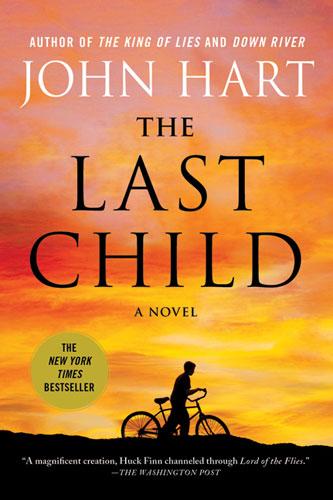
The Last Child
John Hart · 2009
Central nightmare A thirteen-year-old boy searches for his missing twin after the adults around him have begun to surrender
Closest I Will Find You connection Belief that a missing child may still be alive drives an unauthorized investigation through buried local crimes
Main difference The child's brother, rather than a convicted parent, becomes the story's most determined investigator
Best for Readers who want Southern Gothic atmosphere, a child investigator, damaged families, local corruption and a mystery with strong emotional weight.
Johnny Merrimon's twin sister Alyssa has been missing for a year. His father has left, his mother has collapsed into addiction and a wealthy local man has made himself indispensable to the household. Johnny maps sex offenders, watches suspicious houses and follows rumors with a discipline that alarms Detective Clyde Hunt, who has failed to solve the case and cannot stop caring about the family.
Hart combines Southern crime, family tragedy and a child's absolute refusal to accept adult resignation. Johnny's theories are sometimes reckless, but his conviction exposes connections a conventional investigation has missed. The novel ranks sixth because wrongful accusation is secondary, yet its emotional motor is very close to I Will Find You: hope becomes dangerous when everyone else experiences it as denial.
Know before you start. The novel includes child abduction, sexual abuse, domestic violence, addiction, murder, vigilante behavior and threats to minors.
5
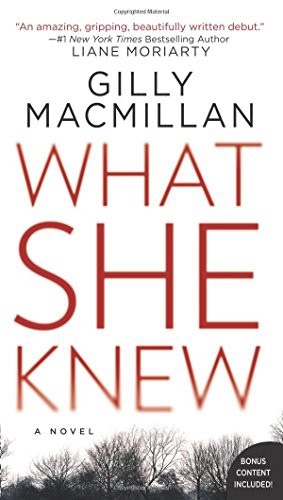
What She Knew
Gilly Macmillan · 2015, initially published in the United Kingdom as Burnt Paper Sky
Central nightmare An eight-year-old boy disappears during an ordinary walk, and his mother becomes an object of public suspicion
Closest I Will Find You connection Police procedure and media judgment create a story about the parent before the child's fate is established
Main difference The mother remains inside the investigation rather than escaping from custody to conduct her own
Best for Readers who want a realistic missing-child investigation, dual perspectives, British domestic suspense and careful attention to media behavior.
Rachel Jenner briefly lets her son Ben run ahead in a Bristol park. When she reaches the swing, he is gone. Detective Inspector Jim Clemo leads the search, while journalists and online spectators dissect Rachel's marriage, decisions and demeanor. Every appeal for help gives strangers more material from which to construct a version of her guilt.
Macmillan alternates Rachel's experience with Clemo's later psychological debriefing, revealing the cost of the case on both sides of the interview table. The structure makes institutional pressure personal without simplifying the police into villains. It ranks fifth because the child and the investigation remain at the center, and because it understands how quickly a frightened parent can become a suspect in the public imagination.
Know before you start. The novel includes child abduction, intense parental distress, harassment, victim blaming, marital conflict and discussion of harm to children.
4
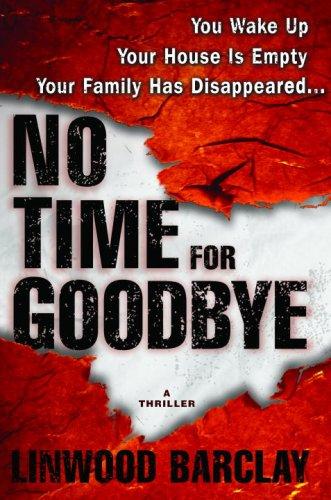
No Time for Goodbye
Linwood Barclay · 2007
Central nightmare A woman wakes as a teenager to find her entire family gone, then receives evidence decades later that the disappearance was never finished
Closest I Will Find You connection New information reopens a loss that everyone else has treated as permanent
Main difference The protagonist was the child left behind, not the parent convicted of killing one
Best for Readers who want suburban suspense, an old disappearance, accessible prose, family secrets and steady twists rather than graphic violence.
Fourteen-year-old Cynthia Bigge wakes after an argument to discover that her parents and brother have vanished. Twenty-five years later, she has a husband and daughter but no explanation. A television program revisits the case, and strange messages begin arriving. Someone appears to know what happened—and may be watching the family Cynthia built after losing the first one.
Barclay excels at turning domestic details into evidence that the past has entered the house. Cynthia's need for answers is inseparable from the fear that searching will endanger her daughter. It ranks fourth because it offers the same escalation from photograph-like clue to sprawling hidden history, with a clean commercial-thriller pace and an emotional question stronger than the mechanics: what if the dead were absent rather than gone?
Know before you start. The book includes missing family members, child endangerment, murder, stalking, home invasion and revelations about long-term deception.
3
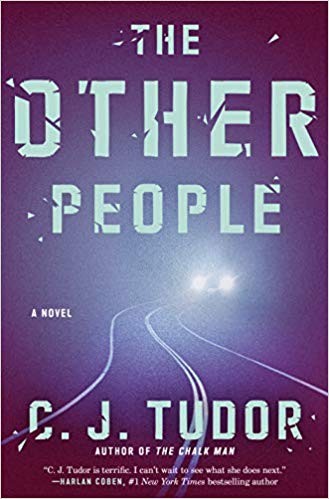
The Other People
C. J. Tudor · 2020
Central nightmare A father sees his young daughter in a stranger's car, only to be told that she and his wife were murdered at home
Closest I Will Find You connection A glimpse of a supposedly dead child turns grief into an obsessive search and exposes a hidden network
Main difference Supernatural ambiguity and horror imagery complicate the conspiracy
Best for Readers who want a dark road thriller, secret organizations, horror-adjacent suspense, multiple timelines and a parent following one impossible sighting.
Gabe is driving home when he sees a little girl's face in the rear window of a car ahead. He is certain it is his daughter, Izzy. The vehicle disappears, and police later tell him that Izzy and his wife are dead. Three years later he travels the same roads, following sightings and sleeping in a van, convinced that the official conclusion cannot account for what he saw.
Tudor builds the novel around the terror of a parent whose most important evidence is an instant no one else witnessed. The pursuit leads toward a group called the Other People, whose members exchange acts of revenge through a system designed to separate desire from responsibility. It ranks third because its opening and secret network mirror I Will Find You unusually well, though the atmosphere is stranger and more overtly gothic.
Know before you start. The novel includes child abduction, family murder, revenge killings, suicide, coma, stalking and supernatural uncertainty.
2
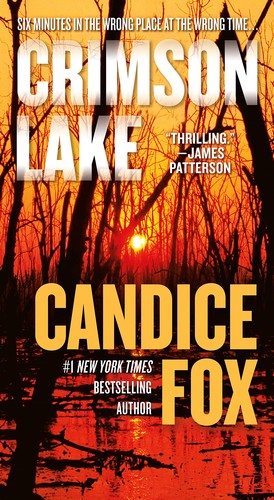
Crimson Lake
Candice Fox · 2017
Central nightmare A former detective accused of abducting a thirteen-year-old girl tries to disappear in northern Queensland
Closest I Will Find You connection A man convicted by public opinion investigates another disappearance while the unresolved accusation follows him everywhere
Main difference The original missing girl remains a continuing series mystery rather than the sole engine of the first book
Best for Readers who want a continuing detective series, Australian settings, abrasive partners, black humor and investigators carrying unresolved accusations.
Ted Conkaffey's car was seen near the bus stop from which Claire Bingley vanished. He was charged but not convicted, and legal release does nothing to restore his marriage, career or safety. In the wetlands around Crimson Lake, he joins private investigator Amanda Pharrell—a woman who served time for murder—to search for missing local author Jake Scully.
Fox gives Ted a partner who understands that innocence and social acceptability are different forms of evidence. Their case is eccentric and darkly funny, while Ted's past keeps threatening to overwhelm the work in front of him. It ranks second because it combines wrongful accusation, a vanished child, an outsider investigation and long-term reputational punishment more completely than almost any thriller outside Coben's own catalog.
Know before you start. The novel includes child abduction, alleged sexual violence, public harassment, murder, animal danger, trauma and discussion of Amanda's earlier conviction.
1
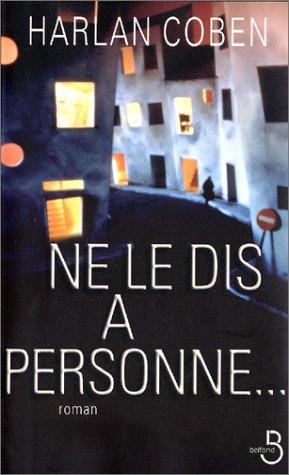
Tell No One
Harlan Coben · 2001
Central nightmare A widower receives a message suggesting that the wife murdered eight years earlier may be alive
Closest I Will Find You connection An intimate digital clue overturns an accepted death, makes the grieving protagonist a suspect and launches a fugitive investigation
Main difference The missing loved one is a spouse rather than a child
Best for Readers who want the closest structural match, short chapters, a fugitive protagonist, emotional stakes and twists that arrive without slowing the chase.
Pediatrician David Beck has spent eight years living with the murder of his wife, Elizabeth. An email arrives containing information only she should know and a link to a live street camera where a woman appears at an appointed time. As Beck tries to follow the instructions, new evidence causes law enforcement to reconsider his role in the original crime.
This is the closest match because Coben perfected the engine he later reconfigured in I Will Find You: a supposedly impossible image, grief transformed into action, a protagonist running from authorities and a conspiracy rooted in the private history of a family. The book is compact, ingenious and willing to make every answer generate a more urgent question. Readers who enjoyed the adaptation's particular blend of hope and jeopardy should start here.
Know before you start. The novel includes murder, assault, child abuse in a patient's history, organized crime, stalking, grief and several highly compressed coincidences.
Which Thriller Should You Read First?
Where to start. Choose Tell No One for the closest possible follow-up. It uses the same author's signature combination of a loved one presumed dead, a visual message, renewed suspicion and a protagonist forced outside the normal investigation. Choose Crimson Lake if the wrongful-accusation element matters most and you want a continuing detective series rather than another standalone race.
Read The Other People for the darkest, strangest version of the impossible sighting. No Time for Goodbye is the cleanest family-secret page-turner, while What She Knew gives the most grounded picture of a parent caught between police procedure and public judgment. Readers who prefer richer atmosphere should choose The Last Child or Descent.
For a justice-system novel, start with The Confession. For a literary study of how society constructs a guilty mother, choose Little Deaths. The Chain is the best choice when speed and an unbearable moral dilemma matter more than mystery.
The missing-child thriller usually begins with uncertainty, while the wrongful-conviction thriller begins with certainty imposed by the state. I Will Find You is so effective because a single photograph makes those conditions collide. David's son may be alive; therefore the murder, evidence, confession, sentence and years of grief must all be reconsidered at once.
Tell No One ranks first because it generates the same emotional voltage from an equally economical clue. Crimson Lake offers the strongest examination of the life that remains after an accusation, and The Other People best captures the madness of trusting one glimpse over a finished police narrative. Across all ten books, the real antagonist is not simply a kidnapper or prosecutor. It is the story everyone has agreed to stop questioning.