Ranked · Superhero Fiction
The Top 10 Superpowered Novels About Lonely Heroes and Double Lives Like Spider-Man: Brand New Day
by E. M. Larkin
A ranked guide to secret identities, erased memories, precarious work, public masks, damaged friendships, and superpowered people learning how to be known
Spider-Man: Brand New Day reaches theaters on July 31, 2026 with Peter Parker in a particularly lonely version of the problem that has always defined him. The world still knows Spider-Man, but Doctor Strange's spell has erased Peter from the memories of the people who loved him. He has responded by becoming a full-time hero, watching his old friends move forward while he lives without the ordinary relationships that once kept the mask connected to a person.
That premise makes this more than a list of novels containing capes and powers. Spider-Man stories work because heroism competes with rent, friendship, work, shame and the temptation to disappear into a role. The costume can provide freedom, but it can also become a place to hide. A hero may save an entire city while being unable to tell one friend why they missed dinner.
This ranking favors prose fiction about divided identities, erased or unstable memories, ordinary financial pressure and superpowered people learning that isolation is not the same thing as independence. Several entries are superhero satires, and a few replace costumes with secret agencies or supernatural factions. The strongest matches understand the emotional engine of Brand New Day: when nobody remembers the person beneath the mask, choosing to rejoin a community can be more difficult than defeating a villain.
Selection note. These are prose novels rather than Marvel comics. The ranking rewards a meaningful double life, the personal cost of power and a protagonist who must decide whether other people are liabilities or the reason to keep fighting. Lower entries broaden the match toward team origins, superhero families and identity-driven satire.
10
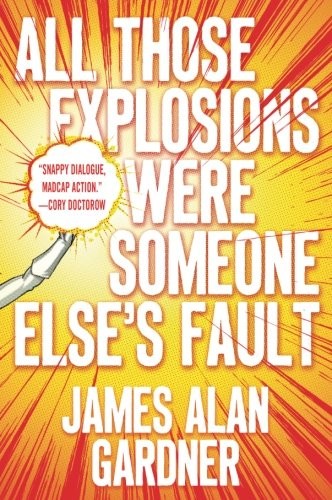
All Those Explosions Were Someone Else's Fault
James Alan Gardner · 2017
Divided life Four Canadian university roommates become superpowered Sparks after a laboratory accident
Closest Brand New Day connection New heroes must invent public identities while their relationships and private insecurities remain messily human
Main difference A fast, cheerful team origin rather than the story of an established hero cut off from everyone he knows
Best for Readers who want jokes, college friendships, Canadian superheroes, queer identity, rapid action and a world divided between science heroes and wealthy monsters.
In Gardner's world, the wealthy can buy supernatural immortality and become Darklings, while scientific accidents create the flamboyant heroes known as Sparks. When Kim Lam and her roommates acquire powers, they do what people raised on comics would do: test abilities, argue about names and discover that saving Waterloo is more complicated than recognizing the genre they have entered.
The novel ranks tenth because companionship arrives with the powers rather than being something the protagonist has lost. That distinction also makes it a useful counterpoint. Kim's shifting presentation and the team's experiments with identity treat superhero names as choices rather than fixed destinies. The roommates survive because they keep translating private knowledge into collective action. Peter Parker's problem is what happens when that supporting structure disappears; Gardner shows why rebuilding one matters.
Know before you start. The tone is exuberant, but the book includes violence, death, predatory immortals, body transformation and a dense opening explanation of its comic-book rules.
9
Turbulence
Samit Basu · 2012 in the United Kingdom; 2013 in the United States
Divided life Passengers on a London-to-Delhi flight develop powers shaped by their deepest desires
Closest Brand New Day connection Ordinary people are abruptly forced to decide which parts of themselves will become public symbols
Main difference A globe-spanning ensemble origin with political satire rather than one neighborhood hero protecting New York
Best for Readers who want Indian science fiction, inventive powers, ensemble action, media politics and superhero conventions examined outside the usual American setting.
Aman Sen leaves an international flight able to communicate through nearly any network. Other passengers can fly, duplicate themselves, control weather or exert impossible charisma. Their gifts are not random. They expose ambitions and fears that were easier to manage when they remained private, and they attract people eager to turn the new superhumans into celebrities, weapons or national assets.
Basu understands that a modern secret identity must survive cameras, social media and governments. The heroes cannot simply put on glasses and disappear. They have to control a story before someone else defines them. It ranks ninth because its scale is much larger and its cast less intimate than Peter's isolation, but it captures the pressure of becoming a public solution while remaining an unprepared person underneath.
Know before you start. The novel includes terrorism, political violence, death, coercion and broad satire. It begins a two-book sequence continued in Resistance.
8
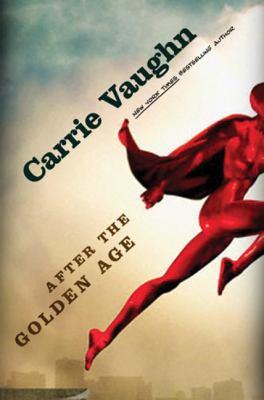
After the Golden Age
Carrie Vaughn · 2011
Divided life A forensic accountant tries to build a normal career outside her famous superhero family
Closest Brand New Day connection Work, family resentment and civic responsibility keep colliding with a heroic identity the protagonist never chose
Main difference Celia West has no powers and is escaping a legacy rather than hiding her own vigilante life
Best for Readers who want family drama, forensic accounting, a nonpowered lead, superhero legal consequences and a lighter mystery with emotional substance.
Celia is the ordinary daughter of Captain Olympus and Spark, the celebrated leaders of Commerce City's Olympiad. Childhood kidnappings and impossible expectations have made her want nothing from the family business. Then her accounting expertise places her on the prosecution team for the trial of the city's most notorious supervillain, and financial records pull her back into the world she has spent adulthood avoiding.
Vaughn approaches superhero life through taxes, corporate ownership and the resentment produced by always being the civilian in danger. Celia's professional competence is her real power, yet even that becomes entangled with her parents' public myth. It ranks eighth because the mask belongs to the people around her, but its central conflict—how to have an ordinary identity when heroism colonizes every relationship—belongs squarely in Spider-Man territory.
Know before you start. The book includes kidnapping history, parental estrangement, violence, public humiliation and romance. It is followed by Dreams of the Golden Age.
7
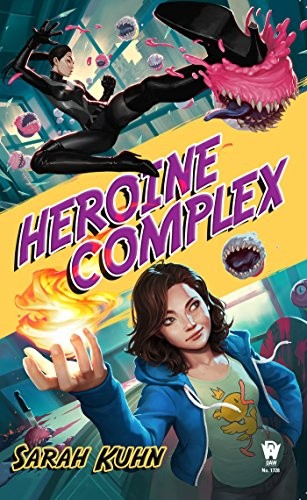
Heroine Complex
Sarah Kuhn · 2016
Divided life Evie Tanaka suppresses her own fire powers while managing the career of celebrity heroine Aveda Jupiter
Closest Brand New Day connection Hero work strains a lifelong friendship because public performance has replaced honest knowledge of the people involved
Main difference Demons, cupcakes and romantic comedy create a brighter, more playful San Francisco
Best for Readers who want Asian American superheroines, female friendship, romantic comedy, demon portals and a complete multi-book series with rotating leads.
Evie handles schedules, publicity emergencies and demon residue for her best friend, San Francisco's most visible superheroine. Remaining in the background appears safer than admitting she has powers of her own. When circumstances force Evie to impersonate Aveda, the temporary disguise exposes how thoroughly both women have confused friendship with the roles they perform for each other.
The secret identity here is emotionally reversed: Evie is hiding her capacity rather than using a costume to express it. Kuhn is especially good on the unpaid personal labor behind a polished hero brand. It ranks seventh because its bubbly paranormal-romance machinery is far from Brand New Day's solitude, but it shares a crucial conviction: protecting a city cannot compensate for refusing to be known by the person standing beside you.
Know before you start. Expect sexual humor, family conflict, panic, demon violence, controlling friendship dynamics and a deliberately heightened pop-culture tone.
6
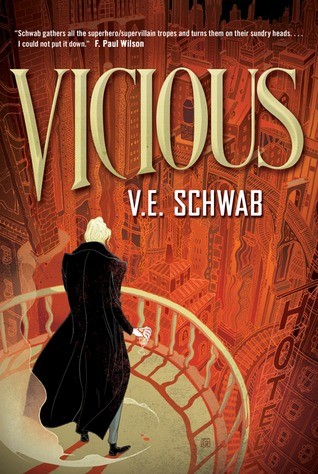
Vicious
V. E. Schwab · 2013
Divided life Former friends Victor Vale and Eli Ever turn near-death research into powers and incompatible myths about what they have become
Closest Brand New Day connection Power intensifies loneliness, obsession and the temptation to let a constructed identity replace moral responsibility
Main difference A revenge story about antiheroes and murderers rather than a fundamentally decent protector
Best for Readers who want morally gray superhumans, nonlinear plotting, intense rivalry, found family and a dark completed trilogy that ends with 2026's Victorious.
Victor and Eli begin as brilliant college roommates studying people who supposedly returned from death with extraordinary abilities. They discover a reproducible mechanism, experiment on themselves and destroy their friendship. Ten years later, Victor escapes prison to stop Eli's campaign of killing other EOs, assembling a fragile found family while insisting that revenge is a sufficient plan.
Schwab strips away civic reassurance and asks what remains when powers arrive without a heroic ethic. Victor and Eli each create a story that justifies isolation: one casts himself as avenger, the other as divinely appointed executioner. It ranks sixth because Peter Parker would reject nearly every choice they make, yet the novel is an unusually sharp study of the same danger—using exceptional ability as proof that ordinary accountability no longer applies.
Know before you start. The book includes suicide attempts, medical experimentation, murder, imprisonment, child endangerment, torture and animal death.
5
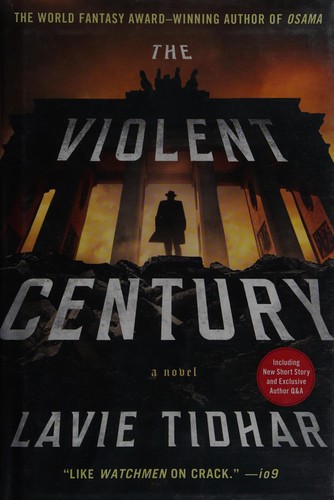
The Violent Century
Lavie Tidhar · 2013
Divided life British superhuman agents Fogg and Oblivion serve through decades of secret twentieth-century warfare
Closest Brand New Day connection A lifetime spent behind code names leaves the men unable to separate duty, memory and the people they failed to protect
Main difference Espionage, war and alternate history replace the neighborhood scale of a Spider-Man story
Best for Readers who want literary superhero fiction, British espionage, nonlinear history, wartime moral injury and a serious examination of power rather than wish fulfillment.
A 1930s experiment changes a small number of people around the world. Nations recruit the resulting “Ubermenschen,” and two British operatives move through the Second World War, the Cold War and later conflicts while official history pretends that superhumans never shaped it. In the present, Fogg is summoned for an interrogation that forces old loyalties and an unfinished love into the open.
Tidhar treats the secret identity as state property. Code names permit governments to use people while erasing the human continuity of what they endure. Fogg's fog and Oblivion's destructive power are less important than the emotional numbness cultivated by decades of classified service. It ranks fifth for understanding a grim version of Peter's dilemma: if duty requires everyone to forget you, eventually you may help them do it.
Know before you start. The novel includes the Holocaust, war atrocities, torture, sexual violence, death and intentionally compressed, fragmented prose.
4
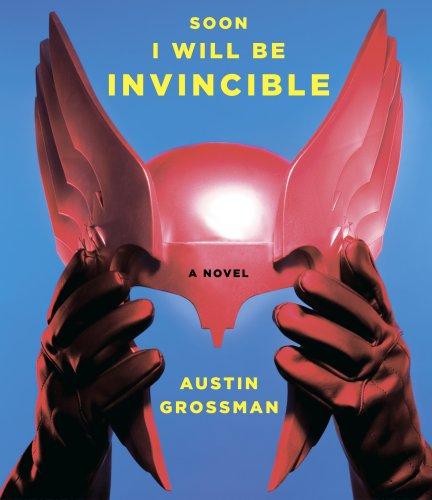
Soon I Will Be Invincible
Austin Grossman · 2007
Divided life Supervillain Doctor Impossible and rookie cyborg Fatale narrate from opposite sides of a famous hero team's crisis
Closest Brand New Day connection Both narrators are isolated by the identities they built and unsure how to belong outside a familiar role
Main difference A broad reconstruction of classic comic archetypes with a supervillain sharing the spotlight
Best for Readers who want alternating first-person narrators, classic superhero lore, a sympathetic villain, team politics and affectionate satire that still takes emotion seriously.
Doctor Impossible has escaped prison again and is preparing another plan for world domination. Fatale, a woman rebuilt as a cyborg after a near-fatal accident, joins the Champions while still trying to understand who paid for her body and whether a team invitation counts as acceptance. Their alternating accounts expose the loneliness behind both theatrical villainy and polished hero branding.
Grossman recognizes that repeated battles can become a social system. Impossible knows who he is when opposing heroes; Fatale knows what to do when given a mission. Ordinary intimacy is harder for both. It ranks fourth because its comic-book world is intentionally larger and more archetypal than Peter's New York, but few prose novels better capture the embarrassed human voice inside a grandiose identity.
Know before you start. The novel includes violence, death, coercive medical reconstruction, bullying memories, depression and a deliberately familiar assortment of comic archetypes.
3
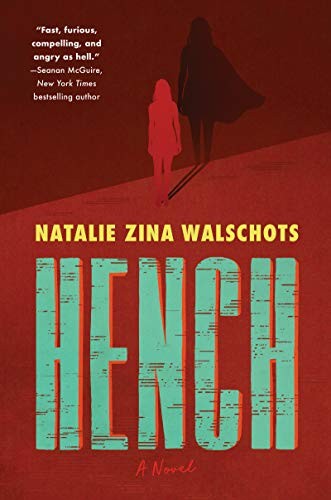
Hench
Natalie Zina Walschots · 2020
Divided life Anna Tromedlov takes precarious temp jobs for villains until superhero collateral damage changes her body and career
Closest Brand New Day connection Rent, employment, injury and public narrative matter as much as spectacular powers
Main difference The protagonist responds to heroic violence by becoming a highly effective villain
Best for Readers who want workplace satire, data science, body horror, villain perspective and an angry analysis of collateral damage. A sequel, Villain, followed in 2026.
Anna performs data entry for costumed criminals because supervillain work is still work and she needs to eat. During a press event, the celebrated hero Supercollider injures her so badly that recovery consumes her life. From bed, Anna calculates the aggregate human cost of superhero interventions. Her analysis attracts Leviathan, and spreadsheets become a weapon more destabilizing than a death ray.
This is the ranking's strongest account of the economy beneath a heroic city. Medical bills, temporary contracts and news coverage determine which identities are possible. Anna is not Peter Parker—her grievance hardens into cruelty—but she understands why a broke person might cling to the one role that makes power legible. It ranks third because Brand New Day also returns Spider-Man to the street-level truth that a saved city is composed of individual people who absorb the damage.
Know before you start. The book includes severe injury, chronic pain, medical trauma, murder, mutilation, coercion, body horror and morally escalating revenge.
2
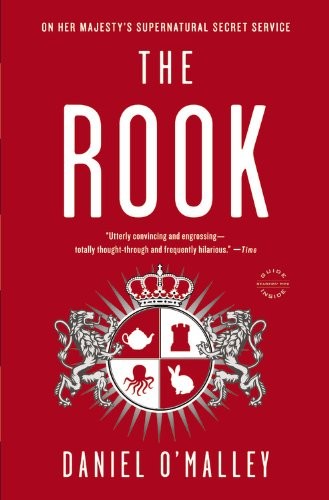
The Rook
Daniel O'Malley · 2012
Divided life An amnesiac woman inherits the body, powers and senior government position of Myfanwy Thomas
Closest Brand New Day connection Personal memory has been severed from a powerful public role, forcing a lonely protagonist to decide what parts of the former life deserve rebuilding
Main difference A supernatural British bureaucracy rather than a masked street hero
Best for Readers who want amnesia, paranormal espionage, dry humor, secret bureaucracy, grotesque powers and a mystery that opens into the Checquy Files series.
A woman wakes in a London park surrounded by gloved corpses and finds a letter beginning with instructions from the person she used to be. Myfanwy Thomas was a high-ranking administrator in the Checquy, the secret organization that manages Britain's supernatural threats. The new Myfanwy must imitate her predecessor, uncover the traitor who arranged the memory attack and decide whether continuity of body creates an obligation to continuity of self.
The fit is unusually precise even without a costume. Like Peter, Myfanwy occupies a life whose relationships no longer recognize the person experiencing it. O'Malley turns administrative files and letters into an improvised support system left by an absent self. It ranks second because the central pleasure is watching isolation become agency without pretending that total self-sufficiency is healthy.
Know before you start. The book includes body horror, violence, death, medical experimentation, child abuse history and long explanatory files embedded in the action.
1
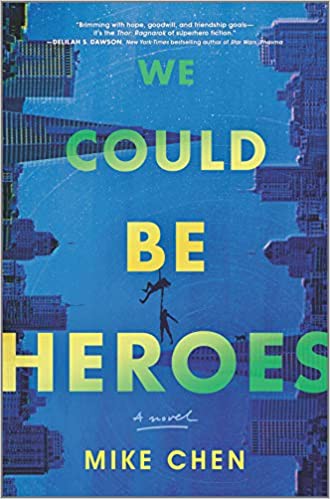
We Could Be Heroes
Mike Chen · 2021
Divided life Two amnesiac superhumans have independently become a vigilante and a bank robber
Closest Brand New Day connection Lost memories, lonely routines and improvised identities make friendship the real route back to personhood
Main difference A warm standalone mystery in which the hero and villain choose cooperation relatively early
Best for Readers who want the closest match, an adult superhero friendship, memory mysteries, found family, humor and a hopeful standalone with no required series commitment.
Jamie wakes with no past and the ability to read or erase memory. He becomes the Mind Robber, holding up banks without hurting anyone so he can afford coffee, books and care for his cat. Zoe, known publicly as the Throwing Star, has strength, speed and the same absence where a personal history should be. They meet in a memory-loss support group, recognize each other and reluctantly compare clues.
No other book on the list aligns so many of Brand New Day's emotional elements. The city knows the powered identities while the people inside them cannot access the ordinary lives that came before. Jamie and Zoe initially treat solitude as protection, but neither can solve the mystery alone. Their friendship does not restore a pristine past. It lets them choose who to become with another person present to remember the choice.
Know before you start. The novel includes memory manipulation, captivity, medical experimentation, violence, grief and loneliness, but its overall tone is generous and restorative.
Which Superpowered Novel Should You Read First?
Where to start. Start with We Could Be Heroes for the closest emotional match: public powered identities, missing private lives and two lonely people learning to trust. Choose The Rook if the erased identity is the element that most interests you and you want a denser supernatural mystery.
Read Hench for street-level economics and collateral damage, or Soon I Will Be Invincible for a full comic-book universe translated into alternating prose voices. The Violent Century is the literary and historically grim option. Vicious suits readers who want the powers without conventional heroism.
For a lighter series, choose Heroine Complex. After the Golden Age centers the ordinary person trapped in a superhero family, while Turbulence and All Those Explosions Were Someone Else's Fault are the best choices for ensemble origins and the excitement of discovering what a new team can do.
The most persuasive superhero fiction understands that a secret identity is not just a practical device. It is a relationship problem. Every rescue creates another reason to hide, and every hidden truth makes the hero less reachable to the people who could keep power from becoming a complete personality.
We Could Be Heroes ranks first because its amnesiac protagonists cannot return to ready-made private selves. They have to construct honest lives from friendship forward. The Rook turns the same rupture into a conspiracy, while Hench asks who pays when heroic stories ignore ordinary consequences. Together, these novels offer what Spider-Man: Brand New Day promises at its best: powers are spectacular, but being remembered—and choosing to be known—is the harder form of salvation.