X-Men ’97 returned to Disney+ for its second season on July 1, 2026, making mutant politics one of the summer’s largest active genre searches. Most reading coverage sends viewers back to essential comic arcs. That is useful, but it leaves a low-competition opening for prose novels that explore the franchise’s deeper engine: a visible or discoverable minority whose unusual abilities become the excuse for surveillance, segregation, recruitment and fear.
The books below are not ranked merely because someone can fly or move objects. Each treats power as a social category. Governments, schools, corporations or communities decide whether gifted people are citizens, threats, tools or symbols. Several directly engage race, gender, sexuality or disability; others construct fictional registration systems whose moral pressure resembles the divide between Xavier’s accommodation and Magneto’s separatism.
Higher entries combine a broad powered population with political organization and disagreement inside the community. Lower entries may focus on one institution, one family or a younger protagonist, but all make belonging as important as spectacle. Comics and graphic novels are excluded so this remains a true prose-fiction opportunity.
Selection note. Books are ranked for the interaction among superhuman ability, minority identity, public fear and competing survival strategies. General superhero adventures without a systemic social conflict were excluded.
10
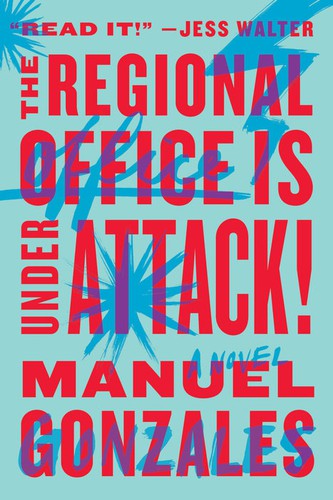
The Regional Office Is Under Attack!
Manuel Gonzales · 2016
Story engine Superpowered female assassins defend a secret organization during an assault led by a former operative
Closest X-Men ’97 connection Young women raised by an institution discover that protection, recruitment and exploitation are difficult to separate
Main difference A kinetic workplace satire with no public mutant-rights movement
Best for Readers who want female assassins, secret offices, nonlinear backstory and comic-book energy in prose.
The Regional Office uses gifted women, oracles and strange technology to prevent catastrophes. Rose enters as part of an attack intended to destroy it, while Sarah fights through the building in its defense. Their histories reveal how the Office selected, trained and sacrificed operatives—and why a former insider believes burning it down may be the only moral response.
Gonzales stages the Xavier-versus-Magneto question inside one collapsing headquarters. Is a flawed institution that saves lives reformable, or does its use of vulnerable recruits invalidate its mission? The combat is gleefully excessive, but the women’s loyalties have emotional weight. It closes the list because persecution comes primarily from the organization itself rather than the public, yet the school-as-weapon critique is unmistakable.
The book takes position #10 because its institutional battle is fun and relevant, though narrower than a society-wide mutant conflict.
Know before you start. The novel includes graphic violence, child recruitment, betrayal and a fragmented timeline.
9
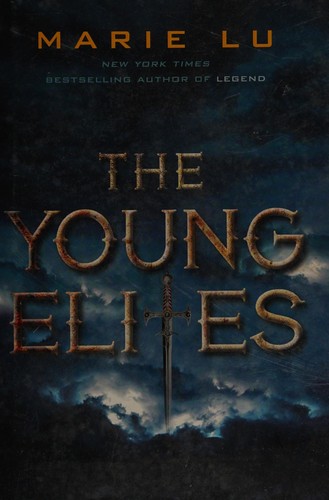
The Young Elites
Marie Lu · 2014
Story engine Survivors of a deadly fever carry visible markings, strange powers and the stigma of being called malfettos
Closest X-Men ’97 connection A persecuted young woman joins a gifted resistance while anger pushes her toward methods her allies fear
Main difference A young-adult villain-origin fantasy set in a Renaissance-inspired world
Best for Readers who want dark YA fantasy, dangerous illusions, antihero psychology and a completed trilogy.
Adelina Amouteru survived the blood fever with silver hair, a scar and an ability to create terrifying illusions. Her abusive father treats her as damaged, while the Inquisition hunts marked survivors. The Dagger Society recruits her, but its gifted members distrust the ambition and resentment that make Adelina powerful.
Lu places the Xavier-Magneto divide inside one protagonist. Adelina wants community and liberation, yet years of humiliation have made revenge feel like proof of worth. The state’s persecution is real, but victimhood does not automatically make every response just. Court politics and romance give the novel a YA shape; its morally dark lead keeps the conflict from becoming a simple resistance fantasy.
The book takes position #9 because it is the strongest villain-origin account of persecution radicalizing a gifted outsider.
Know before you start. The story includes child abuse, torture, execution, self-hatred, manipulation and escalating moral darkness.
8
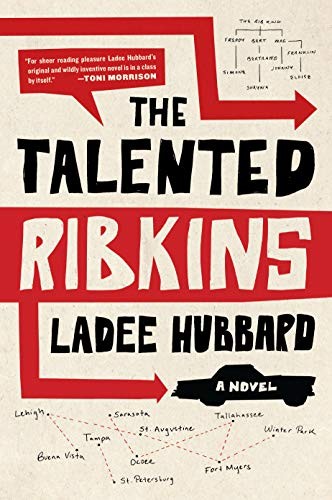
The Talented Ribkins
Ladee Hubbard · 2017
Story engine Members of a Black Florida family possess peculiar inherited gifts that rarely produce conventional success
Closest X-Men ’97 connection Superpowers intersect with racial justice, political organizing, family history and the gap between talent and power
Main difference A literary road novel with magical realism, humor and little genre-style combat
Best for Readers who want literary fiction, Black family history, Florida settings, humor and a morally complicated older protagonist.
Seventy-two-year-old Johnny Ribkins can draw a map of any place, even one he has never seen. To repay money stolen from a mobster, he drives across Florida retrieving cash he buried during a criminal career. His niece Eloise joins him, and their journey opens the history of the Justice Committee, a civil-rights group formed by gifted relatives who disagreed about how their talents should serve change.
Hubbard turns the superhero-team premise toward American history and family disappointment. Extraordinary ability does not protect the Ribkins from racism, debt or ego; it can even tempt organizers to substitute spectacle for durable work. Johnny’s return to old sites becomes an investigation into why the group fractured. The novel lacks mutant-scale public panic, but its argument about solidarity is among the list’s most mature.
The book takes position #8 because its powers are quiet, yet its treatment of minority politics is too relevant to omit.
Know before you start. The book includes racism, crime, family estrangement and references to political violence.
7
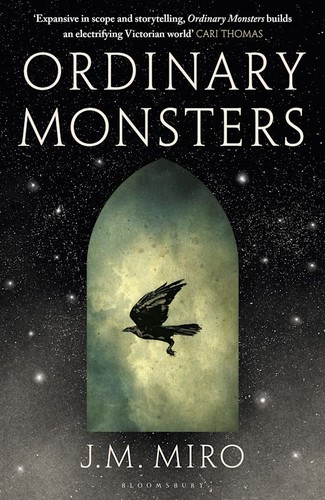
Ordinary Monsters
J. M. Miro · 2022
Story engine Gifted children are gathered at a Victorian institute while an ancient force hunts them
Closest X-Men ’97 connection A refuge must protect unusual young people without reducing them to instruments in a hidden war
Main difference Gothic historical fantasy with occult cosmology and a long, deliberately paced first volume
Best for Readers who want historical settings, found family, monstrous abilities and a continuing epic.
In 1882, detectives escort children with impossible abilities to Cairndale Institute in Scotland. Charlie can heal with terrible consequences; Marlowe radiates destructive blue light; Komako manipulates dust. Their arrival intersects with a killer made of smoke and with secrets about the institute’s founder, wards and purpose.
Miro uses the gifted school as both sanctuary and questionable machine. The children’s bodies attract adult plans they do not understand, and protectors repeatedly decide how much truth the young can bear. Racial violence and class shape who can move safely through the world even before magic appears. The scale is more gothic than superheroic, but the tension between family, school and weapon is deeply X-Men.
The book takes position #7 because it ranks seventh because the wider public conflict remains hidden, while the institutional match is strong.
Know before you start. The novel includes child abuse, racism, torture, body horror, death and violence against children.
6
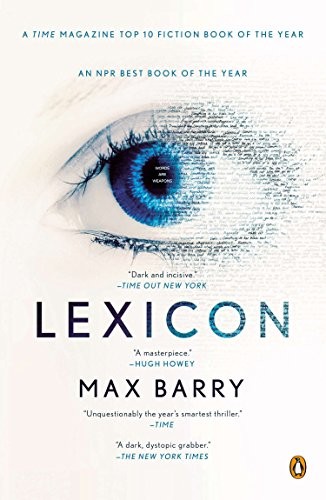
Lexicon
Max Barry · 2013
Story engine Rare people can use linguistic categories to bypass others’ conscious choices
Closest X-Men ’97 connection A secret school identifies talented children, trains their abilities and treats uncontrolled gifts as security threats
Main difference A hard-edged adult conspiracy about weaponized language rather than a public mutant population
Best for Readers who want linguistic puzzles, nonlinear conspiracy, ruthless institutions and morally compromised adults.
Emily Ruff is recruited from the streets into an academy where students learn personality segmentation and coercive words. Years later, Wil Parke appears immune to the techniques and becomes central to a disaster in an Australian town. Competing members of the organization pursue both of them while the narrative reveals how training, attachment and control produced the conflict.
The school resembles a corrupted Xavier Institute: it offers gifted outsiders education, status and community, then defines every private loyalty as a vulnerability. Barry’s system makes persuasion look like a superpower while keeping its violence psychological. The novel ranks below the public-persecution entries because ordinary society barely knows the gifted exist, but its institutional grooming and factional betrayal are exact matches.
The book takes position #6 because it offers the list’s sharpest secret-school thriller.
Know before you start. The book includes coercion, mass death, manipulation of consent, torture and a deliberately disorienting structure.
5
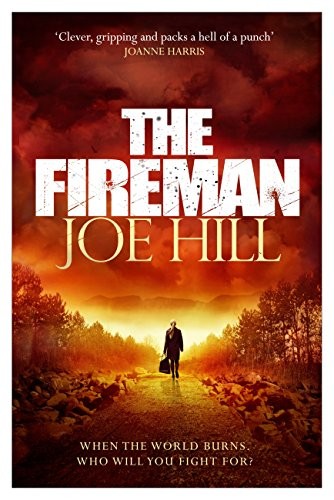
The Fireman
Joe Hill · 2016
Story engine A fungal plague causes infected people to develop luminous markings and sometimes burst into flame
Closest X-Men ’97 connection The changed build hidden communities while uninfected vigilantes hunt them and internal leaders weaponize fear
Main difference Post-apocalyptic horror whose power is contagious, dangerous and tied to collective emotion
Best for Readers who want a large apocalyptic thriller, found family, pregnancy stakes and fire-based powers.
Nurse Harper Grayson contracts Dragonscale while pregnant and flees a husband who believes infected people should die. She reaches a camp where residents have learned to enter a communal state that controls their fire. The refuge initially appears protective, but religious certainty, scarcity and suspicion begin turning its leadership against dissenters.
Hill combines persecution from outside with authoritarian drift inside the sanctuary. The infected are not dangerous because propaganda is entirely false; their bodies can burn cities. The ethical question is whether risk justifies extermination and whether community discipline can avoid becoming coercion. That complication gives the novel Magneto-era urgency: trauma can create solidarity, but it can also make a frightened group reproduce the control it escaped.
The book takes position #5 because its hidden refuge and volatile community make it a strong bridge from mutant fiction into horror.
Know before you start. The novel includes pandemic death, domestic abuse, attempted murder, religious coercion and graphic violence.
4
Wild Cards
George R. R. Martin · 1987
Story engine An alien virus leaves some survivors disfigured and others with extraordinary powers across modern history
Closest X-Men ’97 connection Aces, jokers and unaffected people form a stratified society shaped by stigma, celebrity and political exploitation
Main difference A shared-world mosaic written by many authors, with uneven tone and decades of continuation
Best for Readers who want many powers, linked stories, political history and an enormous shared-world series.
The first anthology follows the Wild Card virus from its release over postwar New York through the transformations it produces. Most infected people die; some become jokers with visible mutations, while a few become aces with useful powers. Interlinked stories show government investigations, public heroes, entertainers, criminals and communities built around bodies that cannot return to normal.
The ace-joker divide literalizes the unequal distribution of social acceptance within a powered minority. Beauty and marketable ability can create celebrity while visible difference attracts segregation. Because the book moves through McCarthyism, media culture and changing politics, it demonstrates how the same population can be recoded as enemy, novelty or voting bloc. That breadth is a major X-Men strength, though the anthology’s age brings dated choices.
The book takes position #4 because its alternate history provides the broadest social canvas after the top three.
Know before you start. The collection includes sexual violence, racism, ableist language, body horror and sharply uneven representation.
3
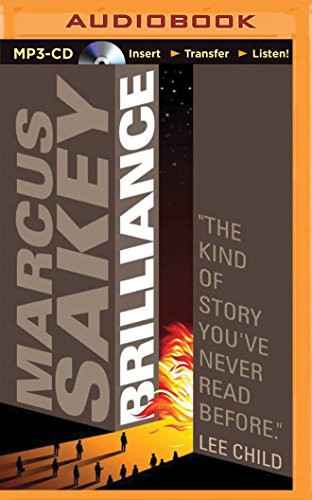
Brilliance
Marcus Sakey · 2013
Story engine A small percentage of children develop exceptional cognitive gifts and become targets of federal control
Closest X-Men ’97 connection A gifted agent hunting gifted radicals learns that the security narrative around his own minority may be manipulated
Main difference A conspiracy thriller whose abilities are heightened talents rather than colorful comic-book powers
Best for Readers who want near-future surveillance, conspiracies, a gifted investigator and a completed trilogy.
Nick Cooper can read body language well enough to predict movement, an ability that makes him valuable to the Department of Analysis and Response. He hunts abnorm terrorists in a country reshaped by fear of their economic and strategic advantages. A pursuit of movement leader John Smith forces Cooper to question the attacks, evidence and laws that justify his work.
Sakey builds the mutant-registration problem into a propulsive police-state thriller. Cooper has benefited from the institution that profiles him, so changing sides would mean admitting that professional belonging was conditional. Gifted people are neither uniformly noble nor uniformly oppressed, and public resentment has plausible economic roots. The moral architecture is simpler than X-Men’s best eras, but the pursuit mechanics keep the ideas moving.
The book takes position #3 because it turns persecution and passing into the fastest adult thriller on the list.
Know before you start. The novel includes terrorism, state violence, torture, family danger and political manipulation.
2
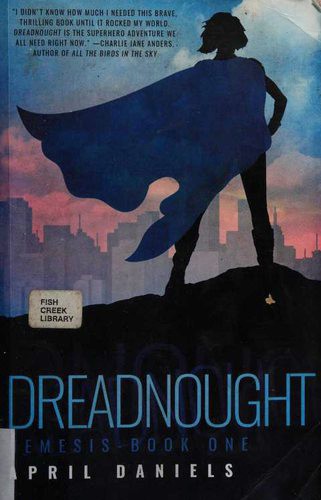
Dreadnought
April Daniels · 2017
Story engine A closeted transgender teenager inherits a famous hero’s powers and a body that reflects her identity
Closest X-Men ’97 connection Public heroism intensifies prejudice while institutions argue over who has the right to define the new Dreadnought
Main difference A young-adult single-protagonist origin story with brighter action and more explicit villains
Best for Readers who want a trans superhero lead, fast action, found alliance and a continuing YA series.
When the dying superhero Dreadnought transfers his mantle to Danny Tozer, the transformation gives her strength, flight and the female body she had hidden herself wanting. It also outs her. Danny faces abusive parents, a transphobic former ally of the hero and a governing superhero organization that doubts her legitimacy while she searches for the villain responsible for Dreadnought’s death.
Daniels makes the power fantasy inseparable from social exposure. Danny can lift impossible weight but cannot force adults to respect her name or stop a bureaucracy from treating prejudice as procedure. Friendship with the vigilante Calamity offers a smaller alternative team built through trust. The result echoes the best X-Men stories, where gaining an ability clarifies an identity without ending the world’s argument over it.
The book takes position #2 because its identity, institutional conflict and exhilarating heroism align with X-Men at unusually personal range.
Know before you start. The book includes severe parental abuse, transphobia, misgendering, violence and public outing.
1
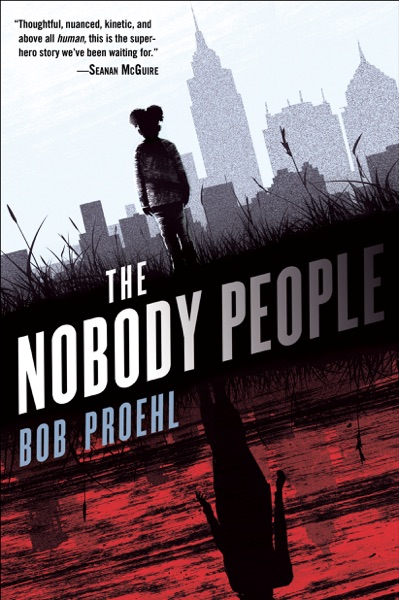
The Nobody People
Bob Proehl · 2019
Story engine People with extraordinary abilities emerge publicly and face registration, detention and organized violence
Closest X-Men ’97 connection A divided powered community debates integration, education, secrecy and resistance as fear becomes policy
Main difference A sprawling adult ensemble whose first volume ends before the conflict is resolved
Best for Readers who want an adult ensemble, powered children, registration politics, queer characters and a completed duology.
Avi Hirsch is a journalist and father whose daughter Emmeline can move objects with her mind. His reporting connects him to the Resonant, people whose abilities range from subtle perception to catastrophic force. A school offers refuge and training, but public exposure brings propaganda, government action and a movement whose members disagree about whether coexistence remains possible.
Proehl deliberately works at X-Men scale. Families, activists, teachers, politicians and frightened civilians all interpret the same emergence differently. The school is both sanctuary and target, while charismatic leaders discover that representing a minority can become another form of control. The novel’s patient ensemble gives assimilation and militancy enough space to become positions held by people rather than costumes assigned to heroes and villains.
The book takes position #1 because it is the closest prose equivalent to the franchise’s community-wide political conflict.
Know before you start. The novel includes hate crimes, detention, family separation, mass violence and harm to children.