Ranked · Spy Thriller
The Top 10 Spy Novels About Disavowed Agents and Internal Betrayals Like Slow Horses
by E. M. Larkin
A ranked guide to disgraced officers, false defectors, abandoned assets, deniable missions, institutional cleanup, internal suspicion, and services that protect themselves first
Season six of Slow Horses premieres on Apple TV on September 16, 2026, with the Slough House team on the run as Diana Taverner’s retaliation closes in. The series has made shabby offices, failed careers and institutional spite as gripping as any glamorous mission. Yet many “books like Slow Horses” results lead back to Mick Herron’s own novels or to broad lists of British espionage classics. This article targets the sharper opening: spies whose own services have demoted, abandoned, framed or hunted them.
Every ranked novel includes a consequential internal betrayal. The protagonist may be officially disavowed, used as a false defector, recalled only because the respectable officers need deniable help, or forced to survive a cleanup ordered by former colleagues. Gallows humor appears in places, but it is not mandatory. The essential Slough House quality is institutional: an intelligence service behaves less like a loyal team than a bureaucracy skilled at protecting itself.
The ranking favors moral and professional humiliation over generic action. Several heroes are extremely capable, but competence does not restore their standing or guarantee that their government deserves service. The highest books understand that the worst wound is often epistemic: an operative who knows how deception works can no longer tell whether disgrace is punishment, cover or the beginning of erasure.
Selection note. These books are ranked for disavowal, internal betrayal and distrust between operatives and their own institutions. They are not a general list of comic spy novels, and only one tries to reproduce Slough House’s exact workplace tone.
10
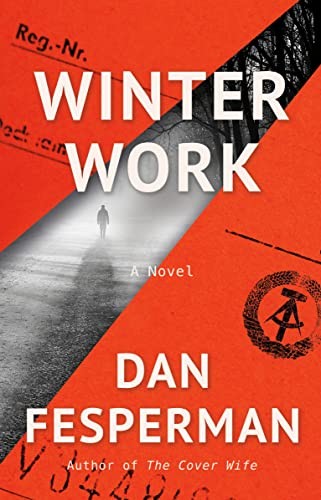
Winter Work
Dan Fesperman · 2022
Institutional failure East Germany’s collapsing foreign-intelligence service turns former colleagues and their secrets into liabilities
Closest Slow Horses connection Experienced officers operate inside an agency whose hierarchy is disappearing faster than its grudges
Main difference A serious historical thriller set in 1990 rather than a contemporary British workplace satire
Best for Readers who want historical espionage, post-Wall Berlin, competing intelligence archives, mature protagonists and patient tradecraft grounded in political transition.
The Berlin Wall has fallen, reunification is approaching and Stasi foreign-intelligence colonel Emil Grimm discovers that the death of a former colleague may not be suicide. Files, agents and informants are becoming tradable assets. Claire Saylor, working for the CIA, enters the same struggle from the Western side, where victory has not made motives transparent.
Fesperman ranks tenth because disavowal occurs through regime collapse rather than an active modern bureaucracy. That difference creates excellent tension: nobody knows which authority will exist next month, yet everyone knows old records can still kill. Emil has the professional knowledge of a senior operative and the political value of damaged inventory. The pace is measured, but the detailed tradecraft and cold streets offer a strong match for readers who prefer Slow Horses when it becomes melancholy rather than comic.
Know before you start. The novel includes murder, state surveillance, Cold War repression and references to past betrayals. Its detail and shifting loyalties reward slow reading.
9
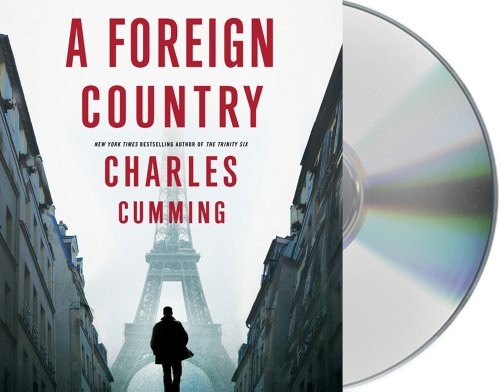
A Foreign Country
Charles Cumming · 2012
Institutional failure A disgraced former MI6 officer is recalled off the books to find the service’s missing chief designate
Closest Slow Horses connection The agency turns to someone it marginalized because official respectability cannot solve an embarrassing crisis
Main difference A polished international mystery with little of Slough House’s grotesque office comedy
Best for Readers who want modern British espionage, missing-person investigation, European settings, subtle tradecraft and the first volume of a continuing Thomas Kell series.
Thomas Kell’s career has ended in scandal after a covert operation. When Amelia Levene disappears weeks before becoming chief of MI6, Kell is quietly asked to find her. The search moves through France and Tunisia and connects personal history to a threat the service cannot acknowledge without damaging itself.
Cumming understands the emotional leverage of unofficial recall. Kell wants professional restoration badly enough to accept a mission whose ambiguity should make him cautious. His humiliation creates both vulnerability and freedom: the people who discarded him underestimate what he can investigate outside normal channels. The novel ranks ninth because Kell works mainly alone in elegant international settings, not among a bickering team of failures. It is ideal for viewers drawn to the serious side of River Cartwright’s need to prove he still belongs.
Know before you start. The book includes murder, abduction, sexual secrets, manipulation and institutional scapegoating. The plot builds gradually before its larger revelations.
8
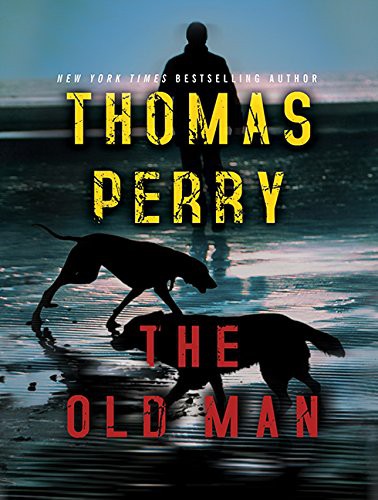
The Old Man
Thomas Perry · 2017
Institutional failure A former Army intelligence operative living under an assumed identity is targeted over a decades-old mission his government never resolved
Closest Slow Horses connection An aging professional discovers that retirement offers no protection when past handlers need a problem erased
Main difference A swift American fugitive thriller built around physical survival and preparation
Best for Readers who want an older fugitive, meticulous escape planning, government secrets, dogs, moral ambiguity and a self-contained thriller.
Dan Chase has spent decades living quietly with false documents, emergency money and the expectation that someone may eventually come. When assassins enter his home, preparation becomes action. The official story says he stole millions during a mission in Libya. The deeper history involves money, loyalty and a government that prefers a manageable lie.
Perry’s pleasure lies in watching an older man use patience, logistics and experience against younger pursuers. Chase is not a comic failure; he is frighteningly competent. His similarity to the Slow Horses lies in institutional abandonment. A service can accept useful work while refusing the worker a defensible place in its records. It ranks eighth because the chase mechanics dominate and team dynamics are minimal. For viewers who enjoy Jackson Lamb’s reminders that old operatives survive by noticing what polished officials overlook, it is a satisfying standalone.
Know before you start. The book includes assassination attempts, firearms, killing, past covert violence and deception inside intimate relationships.
7

The Cleaner
Mark Dawson · 2013
Institutional failure A government assassin tries to leave his secret unit and becomes the kind of loose end he once removed
Closest Slow Horses connection The service’s solution to an inconvenient employee is surveillance, pursuit and deniable force
Main difference A redemption-minded action thriller with a highly capable killer rather than a failed spy ensemble
Best for Readers who want a prolific action series, an assassin seeking redemption, London crime, direct prose and a hero hunted by his former handlers.
John Milton has spent years carrying out state-sanctioned killings for Group Fifteen. Haunted by the work, he walks away after a job goes wrong and tries to help a vulnerable family in London. His former employers do not recognize resignation as an available choice. The local crime story and the institutional pursuit gradually converge.
Milton’s disgrace is self-chosen, which separates him from Slough House’s involuntary exiles. He has not been demoted for incompetence; he has developed a conscience his role cannot accommodate. Dawson nevertheless captures the logic of a deniable unit protecting itself by eliminating biography as well as evidence. The novel ranks seventh because action and atonement outweigh espionage procedure. It also belongs to a long, independently launched series whose early numbering can vary across catalogs and prequel listings.
Know before you start. The book includes gang violence, addiction, murder, child endangerment and vigilantism. Series-order labels differ when short prequels are counted.
6
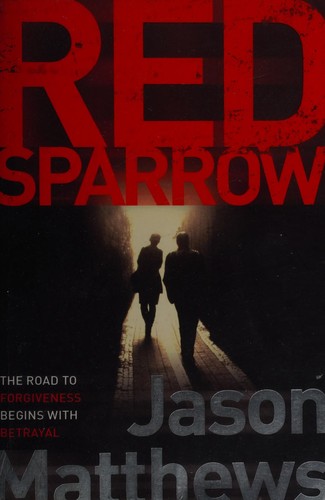
Red Sparrow
Jason Matthews · 2013
Institutional failure Russian intelligence coerces Dominika Egorova into sexual training and treats her body, talent and loyalty as state property
Closest Slow Horses connection Career advancement depends on surviving superiors who are often more dangerous than the declared enemy
Main difference A sexually explicit Russian-American mole hunt with a highly polished procedural surface
Best for Readers who want detailed tradecraft, mole hunting, Russian and American viewpoints, a continuing trilogy and characters attempting to outplay their handlers.
After an injury destroys Dominika’s ballet career, family pressure draws her into Russian intelligence. Her ability to perceive emotional states as colors makes her unusually observant. The service channels that gift through degrading institutional control. CIA officer Nate Nash, meanwhile, is protecting an important Russian source, and their relationship develops amid competing attempts to recruit, use and test them.
Matthews, a former CIA officer, fills the novel with surveillance detection, agent handling and operational detail. The strongest Slough House connection is not national allegiance but managerial contempt: Dominika’s superiors repeatedly mistake coercion for loyalty and create the very betrayal they fear. It ranks sixth because its tone is earnest, its sexual violence is substantial and its geopolitical framing can feel conventional. Readers who want the competence, suspicion and interdepartmental malice without comedy will find a close procedural match.
Know before you start. The novel includes rape, sexual coercion, torture, graphic violence and institutional misogyny. Recipes appended to chapters create an unusual tonal contrast.
5
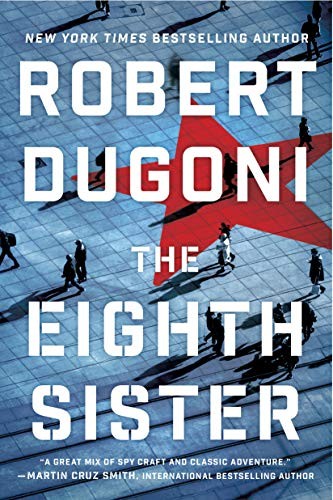
The Eighth Sister
Robert Dugoni · 2019
Institutional failure A former CIA officer accepts a Russian mission, is abandoned by the agency and returns home to face prosecution
Closest Slow Horses connection The organization recruits a disposable veteran, denies him protection and controls the official version afterward
Main difference Half escape thriller and half legal drama rather than an ensemble spy narrative
Best for Readers who want an older Black protagonist, Moscow pursuit, family stakes, legal maneuvering and the beginning of a Charles Jenkins trilogy.
Charles Jenkins left the CIA decades ago and now runs a security business under financial pressure. A former station chief asks him to travel to Moscow and help identify an assassin targeting a secret group of women. The assignment collapses into pursuit. Even reaching the United States cannot end the danger, because the state’s response shifts from disavowal to courtroom accusation.
Dugoni makes the administrative aftermath as important as the field mission. Jenkins must survive Russian counterintelligence and then prove what happened inside a system able to classify evidence and redefine service as treason. That two-part shape earns fifth place: it exposes how easily secrecy becomes leverage against the person who kept it. The courtroom section slows the chase but deepens the institutional betrayal beyond a simple order to kill.
Know before you start. The book includes assassination, imprisonment, family threats, racial discrimination and a pronounced midbook shift from action to legal procedure.
4
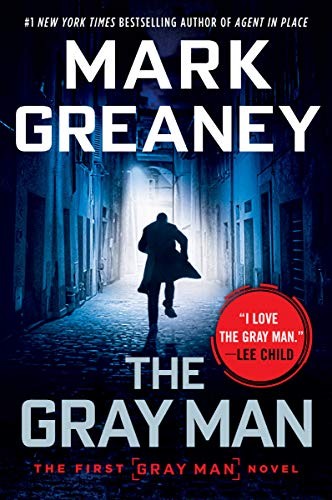
The Gray Man
Mark Greaney · 2009
Institutional failure Former CIA asset Court Gentry becomes the target of a global kill order shaped by political and commercial interests
Closest Slow Horses connection People who once benefited from an operative’s work decide his death is administratively convenient
Main difference Relentless international action centered on an almost superhuman lone assassin
Best for Readers who want nonstop pursuit, professional assassins, weapons and tactics, a long series, global locations and minimal downtime.
Court Gentry works as a deniable killer with a private moral code. When powerful interests require his removal, teams of professional assassins pursue him across Europe. The immediate stakes become personal when people connected to his handler are taken hostage, forcing an injured Gentry to keep moving toward an enemy who can mobilize institutions at scale.
Greaney offers the purest “burn notice” propulsion on the list. Orders travel through corporate and intelligence networks while the human being at the center becomes an obstacle measured in cost. It ranks fourth because the bureaucratic betrayal is clear and sustained, even if the tone is far removed from Slow Horses’ embarrassment and office politics. Court does not languish in a punishment detail; he turns disavowal into a globe-spanning survival course. The result is ideal for viewers who want the action potential behind MI5’s quieter threats.
Know before you start. The novel includes graphic violence, torture, hostage threats and a very high body count. Realism bends around the hero’s endurance.
3
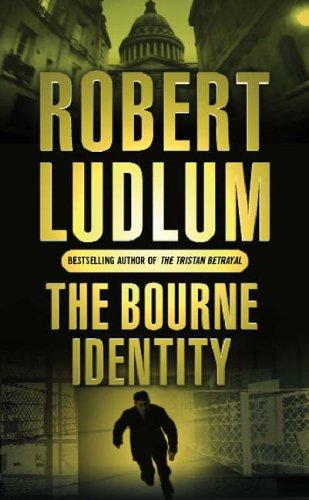
The Bourne Identity
Robert Ludlum · 1980
Institutional failure An amnesiac man discovers that a covert identity, an assassination program and his own government’s contingency plans are inseparable
Closest Slow Horses connection The protagonist has been turned into an expendable instrument and cannot trust the service that constructed his role
Main difference A long, twist-heavy Cold War chase whose plot differs substantially from the film adaptation
Best for Readers who want identity puzzles, European pursuit, covert programs, a classic conspiracy thriller and a book markedly different from its screen version.
A wounded man is pulled from the Mediterranean with no reliable memory and a clue implanted in his body. Following the money attached to the name Jason Bourne leads him into a manufactured identity designed to challenge the terrorist Carlos. Marie St. Jacques begins as a hostage and becomes essential to his attempt to decide which memories, skills and accusations belong to him.
Ludlum makes disavowal existential. Bourne does not merely lose institutional backing; he lacks a stable self outside the operation. Every reflex proves training while raising the possibility that he deserves the people hunting him. It ranks third because that uncertainty captures the psychological violence beneath bureaucratic cleanup. The novel is longer, more repetitive and more rooted in Cold War conspiracy than contemporary thrillers, while its treatment of Marie includes dated coercive dynamics.
Know before you start. The novel includes torture, kidnapping, terrorism, dated sexual politics and graphic violence. Its Carlos-era geopolitics firmly locate it in the late twentieth century.
2
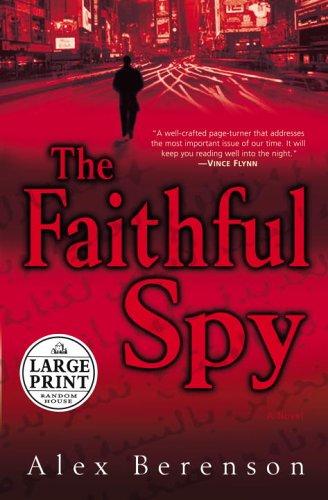
The Faithful Spy
Alex Berenson · 2006
Institutional failure A CIA agent returns after years inside al-Qaeda and finds that his own service doubts whether he still belongs to it
Closest Slow Horses connection Long sacrifice produces suspicion rather than gratitude, leaving an operative isolated between hostile systems
Main difference A terrorism thriller shaped by the immediate post-9/11 era and its assumptions
Best for Readers who want deep-cover tension, a conflicted operative, homeland-security stakes, procedural suspicion and the beginning of a long John Wells series.
John Wells has spent years undercover so deeply that communication with the CIA has nearly disappeared. When he returns to the United States to stop an attack, his religious conversion, absence and proximity to the enemy make him nearly impossible for his handlers to trust. He must act while both sides assess whether his loyalties have changed.
The institutional betrayal is quieter than a formal kill order. The agency created the conditions that made Wells useful, then treats the resulting identity as evidence against him. That paradox earns second place. Like a Slow Horse, Wells possesses knowledge the institution needs and a biography it would rather keep outside the building. The novel’s framing of Islam, terrorism and national loyalty reflects 2006 and deserves critical distance; readers may find both its urgency and its stereotypes inseparable from that context.
Know before you start. The book includes terrorism, torture, mass-casualty threats, religious stereotyping and violence. Its geopolitical perspective is strongly shaped by the early War on Terror.
1
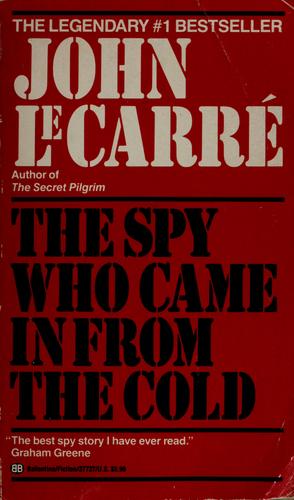
The Spy Who Came in from the Cold
John le Carré · 1963
Institutional failure British intelligence turns Alec Leamas’s apparent disgrace into an operation whose full purpose is hidden even from him
Closest Slow Horses connection Failure, alcohol and professional exile become tools in a scheme designed by superiors who regard people as expendable
Main difference A short, devastating Cold War tragedy without comic relief or a continuing team
Best for Readers who want the definitive bleak spy classic, a short standalone, moral ambiguity, double agents and an ending that redefines the entire operation.
Alec Leamas returns to London after his East German network collapses. He is visibly finished: demoted, drinking and pushed toward civilian failure. That deterioration attracts Communist recruiters and appears to give him a path into a deception aimed at East German intelligence officer Hans-Dieter Mundt. Liz Gold, a young librarian who cares for Leamas, becomes entangled in purposes she cannot see.
Le Carré ranks first because the novel establishes the moral architecture on which Slow Horses builds. Intelligence services do not merely abandon failed agents; they can stage failure, exploit loyalty and classify cruelty as strategic necessity. Leamas knows he is participating in deception but does not know which layer of the operation defines his real task. Professional cynicism offers no immunity when Control has designed the story.
The book is compact, unsentimental and almost entirely free of glamorous espionage. Its shabby rooms, compromised people and administrative language make betrayal feel routine. Jackson Lamb survives partly because he understands that routine. Leamas discovers its final shape too late. For readers seeking the deepest source of Slough House’s conviction that institutions protect outcomes rather than operatives, this remains the essential novel.
Know before you start. The novel includes alcoholism, antisemitic and homophobic language reflective of its period, emotional manipulation, imprisonment and death.
Which Disavowed-Spy Novel Should You Read First?
Where to start. Start with The Spy Who Came in from the Cold for the foundational version of institutional betrayal. It is short enough for one weekend and morally severe enough to explain the whole tradition. Choose A Foreign Country if you want contemporary British tradecraft and a disgraced MI6 protagonist without leaving the tonal neighborhood completely.
Read The Eighth Sister for the most explicit combination of field abandonment and legal retaliation. The Gray Man is the high-action choice, while The Old Man favors preparation and an older hero. Choose The Cleaner when redemption matters more than institutional realism.
The Bourne Identity offers the strongest identity puzzle, and The Faithful Spy turns deep cover into permanent suspicion. Read Red Sparrow for detailed agent handling and coercive hierarchy. Save Winter Work for a quieter historical mood in which the agency itself is dying but its secrets remain fully capable of murder.
Disavowed-agent fiction strips espionage of its most comforting fantasy: that sacrifice earns institutional loyalty. Secret services need deniability precisely when operations become morally or politically indefensible, which means the most devoted operative can become the easiest person to erase.
Le Carré’s first-place novel makes that logic tragic. The other entries vary the mechanism—amnesia, prosecution, forced retirement, false disgrace, ideological collapse—but return to the same question. If your career depended on mastering lies, what evidence could prove that your own side has stopped lying to you? Slow Horses makes the answer bitterly funny. These books show why the joke has always contained a threat.