Ranked · Horror
The Top 10 Slasher Horror Novels About Cursed Summer Places and Killer Legacies Like Crystal Lake
by E. M. Larkin
A ranked guide to deadly camps, haunted carnivals, abandoned water parks, final girls, franchise monsters, old massacres, and summers that keep repeating
Peacock’s Crystal Lake premieres on October 15, 2026, returning to the world before the original Friday the 13th through Pamela Voorhees, young Jason and the community around the lake. Generic slasher-book lists are crowded, but the prequel opens a more specific reading route: summer places where one massacre becomes local history and later generations inherit the killer, survivor or story.
Every ranked book uses a camp, lake, carnival, water park, resort or horror franchise as more than backdrop. The place must preserve memory, lure people back or teach new characters how to behave inside an old pattern. Several are direct slashers with masked killers; others examine final girls, actors and fans who keep the genre’s legacy alive after the first blood dries.
The ranking favors summer atmosphere, intergenerational trauma, self-aware slasher knowledge and locations that seem to demand repetition. The highest novels understand that Crystal Lake is frightening not because nobody remembers what happened there, but because everyone remembers differently—and the story itself begins arranging people into roles.
Selection note. These books are ranked for cursed location, slasher legacy and the recurrence of violence across time. Gore levels are high throughout the list, with the content notes distinguishing extreme titles from more psychological ones.
10
The Cotton Candy Massacre
Christopher Robertson · 2022
Slasher legacy A reopened 1980s amusement park becomes the site of a clown-filled massacre and the beginning of a continuing legend
Closest Crystal Lake connection A family entertainment destination carries a violent identity that outlives one terrible summer day
Main difference Extreme carnival splatter with supernatural candy and killer clowns rather than camp history
Best for Killer clowns, amusement-park horror, 1980s setting, supernatural splatter and a continuing indie series
Bonkin’s Bonanza reopens in the summer of 1989, drawing teenagers, families and people hoping the park represents a second chance. Black cotton candy and the park’s grotesque mythology turn celebration into a sprawling bloodbath. Later volumes follow survivors and the legend created by the event.
Robertson ranks tenth because its first book creates rather than revisits the legacy, but the park behaves like a franchise-ready cursed place from the beginning. Mascots, attractions and nostalgia make violence reproducible. It is the most extreme and least restrained recommendation, suited to readers who want practical effects imagined in prose.
Know before you start. Includes extreme gore, child peril, sexual violence, body horror and mass death. Publication records commonly date the first full release to 2022.
9
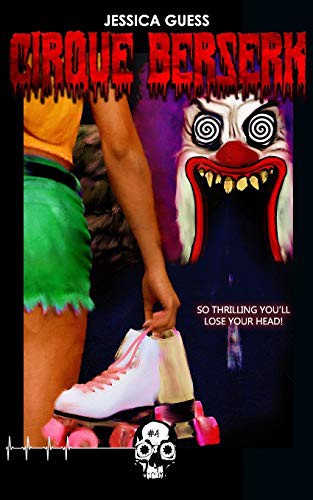
Cirque Berserk
Jessica Guess · 2020
Slasher legacy Teenagers enter an abandoned carnival decades after a notorious 1989 massacre
Closest Crystal Lake connection A local legend turns a closed summer attraction into a ritual site where violence can repeat
Main difference A short supernatural carnival slasher rather than a family-centered camp prequel
Best for Abandoned carnival, dual timelines, Black and queer characters, supernatural slasher rules and a one-sitting read
Cirque Berserk has remained abandoned since teenagers killed multiple people and vanished in 1989. Thirty years later, students on a senior trip detour to the site, expecting an urban legend and a transgressive adventure. Alternating timelines reveal how the carnival’s past and present require one another.
Guess makes legacy compact and literal. The new group enters because the massacre made the location interesting, converting memory into bait. It ranks ninth because the novella has limited room for psychological depth, but its dual timeline and occult recurrence offer a direct structural match for viewers drawn to Crystal Lake before and after its defining story.
Know before you start. Includes graphic murder, occult sacrifice, teen death and betrayal. Some edition records vary around late-2019 and 2020 release formats.
8
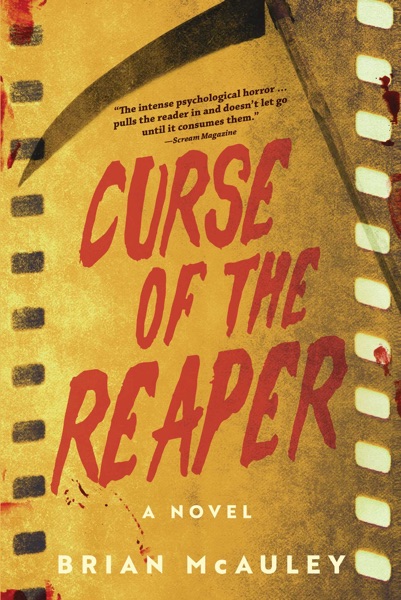
Curse of the Reaper
Brian McAuley · 2022
Slasher legacy An aging actor who played an iconic movie killer confronts a reboot and the possible return of his screen persona
Closest Crystal Lake connection A slasher identity passes between generations and becomes more powerful than the people who created it
Main difference Hollywood metafiction with no cursed summer camp
Best for Meta-slasher fiction, Hollywood horror, an aging actor, addiction recovery and ambiguity between possession and breakdown
Howard Browning once embodied the Reaper through a successful 1980s franchise; now convention appearances preserve a shrinking piece of fame. A reboot casts recovering former child star Trevor Mane. As both men struggle over ownership of the role, the Reaper appears capable of acting outside either performance.
McAuley ranks eighth because it relocates the cursed place into franchise memory. Actors, fans and studios keep the killer alive, making legacy a commercial and psychological possession. The older-younger conflict is particularly useful for a prequel asking how Jason’s image formed before it became culturally inevitable.
Know before you start. Includes gore, alcoholism, addiction, mental deterioration and violence. The book balances dark humor with a serious treatment of fading fame.
7
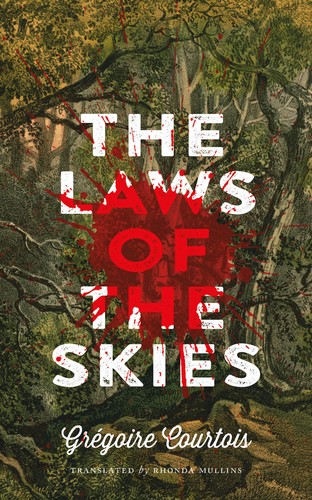
The Laws of the Skies
Grégoire Courtois · 2013
Slasher legacy A school camping trip places young children and adult supervisors inside an indifferent, increasingly lethal forest
Closest Crystal Lake connection A summer excursion becomes a closed ecology where adult protection fails and violence acquires its own momentum
Main difference A nihilistic French literary horror without a masked legacy killer
Best for Short literary horror, wilderness catastrophe, children in danger, bleak satire and ruthless escalation
Twelve six-year-olds enter the woods with three adults for what should be an ordinary overnight trip. Small errors, cruelty and nature’s indifference accumulate into catastrophe. The novel shifts viewpoint freely and refuses the reassuring moral architecture usually surrounding children in danger.
Courtois ranks seventh for transforming camping itself into the cursed pattern. There is no Pamela or Jason figure to explain the violence; the forest, group and chance distribute it. That difference makes the book an abrasive counterpoint to franchise mythology, asking whether a named killer is sometimes the comforting part of a massacre.
Know before you start. Includes extreme child death, animal death, gore and nihilism. First published in French in 2013; English translation appeared in 2019.
6
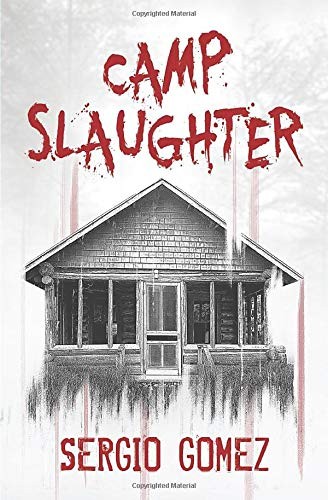
Camp Slaughter
Sergio Gomez · 2019
Slasher legacy Visitors to an isolated Pennsylvania camp encounter a killer whose territory has accumulated bodies and rumor
Closest Crystal Lake connection Cabins, woods and local history create a classic camp-slasher machine in prose
Main difference A direct grindhouse homage with less metafiction and family mythology
Best for Straight camp slasher, masked-killer energy, fast chapters, graphic kills and the start of a series
Camp Slaughter has become the kind of abandoned property people approach for dares, privacy or opportunity. A group entering the grounds discovers that the danger is not a story left in the past. The novel embraces stalking, separation and violent set pieces associated with 1980s camp cinema.
Gomez ranks sixth because the setting match is immediate and uncomplicated. Readers who want to feel as if they have found a lost VHS-era slasher in novel form will know exactly what the book offers. It has less to say about inherited narrative than the higher choices, but it understands the physical grammar of cabins and tree lines.
Know before you start. Includes extreme gore, torture, sexual content and cruelty. Character depth is secondary to suspense and kill design.
5
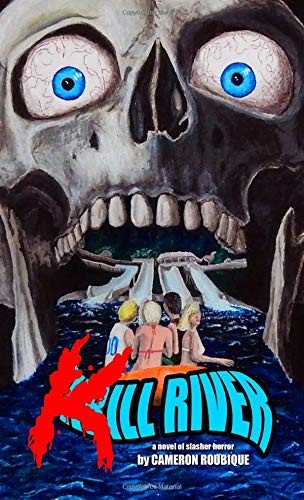
Kill River
Cameron Roubique · 2015
Slasher legacy Teen summer-camp runaways become trapped in an abandoned water park with a masked killer
Closest Crystal Lake connection A summer institution leads directly into another decaying leisure site built for isolation and pursuit
Main difference The main cursed location is a water park and the cast is younger than most franchise slashers
Best for 1980s nostalgia, abandoned water park, young final girl, masked killer and a completed indie trilogy
In 1983, thirteen-year-old Cyndi and three friends flee camp by river and discover an apparently empty water park. The freedom of having the attractions to themselves collapses when one teenager disappears and a killer begins using the park’s layout against them.
Roubique places childhood independence on the exact border where slasher rules begin. The rides, tunnels and pools make a vivid closed map, while later books allow Cyndi and the killer’s history to become a recurring legacy. It ranks fifth for summer nostalgia and an independently built franchise shape that parallels the genre it celebrates.
Know before you start. Includes graphic teen violence, stalking, gore and period-specific attitudes. The protagonists are thirteen, making the danger especially intense.
4
The Summer Is Ended and We Are Not Yet Saved
Joey Comeau · 2013
Slasher legacy A boy attends Bible camp while a killer transforms the isolated summer community into a massacre site
Closest Crystal Lake connection Adult belief and camp routine fail to protect children once a murderer begins assigning victims
Main difference A brief, vicious Canadian slasher with religious satire and no long preexisting lake legend
Best for Bible-camp horror, child protagonist, black humor, practical-effects knowledge and a very short read
Martin joins a Christian camp after helping his mother with special-effects work. Campers, counselors and religious performance create a familiar summer hierarchy before a killer begins moving through it. Martin’s knowledge of manufactured gore offers no assurance against the real thing.
Comeau earns fourth place because he understands camp as a temporary world adults claim to control. Faith language and movie effects provide competing ways to interpret blood, neither sufficient once violence begins. The title’s melancholy is as important as its gore: childhood ends before anyone is ready to call the season finished.
Know before you start. Includes graphic child death, religious cruelty, murder and gore. The book is intentionally brutal and not suitable for readers seeking a conventional young-adult slasher.
3
The Final Girl Support Group
Grady Hendrix · 2021
Slasher legacy Survivors of different massacre archetypes discover that someone is targeting the women who outlived the endings
Closest Crystal Lake connection Slasher stories persist through survivors, media and copycat roles long after the original locations close
Main difference A self-aware action thriller built from multiple fictional franchises rather than one camp’s history
Best for Final girls, horror-movie references, survivor ensemble, fast action and commentary on true-crime spectatorship
Lynette Tarkington attends therapy with other women whose experiences resemble famous slasher films. When danger reaches the group, she interprets every event through survival habits that have preserved her and isolated her. The women must decide whether shared trauma can become practical solidarity.
Hendrix ranks third because legacy is the entire premise. The killer’s cultural afterlife shapes public fascination, legal identity and the survivors’ sense of self. It offers less summer atmosphere than Crystal Lake, but no novel better demonstrates how a massacre becomes franchise grammar that later people may deliberately reenact.
Know before you start. Includes graphic violence, sexual assault history, victim blaming and trauma. Knowledge of classic slasher films adds pleasure but is not required.
2
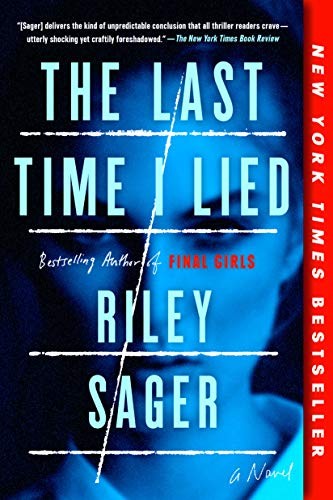
The Last Time I Lied
Riley Sager · 2018
Slasher legacy A woman returns to the summer camp where three cabinmates disappeared fifteen years earlier
Closest Crystal Lake connection An adult revisits a lake, camp and local family whose unresolved story shaped her entire life
Main difference A psychological mystery with slasher atmosphere and a lower body count
Best for Summer-camp mystery, dual timelines, female friendships, unreliable memory and a polished commercial thriller
Emma Davis was the youngest girl in a Camp Nightingale cabin when Vivian, Natalie and Allison vanished. As an adult artist, she accepts an invitation to teach at the camp’s reopening. New campers, hidden evidence and the powerful family that owns the property pull Emma back into the night she cannot reliably explain.
Sager earns second place because reopening makes memory operational. The camp markets renewal while every path and building preserves Emma’s fear. The mystery also asks who controls the official history when property, family reputation and childhood testimony conflict. It is the best low-gore option for viewers interested in Crystal Lake as community secret rather than kill arena.
Know before you start. Includes disappearance, murder, confinement, mental-health treatment and twists that require some implausible concealment. Violence is moderate relative to the list.
1
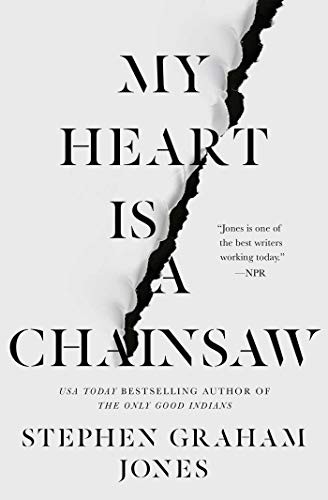
My Heart Is a Chainsaw
Stephen Graham Jones · 2021
Slasher legacy A slasher-obsessed teenager believes her lake town is assembling the roles for a real massacre
Closest Crystal Lake connection Lake history, local families and genre knowledge make one community feel destined to produce a killer
Main difference A dense, character-driven novel whose final violence arrives after extensive theory and town history
Best for Deep slasher lore, Indigenous heroine, lake-town history, emotional complexity and the first Indian Lake novel
Jade Daniels knows the rules of slasher films and sees signs everywhere in Proofrock, Idaho: wealthy newcomers across Indian Lake, buried local violence and a final-girl candidate who does not yet understand her role. Jade’s enthusiasm conceals trauma and a desperate wish for fiction to organize what her town refuses to name.
Jones takes first place because he treats slasher legacy as both scholarship and survival language. Indian Lake contains stories older than the anticipated massacre, and Jade’s predictions are insightful without being emotionally neutral. The book captures why a place like Crystal Lake keeps generating narrative: community denial, fan expectation and personal pain continually sharpen one another.
Know before you start. Includes sexual abuse, suicide, graphic gore, animal death and dense horror references. The slow build and Jade’s voice demand patience before the explosive finale.
Which Slasher-Legacy Novel Should You Read First?
Where to start. Start with My Heart Is a Chainsaw for the richest lake-town history and the character who understands why slasher stories recur. Choose The Last Time I Lied when you want a cleaner mystery about an adult returning to a reopened camp.
The Final Girl Support Group examines what happens after several franchises’ endings, while Curse of the Reaper follows the killer’s actor and reboot. Read Kill River, Camp Slaughter or The Summer Is Ended and We Are Not Yet Saved for direct summer-location slashers, increasing in brutality and bleakness.
Cirque Berserk and The Cotton Candy Massacre replace camp with cursed amusement sites. The Laws of the Skies is the literary, nihilistic outlier: no masked legacy, only a camping trip whose violence refuses the moral reassurance a franchise villain can provide.
A cursed summer place is a memory machine. Camp cabins, lake roads and abandoned rides preserve the geometry of what happened, while survivors and locals disagree about its meaning. Reopening promises that property can be separated from story. Slasher fiction exists to test that promise with a blade.
My Heart Is a Chainsaw wins because it understands the fan, survivor and town at once. The Last Time I Lied makes return the investigation, and the more direct slashers make place into choreography. Together, these books offer the ideal lead-in to Crystal Lake: before a killer becomes an icon, a community has to decide which warnings it will turn into legend and which it will keep ignoring.