Ranked · Science Fiction
The Top 10 Science-Fiction Novels About People and Places Displaced Into Impossible Worlds Like The End of Oak Street
by E. M. Larkin
A ranked guide to transported streets, time-torn communities, ordinary people, prehistoric danger, alien landscapes, and survival after geography breaks
Warner Bros.’ The End of Oak Street reaches theaters on August 14, 2026 with an irresistible displacement image: a suburban street has been torn from its familiar setting and deposited in a landscape where dinosaurs roam beyond the lawns. Most dinosaur reading lists emphasize laboratories, theme parks or time-travel professionals. This one targets the film’s stranger appeal—ordinary people discovering that their home, workplace or whole community has crossed into the impossible.
The ranked books use several mechanisms: time waves exchange pieces of Earth, a café falls into the Cretaceous, an island moves into the Bronze Age, a continent is replaced by alien wilderness and expeditions enter places where evolution followed another path. Dinosaurs are strongly favored but not mandatory. Every choice must make displacement social, forcing people to preserve a group while the geography that once supported their rules has vanished.
The ranking rewards the literal movement of modern spaces, ensemble survival and collisions between domestic normality and prehistoric danger. The top two are especially close because they place everyday people—not elite soldiers or scientists—inside dinosaur catastrophe and make leadership disputes almost as dangerous as the animals.
Selection note. These novels are ranked for physical displacement, group survival and the shock of modern life meeting an impossible ecosystem. A few lack dinosaurs, but all make a familiar community operate without its original world.
10
The Lost Regiment
William R. Forstchen · 1990
Displacement event A Civil War regiment and its transport ship are carried to an alien world populated by displaced human cultures
Closest The End of Oak Street connection A complete social unit arrives somewhere impossible and must rebuild institutions under external threat
Main difference Military alternate history on another planet, with no dinosaurs and a much larger campaign scale
Best for Military science fiction, alternate-history technology, community building, long campaigns and a continuing series
Colonel Andrew Keane and the 35th Maine are sailing home when a storm and mysterious passage deliver them to a world where human societies from different eras live under the rule of nomadic alien predators. The regiment’s weapons, discipline and abolitionist convictions immediately change the balance of power.
Forstchen ranks tenth because the transported group is military rather than suburban, yet the novel takes collective displacement seriously. The soldiers cannot simply survive as individuals; they must decide what parts of their old political order travel with them. Readers drawn to Oak Street as a miniature community suddenly responsible for its own defense will recognize the same civil-engineering problem.
Know before you start. Includes warfare, slavery, cultural stereotyping and large-scale death. Its politics and prose reflect early-1990s military SF.
9
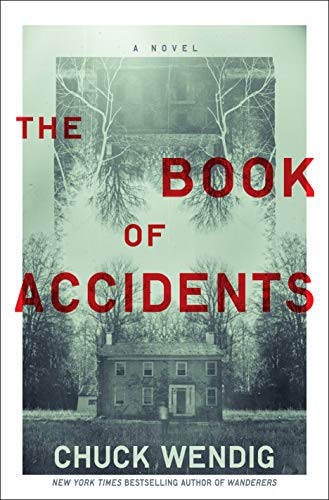
The Book of Accidents
Chuck Wendig · 2021
Displacement event A family returns to a Pennsylvania home where alternate realities begin pressing through local history
Closest The End of Oak Street connection A domestic space becomes the weak point between worlds, forcing a troubled family to stay together
Main difference A supernatural horror epic with psychic violence rather than prehistoric survival
Best for Family-centered horror, parallel worlds, psychic abilities, an abusive legacy and a large emotional canvas
Nate, Maddie and their son Oliver move into Nate’s childhood home after his abusive father dies. The surrounding mine town contains old wounds, a tunnel that does not obey ordinary geography and versions of people shaped by different choices. Oliver’s empathy makes him unusually vulnerable to the cruelty moving between realities.
The novel treats a home as both inheritance and dimensional address. Its family must understand why their particular place is being used before the breach can consume more than one world. It ranks ninth because the landscape does not physically travel, but Wendig captures the Oak Street combination of family fracture, cosmic displacement and ordinary rooms opening onto something vast.
Know before you start. Includes domestic abuse, bullying, hate crimes, graphic violence, child peril and suicide references. At more than five hundred pages, it is expansive.
8
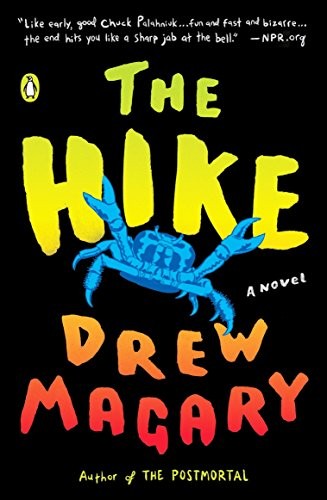
The Hike
Drew Magary · 2016
Displacement event A businessman steps off a hotel path and enters a lethal realm governed by arbitrary storybook rules
Closest The End of Oak Street connection A mundane setting ends abruptly at an impossible landscape that the protagonist must learn to navigate
Main difference A surreal solo quest with comic grotesquerie rather than a neighborhood ensemble
Best for Surreal adventure, dark comedy, relentless invention, a compact quest and a powerful final recontextualization
Ben leaves a business trip for a short walk and finds that the path refuses to return him to the hotel. He encounters masked killers, giant insects, talking animals, impossible oceans and a sequence of trials whose logic is revealed only through punishment. His central goal remains domestic: get back to his wife and children.
Magary reproduces the shock of a normal route becoming a border between realities. Ben has no equipment, theory or heroic identity, only the stubborn belief that home still exists somewhere outside the path. It ranks eighth because the community stays behind, but the mixture of suburban emotional stakes and wildly unstable ecology fits viewers who want Oak Street’s weirdness more than its dinosaur realism.
Know before you start. Includes graphic creature violence, body horror, captivity and abrupt tonal changes. The world operates by dream logic rather than scientific explanation.
7
Darwinia
Robert Charles Wilson · 1998
Displacement event Europe vanishes in 1912 and is replaced by an alien wilderness occupying the same geographical outline
Closest The End of Oak Street connection A familiar map is cut away and replaced by an ecosystem that makes old borders physically uncanny
Main difference An alternate-twentieth-century epic whose metaphysics eventually exceed its expedition premise
Best for Alternate history, alien ecology, early-twentieth-century exploration, metaphysical science fiction and ambitious world building
The event called the Miracle erases Europe’s people, cities and familiar biology overnight. In their place lies Darwinia, a continent-sized jungle filled with organisms that resemble no known evolutionary history. Photographer Guilford Law joins an expedition into the replacement land and discovers that the Miracle is part of a conflict larger than ordinary history.
Wilson scales Oak Street’s severed road up to a continent. The early chapters are especially effective at showing how governments, religions and explorers respond when geography remains but place disappears. It ranks seventh because the human expedition enters the anomaly rather than being transported with it, and the later cosmic explanation moves far beyond dinosaur survival.
Know before you start. Includes colonial attitudes, war, body transformation and dense conceptual shifts. Readers wanting a straightforward lost-world adventure should expect a stranger second half.
6
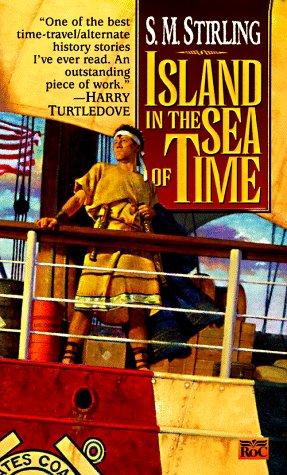
Island in the Sea of Time
S. M. Stirling · 1998
Displacement event The island of Nantucket and its modern population are transported to the Bronze Age
Closest The End of Oak Street connection An intact American community loses the surrounding world and must turn local infrastructure into survival
Main difference Large-scale alternate history centered on technology, diplomacy and war rather than dinosaurs
Best for Community logistics, alternate history, sailing, technological uplift, political division and a complete trilogy
A mysterious event sends Nantucket from 1998 to roughly 1250 BCE. Residents must inventory fuel, medicine, skills and food while deciding how to contact ancient societies without reproducing the worst forms of empire. Not everyone accepts communal restraint, and one faction sees modern knowledge as a route to personal conquest.
Few novels examine transported infrastructure more thoroughly. Boats, workshops, libraries and civic habits become nonrenewable resources, while neighborhood disagreements acquire historical consequences. It ranks sixth because the island’s scale and Bronze Age politics differ from Oak Street’s immediate family peril, but it is the strongest choice for readers asking what happens after the first week.
Know before you start. Includes warfare, slavery, sexual violence and lengthy technical passages. Some depictions of ancient cultures and gender feel dated.
5
The Lost World
Arthur Conan Doyle · 1912
Displacement event An expedition reaches an isolated plateau where prehistoric animals and ancient conflicts survive
Closest The End of Oak Street connection Modern people confront dinosaurs in a landscape cut off from the rules of their ordinary world
Main difference The characters deliberately travel to the lost world, and the novel’s colonial assumptions are pronounced
Best for A short genre classic, dinosaurs, argumentative explorers, pulp pacing and the origin of many later conventions
Reporter Edward Malone joins the combative Professor Challenger on a South American expedition intended to prove that prehistoric life persists on an inaccessible plateau. Once the route is destroyed, scientific spectacle becomes a survival problem involving dinosaurs, rivalries and human inhabitants whom the explorers interpret through their own prejudices.
Doyle’s novel supplies the genre’s foundational image: ordinary modern certainty ends at a cliff, and evolution waits on the other side. It ranks fifth because nobody’s suburb is displaced, yet the stranded ensemble and startling collision of eras remain essential to the appeal. Reading it now also reveals how lost-world adventure linked discovery to colonial entitlement.
Know before you start. Includes racist and colonial language, violence toward animals and Indigenous people, and outdated science. Modern readers may prefer an annotated edition.
4
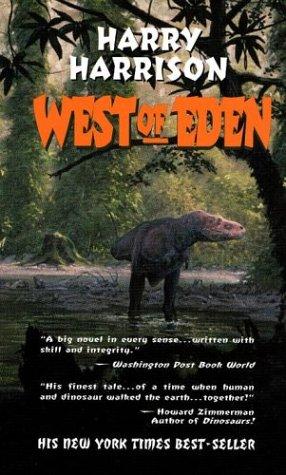
West of Eden
Harry Harrison · 1984
Displacement event Humans and an intelligent dinosaur civilization struggle over an alternate Earth where the extinction never occurred
Closest The End of Oak Street connection Human family survival collides with a fully realized prehistoric ecology and its dominant power
Main difference Alternate evolution rather than transported suburbia, with extensive invented cultures and languages
Best for Intelligent dinosaurs, speculative biology, culture clash, survival warfare and the first volume of a trilogy
In Harrison’s Earth, dinosaurs survived and one lineage developed biotechnology, cities and a rigid social order. Small human groups occupy the margins. When conflict intensifies, young Kerrick is captured and learns the language of the Yilanè, becoming a bridge and weapon between societies that understand the same land in radically different ways.
The novel asks what suburbia rarely has to consider: what if humans are not the default owners of the landscape? Its dinosaurs are not obstacles placed for spectacle but political beings with their own institutions. It ranks fourth for ecological immersion and family stakes, though readers looking for a recognizably modern community will find a complete alternate civilization instead.
Know before you start. Includes graphic violence, captivity, xenophobia and complex invented terminology. The narrative shifts among opposed cultures without offering easy moral comfort.
3
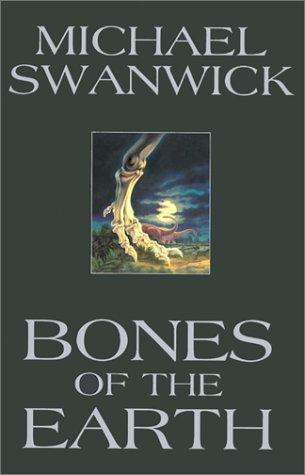
Bones of the Earth
Michael Swanwick · 2002
Displacement event Paleontologists use time travel to study dinosaurs and become stranded across competing versions of deep time
Closest The End of Oak Street connection Modern professionals lose control of the temporal doorway and must survive the world they treated as an object of study
Main difference A nonlinear time-travel puzzle centered on scientists rather than a family or neighborhood
Best for Dinosaur science, time paradoxes, academic characters, nonlinear structure and big speculative ideas in a relatively short book
Paleontologist Richard Leyster is recruited by a visitor with access to genuine dinosaur time. Scientific fieldwork initially seems miraculous, but sabotage, paradox and hidden authorities fragment the project. Researchers at different points in their lives become entangled with a future that regulates travel and with an extinction event nobody can treat as merely historical.
Swanwick earns third place by making the prehistoric world active rather than museumlike. Dinosaurs behave as animals, human knowledge remains incomplete and a controlled expedition can become displacement without warning. It is less domestic than Oak Street, but ideal for readers who want temporal instability, credible paleontology and the unsettling possibility that home belongs to another point on the timeline.
Know before you start. Includes death, predation, sexual relationships and intentional chronology confusion. Attention to character ages and timelines is essential.
2
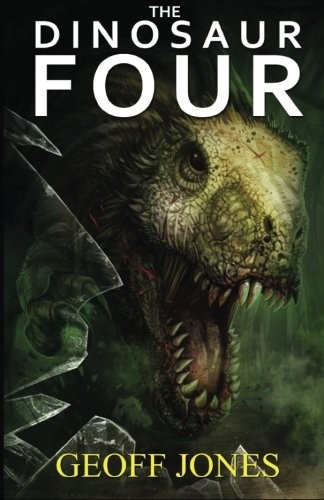
The Dinosaur Four
Geoff Jones · 2014
Displacement event A Denver café and ten ordinary people are transported sixty-seven million years into the past
Closest The End of Oak Street connection A piece of everyday urban space arrives intact in dinosaur territory, leaving strangers to improvise leadership
Main difference A deliberately pulpy, adult B-movie thriller with a smaller transported footprint
Best for Fast dinosaur action, an adult ensemble, survival conflict, time-travel mystery and a standalone adventure
Customers and staff at the Daily Edition Café hear a strange ticking before the building drops into the Cretaceous. The ten survivors have no shared training and little reason to trust one another. As predators close in, the group divides over leadership, sacrifice and whether the experiment that displaced them offers any route home.
This is the most literal small-scale match: coffee cups, counters and ordinary plans collide with prehistoric mud and teeth. Jones understands that the displaced building is useful mainly as an emotional reference point; survival soon depends on leaving it. It ranks second because its social conflict and graphic creature action align closely with Oak Street, even if its self-published B-movie tone is intentionally rougher.
Know before you start. Includes graphic gore, sexual material, profanity and interpersonal cruelty. The author describes it as an R-rated B-movie novel rather than family adventure.
1
Footprints of Thunder
James F. David · 1995
Displacement event A time wave exchanges patches of the modern world with pieces of the prehistoric Earth
Closest The End of Oak Street connection Streets, cities and families are caught inside a global patchwork where the next block may belong to dinosaur time
Main difference A sprawling disaster novel with many viewpoints and a worldwide rather than neighborhood-scale crisis
Best for Large-scale dinosaur disaster, multiple survival stories, government response, time anomalies and the start of a trilogy
Without warning, boundaries between past and present dissolve. Portions of modern cities vanish, prehistoric landscapes appear beside roads and dinosaurs move into populated areas while contemporary people are stranded in ecosystems millions of years away. Families, scientists and government officials face different parts of the same temporal quilt.
David takes first place because the premise almost perfectly enlarges Oak Street’s central image. Modern infrastructure does not merely encounter dinosaurs; pieces of place are exchanged, leaving sharp borders between familiar and impossible terrain. The ensemble structure also preserves the social scale, showing how private survival and public response diverge when geography itself can no longer be trusted.
Know before you start. Includes graphic animal attacks, dated science, biker-gang violence and a long ensemble structure. Early editions date to 1995, while some mass-market records list later reissues.
Which Displaced-World Novel Should You Read First?
Where to start. Start with Footprints of Thunder for the closest large-scale premise: modern streets and prehistoric landscapes abruptly occupy the same map. Choose The Dinosaur Four if you want the event reduced to one everyday business and ten strangers, with faster pacing and far more gore.
Read Island in the Sea of Time when the practical future of a transported community matters more than dinosaurs. The Lost Regiment applies a similar question to soldiers and political reconstruction, while Darwinia makes a whole continent’s replacement the foundation of an alternate twentieth century.
Bones of the Earth is the best science-and-paradox choice. West of Eden offers the richest dinosaur civilization, and The Lost World provides the historical genre blueprint. Choose The Hike or The Book of Accidents if the most attractive part of Oak Street is not paleontology but the sight of a familiar doorway opening onto impossible reality.
Displacement fiction makes home visible by removing its coordinates. A road, café, island or regiment may arrive intact, but the systems that gave it meaning—supply chains, law, neighboring communities and shared history—do not. Dinosaurs intensify the danger, yet the lasting question is social: who gets to carry authority across the break?
Footprints of Thunder wins because its time quilt makes that break physical on a global map. The Dinosaur Four brings the same shock to human scale. Together, these books show why The End of Oak Street has a search angle broader than another dinosaur adventure: it is about people discovering that a place can survive transportation while its assumptions do not.