Funeral work is both ordinary employment and the job most families encounter on one of the least ordinary days of their lives. It involves transport, cosmetics, chemistry, paperwork, sales, ceremony, and an unusual kind of customer service: the person receiving the care cannot complain, while everyone else in the room may remember a small mistake forever.
Fiction often uses a funeral home as shorthand for the macabre. The better novels notice the contradictions inside the work. An embalmer can be gentle with the dead and reckless among the living. A family business can offer continuity while trapping the child expected to inherit it. A polished memorial can be a gift, a commercial product, or both. Even the comic books on this list understand that professionalism begins where someone else's worst day has already started.
The ten selections cross literary fiction, historical fiction, crime, horror, satire, fantasy, and romance. I ranked them by how central funeral work is, how specifically the book depicts it, and how much the profession deepens the story instead of merely supplying an eccentric backdrop.
10
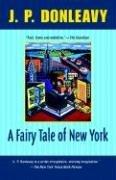
A Fairy Tale of New York
J. P. Donleavy
Role Funeral-home employee learning the work out of financial necessity
Setting New York City in a bawdy, disordered twentieth century
Best for Readers who enjoy picaresque literary fiction, black comedy, and uncontrolled narrators.
Know before you start First published in 1973, it is deliberately excessive and often abrasive rather than cozy or consoling.
Cornelius Christian returns from Ireland with his wife dead aboard the ship and too little money to bury her. Funeral-home owner Clarence Vine offers him employment that can cover the expense. Cornelius enters the business as a mourner in debt to it, then attempts to navigate bodies, widows, coworkers, and a city that turns every solemn arrangement into another opening for appetite or humiliation.
J. P. Donleavy does not offer a restrained occupational novel. Cornelius fights, desires, wanders, philosophizes, and creates trouble in prose that swings between slapstick and loneliness. The funeral home belongs naturally in this world because it converts grief into invoices while surrounding death with performance. Cornelius's inexperience with preparing bodies produces some of the book's darkest comedy, but his own bereavement prevents the dead from becoming completely abstract props.
The sexual politics and manic masculinity are conspicuously of their era, and readers looking for a respectful account of modern death care will not find one. Even the style can feel like an assault when its rhythms do not click. The novel makes the list because it refuses the tidy metaphor of the undertaker as a calm guide. Cornelius arrives at death as he arrives at everything else: broke, grieving, vain, frightened, and incapable of behaving properly.
9
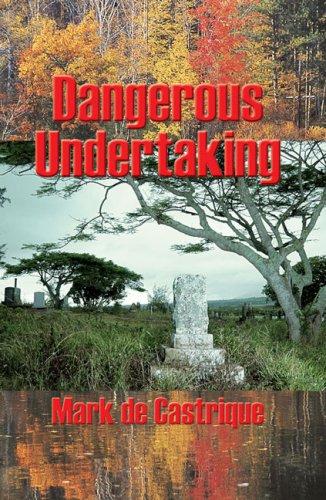
Dangerous Undertaking
Mark de Castrique
Role Former police officer returning to run his family's funeral home
Setting The fictional North Carolina mountain town of Gainesboro
Best for Readers who like regional mysteries, returning-home plots, and a practical middle ground between cozy crime and police procedural.
Know before you start Dangerous Undertaking opens a continuing series, so family and town relationships develop beyond the first case.
Barry Clayton leaves police work in Charlotte to help with the family funeral home after his father develops Alzheimer's disease. A shooting during a graveside service immediately proves that "Buryin' Barry" has not escaped criminal investigation. His knowledge of the town and his old training pull him toward the case even while bodies still need to be prepared and families still expect the Claytons to remain composed.
The premise could be a collection of undertaker jokes, but Mark de Castrique uses the profession to position Barry at the center of small-town fault lines. A funeral director knows several generations, hears what relatives say under pressure, and enters homes at moments when ordinary defenses have failed. He is also a former cop without current police authority, a useful balance for an amateur-sleuth series.
The mystery plotting is conventional and the funeral business sometimes recedes when action takes over. Readers seeking embalming detail should look elsewhere. What distinguishes the six-book Buryin' Barry series is duty. Barry has returned because his parents and community need him, not because he discovered a whimsical new career. That obligation lends weight to even the lighter local encounters.
8
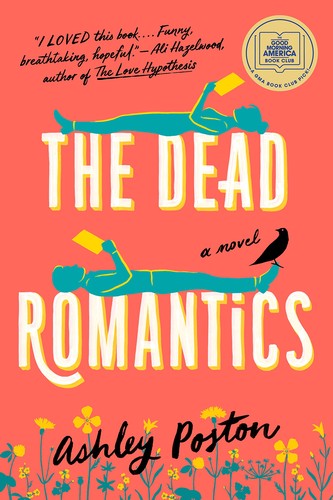
The Dead Romantics
Ashley Poston
Role Funeral-home daughter and romance ghostwriter returning home
Setting A family funeral parlor in small-town South Carolina
Best for Romance readers who want a warm supernatural story about bereavement, family, and finding a way home.
Know before you start The central death is a parent, and the novel mixes romantic comedy with sincere, sometimes heavy grieving.
Florence Day writes romances under another author's name, sees ghosts, and no longer believes in happy endings. When her father dies, she returns to the family funeral home she left behind. Then the ghost of her newly dead editor appears. Grief, professional failure, and an impossible attraction force Florence to reconsider the stories she tells about love and the family business she treated as something to escape.
The mortuary is more emotionally central than technically detailed. Florence's relatives are comfortable discussing bodies and arrangements because death is their work, but the book focuses on the care surrounding that work: how a family receives mourners, how ritual provides something to do with helplessness, and how returning for a parent's funeral turns a childhood workplace into unfamiliar ground.
Ashley Poston aims directly for tears and reassurance. The ghost mechanics bend toward the romance, and readers allergic to earnest speeches about grief may feel the author pressing the emotional buttons with both hands. Florence is also not a full-time funeral professional, which keeps this below books centered on practicing embalmers. It qualifies because the family parlor is not decorative gothic scenery. It is the place where Florence's fear of endings and her capacity to give other people closure meet.
7

Dead Lucky
Connor Hutchinson
Role Young embalmer with a compulsive gambling problem
Setting A busy funeral home in Openshaw, Manchester
Best for Readers who want contemporary working-class fiction, black humor, addiction, and unusually direct embalming detail.
Know before you start Gambling harm, debt, alcoholism, bereavement, and graphic preparation of bodies all feature prominently.
Jamie Fletcher loves embalming. He can manage the fluids, discoloration, cosmetics, and intimate indignities involved in preparing a body, and he talks to the people on his table with irreverent tenderness. Away from work, gambling has produced debt, secrecy, and the belief that one sufficiently large win will repair a life he keeps making less repairable.
Connor Hutchinson's 2025 debut pairs two forms of control. Embalming is exacting physical labor through which Jamie can restore an appearance for grieving families. Gambling is randomness disguised as a system he believes he can master. The contrast prevents the funeral home from becoming a simple symbol of morbidity. In that room Jamie is competent, useful, and often compassionate; the danger begins when he leaves the dead and starts lying to the living.
The voice is profane, local, and determined to make a joke before anyone can pity it. Some readers will find Jamie exhausting, particularly when addiction repeats the same promise in slightly altered form. The novel can also strain to keep a self-destructive narrator sympathetic. Its value for this list is specificity. Few recent novels allow an embalmer to discuss the job as skilled work he genuinely enjoys without making that enjoyment evidence of villainy.
6
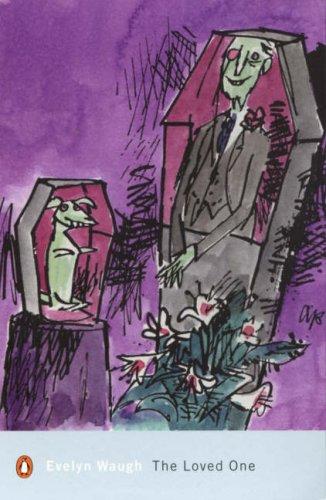
The Loved One
Evelyn Waugh
Role Pet-mortuary employee entangled with workers at a grand human cemetery
Setting Hollywood and the funeral complex of Whispering Glades
Best for Readers who want a short, vicious classic about commercialization, euphemism, and the aesthetics of respectable death.
Know before you start The comedy is cold, and the novella includes suicide and callous treatment of a body.
Dennis Barlow is an unsuccessful British writer working at the Happier Hunting Ground, a cemetery and funeral service for pets. Arranging a colleague's burial brings him to Whispering Glades, where death has been landscaped, scripted, cosmetically improved, and sold as a premium American experience. He becomes involved with cosmetician Aimée Thanatogenos and competes with senior mortician Mr. Joyboy, whose embalmed faces wear a signature smile.
Published in 1948 after Evelyn Waugh visited Los Angeles, the novella attacks industries that manufacture appearances: Hollywood makes stars, Whispering Glades makes "loved ones," and Dennis makes himself a poet by borrowing other people's words. The euphemisms are funny because the sales apparatus tries to eliminate the physical and emotional disorder that makes a funeral necessary.
Waugh's contempt is broad enough to include nearly everyone, and his anti-American caricature can be as revealing of the satirist as of his target. The treatment of Aimée is especially cruel. Dennis works with animal remains rather than as a human mortician, but the entire plot depends on the larger death-care industry. No other book here is better at exposing the strange language produced when grief becomes a luxury product.
5
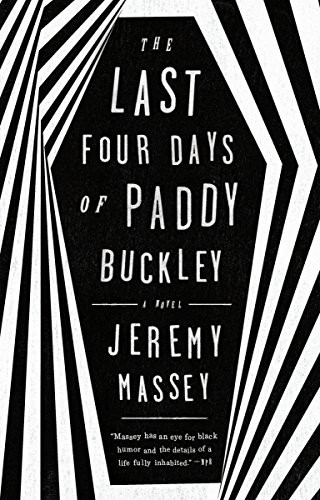
The Last Four Days of Paddy Buckley
Jeremy Massey
Role Dublin undertaker and grieving widower
Setting A long-established family funeral business and the city's criminal underworld
Best for Readers who like Irish settings, crime farce, morally compromised protagonists, and humor built from escalating concealment.
Know before you start The novel combines bereavement with mob danger and comic accidents; its tone is intentionally unstable.
Paddy Buckley works nights for Gallagher's funeral home and has never recovered from the death of his pregnant wife. Driving home, he accidentally kills a pedestrian and discovers that the dead man is the brother of a dangerous Dublin criminal. Then Gallagher's receives the funeral. Paddy must care professionally for the man he killed while concealing his responsibility from a family accustomed to revenge.
Jeremy Massey comes from a family of Irish undertakers, and the occupational detail gives the farce a stable floor. Paddy knows how to collect a body, meet relatives, arrange a service, and disappear behind a manner designed to make the bereaved feel that events are under control. His private panic is funny because his public role requires the opposite. An undertaker cannot look surprised by death, even this death.
The plot piles coincidence upon coincidence and sometimes tips from black comedy into machinery. Paddy's decisions become difficult to defend long before the criminal threat excuses them. Beneath the contrivance, though, is a persuasive connection between professional and personal grief. He can guide strangers through mourning because he understands it, yet he uses work to postpone his own.
4
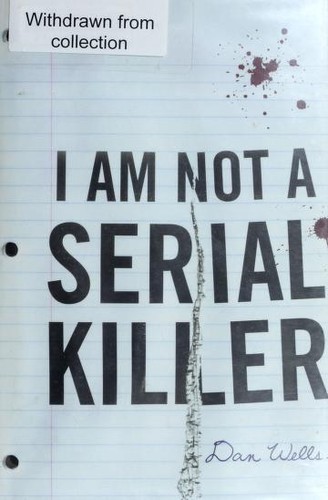
I Am Not a Serial Killer
Dan Wells
Role Teenager assisting in his mother and aunt's mortuary
Setting A small Midwestern town being hunted by a killer
Best for Horror readers who want mortuary procedure, a compellingly controlled first-person voice, and a monster mystery.
Know before you start This begins a six-book series and contains spoilers for itself in many online descriptions, so avoid researching the killer before reading.
Fifteen-year-old John Wayne Cleaver is fascinated by serial killers and terrified that he shares too many of their traits. He constructs rules to prevent himself from hurting anyone. Working in the family mortuary gives him access to bodies and teaches him how violence appears after the performance is over. When a sequence of local deaths develops a pattern, John may be the only person looking at the right details—and solving the case may require breaking the rules that keep him safe.
Dan Wells uses embalming as both plot evidence and moral pressure. John can perform careful, respectful work while feeling emotionally detached from the people around him. The contrast complicates the lazy equation between unusual affect and inevitable violence. His mother and aunt do not operate a chamber of horrors; they run a small business that serves their neighbors, and John's knowledge comes from helping them do necessary work.
The novel shifts from serial-killer thriller into overt supernatural horror, a turn that some readers will love and others will experience as changing the rules. Its language and teenage perspective have led different markets to treat it as young adult or adult fiction. Graphic preparation, animal harm, and John's intrusive violent thoughts make it substantially darker than the age of its protagonist might suggest.
3
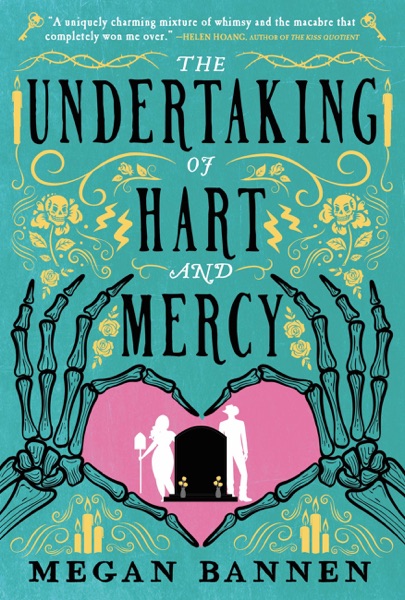
The Undertaking of Hart and Mercy
Megan Bannen
Role Undertaker keeping her family's business afloat
Setting A whimsical secondary world where the dead may rise dangerously
Best for Fantasy-romance readers who want banter, anonymous correspondence, family business pressure, and gentle macabre detail.
Know before you start This is romantic fantasy first, with moderate on-page intimacy and descriptions of body preparation.
Mercy Birdsall works for Birdsall & Son Undertakers, although the "son" has left much of the actual responsibility to her. Hart Ralston is a marshal who patrols the strange land of Tanria and brings bodies to the funeral home. They dislike each other in person, then unknowingly become intimate through anonymous letters carried by magical creatures.
Megan Bannen does more than paste a funeral-home job onto a romance. Bodies from Tanria must be handled properly because the unsettled dead can become dangerous drudges. Mercy's competence includes preparation, family diplomacy, business survival, and the emotional performance of serving customers. Her frustration comes partly from being the capable daughter sustaining an enterprise whose name still imagines a male heir.
The worldbuilding is charming rather than airtight, and the book's mixture of zombie danger, epistolary longing, comedy, and grief can feel tonally crowded. The romance borrows an easily recognized "enemies in person, lovers in letters" structure. It earns third place because the undertaking supplies both practical stakes and thematic purpose. Mercy cares for bodies that Hart retrieves; each understands death professionally while avoiding the loneliness of their own lives.
2

A Terrible Kindness
Jo Browning Wroe
Role Newly qualified embalmer who volunteers after the Aberfan disaster
Setting Britain from the 1950s into the 1970s, centered on October 1966
Best for Readers of historical and literary fiction interested in vocation, trauma, music, and the long aftermath of mass loss.
Know before you start The Aberfan disaster killed many children, and grief, traumatic stress, family conflict, and homophobia shape the novel.
Nineteen-year-old William Lavery is attending his first formal dinner as a qualified embalmer when news arrives that a colliery spoil tip has collapsed onto a school in Aberfan, Wales. A call goes out for volunteers. William travels to help prepare the dead, many of them children, and the experience becomes a fault line running through the rest of his life.
Jo Browning Wroe approaches a real disaster through the people performing necessary work after public attention reaches its limit. Embalming is presented as a terrible kindness: the practitioner must look closely at damage so a family may be spared some of it. The title captures both service and cost. William's training gives him something useful to do, but professional procedure cannot prevent trauma from entering his relationships, choices, and sense of himself.
The novel moves backward into William's childhood as a gifted chorister and forward through the consequences of Aberfan. That structure delays important explanations, occasionally making withheld history feel engineered. Some readers may also question using a fictional outsider as the center of a community's real catastrophe. Wroe writes with restraint, but no novel can make that choice neutral. The result remains a serious examination of care work whose emotional damage is often treated as the worker's private problem.
1
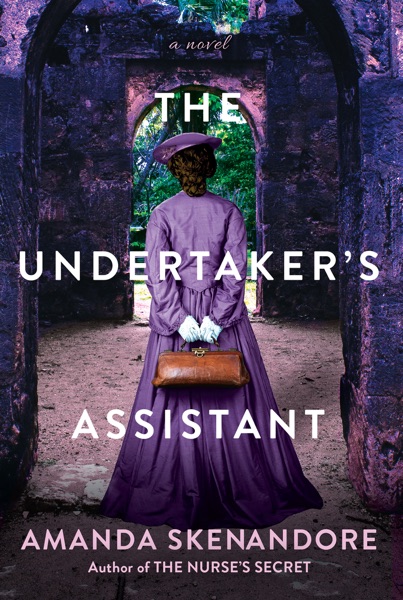
The Undertaker's Assistant
Amanda Skenandore
Role Freedwoman working as an embalmer and undertaking assistant
Setting Reconstruction-era New Orleans
Best for Historical-fiction readers who want an unusual profession, a strong sense of place, and a heroine building independence under hostile conditions.
Know before you start The book includes enslavement, racist violence, traumatic memory, medical and embalming detail, and the political dangers of Reconstruction.
Effie Jones escaped slavery as a child, was found by a Union Army surgeon, and learned anatomy and embalming in the North. She returns to New Orleans with fragmented memories and a desire to understand where she came from. Her skill earns work with a white undertaker whose technical shortcomings make her valuable, but competence cannot protect her from the racial and gender order surrounding the business.
Amanda Skenandore makes embalming historically specific. The Civil War accelerated the American practice as families sought to transport soldiers home, and Effie's training emerges from that violent institutional need. In New Orleans, her steady hand creates professional leverage while funerals expose differences of class, religion, race, and custom. The job places her near both intimate family grief and the political struggle over what freedom will mean after emancipation.
The novel balances several large subjects—lost memory, Reconstruction politics, romance, racial violence, and the details of death care—and some threads receive more resolution than others. At times its explanations reveal the research too plainly. It ranks first because Effie's occupation cannot be removed without collapsing the novel. Embalming is skill, livelihood, historical change, and a complicated form of agency for a woman whose society insists on controlling her body and labor.
Which Funeral-Home Novel Should You Choose?
Choose The Undertaker's Assistant for historical fiction in which embalming shapes every part of the protagonist's position. Choose A Terrible Kindness for the emotional cost of professional care after mass tragedy. Dead Lucky offers the most contemporary working embalmer, while I Am Not a Serial Killer supplies the most detailed mortuary horror.
For a warmer book, try The Dead Romantics. For fantasy and romance, choose The Undertaking of Hart and Mercy. Dangerous Undertaking is the start of a traditional regional mystery series, and The Last Four Days of Paddy Buckley turns professional composure into crime farce. The Loved One remains the sharpest satire. A Fairy Tale of New York is for readers who prefer their funeral fiction loud, disreputable, and difficult to contain.
These books work because funeral care refuses the clean division fiction often makes between body and meaning. A body is physical matter requiring skilled handling, but it is also the person a family still sees. The professional has to work in both realities at once. Sentiment without technique fails the dead; technique without empathy fails the living.
The Undertaker's Assistant ranks first because Effie's work makes that dual vision political. She performs a modernizing profession in a society attempting to rebuild itself while preserving old hierarchies. Her knowledge grants access but not uncomplicated safety. By placing a Black woman embalmer at the center of Reconstruction New Orleans, Skenandore turns death care into a question about who is allowed skill, memory, livelihood, and dignity among the living.