A company town collapses the distance between employer and government. The same organization may own the mine, rent the house, stock the store, appoint the doctor, influence the police, and decide whether dissent leaves a family unemployed or homeless. A wage appears to purchase freedom until most of it returns to the company by Friday.
Novelists have used that arrangement for more than a century because it makes power visible. Historical fiction follows coal, copper, logging, mills, and tobacco. Speculative fiction updates the model into corporate campuses, biotech compounds, and offshore cities. The technology changes; dependence remains.
This list uses a practical definition. A book qualifies when one employer controls several parts of community life—not merely because most residents work in the same industry. The ranking considers the importance of the town to the story, the clarity of its economic structure, the strength of the characters, and whether the novel understands why residents stay as well as why they resist.
10
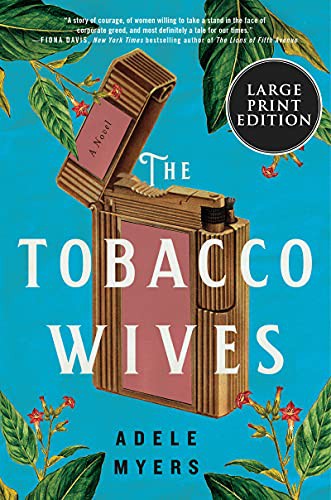
The Tobacco Wives
Adele Myers
Community Bright Leaf, a fictional North Carolina tobacco town
Period 1946
Best for Book clubs seeking readable historical fiction about women, advertising, and an industry town's manufactured respectability.
Know before you start The story addresses pregnancy loss, medical deception, sexism, and the health effects of tobacco.
Fifteen-year-old Maddie Sykes goes to Bright Leaf to assist her aunt, a seamstress who dresses the wives of tobacco executives. The job places Maddie inside drawing rooms where company prosperity appears as fabric, parties, and polished certainty. Then she discovers information suggesting that the industry's products may pose a danger concealed from the women being recruited to promote them.
Adele Myers approaches corporate power through social access rather than a picket line. Bright Leaf's influential families shape employment, charity, medicine, and the stories the town tells about itself. The "tobacco wives" benefit from that order but also perform unpaid public relations for it, turning domestic femininity into an extension of the company.
The mystery is easy to anticipate, and characters sometimes divide too neatly between conscience and corporate loyalty. The novel's contemporary moral vocabulary can feel more explicit than its 1946 setting. It ranks tenth because the company town is persuasive atmosphere but the plot operates primarily as an accessible historical coming-of-age story. For readers new to labor and corporate fiction, that accessibility may be exactly the attraction.
9

Oryx and Crake
Margaret Atwood
Community Gated biotech Compounds protected by corporate security
Period A near future remembered after catastrophe
Best for Readers who want corporate satire, biotechnology, environmental collapse, and a company-town model expanded into a social order.
Know before you start The novel includes sexual exploitation of children, suicide, pandemic catastrophe, and dehumanizing corporate culture.
Before he became Snowman, Jimmy grew up in company Compounds where scientists and their families enjoy manicured safety. Outside lie the pleeblands, dangerous and commercially useful as a market, test population, and warning. Jimmy's friend Crake understands the system well enough to imagine replacing it—and eventually humanity—with something he considers better designed.
Margaret Atwood scales the company town into a corporate caste system. Employers provide housing, schools, recreation, policing, and even the air of moral superiority. Moving jobs means moving communities. Children absorb rank from the Compound their parents have earned, while CorpSeCorps turns private security into government. The arrangement feels comfortable to insiders because the violence has been moved beyond the gates.
The post-apocalyptic frame means the novel does not remain in one working community or develop a conventional labor conflict. Oryx receives less interior life than the two men whose memories construct her. Those limitations keep the book at ninth for this particular theme despite its larger achievement. It belongs because it asks what happens when a company town no longer requires a country around it.
8
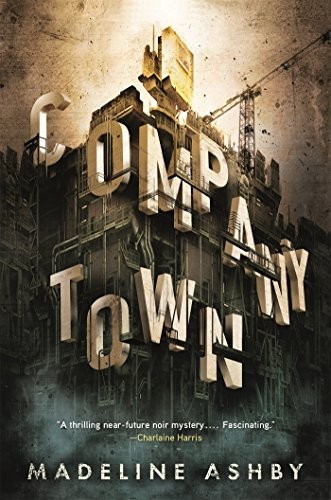
Company Town
Madeline Ashby
Community New Arcadia, a city-sized oil rig owned by Lynch Ltd.
Period Near-future Atlantic Canada
Best for Readers who want a compact science-fiction mystery, bodily autonomy, surveillance, and an unusual offshore setting.
Know before you start The book contains sexual violence, murder, harassment, and discussion of eugenics and genetic modification.
Go Jung-hwa—usually called Hwa—works in New Arcadia, an offshore city built around petroleum extraction. Most residents have accepted biological enhancements; Hwa's unmodified body makes her unusual and, in some surveillance contexts, difficult to see. When the powerful Lynch family buys the rig, she is hired to protect its youngest heir while someone targets women in the city.
The title is literal. Employment, residence, policing, bodily technology, and civic survival share a corporate platform surrounded by ocean. Hwa cannot simply drive to another neighborhood when ownership changes. Madeline Ashby uses that physical isolation to connect labor dependence with surveillance: a worker's body is part of the data system unless refusing modification makes her a blind spot.
The novel attempts corporate dystopia, murder mystery, bodyguard thriller, romance, and speculative physics in fewer pages than all of them need. Its late developments are more complicated than satisfying, and the labor politics sometimes disappear behind plot revelations. New Arcadia remains memorable. It modernizes the traditional mining town without losing the central question of ownership: if the company possesses the ground beneath every home, what would leaving even mean?
7
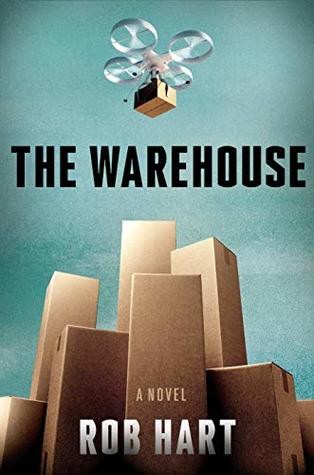
The Warehouse
Rob Hart
Community A MotherCloud live-work complex
Period Near-future America after climate and economic disruption
Best for Readers who want an accessible corporate thriller about algorithmic management, monopoly, and employer-owned daily life.
Know before you start The parallels to real online retail are intentional, but Cloud is a fictional company rather than a disguised documentary account.
Cloud has absorbed much of American retail and employs a vast population in self-contained facilities. Workers live in company housing, eat company food, use company health services, and wear bands that measure location and performance. Paxton arrives looking for stability after Cloud helped destroy his small business. Zinnia arrives with a hidden assignment to discover what the company is protecting.
Rob Hart translates the company store into a complete platform. Employees receive credits, convenience, and air-conditioned shelter in a harsher world, which makes exploitation easier to defend. The campus offers genuine safety. It also converts every need into a transaction controlled by the employer. Leaving requires money, transportation, housing, and a labor market Cloud has helped eliminate.
The alternating viewpoints create thriller momentum but divide attention between workplace observation, espionage, romance, and corporate testimony. Some of the revelation confirms what the premise has already made clear. The novel's strongest passages concern ordinary compromise: Paxton knows the system is degrading, yet a bed and predictable meal are powerful arguments. That recognition keeps the book from treating workers as fools awaiting enlightenment.
6
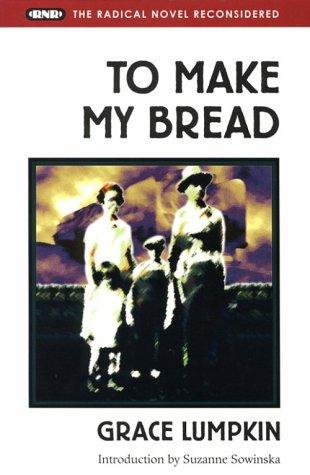
To Make My Bread
Grace Lumpkin
Community A Southern textile-mill town
Period Early twentieth century through the labor conflicts of the 1920s
Best for Readers interested in Depression-era protest fiction, Appalachian migration, textile labor, and an underread American classic.
Know before you start The story includes poverty, child labor, industrial injury, strike violence, and period prejudice.
The McClure family leaves the Appalachian mountains after land loss and economic pressure make subsistence impossible. Mill employment promises regular wages in the fictional town of Leesville. Instead, the family encounters long hours, low pay, industrial discipline, and a community organized around the needs of management. Survival gradually becomes collective struggle.
Published in 1932, Grace Lumpkin's proletarian novel draws on the Loray Mill strike in Gastonia, North Carolina. Its movement from mountain farming to factory labor matters. The workers are not entering exploitation from an idyllic world; poverty and corporate encroachment have already narrowed their choices. The mill town then turns wages, housing, and local authority into a tighter form of dependence.
The political purpose is visible. Characters sometimes carry positions in an argument, and readers resistant to social-realist didacticism may find the conversion toward class consciousness too orderly. The book also comes from a white writer and does not provide a complete account of the racial structure supporting Southern industry. Even with those limits, it deserves recovery as a direct novel of company housing, mill discipline, and women's labor.
5
King Coal
Upton Sinclair
Community A Colorado coal camp controlled by the General Fuel Company
Period Early twentieth century
Best for Readers who want a fast, angry muckraking novel about coal, safety, and the mechanics of employer control.
Know before you start The language and ethnic characterization reflect a 1917 publication, even when the book argues for worker solidarity.
Hal Warner, the privileged son of a coal magnate, takes a job under an assumed identity to learn how miners live. He discovers company housing, dangerous work, a captive store, manipulated elections, and armed authority aligned with the employer. A disaster forces Hal to choose between reform as an insider and solidarity with workers whose risks his class has converted into profit.
Upton Sinclair writes with the urgency of an exposé. The mine does not merely pay wages; it structures food, credit, law, and information. Workers who complain can lose everything at once. The book is especially effective when showing how apparently separate abuses reinforce one another: debt prevents exit, company doctors reduce liability, and political control prevents redress.
Hal is also the familiar reformer who enters oppression voluntarily and can leave when the lesson becomes dangerous. Working-class characters sometimes exist to educate him, and Sinclair rarely hides the moral attached to a scene. The novel ranks fifth because its company-town anatomy remains clear, not because it is subtle. Readers can see nearly every lever by which private ownership becomes local sovereignty.
4
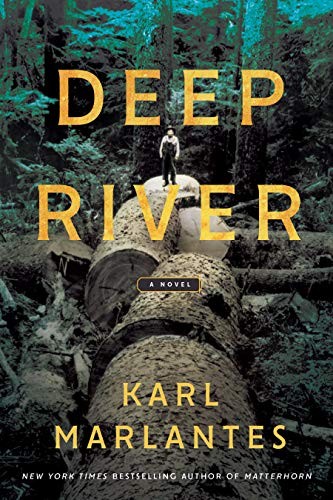
Deep River
Karl Marlantes
Community Logging camps and mill settlements of the Pacific Northwest
Period 1893 to the early 1930s
Best for Readers who want an immersive family saga combining immigration, logging, union history, and Pacific Northwest landscape.
Know before you start Expect industrial deaths, strike violence, political repression, sexual content, and a substantial time commitment.
Three Finnish siblings flee Russian repression and build lives near the Columbia River. The brothers work toward land, family, and independent livelihoods. Their sister Aino brings political commitment formed in Finland into logging communities where accidents, blacklists, private guards, and itinerant labor make union organization both necessary and dangerous.
Karl Marlantes gives the company-town story generational scale. Employers do not control every place equally; power moves through camps, bunkhouses, hiring practices, mills, courts, and the ability to label organizers foreign radicals. The novel is as interested in the appeal of ownership as in labor resistance. Workers dream not only of safer employment but of becoming farmers, fishermen, or mill owners with control over their own time.
At more than seven hundred pages, the story can feel exhaustive. Historical explanation sometimes interrupts character, sexual material is blunt, and Aino's political severity will challenge readers who want an uncomplicated heroine. Those difficulties are inseparable from the scope. Deep River shows that a company town is not just a location; it is one stage in a long contest over who owns forests, machines, labor, and the future built from them.
3
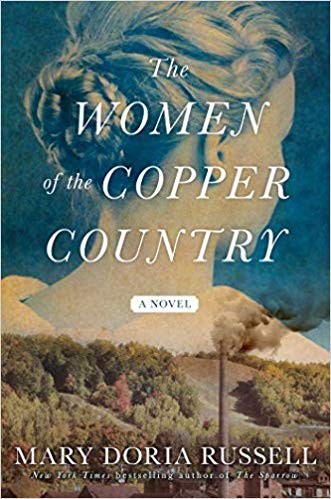
The Women of the Copper Country
Mary Doria Russell
Community Calumet, Michigan, dominated by copper mining
Period The strike of 1913--1914
Best for Readers who want women-centered historical fiction, a real strike, and a vivid Great Lakes mining community.
Know before you start The story includes mine deaths, domestic abuse, ethnic prejudice, strikebreaking, and a mass-casualty disaster.
Annie Clements has watched miners descend into dangerous shafts while their families survive on inadequate wages. She becomes a leader in the strike against the Calumet & Hecla Mining Company, marching beneath a large American flag and organizing women whose work keeps households and resistance alive. The company responds through institutional power, public relations, and force.
Mary Doria Russell builds the novel around a real labor leader, often called the "Joan of Arc" of the Copper Country. Company control is visible in housing and employment, but also in the town's hierarchy of expertise. Managers present technological progress as proof of benevolence while workers bear the physical cost of decisions made above ground.
The novel openly admires Annie, and its villains receive less ambiguity than its workers. Compressing and fictionalizing real people creates emotional clarity at the cost of historical mess. Readers should follow it with nonfiction if the strike itself is their main interest. As a novel, it excels at the domestic infrastructure of resistance: food, childcare, mourning, parades, and the exhausting work required before a crowd can appear united.
2
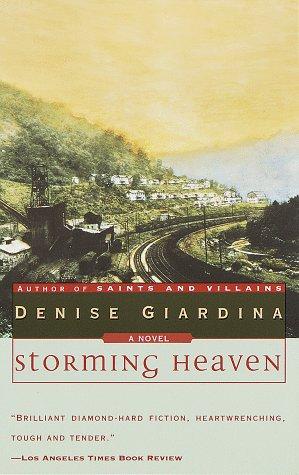
Storming Heaven
Denise Giardina
Community Coal camps in southern West Virginia and Kentucky
Period From industrial expansion to the mine wars of 1920--1921
Best for Readers who want Appalachian history, polyphonic narration, labor conflict, and a novel that treats the mine wars as American history rather than regional folklore.
Know before you start Violence, sexual assault, racism, childbirth trauma, and industrial death are part of the narrative.
Four principal voices narrate the transformation of Appalachian land into company property. Farmers lose mountains, workers enter mines, immigrant communities form, and organizers try to build solidarity against operators backed by guards and political authority. The story moves toward the Battle of Blair Mountain without reducing the conflict to a single hero.
Denise Giardina understands company towns as occupied geography. The operators acquire mineral rights and then reshape roads, housing, commerce, policing, and even the vocabulary used to describe resistance. Multiple narrators prevent one class position or personal history from standing for the whole region. Love, medicine, family loyalty, religion, and union work intersect because the company has made separation impossible.
The episodic structure can feel abrupt, and dialect requires attention. Historical figures and invented lives mingle, so readers again need to distinguish emotional truth from documentary precision. The book's great strength is moral scale. It shows exploitation without turning Appalachians into passive victims or romantic primitives. Communities are made under pressure, and resistance contains disagreements as fierce as the solidarity.
1
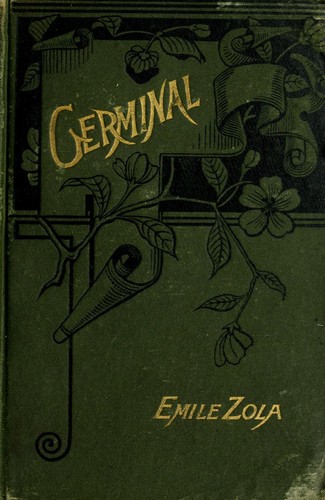
Germinal
Émile Zola
Community The Montsou coal-mining settlements in northern France
Period The 1860s
Best for Readers who want a major classic about mining, class, hunger, strike strategy, and the social world created by extraction.
Know before you start Choose a modern unabridged translation and expect poverty, child death, sexual violence, industrial disaster, and animal suffering.
Unemployed mechanic Étienne Lantier arrives at the Le Voreux mine and joins the Maheu family underground. Hunger, debt, dangerous labor, and the contrast between workers' homes and bourgeois comfort push the settlement toward a strike. The company can wait longer than families can go without bread, turning endurance into an economic weapon.
Published in 1885, Germinal remains the definitive company-town novel because it represents the entire system at once. The mine is a workplace, landscape, appetite, inheritance, and social order. Zola moves from cramped rooms to management conversations, from collective hope to internal division, and from political theory to bodies exhausted by extraction. No faction receives a simple monopoly on wisdom.
The naturalist detail is harsh, sexual politics are often bleak, and some crowd scenes use animal imagery that modern readers may find dehumanizing even when the novel's sympathies are clear. Translations vary significantly in readability. None of that reduces the force of its central insight: the company does not need every worker to believe in it. It needs hunger to arrive before its capital runs out.
The title refers to germination, and the ending refuses easy victory while imagining future growth beneath apparent defeat. That combination of material realism and historical possibility earns the top position.
Which Company Town Should You Enter?
Choose Germinal for the foundational classic and Storming Heaven for an American counterpart with several community voices. The Women of the Copper Country is more immediately accessible, while Deep River offers the widest family and historical canvas. King Coal and To Make My Bread are direct protest novels whose lack of subtlety can be a virtue when the system itself needs explaining.
For speculative fiction, The Warehouse is the clearest bridge from historic company stores to platform monopoly. Company Town turns ownership into physical isolation, and Oryx and Crake imagines corporate compounds replacing public society. The Tobacco Wives is the gentlest book here, emphasizing secrets and social influence over strike violence.
Company towns promise to remove uncertainty. Work, housing, shopping, medicine, and community wait in one place. The danger is that convenience eliminates alternatives. Losing a job becomes eviction; opposing a manager becomes opposing the local order; a private contract begins to function like citizenship without rights.
Germinal ranks first because it never treats that dependence as a puzzle solved by revealing a corrupt executive. The structure survives individual intentions. Workers organize, disagree, sacrifice, and lose, while the capital above them calculates how long hunger will take. Yet the ending imagines change as something already growing underground. In company-town fiction, hope is credible only after the book has measured the weight pressing down on it.