The Odyssey has lasted because getting home is only the beginning of its problem. Odysseus crosses a sea crowded with monsters, gods, seductions, and bad decisions, yet Ithaca is not a reward waiting unchanged at the end. It is a kingdom under pressure, a household occupied by strangers, and a marriage that must survive twenty years of absence. Christopher Nolan's film adaptation opened in theaters on July 17, 2026, bringing that mixture of spectacle and uneasy homecoming back to the center of popular culture.
The best novels in the Odyssean tradition do more than borrow a cyclops or send a hero island-hopping. They understand that travel changes the person who hopes to return, while waiting changes the people left behind. Some retell Penelope's vigil or Circe's exile. Others move the pattern into pirate seas, Bronze Age migrations, scientific expeditions, or submerged futures. In each, the road home becomes a test of identity rather than geography.
This ranking favors mythic voyages with dangerous crossings, complicated women, unstable stories, and destinations that cannot simply restore the past. Direct retellings rank beside novels that capture the epic's deeper machinery: hospitality that may conceal a trap, stories used as survival tools, and the suspicion that a true homecoming requires becoming someone new.
Selection note. The ranking rewards books that make a voyage and its return morally consequential. Direct Homeric connections matter, but so do storytelling, exile, contested homes, maritime danger, and the voices an epic traditionally leaves at the edge of the map.
10

The Deep
Rivers Solomon · 2019
Voyage A journey into the collective memory of an underwater people descended from enslaved women thrown overboard
Closest The Odyssey connection Memory is both the route home and the burden that makes belonging painful
Main difference A compact Afrofuturist novella whose sea is an ancestral archive rather than an obstacle to conquer
Best for Readers who want lyrical prose, underwater civilization, queer connection, ancestral memory, and a powerful story under two hundred pages.
Yetu serves as historian for the wajinru, carrying generations of traumatic memory so that everyone else can live without it. When the annual sharing becomes unbearable, Yetu flees toward the surface and encounters a human woman whose coastal community has its own endangered history. The voyage turns inward: survival depends on finding a form of remembrance that does not destroy its keeper.
Like Odysseus, Yetu must decide whether home means a people, a role, or a story about the self. Solomon reverses the heroic perspective, giving the sea's forgotten dead a future and asking whether communal identity can exist without concentrating suffering in one body.
Know before you start. The novella addresses slavery, intergenerational trauma, drowning, self-harm, isolation, and the emotional cost of inherited memory.
9
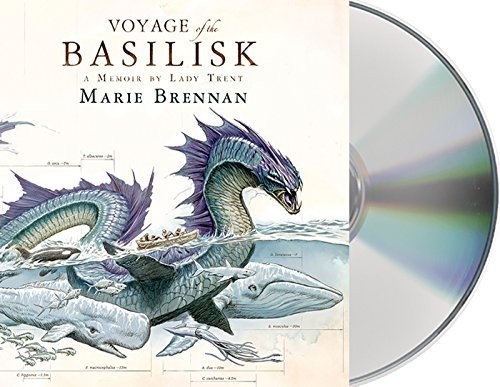
The Voyage of the Basilisk
Marie Brennan · 2015
Voyage A two-year scientific expedition aboard a royal survey ship through islands inhabited by unfamiliar dragons
Closest The Odyssey connection Every harbor offers a new custom, creature, danger, and argument about what a traveler is entitled to take home
Main difference A Victorian-flavored natural-history adventure and the third volume of a longer series
Best for Readers who want dragons treated as animals, maritime exploration, field science, dry wit, and cultures that resist easy classification.
Lady Trent boards the Basilisk with her son, assistants, and an appetite for evidence that regularly outruns diplomatic caution. Shipwrecks, sea serpents, local religions, and gender systems complicate an expedition supposedly organized around observation. Brennan captures the episodic pleasure of an epic voyage while making curiosity, rather than martial glory, its engine.
The novel is especially good on the ethics of arrival. Isabella is intelligent and brave, but knowledge does not make her culturally neutral. Each encounter tests whether she can distinguish discovery from intrusion, a question lurking beneath every famous voyage narrative.
Know before you start. This is book three of The Memoirs of Lady Trent. It can be followed on its own, but earlier volumes establish important relationships.
8
Lavinia
Ursula K. Le Guin · 2008
Voyage The final approach to Italy seen through the woman whose marriage gives a wandering Trojan his promised home
Closest The Odyssey connection A legendary homecoming becomes visible from the shore, where its consequences fall on people the hero barely knows
Main difference Le Guin responds to Virgil's Aeneid rather than Homer's epic and replaces adventure with reflective historical intimacy
Best for Readers who want meditative historical fantasy, classical retellings, quiet intelligence, and women reclaiming space inside canonical epics.
Lavinia knows that a poet has granted her only a few lines. When Aeneas reaches Latium, prophecy and politics turn her prospective marriage into a war. Le Guin gives Lavinia the interior life denied by the epic, then lets her consider the strange relationship between a mortal person and the story that will outlive her.
The novel belongs here because it understands arrival as disruption. Aeneas has endured his own long voyage, but the homeland promised to him already contains families, customs, and rival claims. Le Guin turns destiny into a negotiation between public legend and private cost.
Know before you start. The pace is deliberate, the supernatural is subtle, and the book includes war, forced marriage pressures, childbirth, bereavement, and political violence.
7
Black Ships
Jo Graham · 2008
Voyage Refugees from fallen Troy cross the Mediterranean in search of a land where their descendants can endure
Closest The Odyssey connection Shipwreck, divine pressure, hospitality, and longing for home shape a voyage whose destination exists mainly as faith
Main difference A priestess narrates a version of Aeneas's journey and makes exile communal rather than solitary
Best for Readers who want Bronze Age atmosphere, refugee journeys, priestesses, found family, and myth rendered as plausible historical experience.
Gull, born among Trojan refugees and marked by an injured foot, becomes an oracle of the Lady of the Dead. She joins Prince Aeneas as his people search for safety across hostile waters. Graham makes logistics—food, ships, alliances, children—as important as prophecy, ensuring that heroic movement never becomes detached from the vulnerable people carried with it.
Where Odysseus fights to reclaim an old home, these travelers must invent one. Gull's spiritual authority also complicates the familiar warrior-centered epic. Survival depends on interpretation, diplomacy, and knowing when a promised refuge has become another trap.
Know before you start. The novel includes war, enslavement, sexual violence in the backstory, infant loss, injury, displacement, and religious sacrifice.
6
The Adventures of Amina al-Sirafi
Shannon Chakraborty · 2023
Voyage A retired pirate captain reunites her unruly crew for one last rescue across the medieval Indian Ocean
Closest The Odyssey connection A seasoned liar encounters monsters and divine forces while trying to return to the child waiting at home
Main difference A warm, fast pirate adventure narrated by a middle-aged Muslim mother rather than a king reclaiming his throne
Best for Readers who want pirates, sea monsters, Islamic history, a charismatic older heroine, found family, and blockbuster pacing.
Amina has abandoned piracy for domestic life when a wealthy woman coerces her into finding a kidnapped granddaughter. The job grows from a reluctant reunion into a supernatural chase involving demons, relics, old lovers, and the consequences of Amina's own legend. Her competence is real, but so are age, regret, and the practical difficulty of keeping a crew alive.
Chakraborty captures the delight of a hero telling an unbelievable voyage while allowing other voices to dispute the performance. Amina wants both adventure and home; the novel refuses to call either desire fraudulent. That tension makes every spectacular detour emotionally legible.
Know before you start. The book includes kidnapping, violence, religious coercion, demonic danger, parental separation, and references to abusive relationships.
We reviewed this: read our full review of The Adventures of Amina al-Sirafi →
5
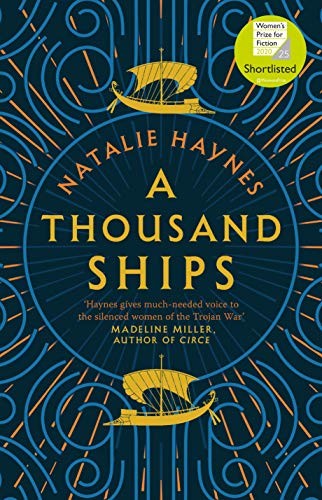
A Thousand Ships
Natalie Haynes · 2019
Voyage The Trojan War and its aftermath reconstructed through the women who wait, flee, grieve, and are carried away
Closest The Odyssey connection Penelope's letters expose the absurdity of a husband's increasingly elaborate excuses for not coming home
Main difference A chorus of perspectives replaces the single hero and treats the supposed ending of war as the beginning of women's ordeals
Best for Readers who want multiple narrators, feminist myth retellings, dark humor, tragic compression, and a broad view of the Trojan cycle.
Haynes moves among Trojan captives, Greek wives, goddesses, mothers, and survivors. Penelope receives reports of Odysseus's adventures with a patience that becomes progressively sharper; Cassandra remains correct and unheard; Creusa disappears during escape; Calliope argues that women's suffering is not a footnote to epic.
The result is neither a simple denunciation nor a dutiful catalog. By shifting scale and tone, Haynes reveals how one man's glorious homeward route intersects with many women's permanent displacement. The comic passages make the tragedy more pointed because heroism looks very different from the household forced to absorb it.
Know before you start. The novel contains enslavement, sexual violence, child murder, war crimes, suicide, bereavement, and the aftermath of conquest.
4
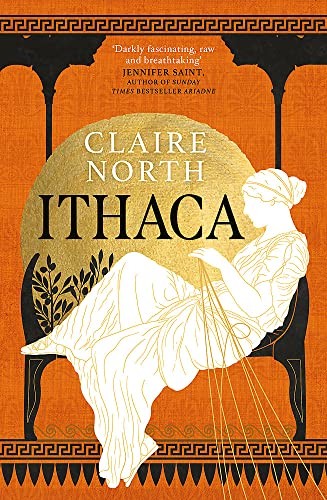
Ithaca
Claire North · 2022
Voyage The political struggle on Ithaca while its king remains missing and its queen must govern without appearing to govern
Closest The Odyssey connection Home is not frozen during the hero's absence; it becomes a dangerous system maintained by women denied public power
Main difference The sea voyage stays largely offstage while Penelope's intelligence and island politics take control
Best for Readers who want palace intrigue, strategic heroines, divine commentary, Greek myth, and a close examination of constrained power.
Seventeen years after Odysseus left, Penelope manages suitors, rival kingdoms, her growing son, and rumors that her husband may never return. The goddess Hera narrates with caustic awareness of what men call history. When raiders strike Ithaca, its women must defend the island without revealing how much authority they already exercise.
North is less interested in proving that Penelope secretly behaved like a modern action hero than in showing political work hidden inside acceptable femininity. Every silence has an audience. Every apparently domestic choice can redirect power. Ithaca becomes a home worth returning to because people other than Odysseus kept it alive.
Know before you start. The book includes misogyny, threat of forced marriage, war memories, violence, death, and deliberate deviations from familiar mythic versions.
3
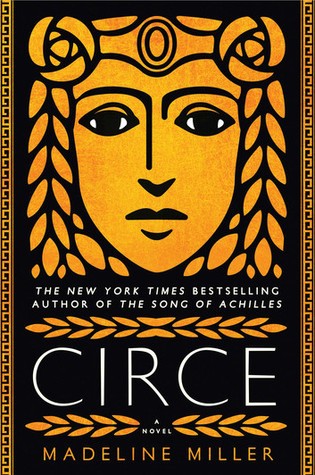
Circe
Madeline Miller · 2018
Voyage An exiled goddess's long life on an island visited by heroes, monsters, sailors, and the consequences of divine cruelty
Closest The Odyssey connection Circe and Odysseus meet as two gifted storytellers whose intelligence cannot protect them from loneliness
Main difference The famous stop on Odysseus's route becomes the center of an entire life rather than an episode in his return
Best for Readers who want immersive myth, witchcraft, solitude, motherhood, complicated gods, and a character-centered emotional arc.
Born to Helios and dismissed as weak, Circe discovers witchcraft and is exiled to Aiaia. There she transforms threatening sailors, encounters figures from across Greek myth, becomes a mother, and eventually receives Odysseus. Miller makes the island a prison, workshop, refuge, and home whose meaning changes with its inhabitant.
The novel's Odysseus is charming and perceptive, but also damaged by the identity that kept him alive. Circe sees both the man and the legend, then must reckon with what reaches her after he leaves. Her own homecoming is not a return to an origin; it is the right to choose a finite future.
Know before you start. The novel includes sexual assault, abusive family relationships, childbirth, child peril, transformation, war violence, and grief.
2
The Penelopiad
Margaret Atwood · 2005
Voyage Penelope recounts her marriage and long wait from the afterlife while her twelve hanged maids interrupt the official story
Closest The Odyssey connection It interrogates the household violence treated as a satisfying conclusion to Odysseus's return
Main difference A brief, theatrical counter-narrative built from unreliable testimony and a restless chorus
Best for Readers who want a short, witty, formally inventive retelling focused on Penelope, class, complicity, and unreliable narration.
Penelope explains her childhood, marriage, cousinly rivalry with Helen, management of Ithaca, and tactics for delaying the suitors. Her version is clever but not complete. The maids whom Telemachus executes speak in songs, lectures, trials, and accusations, refusing to remain anonymous proof that order has been restored.
Atwood's sharpest move is to make storytelling itself a contest over responsibility. Penelope knows how reputations are made and protects her own even after death. The chorus keeps asking whom her famous patience served. The result turns a triumphant homecoming around until its concealed bodies become impossible to ignore.
Know before you start. The book discusses hanging, sexual exploitation, slavery, murder, misogyny, and victim-blaming, often through deliberately satirical forms.
1
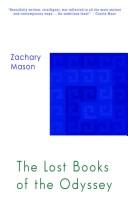
The Lost Books of the Odyssey
Zachary Mason · 2010 in its expanded trade edition
Voyage Forty-four alternate episodes rearrange Odysseus, Penelope, the war, and the possibility of return
Closest The Odyssey connection It treats the epic not as one fixed account but as a machine capable of generating contradictory homecomings
Main difference A mosaic of speculative variations replaces continuous narrative and refuses to declare one version authoritative
Best for Readers who know the basic myth and want elegant experiments, alternate realities, compressed prose, and ideas that continue unfolding after each chapter.
In one chapter, Odysseus discovers that the war may have been a fabrication. In another, Penelope does not recognize the man who returns. Identities exchange places, monsters become explanations, and familiar events bend under the pressure of new premises. Mason writes with the compression of myth and the curiosity of philosophical science fiction.
It ranks first because no other book on this list examines the desire for homecoming from so many angles. What if the traveler is no longer the original man? What if memory has edited the destination? What if a story survives precisely because every retelling betrays it? The fragments make Homer's epic feel newly unstable without reducing it to a puzzle or parody.
Know before you start. The structure is fragmentary, many sections contradict one another, and emotional continuity matters less than variation, implication, and mythic logic.
Which Mythic Voyage Novel Should You Read First?
Where to start. Choose The Lost Books of the Odyssey if you already know the epic and want the most inventive conversation with it. Start with Circe for the richest immersive retelling, or The Penelopiad if your strongest question concerns Penelope, the maids, and the violence hidden inside the conventional ending.
For a voyage with the momentum of a modern adventure, pick The Adventures of Amina al-Sirafi. Black Ships offers the strongest historical texture, while The Voyage of the Basilisk is ideal for readers who prefer scientific curiosity to war. Choose The Deep when you want the sea to hold ancestral memory rather than heroic opportunity.
Readers interested in the people receiving a returning hero should begin with Ithaca or Lavinia. A Thousand Ships provides the broadest chorus and the most direct correction to the idea that war ends when warriors sail away.
The enduring power of The Odyssey lies in the distance between reaching a shore and truly coming home. These novels preserve that distance. Their travelers carry trauma, lies, divine obligations, and altered identities. Their waiting families have developed strategies and wounds of their own. A door can open and still fail to restore what departure destroyed.
The Lost Books of the Odyssey ranks first because it makes that instability its entire form. Every alternate episode recognizes that a homecoming story is also an argument about who the traveler was, what the household remembers, and which costs the singer considers worthy of mention. The route to Ithaca remains inexhaustible because Ithaca changes each time the story is told.