Some mysteries can be moved without damage. Change the city, rename the police station, preserve the clues, and the plot still works. The series on this list cannot be relocated so easily. Their crimes grow from landscape, local memory, archaeology, belief, seasonal customs, old industries, and stories residents tell differently depending on who is asking.
"Folklore" is used broadly but carefully here. It can mean ghost stories, ballads, saints, legendary creatures, occupational traditions, or a community's unofficial account of its past. Living Indigenous religions are not quaint supernatural decoration, so the relevant entries are discussed as mysteries shaped by cultural knowledge and colonial pressure rather than as collections of spooky legends.
The ranking favors long-form series in which place continues to generate cases. A single novel may use an excellent legend; a series must show how history remains active without repeating the same ritual murder in a new costume.
10
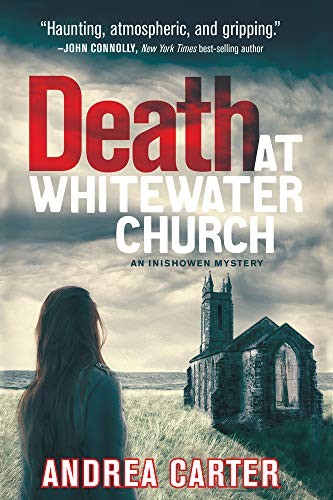
The Inishowen Mysteries
Andrea Carter
Start With Death at Whitewater Church (2015)
Investigator Benedicta "Ben" O'Keeffe, solicitor
Landscape The Inishowen Peninsula in County Donegal
Best for Readers who like remote coastal communities, legal mysteries, and secrets held across generations.
Know before you start Publication order matters increasingly as Ben's personal life and past develop.
Ben O'Keeffe has retreated to Ireland's northern edge, where she runs a legal practice and attempts to keep her own history private. When a skeleton is found in a deconsecrated church, professional knowledge and local relationships draw her into an old disappearance. Later cases use coastal isolation, family memory, border geography, religious sites, and the vulnerability of communities in which everyone is connected.
Andrea Carter writes place as both protection and pressure. Inishowen's beauty never becomes a neutral tourism backdrop; roads, weather, distance, and the Republic's proximity to Northern Ireland determine how information and authority move. Local stories matter because silence can be an inheritance as durable as property.
The books are conventional in their investigative rhythms, and Ben sometimes becomes involved beyond what her legal role comfortably explains. Readers seeking overt supernatural events will find atmosphere rather than confirmation. The series works for those who want folklore to deepen motive and setting without replacing evidence.
9
The Inspector Shan Series
Eliot Pattison
Start With The Skull Mantra (1999)
Investigator Shan Tao Yun, former Beijing inspector and political prisoner
Landscape Tibet under Chinese rule
Best for Readers who want serious mysteries about belief, state violence, and the survival of cultural knowledge.
Know before you start The series depicts imprisonment, torture, religious persecution, and colonial domination.
Shan is imprisoned in a labor camp when officials quietly require his investigative skill. A headless body, powerful interests, monks, prisoners, and state authorities place him between incompatible systems of explanation. Across the series, crimes intersect with sacred landscapes, displaced communities, destroyed institutions, and the political control of cultural memory.
These books belong here because knowledge is never evenly distributed. A site one official treats as empty ground may be a sacred location; an object can be legal evidence, religious inheritance, and contraband at the same time. Shan must interpret not a colorful set of legends but a living culture endangered by the power directing the investigation.
The outsider-authored perspective deserves scrutiny. Eliot Pattison's sympathy for Tibetan communities is explicit, yet readers should not treat crime fiction as a substitute for Tibetan voices or history. The novels are also dense, politically grave, and slower than a standard police procedural.
8
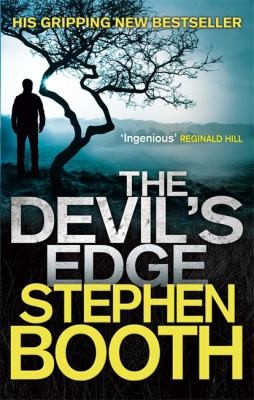
Cooper & Fry
Stephen Booth
Start With Black Dog (2000)
Investigators Detectives Ben Cooper and Diane Fry
Landscape England's Peak District
Best for Readers who want a long police series in which local knowledge is useful, biased, and contested.
Know before you start The books are best read in order for the investigators' difficult relationship, even when the individual crimes stand alone.
Ben Cooper grew up in the region and reads its farms, villages, family histories, and social codes almost instinctively. Diane Fry arrives with sharper ambition and less patience for local assumptions. Their contrasting relationships to the Peak District give the series its central investigative instrument: the insider can mistake familiarity for truth, while the outsider can mistake opacity for backwardness.
Stephen Booth uses stone circles, caves, old roads, rural trades, weather lore, wartime remains, and village stories without requiring every case to become supernatural. Landscape restricts movement and preserves evidence. A local phrase or custom may carry information that no database records.
The procedural and personal arcs are deliberately gradual, and some installments spend more time driving through atmosphere than accelerating the plot. The partnership can also be abrasive; Cooper and Fry are not a comforting pair of mutually admiring sleuths. That friction keeps the regional material from becoming postcard nostalgia.
7
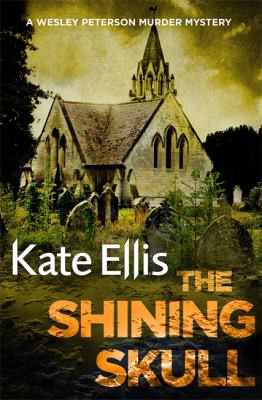
The Wesley Peterson Series
Kate Ellis
Start With The Merchant's House (1998)
Investigators Detective Inspector Wesley Peterson and archaeologist Neil Watson
Landscape South Devon
Best for Readers who want a traditional British procedural paired with historical and archaeological puzzles.
Know before you start This is a substantial long-running sequence; start at the beginning if recurring relationships matter to you.
Wesley Peterson's modern investigations repeatedly echo discoveries made by his archaeologist friend Neil Watson. A present crime may resemble a documented death, emerge beside an excavation, or expose how confidently later generations have rewritten local history. The structure gives the series two puzzles without forcing the past to become a simple key for the present.
Kate Ellis is especially good at material history. Churches, merchant houses, bones, maps, legends, and settlement patterns are evidence before they are atmosphere. Folklore becomes the story a community built around incomplete remains, which means the detective and archaeologist are both reconstructing motives from damaged records.
The parallel narratives can feel formulaic when read rapidly, and the historical strand is not always as strong as the contemporary mystery. Yet the series sustains its premise because Devon contains layers rather than one defining legend. The past does not repeat exactly; people reuse it.
6
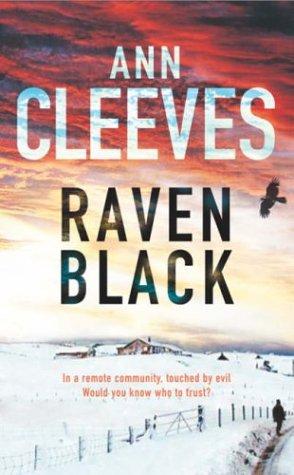
The Shetland Series
Ann Cleeves
Start With Raven Black (2006)
Investigator Jimmy Perez
Landscape The Shetland Islands
Best for Readers who want island atmosphere, intimate suspect pools, and patient character-based police work.
Know before you start The eight-book Shetland sequence is complete and contains major permanent changes. Perez later returns in The Killing Stones, the beginning of a new Orkney-set sequence.
When a teenage girl is murdered after a winter celebration, suspicion turns toward a lonely man already associated with an older disappearance. Inspector Jimmy Perez investigates within a community where distance from the mainland coexists with almost suffocating social proximity. Weather and ferry routes can close the world faster than police procedure can open it.
Ann Cleeves uses island traditions, archaeological remains, Up Helly Aa, music, crofting, and stories about earlier inhabitants as social texture rather than a box of exotic clues. Perez belongs to Shetland but is never uncomplicatedly of the precise community he is questioning. That partial belonging helps him see how rumor becomes local verdict.
The series is more grounded than supernatural. Readers searching for ghosts or occult crimes should begin elsewhere. Its power lies in showing how legend-like narratives form around real people: the recluse everyone fears, the family everyone envies, the death everyone thinks they remember correctly.
5
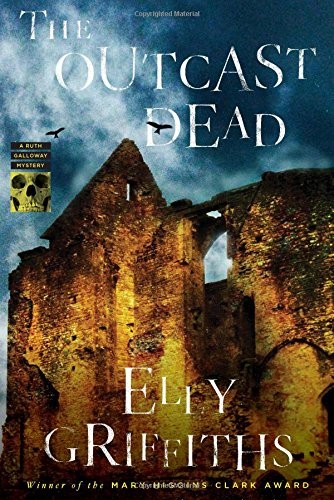
The Ruth Galloway Mysteries
Elly Griffiths
Start With The Crossing Places (2009)
Investigators Forensic archaeologist Ruth Galloway and DCI Harry Nelson
Landscape The saltmarshes and ancient sites of Norfolk
Best for Readers who want forensic archaeology, marshland atmosphere, and a long-running ensemble with emotional continuity.
Know before you start The cases can be read individually, but the complicated relationships cannot.
Ruth Galloway lives near the marsh where sea, land, and human remains continually renegotiate their boundaries. When bones are discovered, DCI Harry Nelson asks whether they belong to a missing child. The answer opens a modern investigation shaped by archaeology, ritual imagery, letters, and Ruth's ability to distinguish ancient death from recent violence.
The series makes expertise appealing without making it magical. Ruth knows what soil, burial position, weathering, and context can reveal. At the same time, local legends and ritual interpretations affect suspects who do not care whether archaeologists consider those stories historically sound.
The personal relationships eventually occupy as much space as the crimes. Some readers become devoted to that continuity; others tire of romantic repetition and unlikely danger following the same academic. The central fifteen-book sequence reaches a deliberate stopping point, making it more approachable than its length suggests.
4
The Charlie Parker Series
John Connolly
Start With Every Dead Thing (1999)
Investigator Charlie Parker, private detective
Landscape Maine, the American Northeast, and a hidden moral geography
Best for Readers who want literary noir, recurring occult mythology, and a detective changed permanently by every answer.
Know before you start The books contain serial murder, child death, torture, and religious horror.
Charlie Parker begins as a bereaved former police officer hunting the killer of his wife and daughter. What initially resembles exceptionally dark serial-killer fiction develops into a series where evil possesses history, symbols recur across cases, and supernatural perception may be trauma, grace, curse, or all three.
John Connolly draws from ghost stories, religious myth, regional memory, old crimes, and invented occult lore. Maine is particularly important: its forests, decaying towns, borders, and long winters hold communities that remember more than they tell. Parker's cases gradually reveal connections without reducing every villain to membership in one convenient cult.
The violence is severe, the grief is sustained, and the series can move from lyrical meditation to thriller confrontation within a few pages. Some cases are more overtly supernatural than others. Readers looking for cozy folklore will find the opposite: stories and beliefs here are residues left by human cruelty.
3
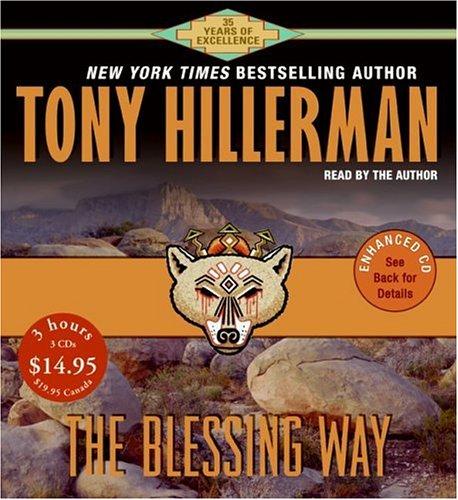
The Leaphorn and Chee Series
Tony Hillerman and Anne Hillerman
Start With The Blessing Way (1970)
Investigators Joe Leaphorn, Jim Chee, and later Bernadette Manuelito
Landscape The Navajo Nation and the Four Corners region
Best for Readers who want procedural mysteries shaped by land, jurisdiction, cultural difference, and multiple forms of knowledge.
Know before you start The first book centers an outside viewpoint more than many later volumes; the series finds its defining dual-investigator form over time.
Joe Leaphorn approaches cases through disciplined observation and a complicated relationship to traditional belief. Jim Chee, introduced later, studies to become a hataalii, often translated as a ceremonial singer or healer. Their differences allow the series to examine crime across jurisdictional lines while showing that two Diné investigators can understand identity, ceremony, and modernity differently.
The cultural knowledge in these books is not a collection of supernatural curiosities. Kinship, language, geography, federal authority, and the disruption of hózhó—balance or harmony—shape what a crime means and how it might be repaired. The landscape is legible to investigators who know names and routes that outside agencies overlook.
Tony Hillerman was not Diné, and his influential work should be read with awareness of that position. Anne Hillerman, his daughter, later continued the series and placed Bernadette Manuelito more centrally. Readers should also seek mysteries by Indigenous writers rather than allowing one famous series to define an entire nation.
2
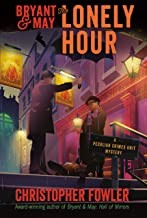
Bryant & May
Christopher Fowler
Start With Full Dark House (2003)
Investigators Arthur Bryant and John May of the Peculiar Crimes Unit
Landscape London in all its buried, demolished, theatrical, and bureaucratic forms
Best for Readers who want Golden Age puzzle energy, eccentric detectives, and London history used as both clue and joke.
Know before you start Full Dark House moves between the unit's beginnings during the Blitz and a later investigation; apparent finality is part of the setup.
The Peculiar Crimes Unit handles cases likely to cause public disorder through their strangeness. Bryant favors obscure histories, folklore, forgotten specialists, and theories that sound impossible until the city supplies evidence. May provides elegance, modern procedure, and the exhausted awareness that Bryant may be right for reasons no report can safely reproduce.
Christopher Fowler makes London an investigative method. Theater superstitions, lost rivers, pub customs, architectural plans, wartime memory, nursery stories, class conflict, and municipal absurdity continually shape the crimes. The books can flirt with the supernatural, but solutions usually return to human ingenuity and the city's inexhaustible ability to hide its workings.
The chronology is playful, the comedy broad, and Bryant's erudition sometimes becomes an essay delivered while suspects wait. Readers seeking realistic policing may find the unit gloriously indefensible. With Fowler's death, the main sequence is finite, though its peculiar construction resists a perfectly tidy endpoint.
1
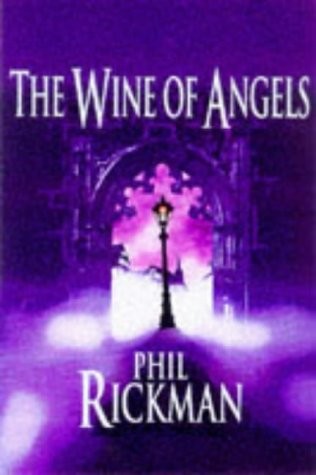
The Merrily Watkins Series
Phil Rickman
Start With The Wine of Angels (1998)
Investigator Merrily Watkins, parish priest and diocesan adviser on deliverance
Landscape Herefordshire and the Welsh border country
Why it ranks first No other mystery series integrates pastoral work, folk belief, local history, family life, and genuine uncertainty about the supernatural so consistently.
Know before you start Begin with The Wine of Angels. Merrily's vocation and relationships develop too substantially for random reading order.
Newly appointed vicar Merrily Watkins arrives in Ledwardine with her teenage daughter Jane. A proposal to revive a seventeenth-century play divides the village, while local history, an orchard, a famous poet, old violence, and present ambition begin pressing against one another. Merrily's later role as an adviser on alleged hauntings and possession gives the series its unusual investigative center.
Phil Rickman is patient about belief. Merrily must take reported supernatural experiences seriously without exploiting vulnerable people or abandoning practical explanations. Police, clergy, historians, musicians, folklorists, occultists, and residents bring incompatible vocabularies to the same event. The uncanny is rarely a detachable culprit.
The border landscape is ideal for this approach. English and Welsh histories overlap, churches inherit older sites, tourism repackages stories, and rural quiet conceals modern economic pressure. The books are long, their subplots numerous, and their pacing closer to a slow television drama than a brisk village puzzle. That breadth is precisely why the folklore feels lived in.
Which Local Mystery Should You Follow?
Choose Merrily Watkins for the richest combination of investigation and possible supernatural activity. Choose Bryant & May when you want folklore to produce wit, puzzles, and historical digression. Leaphorn and Chee offers the deepest engagement with jurisdiction, land, and culturally distinct investigative knowledge, provided it is read with attention to authorship and context.
For archaeology, begin with Ruth Galloway for forensic intimacy or Wesley Peterson for parallel historical plots. For landscape-centered police work, choose the islands of Shetland, the hills of Cooper & Fry, or the Atlantic edge of Inishowen. Readers prepared for the darkest material should follow Charlie Parker.
Local legends endure because they perform work. They mark dangerous ground, explain an injustice, flatter a community, conceal a crime, or give the dead a shape that can be repeated. A good mystery series does not ask only whether the legend is factually true. It asks who needs that version to survive.
The Merrily Watkins books rank first because Merrily cannot solve that problem by declaring belief rational or irrational. Her responsibility is to the people living inside the story. In a genre built around answers, that humility leaves room for place to remain larger than the case.