Detectives and archaeologists are cousins in method. Both arrive after the decisive event, study what survived, and build a story from material that cannot explain itself. A broken pot, a cut mark on bone, and a disturbed layer of soil become testimony—provided the person reading them knows the difference between evidence and wishful thinking.
Mystery fiction has been exploiting that resemblance for decades. The best series do more than place a corpse beside an excavation trench. They make professional knowledge part of the solution: skeletal analysis establishes identity, stratigraphy exposes a planted object, or an understanding of ritual corrects a police theory. They also acknowledge the less romantic parts of the work, from grant applications and academic rivalries to the ethical problem of deciding who owns the dead.
This ranking covers archaeology, cultural anthropology, and forensic anthropology. Some series are cozy or comic; others describe decomposition in clinical detail. I ranked them by how essential the profession is, how well the mysteries use it, the quality and consistency of the series, and how rewarding it is to remain with the characters across multiple books.
10
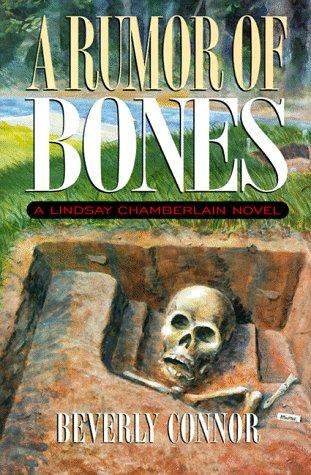
Lindsay Chamberlain Mysteries
Beverly Connor
Start with A Rumor of Bones (1996)
Specialty Southeastern archaeology, osteology, and forensic anthropology
Best for Readers who want active dig sites, old crimes beside new ones, and a compact series that can be finished quickly.
Know before you start Publication and edition history can be confusing, so check that you are beginning with A Rumor of Bones rather than Connor's later Diane Fallon series.
Lindsay Chamberlain is working on a Native American site in Georgia when a sheriff asks her to examine human remains discovered in nearby shallow graves. The distinction between the ancient site and the recent dead establishes the series' central pleasure: Lindsay can move from excavation to criminal investigation because bones and soil retain histories that a killer hoped were gone.
Beverly Connor trained in archaeology, and her five-book series is strongest when it stays close to fieldwork. Crews argue, sites attract looters, funding and local hostility complicate research, and an apparently minor disturbance can alter the meaning of everything beneath it. Lindsay is neither a glamorous tomb raider nor a laboratory machine. She is a working archaeologist whose ability to reconstruct incomplete events makes her useful to police.
The books are harder to find and less polished than the major series higher on this list. Early romantic and suspense elements can also feel dated, while the limited run ends before Lindsay accumulates the emotional depth of a fifteen- or twenty-book lead. Still, this is precisely the kind of neglected series a niche list should recover. It understands that archaeology is patient interpretation, not merely an excuse to open a sealed chamber.
9
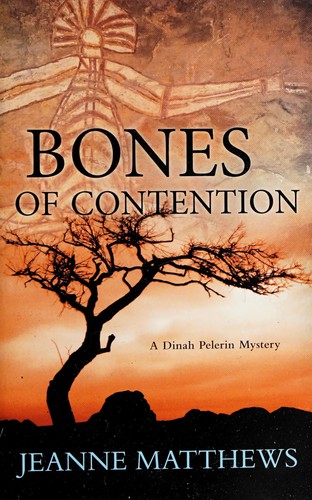
Dinah Pelerin Mysteries
Jeanne Matthews
Start with Bones of Contention (2010)
Specialty Cultural anthropology, mythology, and comparative belief
Best for Armchair travelers who prefer mythology and family secrets to autopsy detail.
Know before you start Dinah is an aspiring anthropologist in the opening book, and the tone sits between cozy mystery and international suspense.
Dinah Pelerin begins as a would-be anthropologist rather than an established professor. In northern Australia, she attends a difficult family reunion after her wealthy uncle's apparent suicide and becomes entangled in two deaths. Aboriginal traditions, family ancestry, and competing explanations of justice surround the mystery, forcing Dinah to examine both the culture she is visiting and the stories her own relatives tell about themselves.
Each of the five novels moves to a different international setting, including Hawaii, Norway, Greece, and the American Southwest. That travel gives Jeanne Matthews room to connect murder with mythology and local history rather than repeat the same university department. Dinah's curiosity is her investigative instrument. She listens for the social meaning of an object or custom, then notices when someone has simplified that meaning for personal advantage.
The approach also creates the series' largest risk. A visiting American interpreting Indigenous belief can drift toward tourism or turn living cultures into exotic puzzle material. The books are most convincing when Dinah admits the limits of her knowledge and least convincing when complicated traditions line up too neatly with the murder plot. Readers wanting laboratory procedure will find little of it. Readers interested in how belief, kinship, and identity shape testimony may find an unusually broad amateur-sleuth series.
8
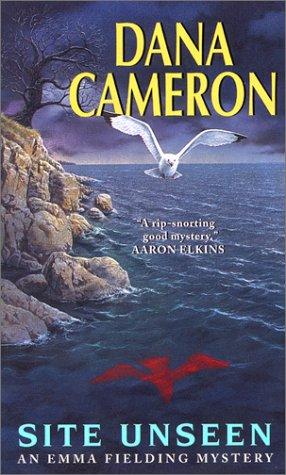
Emma Fielding Mysteries
Dana Cameron
Start with Site Unseen (2002)
Specialty Historical archaeology and early colonial New England
Best for Readers who want academic politics, New England settings, and mysteries in which the integrity of a dig matters.
Know before you start The Hallmark adaptations are much lighter and condense the novels; the original six-book sequence begins with Site Unseen.
Emma Fielding is an archaeology professor trying to prove that a seventeenth-century settlement on the Maine coast predates Jamestown when she finds a much newer body. That discovery brings police attention to a dig already strained by professional competition, land access, fragile evidence, and the pressure to make a career-defining claim without overstating what the site can prove.
Dana Cameron's six novels treat academia as a workplace capable of generating motives. Reputation, publication, tenure, intellectual ownership, and rival interpretations matter alongside greed or revenge. Emma's expertise often operates through context. An artifact by itself is merely an object; its location, surrounding layer, and relationship to other finds determine whether it changes history or exposes tampering.
The series follows a familiar traditional-mystery rhythm, and readers used to contemporary forensic thrillers may find its action modest. Emma occasionally investigates beyond what sensible personal safety or professional boundaries would allow. Yet the occupational texture distinguishes the books from cozies in which a themed job disappears after chapter one. Even when Emma should call the police sooner, she still thinks like an archaeologist.
7
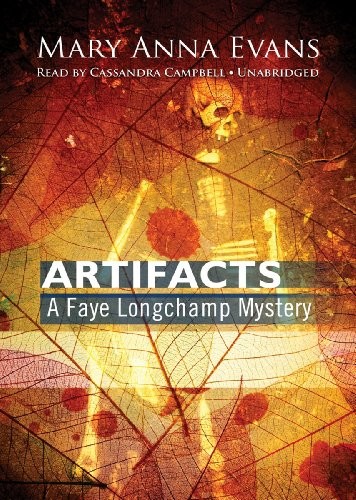
Faye Longchamp Mysteries
Mary Anna Evans
Start with Artifacts (2003)
Specialty Historical archaeology across the American South
Best for Readers who want regional history, a heroine who builds a career over time, and mysteries attentive to race and inheritance.
Know before you start Read in order for Faye's personal development, even though individual cases are substantially self-contained.
Faye Longchamp begins with intelligence, determination, and almost no money. She is struggling to preserve Joyeuse, her deteriorating family home on a remote Florida island, while studying archaeology and selling artifacts she knows should not be disturbed. When a dig and family records uncover evidence connected to the island's past, survival and historical responsibility collide.
Across thirteen novels, Mary Anna Evans links archaeological investigation to American histories that polite local narratives often suppress: slavery, racial violence, displacement, war, and the labor of people excluded from official records. Faye develops professionally rather than appearing fully formed. Education, field experience, marriage, parenthood, and ownership change the questions she is able to ask without severing her from the precarious young woman of Artifacts.
The series sometimes uses coincidence and personal danger more freely than a strict procedural would, and its archaeological content varies from book to book. The early decision to have Faye sell finds is meant as moral conflict, but it may make readers protective of cultural heritage recoil before the series can develop its critique. The larger achievement is sustained attention to who gets remembered. Faye excavates places where the official story has usually belonged to the landowner.
6
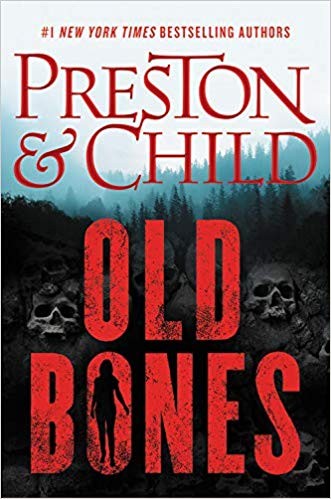
Nora Kelly Novels
Douglas Preston and Lincoln Child
Start with Old Bones (2019)
Specialty Southwestern archaeology and historical expeditions
Best for Thriller readers who like lost camps, desert ruins, historical mysteries, and a touch of the uncanny.
Know before you start Prior Pendergast knowledge adds context but is not required; Old Bones functions as a series beginning.
Nora Kelly, a curator at the Santa Fe Institute of Archaeology, is invited to search for a supposedly lost camp of the Donner Party. The expedition promises a major discovery and perhaps buried gold. It also intersects with grave robberies investigated by rookie FBI agent Corrie Swanson. Archaeology and federal procedure converge as the nineteenth-century disaster begins producing present-day violence.
Nora originally appeared in the authors' broader Pendergast universe, but Old Bones launches a cleanly accessible partnership. Nora leads digs and reads sites; Corrie handles the criminal authority. Later books send them toward Roswell, a mysterious mountain death, and the desert badlands. The combination lets Preston and Child move quickly from historical puzzle to thriller set piece without asking one character to be both field scientist and armed agent.
Subtlety is not the series' priority. Discoveries tend to be sensational, danger escalates on schedule, and supernatural possibilities receive more room than cautious archaeological practice normally permits. Readers seeking the quotidian realism of grant writing and cataloging should choose Emma Fielding. Readers who want an expedition, an old legend, a remote landscape, and a reason to keep turning pages at midnight will find Nora's five-book run through Badlands highly efficient entertainment.
5
Body Farm Novels
Jefferson Bass
Start with Carved in Bone (2006)
Specialty Forensic anthropology and human decomposition
Best for Readers who enjoy procedural detail, applied science, and cases built around what happens to a body after death.
Know before you start The descriptions of decomposition are frequent and clinical. This is not a discreet bones-only mystery series.
Dr. Bill Brockton directs a Tennessee research facility where donated bodies are studied under controlled conditions. In Carved in Bone, a corpse preserved inside a mountain cave draws him into a community whose suspicions of outsiders complicate the science. The state of the body is not atmospheric decoration. Chemistry, environment, insects, and decay determine what Brockton can infer about death.
"Jefferson Bass" combines journalist Jon Jefferson with forensic anthropologist Bill Bass, founder of the real University of Tennessee Anthropology Research Facility that inspired the fictional Body Farm. That collaboration gives the ten primary novels unusual authority when they explain decomposition, skeletal trauma, recovery, and the experiments required to validate a forensic conclusion. The books know that expertise is built from unpleasant observation repeated carefully.
Scientific confidence occasionally outruns character complexity. Explanations can read like demonstrations prepared for a fascinated audience, and the plots sometimes escalate into conventional thriller jeopardy after beginning with a more distinctive forensic problem. The graphic material is also literal rather than gothic; flies, fluids, odor, and damaged bodies are working evidence. For readers who want to understand what a forensic anthropologist actually contributes, the series remains one of the clearest entry points.
4
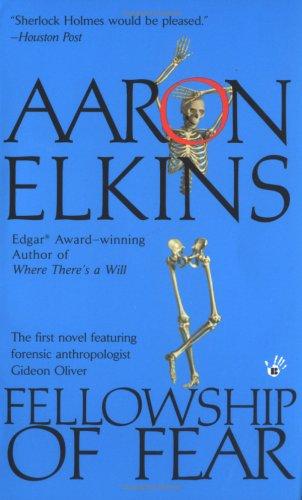
Gideon Oliver Mysteries
Aaron Elkins
Start with Fellowship of Fear (1982)
Specialty Forensic anthropology and skeletal identification
Best for Fans of classic deduction who want compact mysteries, international settings, and conclusions reasoned from skeletal evidence.
Know before you start The books can largely stand alone, and readers interested only in the signature formula may prefer to continue at least through Old Bones before judging the series.
Gideon Oliver is the "Skeleton Detective," an anthropology professor whose vacations, lectures, and visiting appointments repeatedly place him near remains that have been misunderstood. A fragment of bone can give him age, sex, injury, occupation, or evidence that several apparently compatible assumptions cannot all be true. The mysteries often turn on the slow correction of an initial identification.
Across eighteen novels, Aaron Elkins sends Gideon from European academic programs to archaeological sites, glaciers, islands, ranches, and museums. The travel keeps the cases visually varied, while the durable formula remains intellectual. Gideon examines bones, proposes an answer, learns something that makes him revise it, and advances through better questions rather than omniscience. Old Bones, the fourth installment, won the Edgar Award for Best Mystery Novel and is an excellent demonstration of the mature series.
The earliest books carry Cold War plotting and attitudes that now show their age, and Fellowship of Fear leans more toward espionage than the bone puzzles for which the series became known. Character development is comfortable rather than profound. Elkins nevertheless helped establish forensic anthropology as a complete mystery engine, not just a specialist consultation in the final act. Later fictional anthropologists are working in Gideon's excavated trench.
3
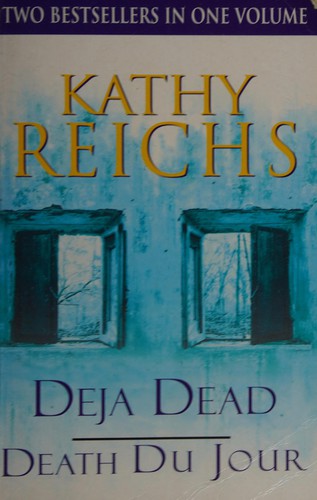
Temperance Brennan Novels
Kathy Reichs
Start with Déjà Dead (1997)
Specialty Forensic anthropology in Quebec and North Carolina
Best for Readers who want a long, science-forward forensic series with recurring characters and substantial case detail.
Know before you start Novel Tempe is older, more solitary, and more grounded than her television namesake; do not expect the Jeffersonian team from Bones.
Temperance Brennan is called when remains are too damaged, decomposed, burned, or incomplete for ordinary identification. In Déjà Dead, dismembered remains found in Montreal suggest a pattern that colleagues are reluctant to accept. Tempe's analysis draws her from the laboratory into the hunt for a possible serial killer, establishing a tension the series never entirely resolves: she is most credible at the examination table and most vulnerable when the plot turns her into a field investigator.
Kathy Reichs is herself a forensic anthropologist, and the novels benefit from experience with evidence, institutions, and the limits of a conclusion. Tempe works across Canadian and American systems; terminology, jurisdiction, language, and professional relationships affect what she can do. The science evolves over twenty-four novels through Evil Bones, giving the series a record of forensic practice as well as a long personal history involving sobriety, family, and an unstable relationship with detective Andrew Ryan.
Formula becomes visible across so many books. Tempe sometimes withholds information, pursues danger alone, or reaches a personal connection to a case because a thriller requires proximity. Technical passages can slow the impatient, while the television series Bones is only loosely inspired by the novels and creates very different expectations. At its best, however, Reichs makes a damaged skeleton both a person deserving identification and a disciplined set of questions that cannot be answered by intuition.
2
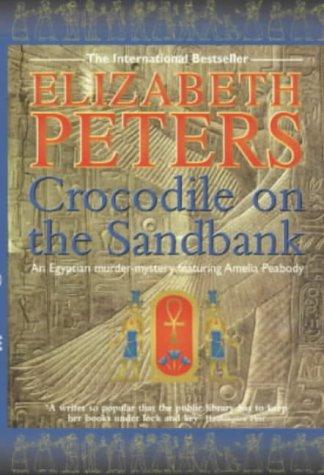
Amelia Peabody Mysteries
Elizabeth Peters
Start with Crocodile on the Sandbank (1975)
Specialty Egyptology during the late nineteenth and early twentieth centuries
Best for Readers who want wit, romance, family continuity, and historical mysteries saturated with Egyptology.
Know before you start Publication order is simplest. The twentieth book, The Painted Queen, was completed by Joan Hess from material Elizabeth Peters left unfinished.
Amelia Peabody inherits enough money to ignore the Victorian life prescribed for her and travels to Egypt armed with confidence, curiosity, and a formidable parasol. She meets Evelyn Barton-Forbes and the Egyptologist brothers Walter and Radcliffe Emerson, then confronts accidents, threats, and a suspicious mummy at an excavation. The first mystery becomes the beginning of a family saga spanning the archaeological seasons from 1884 toward the discovery of Tutankhamun's tomb.
Elizabeth Peters was the pen name of Egyptologist Barbara Mertz, and the twenty novels combine genuine knowledge with affectionate parody. Amelia narrates herself as invariably rational, correct, and indispensable; readers learn to detect the evidence that her account has quietly distorted. Archaeological methods, famous sites, colonial administration, and real historical figures develop around that comic gap between Amelia's certainty and the larger truth.
The series is a product and critique of old adventure fiction at once. It gives Egyptian characters more agency than many works it imitates, especially as it develops, but its British family remains at the center of an Egypt shaped by occupation and foreign excavation. Repeated kidnappings and criminal masterminds eventually become part of the family routine. Those caveats matter, yet few mystery series create such an expansive sense of time. Children grow up, methods change, wars intrude, and each excavation season feels like a return to a beloved, exasperating household.
1
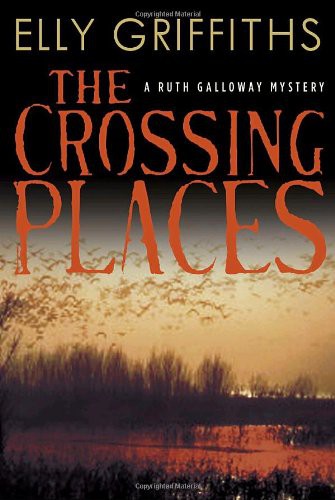
Ruth Galloway Mysteries
Elly Griffiths
Start with The Crossing Places (2009)
Specialty Forensic archaeology in Norfolk
Best for Readers who want atmospheric British crime, an intelligent but fallible heroine, and a complete-feeling long series with strong continuity.
Know before you start Read in order. The Last Remains (2023) is the fifteenth book and closes the major ongoing arcs, though Griffiths has described it as the end "for now."
Dr. Ruth Galloway lives with her cats on the edge of the North Norfolk saltmarsh and teaches archaeology at a small university. When DCI Harry Nelson asks her to examine a child's bones, Ruth determines that they are Iron Age rather than the remains of a girl missing for ten years. Her conclusion disappoints the police but connects her to the cold case, especially after another child disappears and archaeological language surfaces in the killer's letters.
Elly Griffiths builds fifteen novels around the border between ancient and recent dead. Builders expose bones, old excavations acquire new meanings, and ritual theories tempt investigators toward dramatic mistakes. Ruth's expertise matters, but the series' real strength is cumulative life. Her friendship with the theatrical druid Cathbad, her complicated bond with Nelson, motherhood, academic insecurity, and the changing police team make each case part of a community rather than an interchangeable puzzle.
The personal storyline can become melodramatic, particularly the long romantic arrangement at its center, and regular readers may tire of secrets that honest conversation would shorten. Archaeology is more prominent in some installments than others. Griffiths earns first place because setting, profession, and character reinforce one another across the full sequence. Ruth understands landscapes as layers of occupation; the series treats relationships the same way. Earlier choices remain beneath the present, covered but never inert.
Which Series Should You Excavate First?
Choose Ruth Galloway for atmosphere, continuity, and the best balance of professional and personal life. Choose Amelia Peabody if you want comedy and a family saga large enough to inhabit for months. Temperance Brennan and the Body Farm novels provide the most sustained forensic detail, while Gideon Oliver offers shorter, more classically deductive bone puzzles.
For field archaeology, Emma Fielding is the most academically grounded choice, and Faye Longchamp connects excavation to overlooked American history. Nora Kelly is the fastest and most sensational, ideal when "archaeology mystery" means an expedition entering dangerous country. Dinah Pelerin favors belief and culture over physical remains. Lindsay Chamberlain is the buried artifact of the list: modest, difficult to spot, and worth recovering.
The appeal of an archaeological detective is not that the past contains cleaner answers than the present. It contains fewer witnesses, damaged evidence, and layers disturbed by everyone who arrived later. The discipline teaches caution: context can be destroyed once, an attractive theory can still be wrong, and human remains are not props simply because their names have been lost.
The Ruth Galloway series ranks first because it turns those principles into character. Ruth identifies bones, but she also lives among emotional remains whose meaning changes as new facts emerge. The saltmarsh holds Iron Age burials, wartime secrets, missing children, and the memory of earlier books. Griffiths understands the central promise of this entire subgenre: digging something up does not end its story. It begins the argument over what the story was.