The best mystery-box stories do not merely hide an answer. They build a place whose rules appear meaningful before anyone understands the system. A hatch in the jungle, a road that returns to the same town, a number repeated too often, or a building with measurements that cannot be correct creates a special kind of narrative contract: keep watching—or reading—and the pattern may become visible.
Books can deliver that pleasure differently from television. They do not have season breaks, actor contracts, or cancellation cliffhangers, but they also cannot rely on a weekly audience comparing screenshots. A successful mystery-box book series therefore needs more than secrets. It needs escalating questions, characters whose survival depends on interpretation, and answers that alter the meaning of earlier events.
This list ranks series rather than isolated puzzle novels. Some are completed and answer their central mysteries; others remain open or use a shared universe in which each book illuminates a different corner. Priority goes to the feelings associated with Lost and From: confinement, impossible geography, secret experiments, contested leadership, partial explanations, and the suspicion that escape may be another layer of the trap.
10
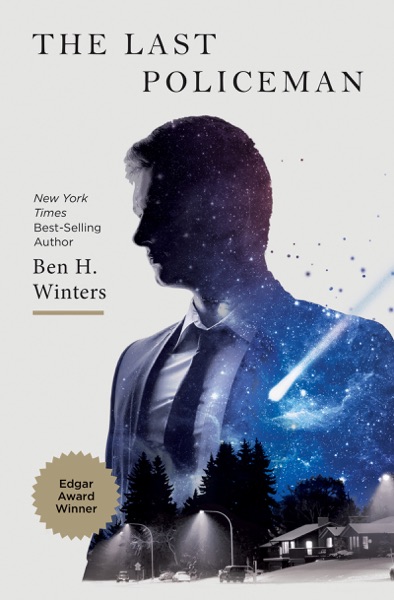
The Last Policeman Trilogy
Ben H. Winters
Start With The Last Policeman (2012)
Series Status Complete in three novels
Central Question Why solve a murder when an asteroid will soon end civilization?
Closest match The way crisis exposes why different people need rules, faith, escape, or authority.
Know before you start The tone is melancholy and procedural rather than spectacular.
Detective Hank Palace investigates an apparent suicide in a world that has already received its finale. A massive asteroid is approaching Earth, the date of impact is known, and institutions are failing as people abandon jobs, pursue final ambitions, or decide that law no longer has meaning. Hank believes one dead man was murdered. Almost everyone else considers the distinction irrelevant.
This is the least geographically impossible series on the list, but it understands the social engine of Lost and From: pressure turns a community into competing philosophies. The countdown is public, yet questions about the victim, Hank's family, and possible government responses keep expanding the investigative frame.
The trilogy is restrained science fiction. Readers seeking monsters, portals, or elaborate hidden technology should look elsewhere. Its mystery box is ethical: is Hank preserving civilization or refusing to recognize that it has already ended? Because the trilogy is complete, that question develops toward a deliberate conclusion rather than indefinite delay.
9
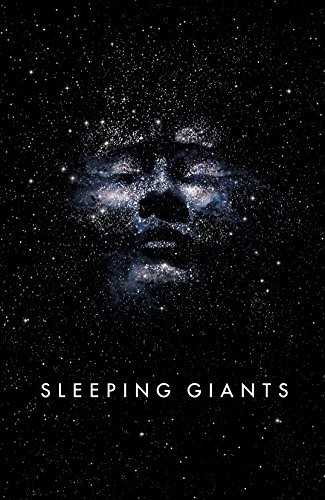
The Themis Files
Sylvain Neuvel
Start With Sleeping Giants (2016)
Series Status Complete in three novels
Central Question Who buried the pieces of an enormous machine around the world?
Closest match Fragmentary evidence, secret coordination, and an artifact that turns individual lives into a global experiment.
Know before you start Nearly the entire series is presented as documents rather than conventional prose scenes.
As a child, Rose Franklin falls into a hole and lands in a gigantic metal hand. Years later, as a physicist, she joins the effort to locate and assemble the remaining pieces. The story unfolds through interviews, mission logs, transcripts, and reports conducted by a nameless interrogator whose access and motives form a second mystery.
The documentary structure reproduces the audience position of a mystery-box show. Every source knows only part of the situation; omissions become evidence; and the person arranging the testimony may be shaping the story. The machine's purpose opens questions about human history, international power, and whether discovery is distinguishable from activation.
The format creates speed but limits interior depth. Major emotional events can arrive as after-action testimony, and the dialogue sometimes sounds engineered to transfer information. Readers who accept that artificiality receive a completed alien-contact trilogy whose revelations keep changing the scale of the original archaeological puzzle.
8
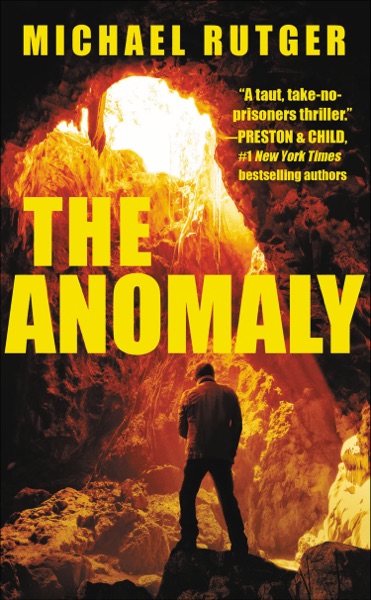
The Anomaly Files
Michael Rutger
Start With The Anomaly (2018)
Series Status Two novels published
Central Question What kind of place can revise the rules of the people exploring it?
Closest match A group trapped in an impossible site, interpreting symbols while interpersonal trust deteriorates.
Know before you start The first book contains intense claustrophobia and graphic biological horror.
Nolan Moore hosts a web series about fringe archaeology. A search for a rumored cave in the Grand Canyon gives his documentary crew the breakthrough they want, then seals them inside an underground site whose contents are more dangerous than professional embarrassment. The second novel, The Possession, sends the team toward another apparently paranormal investigation.
The series is an unusually direct bridge between found-footage horror and mystery-box fiction. Camera batteries, crew tensions, contested expertise, and the need to produce a story affect how evidence is gathered. The cave is not merely a maze. It is an argument about observation and the cost of assuming that ancient anomalies are waiting passively to be catalogued.
Nolan's jokes and the familiar television-crew roles can make the opening feel lighter than its later body horror. The larger series architecture is also less complete than the trilogies ranked above it. Read The Anomaly for the claustrophobic expedition rather than for assurance that every connected question will receive a final volume.
7
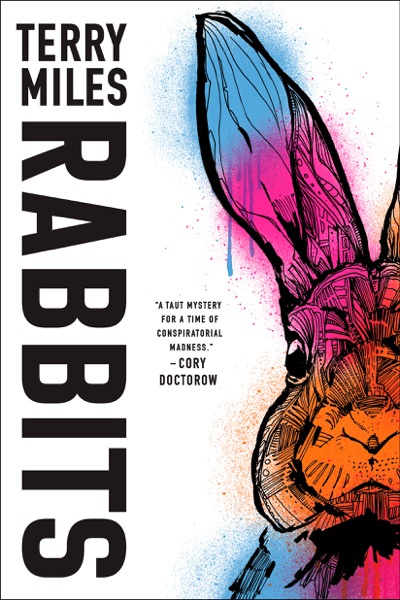
The Rabbits Novels
Terry Miles
Start With Rabbits (2021)
Series Status Two novels published, connected to the Rabbits podcast
Central Question Is the secret game altering reality, or merely selecting people who can see the alterations?
Closest match Recurring symbols, reality slippage, and the fear that participation was arranged before the protagonist noticed the game.
Know before you start The novels stand on their own, but the podcast supplies additional atmosphere and lore.
An underground competition known as Rabbits appears to hide clues in coincidences, pop culture, missing records, and discrepancies between remembered and official reality. K, a player obsessed with the game, is asked by a billionaire to find out what has gone wrong with the current iteration. Soon the search involves vanished people, impossible memories, and the possibility that winning has consequences beyond status.
Terry Miles understands compulsive pattern recognition. A song played at the wrong time or a detail changed in an old film can become evidence, bait, or noise. The books recreate the communal theorizing of a television mystery, except the characters themselves are the forum users linking clues at three in the morning.
That method can become exhausting. K's narration repeatedly assigns cosmic significance to cultural trivia, and the border between deliberate clue and arbitrary reference is intentionally unstable. Readers who require firm ground may find the game evasive. Those who enjoy alternate-reality experiences will appreciate a mystery that makes interpretation itself the dangerous activity.
6
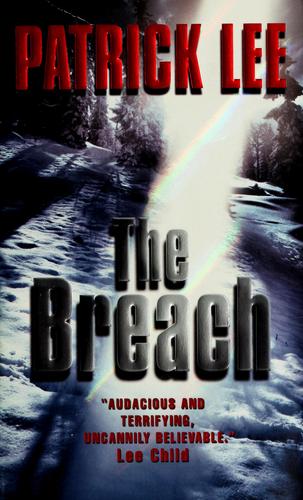
The Travis Chase Trilogy
Patrick Lee
Start With The Breach (2009)
Series Status Complete in three novels
Central Question Why is a government facility receiving impossible objects from somewhere else?
Closest match A secret facility, dangerous artifacts, competing custodians, and technology that looks supernatural until the explanation becomes stranger.
Know before you start This is action-heavy science fiction with mystery-box components, not slow existential horror.
Travis Chase, recently released from prison, discovers a crashed aircraft and a trail leading toward a covert site. The investigation exposes the Breach, a phenomenon that produces entities and devices whose purposes are rarely obvious and whose capabilities can destabilize nations. Each object suggests both technological possibility and a sender whose intentions remain unreadable.
Patrick Lee combines the propulsive government thriller with the artifact logic of Lost. One impossible device solves an immediate problem while creating several larger ones. Agencies divide over secrecy and use, loyalties become difficult to verify, and Travis is valuable partly because he enters the system without accepting its assumptions.
The characterization is functional, action regularly outruns reflection, and the prose is designed to keep pages turning rather than create eerie atmosphere. The trilogy is valuable for readers who want answers delivered at thriller speed. Its completed structure offers escalation and closure without requiring a sprawling shared universe.
5
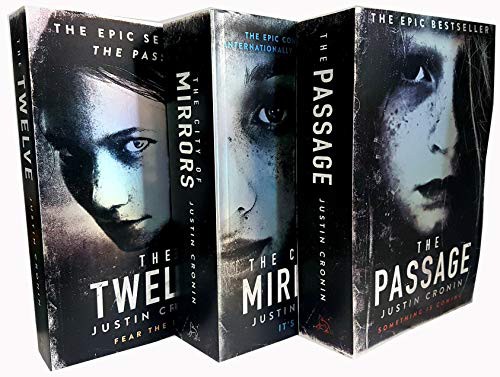
The Passage Trilogy
Justin Cronin
Start With The Passage (2010)
Series Status Complete in three novels
Central Question How are a secret experiment, one unusual child, and humanity's distant survivors connected?
Closest match Large cast, timeline shifts, scientific conspiracy, quasi-spiritual connection, and delayed convergence.
Know before you start The books contain child endangerment, pandemic collapse, and extensive character loss.
A government project seeking medical breakthroughs creates the viral beings that destroy civilization. The opening follows the experiment and the child Amy; the novel then leaps forward to a fortified colony whose residents know the apocalypse mainly through rules, lights, and inherited fragments. What appears to be one story becomes an intergenerational design.
The comparison to Lost lies in structure more than premise. Justin Cronin introduces emotionally complete groups, separates timelines, withholds the bridge between them, and lets repeated names or documents carry meaning across decades. Scientific conspiracy, religious imagery, psychic connection, and survivor politics coexist without collapsing into a single genre.
The trilogy is long and uneven. Readers attached to one period may resent being moved to another, while the lyrical attention given to minor lives slows the central chase. That willingness to leave the main road is also why the eventual convergences matter. The mystery is not simply what caused the monsters. It is why certain human choices remain legible across catastrophe.
4
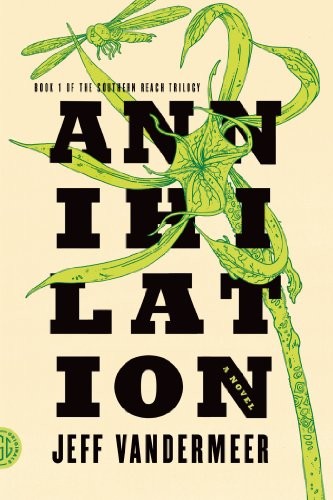
The Southern Reach
Jeff VanderMeer
Start With Annihilation (2014)
Series Status Four novels published, including Absolution
Central Question What is Area X, and what does it mean to return from it?
Closest match An isolated zone, failed expeditions, doubles, unreliable organizations, and clues that become less stable when examined.
Know before you start The series favors ambiguity, atmosphere, and transformation over a single definitive explanation.
Area X is an expanding region cut off from ordinary civilization. Expeditions enter under controlled conditions and return damaged, altered, or not at all. Annihilation follows the twelfth expedition through the journal of an unnamed biologist, whose observations of a strange tower, transformed ecology, and unreliable companions undermine the organization's official account.
No series on this list is better at making the environment itself the mystery box. Maps, names, hypnosis, expedition records, doubles, and institutional language all fail to contain Area X. Later volumes change viewpoint and period, revealing more about the Southern Reach bureaucracy without converting the central phenomenon into a diagram.
Readers who equate payoff with a precise causal lecture may be frustrated. Jeff VanderMeer provides answers, but they behave like ecological evidence: partial, entangled, and changed by the observer. Absolution expands the sequence after the original trilogy, making "complete" less useful than "deliberately revisited."
3
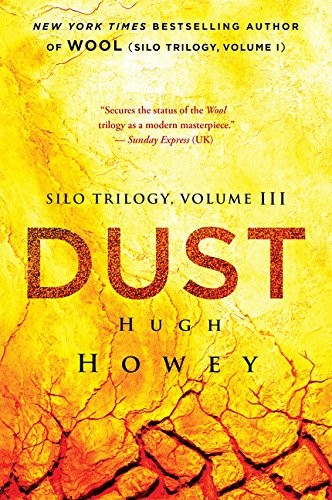
The Silo Trilogy
Hugh Howey
Start With Wool (first released in 2011)
Series Status The core trilogy is complete
Central Question Why must the last human community live underground, and why does asking lead outside?
Closest match Trapped population, forbidden exit, controlled information, leadership conflict, and a community built around a possibly false survival story.
Know before you start Begin with the collected novel Wool, then read Shift and Dust.
Thousands of people live in an enormous underground silo. The outside world is believed to be lethal, social roles are tightly regulated, and those who demand to leave are sent to clean the external sensors before dying. The first story turns that ritual into a puzzle. Subsequent sections enlarge the cast, descend through the silo's levels, and expose the political architecture behind apparently practical rules.
The fit for mystery-box readers is immediate. A sealed community accepts inherited explanations because testing them carries a death sentence. Screens may mediate reality, leaders control information, and vertical geography becomes social hierarchy. Every answer about the silo raises a question about who designed the answer.
Wool grew from shorter self-published installments, and its episodic construction remains visible. Some character turns are abrupt, and later explanations trade part of the opening's uncanny force for conspiracy mechanics. Unlike many open-ended mysteries, however, the trilogy commits to revealing how the system works and what breaking it might cost.
2
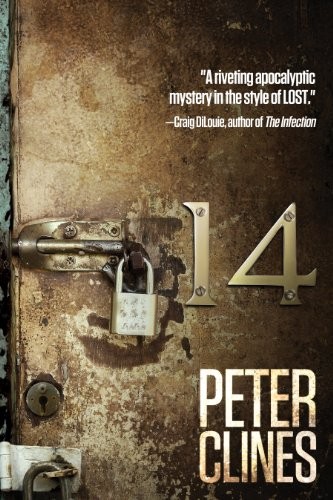
The Threshold Universe
Peter Clines
Start With 14 (2012)
Series Status Four loosely connected novels published
Central Question Why do the apartments in one Los Angeles building fail to add up?
Closest match A strange building, ensemble investigation, impossible architecture, secret design, and answers that expose a wider reality.
Know before you start Read 14 first. The other Threshold books share concepts and connections more than one continuous cast.
Nate Tucker moves into an unusually affordable apartment and begins noticing small impossibilities. The building has odd fixtures, sealed spaces, inconsistent dimensions, and neighbors who have accumulated separate pieces of the same puzzle. Informal curiosity becomes collaborative investigation, then a confrontation with the purpose for which the building was constructed.
14 is one of the closest literary equivalents to watching strangers become a theory community. Different skills matter, personalities clash, measurements replace message-board speculation, and each opened door reveals a larger category of question. Later Threshold novels connect experiments, machines, and alternate realities without functioning as a conventional numbered sequence.
Peter Clines favors accessible dialogue and overt explanation. The characters can feel arranged by useful competencies, and the reveal moves from urban mystery into a familiar branch of cosmic horror. Those are fair criticisms, but the book delivers the pleasure many mystery boxes postpone: residents gather the clues, test the map, open the wall, and keep going.
1
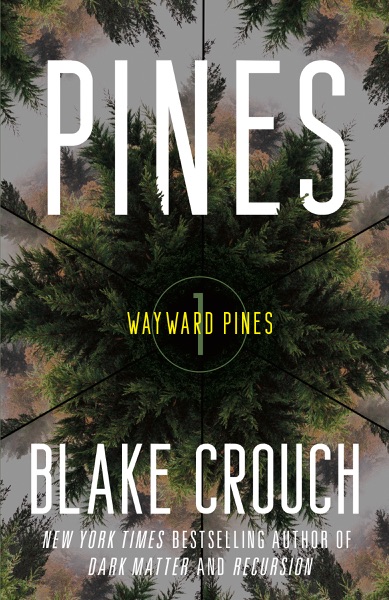
The Wayward Pines Trilogy
Blake Crouch
Start With Pines (2012)
Series Status Complete in three novels
Central Question Why can nobody leave Wayward Pines?
Why it ranks first It combines the inescapable town of From with the staged information, surveillance, divided leadership, and radical recontextualization that drive Lost.
Know before you start Avoid reading detailed summaries. The first novel's central revelation changes the meaning of almost every earlier scene.
Secret Service agent Ethan Burke wakes after an accident in an idyllic Idaho town. He cannot contact the outside world, residents behave as if watched, roads refuse to provide a normal exit, and the local authorities respond to questions with escalating force. Even Ethan's own memories cannot be treated as neutral evidence.
This is the clearest recommendation for viewers of From. The town is attractive, geographically imprisoning, socially regulated, and full of people who have learned that public deviation can be fatal. Ethan must decide whether individual residents are collaborators, prisoners, or both. The first book is constructed around the central reveal; the next two examine whether knowing the truth makes governing the community any less monstrous.
Blake Crouch writes for speed. Prose and characterization are subordinate to cliffhangers, and the explanation will satisfy readers who want a mechanism more than those who prefer metaphysical ambiguity. The final volume also pushes some social questions toward action-thriller solutions. Still, the trilogy is complete, compulsive, and unusually honest about what happens after the box opens.