Ranked · Literary Fiction
The Top 10 Multigenerational Novels About Cursed Families and Repeating History Like One Hundred Years of Solitude Part 2
by E. M. Larkin
A ranked guide to inherited stories, recurring names, buried violence, national upheaval, ghosts, migrations, family archives, and histories that keep returning to the same rooms in different generations
Netflix releases the first seven episodes of One Hundred Years of Solitude Part 2 on August 5, 2026, followed by a feature-length finale on August 26. The adaptation’s return creates immediate interest in Macondo, but the most useful reading list is not another roundup of loosely defined magical realism. Adult readers often want the particular experience Gabriel García Márquez created: generations repeating names and errors, national history entering the house and the supernatural treated as part of family memory.
The novels below follow families across decades, revolutions, migrations, partitions and ecological change. Some use overt ghosts or impossible events; others make history itself feel uncanny through recurrence. The ranking rewards the fusion of household and nation, narrative confidence across generations and the sense that inheritance includes stories people tried to suppress.
This is not a list of imitations. The books come from Latin America, Africa, Asia, Europe and the United States, and their differences matter. Each builds its own relationship among history, myth and family. All ten ranked selections come from different authors and have not appeared as ranked books in earlier Website listicles.
Selection note. The ranking favors novels in which family recurrence and public history are structurally inseparable. Magical realism helps, but resemblance is based on narrative function rather than the mere presence of ghosts.
10
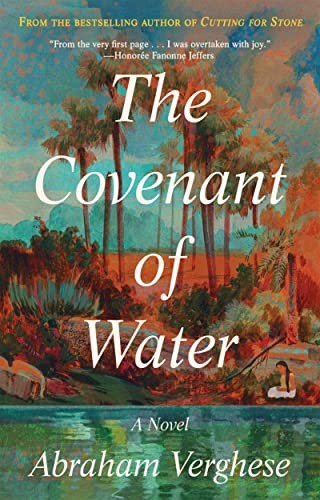
The Covenant of Water
Abraham Verghese · 2023
Generational span A Christian family in Kerala from 1900 through the 1970s
Closest Solitude connection A recurring pattern of drowning becomes family mystery, inherited fear and a route into changing medicine
Main difference Expansive historical realism with medical detail and limited supernatural ambiguity
Best for Readers who want a very long family saga, Kerala history, medicine, faith and interlocking lives.
A twelve-year-old girl enters an arranged marriage and eventually becomes the family matriarch known as Big Ammachi. Across the decades, descendants confront a strange tendency for members of the family to die by drowning despite living in a water-bound landscape. Political change, medical institutions and private loss gradually alter how the pattern can be understood.
Verghese ranks tenth because the novel explains more than Márquez would and devotes substantial space to medicine. Its deepest resemblance lies in duration. The family secret changes meaning as knowledge, relationships and Kerala itself change. What begins as curse can also be diagnosis, but scientific explanation does not erase the emotional inheritance created before it. The length permits minor decisions to echo across lives, though readers wanting compressed magical intensity may find it patient.
Know before you start. The novel includes child marriage, death by drowning, addiction, illness, caste prejudice and grief.
9
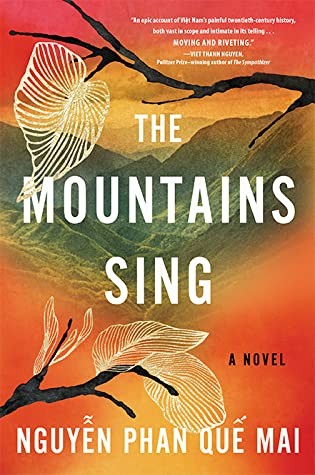
The Mountains Sing
Nguyễn Phan Quế Mai · 2020
Generational span A Vietnamese family across land reform, war and reunification
Closest Solitude connection National upheaval repeatedly divides the same family while oral storytelling preserves what official history simplifies
Main difference Historically grounded realism with a more linear, intimate dual narrative
Best for Readers who want Vietnamese history, grandmother-granddaughter bonds, war from civilian perspectives and an emotionally direct saga.
Hương grows up in Hanoi during the Vietnam War under the care of her grandmother Trần Diệu Lan. The grandmother recounts a life shaped by famine, land reform, dispossession and the dispersal of her children. Hương’s own parents and uncles carry later forms of the same history.
The novel ranks ninth because family memory is its resistance to political erasure. Stories cross the gap between generations, but they cannot prevent every child from interpreting survival as betrayal. Quế Mai’s prose is more direct and explanatory than Márquez’s, with no sustained magical element. The book nevertheless captures how a century of public violence can enter recipes, sibling resentments and the decision to speak or remain silent. It is an accessible route for readers who value the historical family pattern more than supernatural events.
Know before you start. The novel includes famine, war, rape, execution, family separation and political persecution.
8
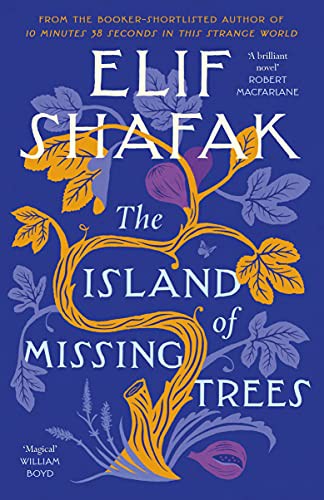
The Island of Missing Trees
Elif Shafak · 2021
Generational span A Greek Cypriot–Turkish Cypriot love story and its effect on their daughter in London
Closest Solitude connection A family carries civil conflict into exile while a nonhuman witness preserves memories people cannot narrate
Main difference Compact dual-timeline novel partly narrated by a fig tree
Best for Readers who want Cyprus history, diaspora, ecological perspective, family secrets and accessible magical realism.
Kostas and Defne fall in love in 1970s Cyprus despite belonging to communities divided by violence. Years later, their daughter Ada lives in London with grief and questions about the island her parents rarely explain. A fig tree transported from Cyprus becomes witness, archive and unusual narrator.
Shafak ranks eighth because the tree performs a function close to Macondo itself: it holds weather, rumor, migration and death without separating natural history from human history. The family is smaller than the Buendías, and the prose often explains its symbols directly. The compressed scale makes inheritance easy to feel. Ada receives not only trauma but missing context, and the novel asks whether roots are a place, a relationship or a story carried elsewhere.
Know before you start. The novel includes civil war, disappearance, suicide, grief and anti-gay violence.
7
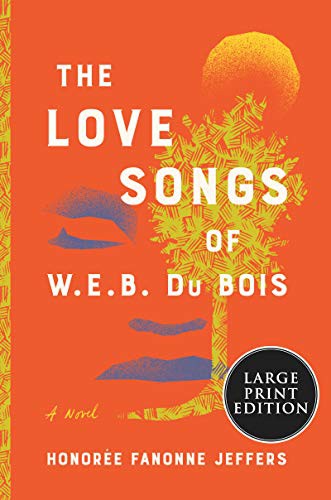
The Love Songs of W.E.B. Du Bois
Honorée Fanonne Jeffers · 2021
Generational span An African American family’s history from Indigenous ancestry and slavery through the present
Closest Solitude connection Repeated names, hidden parentage and historical violence accumulate beneath one family’s understanding of itself
Main difference A realist coming-of-age epic whose archival precision is more prominent than supernatural wonder
Best for Readers who want an ambitious American family epic, Black women’s history, land, education and a deeply developed protagonist.
Ailey Pearl Garfield grows up between a northern city and her family’s Georgia home. Her personal story is interwoven with generations shaped by Creek history, enslavement, sexual violence, education and land. The past does not appear as a decorative prologue; it changes the meaning of every relationship Ailey inherits.
Jeffers ranks seventh because she makes genealogy an argument about whose memory becomes official. Family pride coexists with silence, and achievement cannot prevent old forms of harm from recurring inside the household. The novel is longer and more explicitly historical than One Hundred Years of Solitude, with difficult scenes that require attention. Readers who want the scale of a family tree and the moral seriousness of history repeating through intimate choices will find a major work.
Know before you start. The book includes slavery, incest, child sexual abuse, rape, racism, addiction and suicide.
6
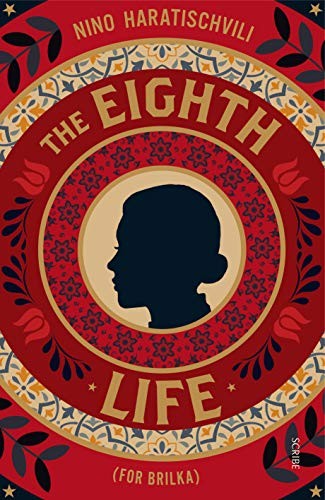
The Eighth Life
Nino Haratischvili · 2014
Generational span A Georgian family through the Russian Revolution, Stalinism, the Soviet era and its aftermath
Closest Solitude connection A prized chocolate recipe and repeated family patterns become a private curse moving beside enormous political change
Main difference Monumental historical novel with European realism and very little literal magic
Best for Readers who want an immense historical saga, Georgia, Soviet history, women’s lives and a family curse kept deliberately ambiguous.
Niza writes the history of the Jashi family for a younger relative, beginning with a confectioner whose secret chocolate recipe seems to bring pleasure and disaster together. Descendants move through revolution, purges, war, artistic ambition and political compromise.
Haratischvili uses the suspected curse carefully. Whether the chocolate causes anything matters less than the family’s need for an object that explains why desire repeatedly becomes danger. The novel ranks sixth because its scale and political density can be exhausting, and history is narrated more explicitly than in Márquez. Its repeated passions, names and betrayals create the same sensation of descendants entering rooms already furnished by the dead.
Know before you start. The novel includes political terror, torture, rape, war, abuse and child death. It is exceptionally long.
5
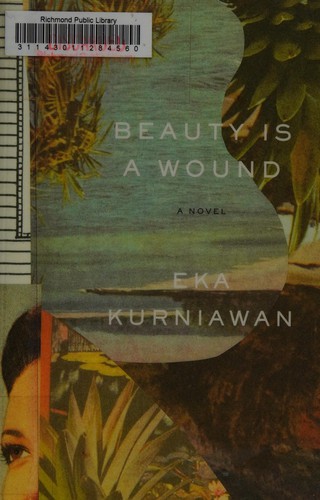
Beauty Is a Wound
Eka Kurniawan · 2002
Generational span Four daughters and their descendants across Dutch colonialism, Japanese occupation and Indonesian political violence
Closest Solitude connection The dead return casually, outrageous events carry historical truth and family repetition becomes national allegory
Main difference Much more sexually graphic, grotesque and satirical
Best for Readers who want Indonesian history, bawdy satire, ghosts, nonlinear family storytelling and deliberately excessive fiction.
Dewi Ayu rises from her grave after twenty-one years. Her life and the lives of her daughters unfold through colonial exploitation, war, prostitution, beauty, revenge and supernatural recurrence. The fictional town of Halimunda absorbs history without distinguishing cleanly among gossip, myth and fact.
Kurniawan offers one of the closest formal matches to Márquez while refusing to reproduce his tone. Impossible events are narrated with confidence, comedy enters atrocity and family bodies become contested national territory. The novel ranks fifth because its relentless sexual violence and grotesquerie make it unsuitable for many readers. Those prepared for its harshness will find magical realism used not to soften history but to express the absurd violence that ordinary realism can make falsely orderly.
Know before you start. The book includes repeated rape, incest, prostitution, colonial violence, murder and graphic brutality.
4
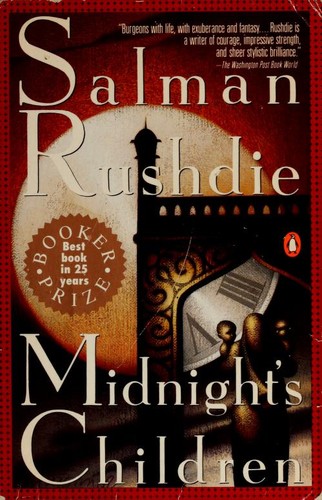
Midnight’s Children
Salman Rushdie · 1981
Generational span Saleem Sinai’s family before and after Indian independence
Closest Solitude connection A narrator’s body and family history become inseparable from the birth, hope and fracture of a nation
Main difference Verbally exuberant first-person history centered on one self-conscious storyteller
Best for Readers who want Indian history, linguistic play, unreliable narration, political allegory and ambitious magical realism.
Saleem is born at the exact moment India becomes independent and discovers a connection to other children born in that first hour. His telepathy, unreliable memory and family secrets place private life inside partition, war and the Emergency.
Rushdie ranks fourth because recurrence is filtered through a narrator who continually comments on his own construction. Where Macondo’s repetitions can feel fated, Saleem argues, corrects and exaggerates. The magical premise creates a literal generation of national possibility, then shows class, language and politics dividing it. The density of allusion and wordplay may challenge readers, but the novel demonstrates how family saga can become an unstable archive rather than a smooth chronicle.
Know before you start. The novel includes war, communal violence, forced sterilization, abuse and political imprisonment.
3
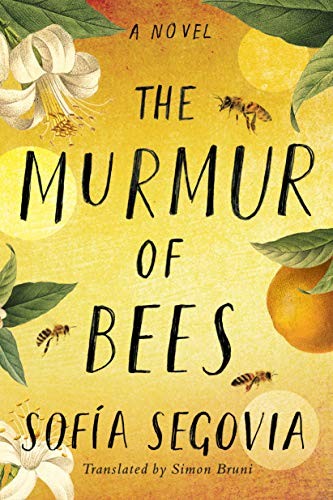
The Murmur of Bees
Sofía Segovia · 2015
Generational span A landowning family in northern Mexico during revolution and the 1918 influenza pandemic
Closest Solitude connection Bees, weather, rumor and intuition become part of family history without requiring a boundary between magic and reality
Main difference Gentler, more linear historical saga focused on one unusual child
Best for Readers who want Mexican history, lyrical nature writing, family bonds, pandemic fiction and gentle magical realism.
An abandoned infant named Simonopio is found covered by bees and adopted by the Morales family. His connection to the hive and apparent knowledge of approaching danger shape the household as revolution, disease and resentment transform the region.
Segovia earns third place because the bees never collapse into a puzzle with one answer. They are companions, warning system, miracle and part of the landscape’s intelligence. The family’s wealth complicates its vulnerability, while social change reaches the household through workers and neighbors whose loyalties cannot be assumed. The book is more sentimental and accessible than Márquez, but it preserves his ability to make historical catastrophe and private wonder occupy the same sentence.
Know before you start. The novel includes pandemic death, class conflict, violence, disability stigma and threats to a child.
2
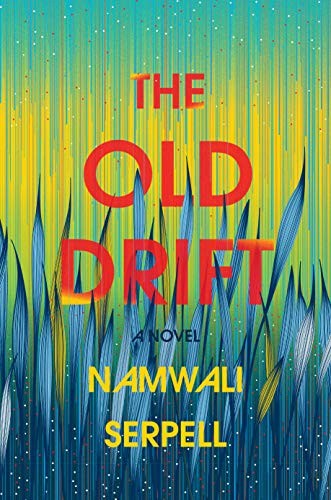
The Old Drift
Namwali Serpell · 2019
Generational span Three Zambian families from the colonial era into a near future
Closest Solitude connection Chance encounters become family destiny while national development repeats colonial promises in technological form
Main difference Genre-shifting epic that moves from historical fiction into science fiction
Best for Readers who want Zambian history, science fiction, interlocking families, political experimentation and a structurally adventurous novel.
An encounter near Victoria Falls entangles three families whose descendants inherit rivalry, desire and political consequence. The narrative moves through colonial administration, independence, medical experimentation, activism and a technologically transformed Zambia. A mosquito chorus provides a collective perspective on human ambition.
Serpell ranks second because she understands recurrence as invention as well as curse. Dams, vaccines, drones and revolutionary plans repeatedly promise control over the future; each also carries the assumptions of the people financing it. Family coincidence and national engineering mirror one another. The book’s shifts in tone and genre can feel unruly, but that unruliness is the point. Like Macondo, Zambia is never frozen as an exotic past. It moves toward futures that remain haunted by who first drew the plans.
Know before you start. The book includes colonial racism, medical exploitation, HIV/AIDS, sexual content, disability and political violence.
1

The House of the Spirits
Isabel Allende · 1982
Generational span The Trueba and del Valle families across decades of social change and dictatorship
Closest Solitude connection Clairvoyance, ghosts, repeated family conflict and national violence coexist inside a large, memory-filled house
Main difference A more intimate political trajectory with women’s testimony gradually correcting patriarchal narration
Best for Readers who want Latin American political history, clairvoyant women, family conflict, ghosts and an emotionally powerful standalone.
Clara can move objects, predict events and communicate with spirits. Her marriage to Esteban Trueba joins her unusual household to a man whose ambition, violence and political conservatism reshape several generations. Children and grandchildren inherit love, class power, secrets and enemies as the country moves toward coup and repression.
Allende earns first place because the family saga and political novel never separate. Esteban wants to narrate himself as builder and patriarch; the women’s notebooks preserve experiences his account cannot contain. Ghosts do not interrupt history. They insist that the people history declares finished remain present in the house.
The comparison to Márquez is familiar, but it remains useful when made precisely. The House of the Spirits is not merely “another magical-realist family book.” It tracks how private domination prepares people to accept public authoritarianism, and how testimony can break repetition without undoing harm. For viewers leaving Part 2 with the Buendías still echoing in their minds, it is the strongest next destination.
Know before you start. The novel includes rape, torture, domestic abuse, political imprisonment and murder.
Which One Hundred Years of Solitude Read-Alike Should You Read First?
Where to start. Start with The House of the Spirits for the closest combination of ghosts, politics and generations. Choose The Old Drift if you want the boldest contemporary expansion into science fiction, or The Murmur of Bees for a warmer Mexican family saga.
Read Midnight’s Children when language and national allegory matter most. Choose Beauty Is a Wound for a much more graphic, grotesque form of magical realism. The Eighth Life and The Covenant of Water suit readers ready for very long historical immersion.
Pick The Love Songs of W.E.B. Du Bois or The Mountains Sing for family memory grounded in historical realism. The Island of Missing Trees is the most compact and accessible route into inherited trauma and a nonhuman narrator.
Multigenerational fiction changes the scale of causation. A decision that looks private in one chapter becomes climate, custom or grievance three generations later. Magic can make that continuity visible, but the best family sagas do not require a ghost to prove that the dead remain active.
The House of the Spirits turns notebooks into counterhistory. The Old Drift follows colonial ambition into technological futures, while The Murmur of Bees lets a landscape warn a family that history is approaching. These novels resemble Macondo most when they refuse to place wonder on one side and politics on the other. Families inherit both at once.