Ranked · Kaiju
The Top 10 Kaiju Novels About Families, Secret Agencies, and Monster Legacies Like Monarch: Legacy of Monsters
by E. M. Larkin
A ranked guide to giant monsters, inherited investigations, hidden ecosystems, corporate containment, government cover-ups, field teams, family secrets, and the people left living in a titan’s footprint
Monarch: Legacy of Monsters completed its second Apple TV season in May 2026, extending the MonsterVerse’s strongest family-and-conspiracy storyline. Searches for giant-monster books return useful Godzilla and kaiju roundups, but almost no dedicated list isolates what makes Monarch different: relatives uncovering decades of secrets while scientists, soldiers and corporations attempt to classify creatures too large for any institution to control.
Every ranked novel includes a large or biologically extraordinary creature and a meaningful investigative system around it. Some feature formal agencies; others use museums, preserves, corporations or expedition teams. Family legacy is strongest near the top, but even lower entries attend to the workers and communities living after the first spectacular attack. Pure dragon fantasy and disaster novels without investigation were excluded.
Higher entries combine creature scale, scientific discovery, institutional secrecy and personal consequence. Lower entries may be more pulpy, more isolated or less family-centered. All ten are prose novels by different authors, and none is an official MonsterVerse tie-in.
Selection note. Books are ranked for kaiju scale, secret organizations, scientific or detective inquiry and multigenerational consequence. A giant creature appearing only for a final battle was not enough.
10
Kaiju: Battlefield Surgeon
Matt Dinniman · 2019
Story engine A man trapped in a brutal virtual world becomes a healer inside enormous monsters
Closest Monarch: Legacy of Monsters connection Human survival depends on learning titan anatomy from within rather than treating kaiju as distant spectacle
Main difference Extremely graphic LitRPG horror with no family investigation or public agency
Best for Experienced LitRPG and splatter-horror readers who want grotesque invention and progression mechanics.
Duke enters a game and discovers he cannot log out. His role requires traveling through the bodies and battlefields of gigantic creatures, using a progression system built around surgery, pain and survival. The virtual environment’s cruelty and the people controlling access become as dangerous as the monsters themselves.
Dinniman earns the final position by changing the scale of inquiry. Instead of looking up at a titan, the protagonist navigates organs as landscapes and learns anatomy under pressure. That biological intimacy will interest readers fascinated by Monarch’s field science. Almost every other element diverges: the tone is sadistic, the system game-like and the institutional story personal rather than generational.
The book takes position #10 because it is an extreme outer-edge recommendation for readers who prioritize kaiju biology.
Know before you start. The novel contains extreme gore, torture, body horror, sexual violence references and sustained psychological cruelty.
9
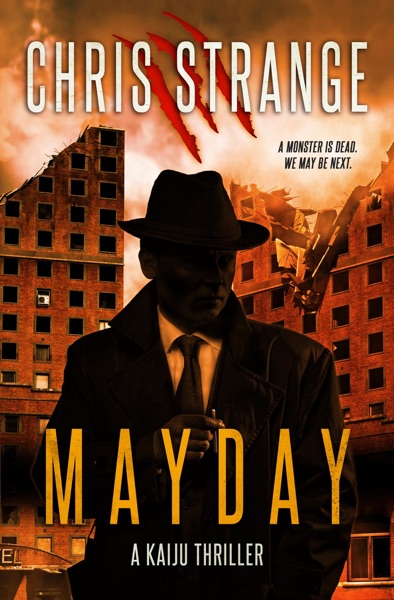
Mayday: A Kaiju Thriller
Chris Strange · 2014
Story engine A corporate detective investigates the impossible murder of an enslaved giant monster
Closest Monarch: Legacy of Monsters connection Monster history, media ownership and corporate secrets turn kaiju into both victims and evidence
Main difference A noir mystery in a world where defeated monsters are commercial entertainment
Best for Readers who want hardboiled detection, monster gladiators, conspiracy and an unconventional standalone.
Nineteen years after five Maydays nearly destroyed humanity, surviving monsters are forced to fight for global audiences. When one apparently indestructible creature is found dead, Volkov Media detective Jay Escobar must solve the case before the company’s spectacle collapses. The murder points toward a plan capable of restarting the war.
Strange asks what institutions do after they win. Kaiju become intellectual property, labor and broadcast product, while the detective is paid by the company with the most to conceal. That corporate afterlife is a sharp extension of Monarch’s concern with managing titan knowledge. The independent production is less polished than the top entries, but the premise is genuinely distinctive.
The book takes position #9 because its kaiju-noir investigation is unique, though narrower and harder to source.
Know before you start. The book includes corporate exploitation, violence, mass-destruction history and noir cynicism.
8
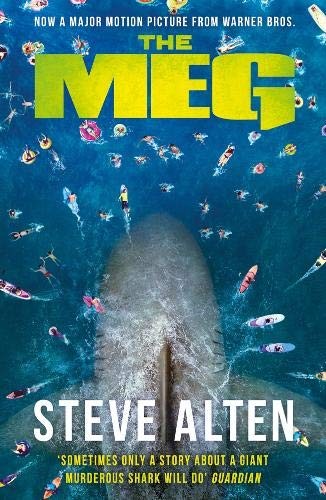
The Meg
Steve Alten · 1997
Story engine A disgraced deep-sea expert believes a prehistoric meg lodon has escaped into the modern ocean
Closest Monarch: Legacy of Monsters connection Past expedition trauma and scientific disbelief force one specialist to prove a monster exists before institutions respond
Main difference A sea-predator thriller with limited conspiracy and no supernatural scale
Best for Readers who want deep-sea suspense, prehistoric predators, scientific pursuit and a long series.
Jonas Taylor abandoned deep-ocean work after a disastrous dive in the Mariana Trench. Years later, evidence suggests the enormous shark he saw was real and has entered warmer water. Personal credibility, commercial interests and a history of failed warning complicate the effort to track it.
The useful Monarch connection is legacy through trauma. Jonas has organized his life around an encounter no institution validated, and renewed evidence forces family and colleagues into the same story. Scientific explanation is sensational but materially important. The creature lacks a kaiju’s intelligence or mythic role, yet the expert-versus-disbelief structure is a durable match.
The book takes position #8 because it is a foundational modern giant-creature thriller, though the agency element is thin.
Know before you start. The novel includes animal attacks, mass casualties, dated sexual politics and graphic violence.
7
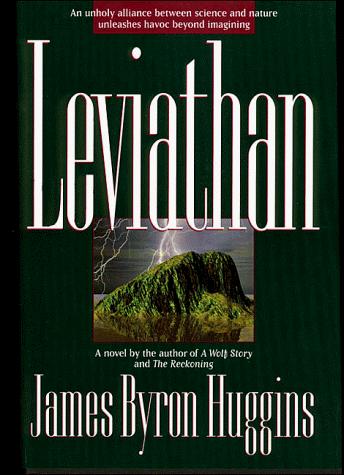
Leviathan
James Byron Huggins · 1995
Story engine A genetically engineered biblical monster escapes inside a secret installation beneath an Icelandic island
Closest Monarch: Legacy of Monsters connection Scientists and soldiers confront the consequence of a covert weapons project built around an ancient archetype
Main difference Religious action horror with an almost indestructible single creature and straightforward morality
Best for Readers who want 1990s techno-horror, underground containment, biblical monsters and nonstop pursuit.
An illegal experiment transforms a creature into Leviathan, capable of melting containment and surviving modern weapons. When it escapes into the underground complex, electrical engineer Connor must help prevent it from reaching the surface. The facility’s creators have already converted scientific ambition into an apocalyptic liability.
Huggins supplies the classic secret-base version of Monarch. Corridors, shields and specialized personnel demonstrate how much planning preceded the failure, while the creature’s mythic identity makes classification unstable. Family stakes keep Connor’s struggle from becoming purely military. The prose is muscular and faith-inflected, which will either enhance or limit the appeal.
The book takes position #7 because its covert facility and family urgency fit well, though characterization is pulpy.
Know before you start. The novel includes graphic creature violence, religious themes, military deaths and a strongly Christian worldview.
6
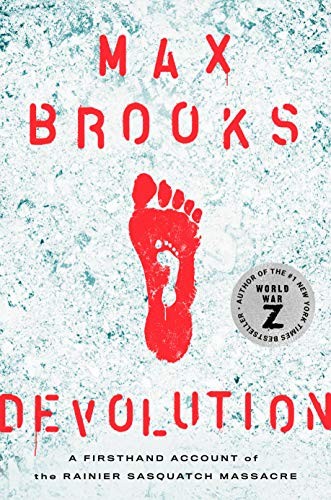
Devolution
Max Brooks · 2020
Story engine An isolated high-tech community documents attacks by a group of Sasquatch after a volcanic disaster
Closest Monarch: Legacy of Monsters connection Evidence, official disbelief and community survival reveal how monster events become contested records
Main difference A found-document horror novel about cryptids smaller than kaiju and no permanent secret agency
Best for Readers who want Bigfoot horror, survival logistics, community breakdown and found documents.
After Mount Rainier erupts, the eco-community of Greenloop is cut off from roads and services. Kate Holland’s journal records residents realizing that large primates are watching and testing them. Interviews and later documents frame the account, leaving investigators to reconstruct how idealistic isolation became a siege.
Brooks is interested in the aftermath of evidence. Journals, recordings and expert commentary compete over what happened, resembling the archival layers through which Monarch characters uncover earlier titan encounters. The creature group is intimate enough to make every improvised defense matter. It ranks below facility thrillers because the agency enters mainly through retrospective interpretation.
The book takes position #6 because its documentary reconstruction and civilian perspective provide a useful change of scale.
Know before you start. The book includes graphic attacks, animal death, disaster, panic and sustained siege tension.
5
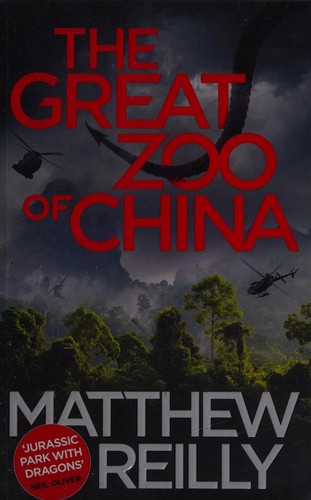
The Great Zoo of China
Matthew Reilly · 2014
Story engine A Chinese corporation and government unveil a hidden dragon preserve designed to eclipse every global attraction
Closest Monarch: Legacy of Monsters connection A managed monster project collapses because branding, secrecy and national ambition override field evidence
Main difference A maximalist action thriller whose creatures are dragons and whose characters are deliberately broad
Best for Readers who want dragons, secret megaprojects, rapid action and Jurassic Park–style containment failure.
Reptile expert C. J. Cameron joins a VIP tour of an enormous secret zoo where dragons have been bred and contained. Officials insist every risk has been engineered away. When the creatures exploit weaknesses in the system, the tour becomes a fight through infrastructure designed more to impress investors than respect intelligent predators.
Reilly’s preserve is what Monarch could become under pure public-private ambition. Scientists supply warnings, executives supply assurances and the monsters reveal which model describes reality. C. J.’s expertise gives the action an investigative spine even as set pieces become enormous. The book is unapologetically implausible, but its critique of containment as marketing is effective.
The book takes position #5 because it offers the best corporate-monster facility, with corresponding blockbuster excess.
Know before you start. The novel includes mass casualties, graphic creature attacks, authoritarian secrecy and extreme implausibility.
4
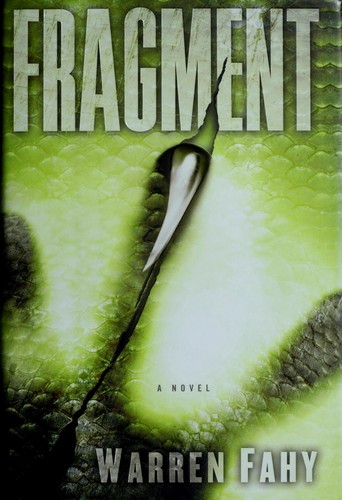
Fragment
Warren Fahy · 2009
Story engine A television expedition reaches an island where evolution produced a lethally unfamiliar ecosystem
Closest Monarch: Legacy of Monsters connection Scientists, military officials and media personnel fight over whether discovery should be studied, destroyed or exploited
Main difference An ensemble techno-thriller with no legacy family and many creature species rather than one titan
Best for Readers who want speculative evolution, expedition disaster, scientific debate and relentless creature action.
The crew of a struggling science reality show lands on Henders Island after receiving an emergency signal. Organisms evolved there through relentless predation, making even brief exposure catastrophic. As footage reaches the outside world, scientists and governments debate quarantine while a few survivors search for intelligence within the ecosystem.
Fahy excels at the collision between field discovery and institutional response. Cameras turn danger into content before anyone understands it; military containment protects the world while threatening knowledge; scientists disagree about personhood and contamination. The creatures are not traditional kaiju, but the hidden biome and escalation feel like Monarch discovering that its classifications are too small.
The book takes position #4 because its secret ecosystem and multidisciplinary crisis are superb, though family emotion is minimal.
Know before you start. The novel includes graphic animal and human deaths, body horror and extensive biological description.
3
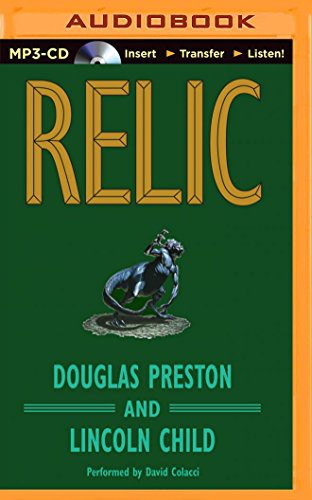
Relic
Douglas Preston and Lincoln Child · 1995
Story engine Museum staff and investigators hunt a creature killing people inside New York’s natural-history museum
Closest Monarch: Legacy of Monsters connection Specimens, expedition history and institutional reputation conceal a biological threat with roots in an earlier generation
Main difference A confined creature mystery rather than a giant city-scale kaiju story
Best for Readers who want museum horror, forensic clues, secret expeditions and the start of the Pendergast series.
Days before a major exhibition opens, bodies are discovered in the museum with horrific injuries. Graduate researcher Margo Green, police lieutenant Vincent D’Agosta and FBI agent Pendergast connect the killings to a failed Amazon expedition and to material the museum stored without understanding. Administrators resist conclusions that could destroy the gala and institution.
The museum functions like Monarch’s archive: a respectable public face sits above crates, field notes and decisions made by absent explorers. Scientific clues matter, but budgets and reputation determine which warnings receive action. The creature is smaller than Godzilla, yet the multigenerational investigation and institutional denial are exceptionally close to the show’s human-scale mystery.
The book takes position #3 because it is the strongest procedural investigation, losing points only on monster size.
Know before you start. The novel includes graphic killings, body horror, animal experimentation and dated scientific elements.
2
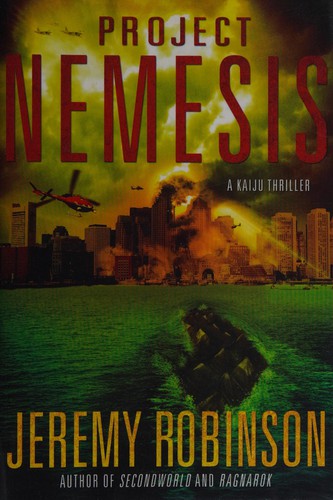
Project Nemesis
Jeremy Robinson · 2012
Story engine A federal investigator uncovers experiments that create a rapidly growing monster tied to human trauma
Closest Monarch: Legacy of Monsters connection Government programs, buried crimes and personal history converge as a creature becomes a national catastrophe
Main difference Pulpy, explosive and less scientifically restrained than Monarch
Best for Readers who want military action, secret experiments, fast chapters and a long connected kaiju series.
Department of Homeland Security investigator Jon Hudson visits a secretive company in rural Maine and finds evidence of illegal biological work. The investigation connects Japanese kaiju mythology, a murdered girl and a creature whose growth soon exceeds any local response. Hudson and allies race to understand Nemesis while official secrecy makes each escalation harder to contain.
Robinson gives the monster an emotional and conspiratorial origin rather than treating scale as enough. The federal perspective supplies agencies, jurisdiction and cover-up, while Hudson’s fieldwork keeps discoveries personal. Destruction arrives early and grows across the Nemesis Saga, satisfying readers who want the television series’ conspiracy accelerated into blockbuster action.
The book takes position #2 because its government investigation and creature scale are exact, though subtlety is not the goal.
Know before you start. The novel includes child murder, experimentation, graphic destruction and mass casualties.
1

The Kaiju Preservation Society
John Scalzi · 2022
Story engine A covert organization studies and protects enormous creatures in a parallel Earth
Closest Monarch: Legacy of Monsters connection Field science, bureaucracy and secrecy reveal the practical institution hidden behind public monster mythology
Main difference A comic workplace adventure with little family drama and a lighter emotional register
Best for Readers who want brisk science fiction, competent teams, workplace humor, monster ecology and a standalone.
Jamie Gray accepts what sounds like animal-care work after losing a corporate job. The animals turn out to be kaiju living in an alternate ecosystem where nuclear processes shape biology. Jamie joins a specialized team maintaining equipment, collecting data and keeping both worlds safe until wealthy visitors attempt to convert the preserve into a private opportunity.
Scalzi makes the secret agency legible through labor. Someone carries batteries, checks seals and learns safety protocols before anyone confronts a monster. The kaiju possess ecological roles rather than existing only as city-destroying targets, while corporate intrusion provides a convincing reason secrecy can be both protective and dangerous. It lacks Monarch’s generational weight, but it captures the organization better than any rival.
The book takes position #1 because it is the most direct and accessible novel about working inside a hidden kaiju program.
Know before you start. The book includes workplace precarity, corporate violence, death and kaiju danger, mostly in a light tone.