The film adaptation of Project Hail Mary reached Prime Video on July 3, 2026 after a major theatrical run, renewing one of the year’s largest book-and-film searches. Generic read-alike pages are now crowded. The more defensible opening is the novel’s least replaceable pleasure: a human and a genuinely nonhuman partner building communication, trust and practical science because neither species can solve the emergency alone.
Every book here contains sustained cross-species cooperation, not merely an alien cameo or first-contact briefing. Biology and environment matter. Partners may breathe different atmospheres, perceive different senses or carry incompatible social assumptions. Several books are older and more rigorous than contemporary conversational science fiction; others prioritize cultural translation over equations. Together they isolate the Grace-and-Rocky engine without copying it.
Higher rankings combine scientific problem-solving, mutual dependence and a relationship that changes both participants. Lower entries may be less intimate, less optimistic or less technically detailed. Andy Weir’s other novels are excluded, as are books already used in the current exploratory-crew article.
Selection note. Books are ranked for human-alien partnership, credible biological difference, communication work and survival through shared expertise. First contact ending at diplomacy or war was not enough.
10
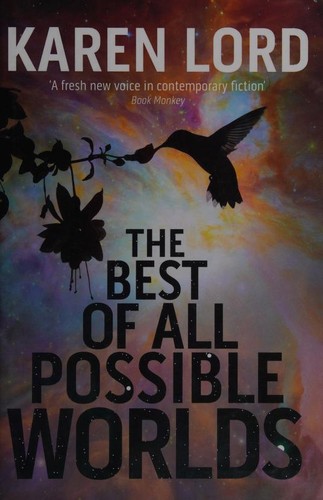
The Best of All Possible Worlds
Karen Lord · 2013
Story engine A surviving alien community works with humans to find compatible settlements and preserve its culture
Closest Project Hail Mary connection Field partners move from professional translation to affection while gathering social and biological knowledge
Main difference A gentle episodic social-science journey with romance and little immediate survival engineering
Best for Readers who want social science fiction, gentle romance, refugee themes and episodic planetary travel.
After the Sadiri homeworld is destroyed, male survivors arrive on Cygnus Beta and begin searching for communities that can help their people continue. Scientist Grace Delarua joins Councilor Dllenahkh on expeditions through varied settlements. Their observations of kinship, telepathy and culture gradually reshape both the resettlement project and their relationship.
Lord treats survival as more than keeping bodies alive. The Sadiri need continuity without turning other populations into reproductive resources, and every community resists easy classification. Grace and Dllenahkh’s partnership grows through fieldwork, disagreement and attention. The scientific register is anthropological rather than mechanical, placing it at the outer edge of the list but preserving the core pleasure of knowledge becoming care.
The book takes position #10 because it closes the ranking because crisis is quiet, while cross-cultural partnership is beautifully sustained.
Know before you start. The novel includes genocide aftermath, reproductive politics, grief and some uneven pacing.
9
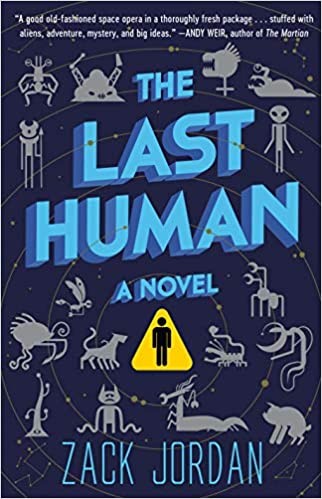
The Last Human
Zack Jordan · 2020
Story engine A hidden human raised by aliens becomes central to a galaxy that believes humanity was exterminated for good reason
Closest Project Hail Mary connection Survival depends on bonds across species and on questioning a network intelligence’s account of dangerous life
Main difference A fast, twist-heavy space adventure with softer science and a younger tonal register
Best for Readers who want many alien species, found family, artificial intelligence and rapid revelations.
Sarya is secretly human in a vast Network of species that classifies intelligence and manages civilization. Her adoptive mother, a giant spiderlike alien, has kept her identity hidden. Exposure pulls Sarya into conspiracies involving the Network, humanity’s history and allies whose bodies and motives defy familiar categories.
Jordan supplies affectionate cross-species family before the larger survival plot begins. Sarya’s mother does not need humanity to be innocent in order to protect one human child. The Network’s classifications turn intelligence into bureaucracy, while cooperation among mismatched beings challenges its certainty. The book is less rigorous than Weir, but its alien companionship and momentum are strong.
The book takes position #9 because it is the most accessible modern space adventure, though scientific problem-solving is secondary.
Know before you start. The novel includes genocide, violence, identity concealment and major twists that repeatedly reframe the premise.
8
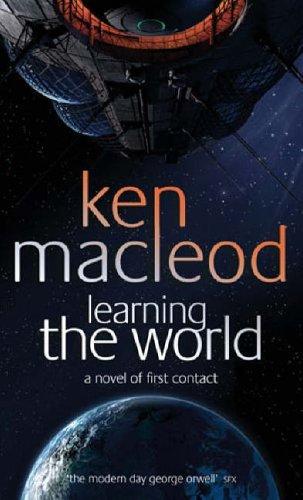
Learning the World
Ken MacLeod · 2005
Story engine A generation ship discovers an inhabited planet whose astronomers simultaneously discover the approaching humans
Closest Project Hail Mary connection Young people on both sides build understanding while their institutions debate survival, secrecy and intervention
Main difference A society-level encounter with multiple narrators and limited face-to-face partnership until late
Best for Readers who want generation ships, alien astronomy, political debate and a standalone contact novel.
The human ship But the Sky, My Lady! The Sky! has traveled for centuries to settle a new system. Its young population expects an empty world. On the planet, batlike inhabitants are entering an industrial scientific age and notice the ship. Blogs, astronomy and political debate unfold on both sides as each civilization decides what the other’s existence requires.
MacLeod lets discovery be reciprocal. Neither side owns the role of explorer, and both contain factions whose risk calculations are reasonable from local evidence. The younger human voice brings curiosity into conflict with inherited mission design. Direct teamwork arrives slowly, but the novel’s strongest match is conceptual: survival improves when people resist letting strategic fear make contact irreversible.
The book takes position #8 because its dual discovery is clever, though the partnership remains distributed.
Know before you start. The book includes war planning, death and dense political discussion; its blog-like narration may divide readers.
7
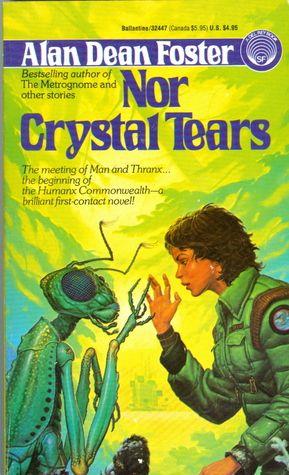
Nor Crystal Tears
Alan Dean Foster · 1982
Story engine An insectoid Thranx agriculturalist becomes an advocate for contact with humanity
Closest Project Hail Mary connection Friendship develops by confronting mutual disgust, fear and political efforts to prevent alliance
Main difference An older, straightforward contact adventure with lighter science and franchise-adjacent universe building
Best for Readers who want an alien protagonist, optimistic first contact and the origins of a long human-Thranx setting.
Ryozenzuzex is fascinated by alien life before a human encounter forces him to act on that curiosity. Humans instinctively recoil from the Thranx’s insect appearance, and Thranx institutions have their own reasons for caution. Ryo works through language, captivity and diplomacy to prove that the species can become partners.
Foster addresses a barrier many friendly-alien stories skip: bodies can trigger fear before words begin. Ryo’s persistence and the humans’ gradual revision of instinct turn cooperation into moral work. The biology is less rigorous than the top books, but the emotional arc from revulsion to alliance offers a clear, optimistic cousin to Grace and Rocky’s friendship.
The book takes position #7 because it is warm and accessible, though less scientifically demanding.
Know before you start. The book includes captivity, xenophobia and dated social assumptions but limited graphic violence.
6
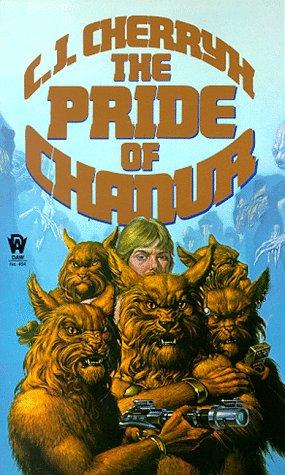
The Pride of Chanur
C. J. Cherryh · 1981
Story engine An alien merchant captain shelters the first human her species has encountered
Closest Project Hail Mary connection A vulnerable outsider and a nonhuman crew survive by exchanging partial language, political knowledge and trust
Main difference A fast trade-and-pursuit space opera told from the alien side, with little laboratory science
Best for Readers who want merchant ships, alien politics, female-led crews and a classic continuing series.
Tully escapes captivity and reaches the hani ship The Pride of Chanur. Captain Pyanfar Chanur takes him aboard, unaware that his existence will destabilize trade among several species. Rival kif pursue the ship while Tully and the hani build a rudimentary vocabulary sufficient for warnings, bargains and loyalty.
Cherryh wisely makes the human the incomprehensible alien. Pyanfar reads his gestures through hani assumptions, and Tully cannot explain the interstellar interests attached to him. Translation grows under pressure, with crew members contributing different patience and suspicion. The partnership is more commercial and political than Weir’s, but its earned cross-species protectiveness is deeply satisfying.
The book takes position #6 because it provides the strongest alien-viewpoint adventure and crew relationship.
Know before you start. The novel includes captivity, torture in backstory, pursuit and dense species terminology.
5
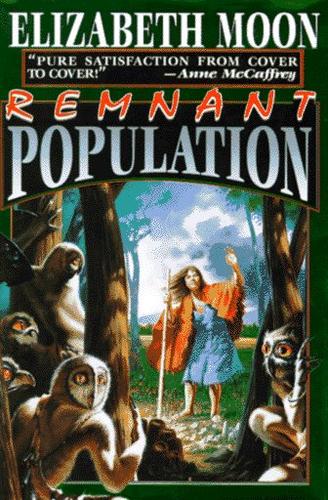
Remnant Population
Elizabeth Moon · 1996
Story engine An elderly colonist stays behind after evacuation and becomes humanity’s first mediator with a native species
Closest Project Hail Mary connection Practical skills, patience and chosen kinship succeed where official explorers bring hierarchy and assumptions
Main difference A quiet colony novel centered on domestic competence rather than urgent planetary science
Best for Readers who want an older woman protagonist, quiet competence, colonial critique and found family across species.
Ofelia Falfurrias hides when her corporate colony is evacuated, finally free from family demands and administrative control. Her solitude ends when an intelligent local species approaches. Ofelia learns to communicate and becomes grandmother, teacher and protector as a returning human team attempts to claim authority over the encounter.
Moon gives first contact to the person institutions consider least useful. Ofelia’s gardening, observation and respect create trust before trained specialists arrive. The aliens are not puzzles she solves for prestige; they become relations with their own judgments about which humans are safe. Scientific procedure appears, but the decisive survival technology is social humility.
The book takes position #5 because its partnership is intimate and humane, though lower in technical crisis.
Know before you start. The novel includes sexism, ageism, colonial violence, death and conflict involving children.
4
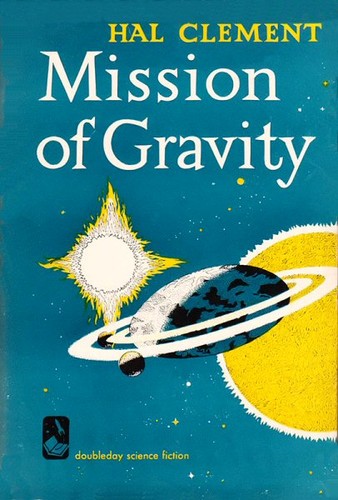
Mission of Gravity
Hal Clement · 1954
Story engine A human scientist recruits an alien trader to recover equipment on a planet with extreme gravity variation
Closest Project Hail Mary connection Each partner possesses environmental knowledge the other lacks, turning engineering into negotiated trust
Main difference A classic adventure with dated prose and a transactional relationship rather than modern emotional intimacy
Best for Readers who want classic hard science, planetary travel, alien sailors and problem-solving with minimal violence.
Mesklin’s gravity ranges from a few times Earth normal at the equator to hundreds of times stronger near the poles. Barlennan, captain of a native trading vessel, agrees to help human scientist Charles Lackland retrieve a stranded probe. Their journey requires adapting human concepts to Mesklinite bodies, weather and technology while both sides conceal part of what they want.
Clement established the template for survival through complementary expertise. Lackland has theory and off-world tools; Barlennan understands terrain, crew and local risk. Neither can simply command the other. The scientific puzzles remain delightful because each solution grows from the planet’s rules. Later books offer warmer characters, but few show more clearly how a partnership becomes possible when knowledge is distributed.
The book takes position #4 because it is the foundational engineering partnership, though its age creates distance.
Know before you start. The book includes dated gender absence and heavy physics explanation but little graphic content.
3
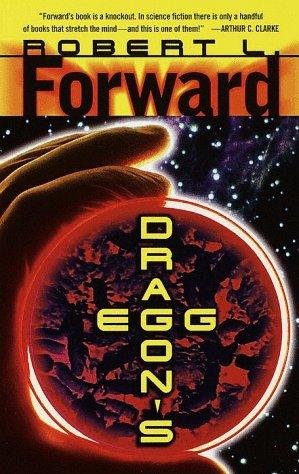
Dragon’s Egg
Robert L. Forward · 1980
Story engine Humans encounter intelligent life evolving on a neutron star at a vastly faster rate
Closest Project Hail Mary connection Scientists and cheela exchange knowledge despite incompatible scale, gravity, bodies and experience of time
Main difference More a civilization-level contact chronicle than an intimate two-person friendship
Best for Readers who want rigorous hard science, neutron stars, accelerated evolution and optimistic knowledge exchange.
A human expedition studies Dragon’s Egg, a neutron star whose surface supports tiny, dense cheela. Because cheela lives unfold far faster than human lives, their civilization develops from prehistory to advanced science during the mission. Contact begins through observation and signals, then becomes an exchange whose direction changes as the cheela surpass their visitors.
Forward’s central pleasure is constraint-driven invention. Gravity, chemistry and time determine cheela biology and technology, making communication a scientific achievement rather than a narrative convenience. Humans initially act as teachers, then must accept becoming the less advanced partner. The emotional connection is diffuse, but the respect produced through shared inquiry closely matches what readers love in Grace and Rocky.
The book takes position #3 because its alien physics are unmatched, while the relationship operates at species scale.
Know before you start. The novel contains scientific exposition, war within the alien society and limited conventional character depth.
2
The Color of Distance
Amy Thomson · 1995
Story engine A human scientist stranded on an alien world must be physically altered to live among its amphibious people
Closest Project Hail Mary connection Mutual survival requires biological adaptation, language learning and respect for an ecology humans can easily damage
Main difference A field-anthropology novel with slower pacing and a more unequal initial dependence
Best for Readers who want immersive alien ecology, transformation, patient cultural learning and a female scientist.
Juna Saari is left behind during an expedition to an intensely interconnected rainforest. The Tendu alter her body so she can breathe and communicate through color patterns and touch. Living with Anito and the community, Juna learns their ecological practices while trying to signal rescue without bringing destructive human assumptions into the forest.
Thomson makes communication bodily. Juna cannot treat language as a code detached from environment; her new skin, senses and metabolic needs change every relationship. The Tendu also learn from her, especially when off-world contact threatens the planet. That reciprocity and laboratory-level attention to biology place the novel near the top, though its cultural dynamics invite critical discussion about older anthropological tropes.
The book takes position #2 because its physical commitment to cross-species understanding is extraordinary.
Know before you start. The novel includes body modification, reproductive themes, ecological danger and a slow observational pace.
1
A Darkling Sea
James L. Cambias · 2014
Story engine Humans studying an intelligent species beneath alien ice clash with another extraterrestrial power enforcing noninterference
Closest Project Hail Mary connection Survival and peace depend on humans and Ilmatarans sharing knowledge across biology, politics and a lightless ocean
Main difference A larger multi-species conflict with less one-to-one warmth and more argument about intervention
Best for Readers who want hard first contact, underwater science, noninterference debates and multiple alien viewpoints.
Scientists occupy a station at the bottom of Ilmatar’s dark ocean, observing blind native beings around geothermal vents. After an unauthorized encounter ends in death, the Sholen—aliens who oppose human interference—intervene. Human researcher Alicia and Ilmataran scholar Broadtail become central to a conflict in which every side claims to protect the natives.
Cambias builds cooperation from environment outward. Pressure changes cooking and engineering; Ilmataran senses change what counts as evidence; Sholen social behavior complicates negotiation. Alicia and Broadtail cannot survive by declaring universal values. They must translate practical knowledge while powerful outsiders make decisions about them. The mix of science, danger and ethical argument makes this the closest independent novel to Weir’s partnership engine.
The book takes position #1 because it combines believable aliens, survival constraints and mutual problem-solving more completely than the competition.
Know before you start. The novel includes murder, warfare, colonial interference and scientific danger; some political sections slow the pace.