Moving is already an act of faith. You trade familiar streets for unfamiliar rules, accept that the neighbors know more than you do, and trust that the charming local custom is merely charming. Horror understands how little pressure that faith can withstand.
The books on this list all begin with some version of the same mistake: newcomers enter a town, village, development, or rural community that appears to offer a better life. The bargain may be cheap property, peace and quiet, creative renewal, or escape from grief. What the brochures omit is that close-knit places can close ranks. The newcomer is not simply learning local history. The newcomer has stepped into it.
This is not a general list of small-town horror. Each selection makes relocation or temporary settlement central to the story. The ranking favors books in which the community has a distinct social logic and the outsider's arrival exposes what that logic costs.
10
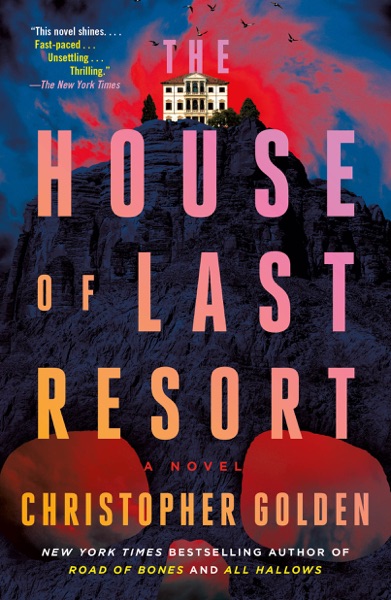
The House of Last Resort
Christopher Golden · 2024
New Community Becchina, Sicily
Best For A fast contemporary haunted-house story with village secrets
Why it belongs here The one-euro home is a perfect modern invitation into an old community: cheap enough to defeat suspicion, contractual enough to make escape difficult.
Know before you start This is brisk, plot-forward supernatural horror, not a patient ethnography of Sicilian village life.
Tommy and Kate Puglisi join the real-world Italian dream of buying an abandoned house for one euro. The catch is that they must renovate it and live in Becchina for five years. It seems an ideal exchange: the village gains residents, while the couple gains a beautiful old home and a clean break from life in America. Then the house begins behaving less like a bargain and more like a containment system.
Christopher Golden makes the scheme especially effective because moving is not incidental. Tommy has family connections to Becchina, but belonging by ancestry proves very different from possessing local knowledge. Priests, neighbors, and officials understand fragments of the house's history, and their omissions turn ordinary newcomer uncertainty into justified paranoia.
The novel moves quickly and explains more than readers of highly ambiguous horror may prefer. Its characters sometimes follow the route required by the haunted-house machinery rather than the route a cautious adult might choose. What it does well is convert renovation—the hopeful work of making a place yours—into the uncovering of layers that were buried deliberately.
9
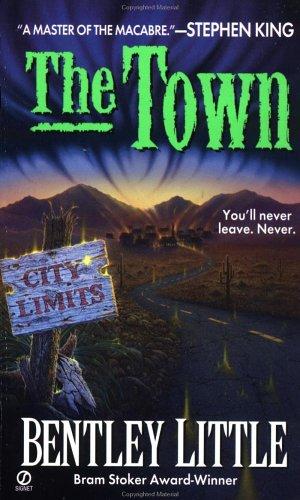
The Town
Bentley Little · 2000
New Community McGuane, Arizona
Best For Readers who like ordinary civic life becoming grotesque
Why it belongs here Gregory's family is trapped between his inherited confidence and their mounting evidence that the town does not want to be understood.
Know before you start Expect graphic and sometimes deliberately excessive horror.
Gregory Tomasov moves his family back to McGuane after a lottery win appears to offer the freedom to begin again. He remembers the Arizona town through childhood and family tradition, but his wife and children experience it as newcomers. That split matters. Gregory's nostalgia keeps translating warnings into familiarity even as the rest of the family recognizes that something is wrong.
Bentley Little is at his best when institutions or communities develop the logic of nightmares without losing the banal texture of American life. Here, desert isolation, old religious beliefs, family memory, and eruptions of surreal violence make McGuane feel both specific and untrustworthy. The town does not present one tidy conspiracy. It seems infected by a history that changes shape according to who encounters it.
The episodic strangeness can feel loose, and Little's appetite for escalation occasionally overwhelms subtlety. Readers looking for a single elegant explanation may find the book deliberately messy. Its power lies elsewhere: in the sense that returning "home" can be another form of moving somewhere unknown.
8
The Land of Laughs
Jonathan Carroll · 1980
New Community Galen, Missouri
Best For Literary fantasy-horror about stories colonizing reality
Why it belongs here Few novels make an apparently whimsical town feel so completely owned by its local mythology.
Know before you start Its dream logic and emotional relationships matter more than a rule-based supernatural explanation.
Schoolteacher Thomas Abbey wants to write the biography of beloved children's author Marshall France. He travels with fellow admirer Saxony Gardner to France's hometown of Galen, where the author's daughter may grant access to private papers. The temporary research trip gradually becomes settlement, and Galen's friendliness begins to feel less like hospitality than stage direction.
Jonathan Carroll does not use the obvious machinery of a village cult. The unease comes from repetition, coincidence, and the possibility that residents occupy roles before Thomas understands the script. Galen seems curated around the memory of Marshall France, yet memory may be the weakest word for the relationship between the town and his fiction.
The book is playful, romantic, and surreal before it becomes frightening. Readers expecting conventional scares may wonder when the horror will arrive. The answer is that it has been present in the desire to live inside a favorite writer's imagination. Carroll asks what happens when escapism becomes reciprocal—when the story also wants something from the reader.
7
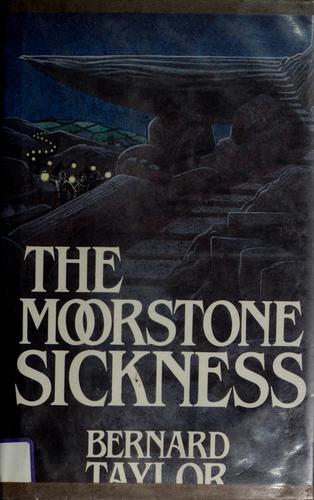
The Moorstone Sickness
Bernard Taylor · 1982
New Community Moorstone, an isolated English village
Best For A compact bridge between quiet Gothic horror and folk horror
Why it belongs here The village does not merely hide its secret from outsiders; it recruits outsiders through the promise of recovery.
Know before you start Child loss is the emotional foundation of the story.
After the death of their young son, Hal and Rowan Graham leave London and search for a place where grief might loosen its grip. Moorstone appears almost providential: attractive, peaceful, inexpensive, and unusually welcoming. The villagers are healthy, courteous, and eager to help. Their perfection is the first warning.
Bernard Taylor understands that hospitality can become coercive without anyone raising a voice. The Grahams are vulnerable because the village seems to anticipate their needs. Every kindness reduces the social space in which they might question what they see. The result resembles The Wicker Man stripped of pageantry and compressed into a clean, cold domestic nightmare.
The novel is short, and modern readers may solve its central arrangement before Hal and Rowan do. Characterization is efficient rather than expansive. That economy is also the book's strength: Moorstone has no wasted streets, conversations, or traditions. Everything attractive about it is part of the mechanism.
6
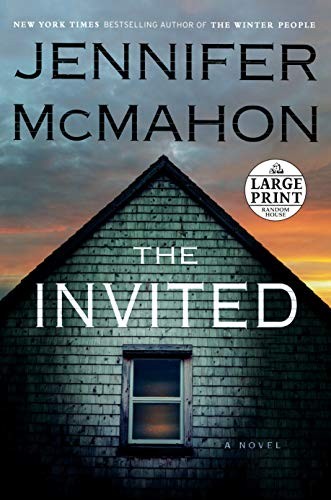
The Invited
Jennifer McMahon · 2019
New Community Rural Vermont
Best For Ghost-story readers who prefer history, investigation, and domestic tension
Why it belongs here The newcomers believe self-sufficiency will protect them, but every reclaimed object binds their private project to local history.
Know before you start This is as much a historical family mystery as a haunted-house novel.
Helen and Nate abandon teaching jobs and suburban predictability to build a house on rural Vermont land. They are not careless buyers who fail to inspect an old property. They begin with the land itself, intending to make a home by hand. Unfortunately, materials can carry history, and Helen's fascination with the local legend of Hattie Breckenridge turns construction into invitation.
The central reversal is excellent: this couple does not move into a haunted house; they assemble one. Around that idea, Jennifer McMahon builds a community divided between gossip, guarded memory, and competing accounts of women once labeled dangerous. Helen's training as a history teacher makes her curiosity credible even when it becomes unwise.
The novel mixes perspectives and mysteries, and its final pattern is more emotionally neat than its eerie beginning suggests. Readers who want relentless terror may find its investigation and family drama too prominent. It works best as a story about the stories a community preserves, and which women are allowed to become legends rather than people.
5
The Ceremonies
T. E. D. Klein · 1984
New Community Gilead, New Jersey
Best For Dense, gradual cosmic horror with a scholarly protagonist
Why it belongs here Jeremy enters Gilead for solitude and discovers that isolation can make a person easier to position inside someone else's ceremony.
Know before you start The pace is patient and the cosmic threat is filtered through extensive literary and religious detail.
Graduate student Jeremy Freirs rents a converted outbuilding on a farm near Gilead so he can spend the summer reading Gothic literature. His landlords belong to an isolated religious community with strict customs and little affection for the modern world. Jeremy considers himself an observer. The ancient presence arranging events considers him material.
T. E. D. Klein makes reading itself dangerous. Jeremy's literary knowledge helps him notice patterns, but it also encourages the comforting belief that patterns are interpretable. Gilead's religious boundaries, the Poroth family's decency, and the outsider's mild condescension create a far more complicated community than a collection of sinister villagers.
At more than five hundred pages, the novel is slow, digressive, and intentionally cumulative. Some readers will prefer Klein's earlier, leaner novella "The Events at Poroth Farm," from which the novel grew. Others will value the extra room: seasonal change, minor disturbances, and social discomfort gather until the supernatural feels less like an intrusion than a buried climate.
4
Those Across the River
Christopher Buehlman · 2011
New Community Whitbrow, Georgia
Best For Southern Gothic, historical guilt, and ferocious creature horror
Why it belongs here Frank does not simply move near a monster. He moves into a community whose survival has long depended on managing it.
Know before you start The book includes racism, wartime trauma, sexual content, and severe violence.
In 1935, former professor and First World War veteran Frank Nichols arrives in Whitbrow with Eudora. He plans to write about the nearby plantation once owned by his brutal ancestor. The town appears poor but companionable, held together by routines that include sending pigs into the woods across the river. When economic pressure ends that practice, the community learns what the ritual was buying.
Christopher Buehlman gives the novel two sources of dread. One is immediate and physical; the other is the inherited violence of the plantation. Frank approaches history as a career he might restore, but Whitbrow lives beside consequences that cannot be made safely academic. The community is neither innocent nor reducible to its bargain.
The sexual descriptions of Eudora can become repetitive, and the treatment of race is filtered through a white protagonist investigating his own family's crimes. The novel is strongest when it refuses the fantasy that exposing a hidden history is the same as repairing it.
3
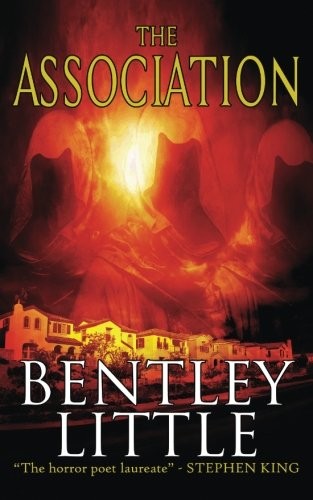
The Association
Bentley Little · 2001
New Community Bonita Vista, a private mountain development
Best For Homeowners-association anxiety pushed into savage satire
Why it belongs here Bonita Vista turns the promise of an orderly community into a total claim over the people who buy into it.
Know before you start This is broad satirical horror with graphic violence, not a restrained neighborhood thriller.
Barry and Maureen think they have found the ideal house in Bonita Vista. The mountain setting offers quiet, beauty, and distance from urban pressure. Then the homeowners association begins enforcing rules. What starts with petty restrictions becomes surveillance, punishment, and a claim that the community owns far more than its shared spaces.
Little's target is recognizable: the private governing body that presents conformity as property protection. The horror works because every absurd demand arrives in administrative language. Neighbors comply not because every resident is secretly evil, but because convenience, fear, and self-interest make collective resistance difficult.
Subtlety is not the method. The association's behavior grows spectacularly cruel, and the symbolism is announced with the force of a violation notice nailed to a door. That excess makes the book cathartic for anyone who has argued over paint colors, lawn height, or covenants, though it can flatten the supporting cast.
2
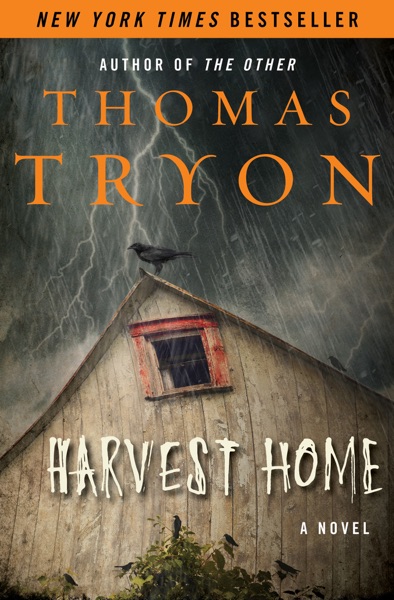
Harvest Home
Thomas Tryon · 1973
New Community Cornwall Coombe, Connecticut
Best For The slow discovery of an American village governed by old rites
Why it belongs here This is the definitive American novel about urban escape becoming submission to a community's agricultural and sexual order.
Know before you start The story includes fertility rites, violence, and a bleak treatment of bodily autonomy.
Ned Constantine moves with his wife and daughter from New York City to Cornwall Coombe, a secluded Connecticut village that appears preserved against modern ugliness. Ned wants to paint. His family wants space and renewal. The villagers offer friendship, shared labor, and the reassuring conviction that their "old ways" give life an order the city has lost.
Thomas Tryon allows that attraction to breathe. Cornwall Coombe is not frightening because its residents glare at strangers. It is frightening because their seasonal life seems meaningful. Ned's investigation begins only after he has become emotionally invested in being accepted, and every answer threatens the pastoral fantasy he helped construct.
The middle is leisurely, Ned can be frustratingly certain of his right to know everything, and the village's gender politics invite more complicated readings than the novel always supplies. Yet the slow pace is essential. The community must feel like a possible home before belonging acquires its price.
1
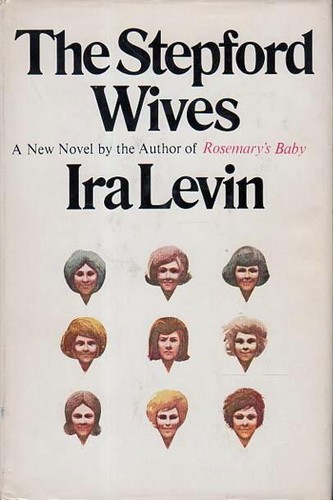
The Stepford Wives
Ira Levin · 1972
New Community Stepford, Connecticut
Best For Concise social horror about conformity, gender, and suburban perfection
Why it ranks first No other book has so permanently defined the horror of moving somewhere perfect and realizing that perfection is an enforcement policy.
Know before you start The famous premise is difficult to avoid, but knowing it does not erase the dread of Joanna's narrowing options.
Photographer Joanna Eberhart moves from New York City to Stepford with her husband Walter and their children. She expects more space and a strong community. Instead, she finds wives who appear consumed by housework, beauty, and obedience, while the town's men preserve a club from which women are excluded. Joanna's attempts to organize and make friends become a way of measuring how thoroughly female independence has disappeared.
Ira Levin's great achievement is compression. The novel does not require occult archives or generations of exposition. A kitchen polished too thoroughly, a conversation without curiosity, and a husband spending more time at the Men's Association are sufficient. Stepford's terror is the conversion of a political desire into a consumer product.
Some elements are unmistakably rooted in early-1970s second-wave feminism, and the book concentrates on white, affluent heterosexual suburbia. That narrowness limits its social map while sharpening its chosen target. The word "Stepford" survived because Levin identified a fantasy of frictionless community that depends on eliminating the person who creates friction.
Which Strange Community Should You Visit?
Start with The Stepford Wives if you want a short classic whose social argument remains sharp. Choose Harvest Home when you want to spend enough time in the village to understand why the newcomers ignore their instincts. The Association is the blunt, cathartic choice for readers whose real-life monster is a covenant committee.
For folk and cosmic horror, choose The Moorstone Sickness for speed or The Ceremonies for immersion. Those Across the River offers the most physical danger, while The Land of Laughs is the best choice for readers who prefer reality to become uncertain one charming detail at a time.
The two newest books approach the old premise from opposite directions. The House of Last Resort uses a real contemporary relocation scheme as its trap. The Invited lets its couple build the trap themselves.
The frightening community is not simply a collection of unfriendly people. It is a place in which everyone else already understands the exchange. The harvest requires something. The association protects something. The beautiful houses were made possible by something. Newcomers see only the benefit because the cost has been normalized into tradition, paperwork, or good manners.
That is why The Stepford Wives remains first. Stepford does not look ancient, impoverished, or cursed. It looks successful. Its nightmare is not that community has failed, but that one group has designed a community that works perfectly for them.