The night shift turns an ordinary workplace into a locked room. The public leaves, the lights become harsher, and every sound from the loading dock acquires a possible intention. A worker may be responsible for an entire hotel, store, ward, or roadside business while the people who wrote the emergency procedures are asleep.
These books use that vulnerability in different ways. Some deliver ghosts and occult monsters. Some are slashers. Others are thrillers in which late work creates the original crime or traps a character with someone dangerous. Several are funny because anyone who has worked nights knows that absurdity arrives long before the demon does.
The selection rule is stricter than "a scary thing happens after dark." Employment or required overnight duty must create the situation. The ranking considers atmosphere, use of workplace detail, quality of the threat, and how well the book captures the peculiar exhaustion of being responsible when almost nobody else is awake.
10
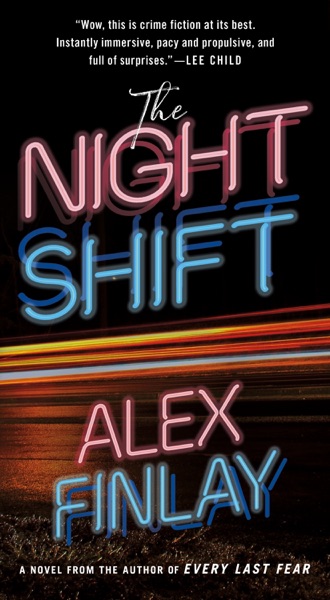
The Night Shift
Alex Finlay
Workplace A Blockbuster Video closing shift and a late-night ice-cream shop
Genre Crime thriller
Best for Readers who want a fast contemporary thriller built around parallel workplace massacres.
Know before you start The book contains graphic violence and trauma, but the majority is investigation rather than on-the-job survival horror.
On New Year's Eve 1999, four teenage employees are attacked after closing a New Jersey video store. One survives. Fifteen years later, another group of young workers is massacred during the night shift at an ice-cream shop, again leaving one survivor. The apparent echo draws together an FBI agent, the brother of the original suspect, and the woman who lived through the first crime.
Alex Finlay uses night work as the opening wound rather than the whole setting. The novel soon becomes a multi-viewpoint investigation concerned with survivors, suspects, and connections between the two attacks. Readers wanting to remain inside a fluorescent workplace until dawn should look higher on the list. What Finlay captures is the risk embedded in closing: young employees, a nearly empty building, cash to count, and the assumption that locking the public out has made the staff safe.
The coincidences accumulate, and seasoned thriller readers may identify parts of the solution before the characters do. The pace is efficient enough to carry the machinery. It belongs here as the most conventional crime option and as a reminder that "night shift horror" does not require anything supernatural.
9
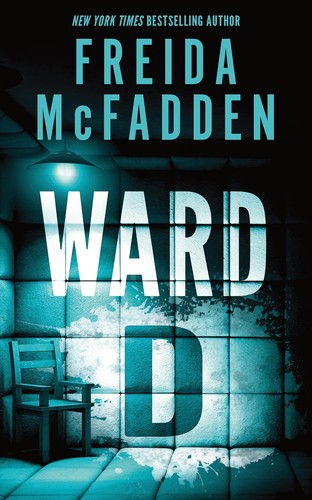
Ward D
Freida McFadden
Workplace An overnight rotation in a locked psychiatric ward
Genre Psychological thriller
Best for Readers who enjoy short chapters, escalating suspicion, and locked-ward thrillers.
Know before you start Do not expect a realistic account of psychiatric medicine, and be prepared for stigmatizing genre conventions.
Medical student Amy Brenner dreads her required night in Ward D. The psychiatric unit is locked, a patient has already warned her to leave, and Amy has personal reasons for finding the assignment unbearable. As the hours pass, staff and patients become difficult to locate, stories stop matching, and the ward's controlled environment begins to feel designed to prevent escape rather than provide safety.
The setup is almost laboratory-pure: one reluctant trainee, one sealed floor, limited authority, and a long interval before daylight. McFadden writes for speed. Chapters end on reversals, suspicion moves rapidly between candidates, and clinical plausibility yields whenever another twist needs space. Readers familiar with her work will know whether that bargain appeals.
The psychiatric setting also deserves a warning beyond plot mechanics. The book uses fear of patients, institutionalization, and mental illness as thriller material. It eventually complicates some assumptions, but not enough to make the representation neutral. As night-shift fiction, it succeeds at the helplessness of being the least powerful worker in a place where every door requires someone else's key.
8
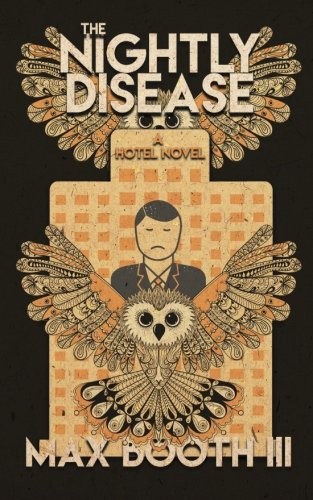
The Nightly Disease
Max Booth III
Workplace A Texas hotel front desk
Genre Surreal horror comedy
Best for Readers who want transgressive workplace horror with authentic hotel-night-auditor frustration.
Know before you start Expect explicit sexual behavior, bodily fluids, misanthropy, gore, and a narrator not designed to be liked.
Isaac is a hotel night auditor who would like eight quiet hours in which guests require nothing and the plumbing remains functional. Instead he encounters hostile customers, repellent bodily messes, dead coworkers, and an increasingly unhinged conspiracy involving owls. The supernatural escalation feels less like an invasion than the final stage of a job that was already eroding his judgment.
Max Booth III drew on his own night-auditing experience, and the ugly service details give the book its authority. Isaac is not a secretly gifted monster hunter. He is exhausted, resentful, sexually inappropriate, and often unpleasant company. His fantasies of revenge blur with events until readers cannot be certain whether the hotel is cursed or its employee has finally become the danger everyone assumed he was.
That abrasive voice is the obstacle. The humor is vulgar, the sexual material is deliberately uncomfortable, and the plot behaves more like a bad shift spiraling into hallucination than a clean supernatural mystery. Readers willing to inhabit Isaac's damaged head will find one of the list's most specific portraits of graveyard-shift alienation.
7

The Night Stockers
Kristopher Triana and Ryan Harding
Workplace Rival grocery stores during an overnight stocking shift
Genre Extreme horror and splatterpunk comedy
Best for Experienced extreme-horror readers who want a fast, deliberately offensive retail slasher.
Know before you start Graphic gore, sexual violence, cruelty, bigotry, and other transgressive material are central rather than incidental.
In 1992, employees of the struggling Freshway grocery store face a new competitor across the road. Workplace resentment, personal grudges, and satanic violence turn the stores into arenas for an after-hours massacre. Box cutters, meat equipment, displays, and inventory become opportunities for elaborately excessive harm.
The title promises night work and the book delivers it, but realism is not the objective. Kristopher Triana and Ryan Harding take retail hostility to cartoon extremes, using the supermarket as a complete practical effects department. The jokes are mean, the gore attempts to surpass the previous scene, and nearly every taboo is available as material.
This is ranked seventh because it fits the search perfectly while serving the narrowest audience. Readers who enjoy splatterpunk may appreciate the competitive invention and anti-corporate energy. Everyone else should treat the content warning as the review. There is no tasteful version waiting beneath the blood. The novel's argument is that retail work already reduces people to replaceable stock; the satanic slaughter simply makes the metaphor visible.
6
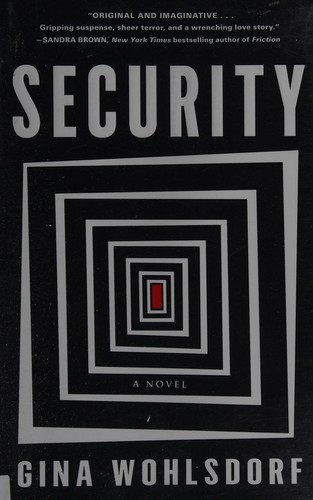
Security
Gina Wohlsdorf
Workplace A luxury hotel preparing for its grand opening
Genre Slasher thriller
Best for Readers who like slashers, surveillance puzzles, and novels that experiment with visual layout.
Know before you start Violence is graphic, and the unconventional presentation may work better in print than in some electronic formats.
The Manderley Resort is supposed to offer perfect security. Twenty-four hours before opening, manager Tessa and a small staff finish preparations while a masked killer moves through the hotel. The reader sees much of the attack through surveillance feeds, often knowing that an employee is in danger while other screens continue to show routine work.
Gina Wohlsdorf turns the page into a control room. Split scenes imitate banks of monitors, and the gap between what cameras record and what people notice produces the suspense. A secure building becomes horrifying precisely because its systems work: violence is visible, documented, and still insufficiently understood to save anyone.
The formal trick is clever but not effortless. Some readers will find the divided layout distancing, and later explanations are less elegant than the visual setup. The employees are preparing overnight rather than performing a normal recurring graveyard shift, so this sits near the edge of the selection rule. It remains a strong workplace slasher because tasks continue beside murders. The hotel cannot distinguish readiness from danger until the person watching the screens decides what the images mean.
5
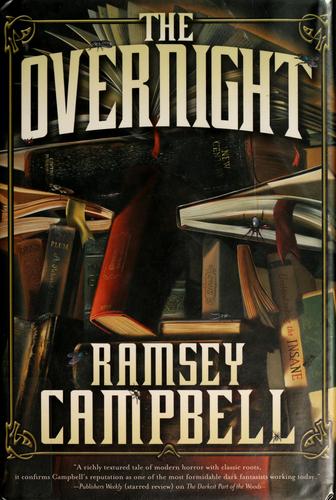
The Overnight
Ramsey Campbell
Workplace A newly opened chain bookstore during an all-night inventory
Genre Atmospheric supernatural horror
Best for Readers who want oppressive atmosphere, haunted retail, and horror that makes ordinary sentences feel unstable.
Know before you start The prose is intentionally oblique, and readers seeking a clean mythology or brisk pace may struggle.
Texts has opened its first British branch on a retail development built over treacherous ground. Books appear damp, computers produce corrupted messages, customers leave strange residues, and fog presses against the store. Manager Woody Blake responds as bad managers often do: he gathers the staff for an overnight inventory before an important inspection.
Ramsey Campbell had worked in a chain bookstore, and his knowledge appears in the petty humiliation of retail targets, forced enthusiasm, and employees trapped between corporate language and physical decay. The haunting does not arrive as a single ghost with a grievance. It seeps into communication, perception, and the store's insistence that every malfunction must have an approved explanation.
The novel is dense, repetitive, and more committed to disorientation than plot. Campbell's sentences make readers share the employees' uncertainty about shapes at the edge of vision; that technique can produce dread or simple frustration. The final all-nighter pays off the workplace premise, but the book takes its time locking the doors. It is the list's best choice for slow contamination rather than rapid attack.
4

The Graveyard Shift
D. M. Guay
Workplace A 24-hour convenience store whose beer cave opens onto Hell
Genre Lovecraftian horror comedy
Best for Readers who want Clerks energy, found family, ridiculous monsters, and a long comic series to continue.
Know before you start Expect indie roughness and deliberately goofy horror rather than sustained fear.
Lloyd Wallace needs a job and accepts the graveyard shift at 24/7 Demon Mart. The store's employee manual is more important than it looks, the beer cave is a gateway, and his coworkers include a formidable woman and a talking cockroach with rock-star confidence. Preventing the end of the world becomes another responsibility omitted from the advertisement.
D. M. Guay understands the comic usefulness of convenience stores. They are always open, stocked with improvised weapons, and visited by customers whose behavior does not require supernatural explanation to become bizarre. The book converts that reality into accessible monster comedy. Lloyd's lack of competence allows the worldbuilding to arrive as training he should have received before being left alone.
The humor is broad, the prose functional, and the chaos sometimes substitutes for escalation. Readers wanting cosmic insignificance may find the Lovecraftian label much darker than the experience. This is a scrappy underdog story with demons, jokes, and an ensemble built for sequels. Its fourth-place ranking reflects how exactly it answers the premise: the graveyard shift is the job, the trap, and eventually the team identity.
3

Tales from the Gas Station: Volume One
Jack Townsend
Workplace A 24-hour gas station at the edge of a strange town
Genre Absurdist supernatural horror comedy
Best for Readers who like internet-born horror, unreliable narration, sarcasm, and weird fiction that keeps turning into friendship.
Know before you start The story continues across four main volumes and several side adventures; this first book does not close every question.
Jack works nights at a gas station where garden gnomes move, raccoons shoplift, corpses appear, and local conspiracies multiply faster than anyone can explain them. He also suffers from a severe sleep disorder, which gives every impossible event a plausible escape hatch: perhaps the station is a center of cosmic disturbance, or perhaps the narrator has not rested enough to recognize reality.
The novel grew from an online serial, and its strength is accumulation. Each new incident sounds like something a bored night clerk would post to entertain strangers, then the fragments begin to form a larger threat. Jack's dry refusal to be impressed protects him from terror and prevents him from responding sensibly. The station becomes a refuge precisely because it is the one place where his impossible life counts as routine.
Serial origins also produce looseness. Episodes repeat a setup, continuity sometimes feels retrofitted, and readers seeking a single disciplined plot may prefer a conventional novel. The voice carries it. Few books capture the night worker's special relationship with regular customers, emergency coffee, and the knowledge that management will not believe the incident report.
2
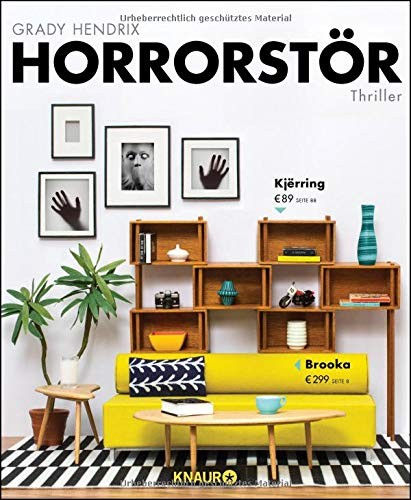
Horrorstör
Grady Hendrix
Workplace An IKEA-like furniture store during overnight surveillance
Genre Haunted-house satire
Best for Readers who want a quick, inventive haunted-house story with retail satire and strong book design.
Know before you start Print conveys the catalog jokes best, and the second half includes confinement, torture imagery, and gore.
Employees at the Orsk store in Cleveland keep finding damaged displays each morning. Three workers agree to remain overnight and document the vandalism before corporate inspectors arrive. The showroom's carefully designed path becomes a maze, the building reveals a history beneath its Scandinavian product names, and the management language of self-improvement takes on punitive force.
The physical book imitates a retail catalog, complete with products that grow more disturbing as the shift deteriorates. That design is not a disposable gimmick. Grady Hendrix connects the store's promise—that every life can be optimized through the correct purchase—to a former prison ideology built around breaking people into productive shapes. The employees are vulnerable because corporate retail has already trained them to mistrust one another and obey the route.
Characters are intentionally broad, and the social satire sometimes states what the haunted merchandise has already shown. The scares are more fun-house direct than psychologically subtle. Still, this is the purest "overnight retail turns into a haunted house" novel on the list. Clocking in creates the closed group, corporate architecture controls movement, and the morning shift feels impossibly far away.
1
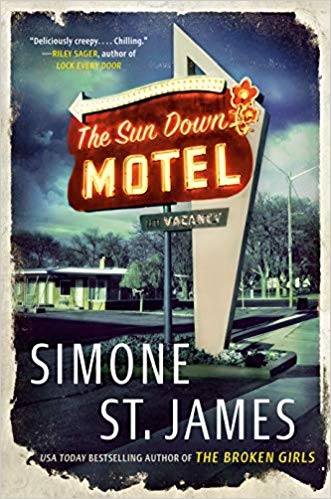
The Sun Down Motel
Simone St. James
Workplace The overnight desk at a roadside motel in Fell, New York
Genre Ghost mystery and thriller
Best for Readers who want an accessible ghost story, dual timelines, true-crime energy, and a satisfying investigation.
Know before you start Themes include serial murder, sexual violence, stalking, and the long aftermath of violence against women.
In 1982, Viv Delaney takes the night-clerk job at the Sun Down Motel and begins noticing doors that open, cigarette smoke with no source, and a guest ledger connected to murdered women. In 2017, her niece Carly accepts the same shift to learn why Viv disappeared. The motel holds both timelines together, preserving violence the town found easier not to solve.
Simone St. James makes front-desk work an investigative position. A night clerk knows who arrives alone, which guest lies about a room, which car returns, and how much danger can cross a lobby before police respond. Viv and Carly are not merely stranded at the motel; the job gives them the observations required to challenge a pattern of ignored crimes.
The two timelines resemble each other closely, and experienced mystery readers may solve the human portion early. The ghosts are less ambiguous than in a pure psychological thriller. Those choices create clarity rather than subtlety, but they also give the victims a presence beyond evidence. The novel ranks first because it joins labor, haunting, and investigation completely. The night shift exposes both the supernatural activity and the social habit that allowed a predator to operate.
Which Shift Should You Take?
Choose The Sun Down Motel for the most balanced mixture of ghosts, crime, and character. Choose Horrorstör when retail architecture itself should become the monster. The Overnight is slower and stranger; Security is faster, bloodier, and visually experimental.
For comedy, decide how much abrasion you want. The Graveyard Shift is the friendliest entry, Tales from the Gas Station is weirder and more serialized, and The Nightly Disease is aggressively adult and misanthropic. The Night Stockers is a separate intensity category and should be approached only by readers actively seeking extreme horror. Thriller readers can begin safely with The Night Shift or Ward D.
Night work frightens because responsibility and support move in opposite directions. The worker is expected to protect the building, balance the register, monitor the patient, or greet the guest. At the same time, fewer witnesses are present, supervisors are remote, and fatigue makes perception negotiable.
The Sun Down Motel ranks first because the job does more than isolate its heroines. It teaches them to see. The motel ledger, recurring cars, room keys, and habits of guests become an archive of crimes that daylight society ignored. In the best night-shift horror, staying awake is not enough. The worker must decide what deserves to be noticed before morning makes everything look ordinary again.