Apple TV's The Studio understands Hollywood as a workplace where everyone speaks reverently about art while checking whether reverence can survive the quarterly meeting. Seth Rogen plays Matt Remick, the new head of Continental Studios, a genuine movie lover promoted into a job that requires him to flatter talent, obey corporate mandates, survive public embarrassment, and approve films he may privately despise. The series premiered in March 2025 and was renewed for a second season.
Hollywood satire works best when it does not pretend executives are the only phonies in the room. Directors want freedom and enormous budgets. Actors want authenticity and flattering light. Writers want integrity and a sale. Assistants learn to translate panic into scheduling language. The business produces real beauty through systems that often seem designed to humiliate everyone involved.
This ranking favors novels about studio machinery, ambition, compromised taste, public performance, and the strange labor of turning private ideas into expensive mass entertainment. Some are savage comedies; others are elegies for people who believed they could control the dream factory. Each recognizes the central joke of The Studio: loving movies may be the least useful qualification for making them.
Selection note. The ranking rewards access to Hollywood's decision-making rooms, especially stories where taste collides with money, status, and fear. Several books broaden the view to performers or crew because studio power is clearest when seen by the people who must live with its choices.
10
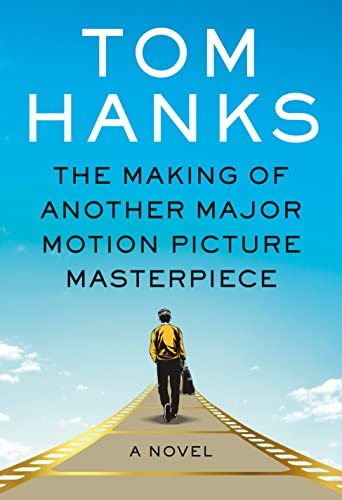
The Making of Another Major Motion Picture Masterpiece
Tom Hanks · 2023
Production crisis A giant superhero film tries to convert one obscure comic, hundreds of workers, and a temperamental star into a coherent release
Closest The Studio connection Movie production appears as organized panic sustained by professionals who solve problems executives barely notice
Main difference A generous ensemble tribute to filmmaking rather than a ruthless satire of studio leadership
Best for Readers who want an accessible production novel, behind-the-scenes detail, multiple generations, crew competence, and affection for old comics.
Hanks traces a fictional blockbuster from a soldier's wartime experience to his nephew's 1970s comic and, decades later, a costly adaptation. The narrative spends time with the director, producer, actors, assistants, drivers, craftspeople, and technicians whose coordinated labor makes a manufactured miracle possible.
The comedy comes from scale and incompatibility: an actor's ego can derail a day planned down to the minute, while a seemingly minor crew decision saves the production. It ranks tenth because Hanks admires the machine more than he attacks it, but that affection makes a useful companion to Matt Remick's sincere love of movies.
Know before you start. The structure is expansive, includes screenplay and comic-book elements, and spends more time on process than on a single driving plot.
9
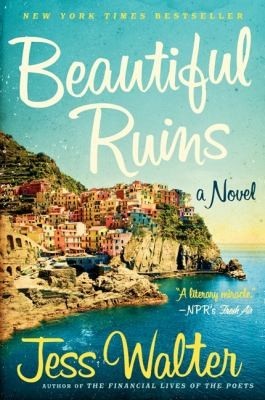
Beautiful Ruins
Jess Walter · 2012
Production crisis An old secret from a disastrous 1960s epic resurfaces in the office of a legendary producer and his disillusioned assistant
Closest The Studio connection Hollywood turns every sincere life into potential material while executives mistake owning a story for understanding it
Main difference A romantic, time-spanning ensemble balances satire with melancholy and tenderness
Best for Readers who want Hollywood history, Italy, interlocking lives, bittersweet romance, and satire that retains compassion for nearly everyone.
In 1962, an American actress arrives at a tiny Italian hotel during the production of Cleopatra. Fifty years later, an elderly innkeeper appears at a producer's office looking for the woman he once knew. Walter moves among actors, writers, pitch meetings, Edinburgh, Seattle, and the Italian coast as old compromises acquire new consequences.
The book is sharpest in the contemporary development office, where assistants listen to terrible pitches and a producer converts regret into brand management. Yet Walter allows movies to create meaningful accidents even when the industry behaves badly. It ranks ninth because studio politics share space with a broader romantic mosaic.
Know before you start. The novel includes infidelity, addiction, illness, death, exploitation, and a nonlinear structure with several tonal shifts.
8
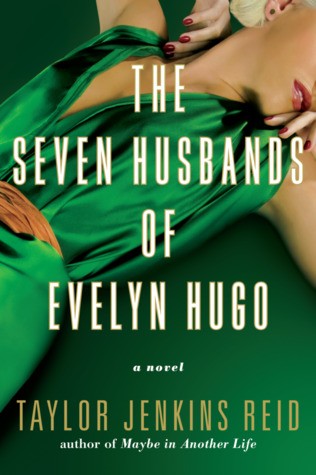
The Seven Husbands of Evelyn Hugo
Taylor Jenkins Reid · 2017
Production crisis A retired star reveals how publicity, contracts, studio control, and calculated marriages manufactured her screen identity
Closest The Studio connection Every public narrative is a collaboration between art, commerce, ambition, and people protecting what cannot be marketed safely
Main difference The performer controls the retrospective, while executives usually remain offstage as a system of pressure
Best for Readers who want an addictive celebrity confession, queer romance, Old Hollywood, ambition, secrets, and morally complicated self-invention.
Evelyn Hugo chooses an obscure journalist, Monique Grant, to write her authorized life story. Her account moves through studio-era Hollywood, seven marriages, a concealed great love, and the choices required of a bisexual Cuban American woman determined to become powerful in an industry eager to define her.
Reid treats publicity as creative labor with moral consequences. Evelyn can manipulate the machine because she understands what audiences and executives want, but control never makes the bargains painless. It ranks eighth because it is less comic than The Studio, yet it reveals the human lives hidden beneath the narratives a studio sells.
Know before you start. The novel includes domestic abuse, homophobia, racism, bereavement, alcoholism, infidelity, suicide, and a significant late revelation.
7
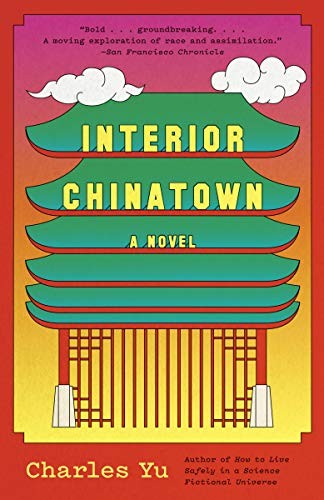
Interior Chinatown
Charles Yu · 2020
Production crisis An Asian American actor remains trapped in generic roles inside a police procedural that may also be the structure of his reality
Closest The Studio connection Industry language turns people into functions, allowing executives and audiences to call exclusion a storytelling necessity
Main difference A screenplay-shaped literary experiment focuses on representation rather than studio administration
Best for Readers who want formal invention, media criticism, Asian American family history, absurd humor, and a short novel with a strong argument.
Willis Wu aspires to become Kung Fu Guy, the highest role available to someone who usually plays Background Oriental Male or Generic Asian Man. He moves through the sets, family histories, and social rules of the procedural Black and White, gradually recognizing that success within the hierarchy may preserve the hierarchy itself.
Yu's format exposes how production categories become ways of thinking. A call sheet can determine who gets interiority; a supposedly neutral genre can make whiteness the condition of being a protagonist. It ranks seventh because its satire reaches beyond an executive suite to show what development decisions do after they become narrative convention.
Know before you start. The screenplay structure is intentionally disorienting; the book includes racism, stereotyping, family estrangement, death, and historical exclusion.
6
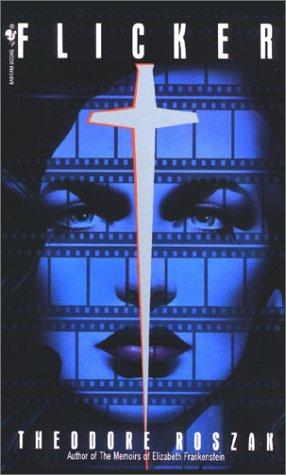
Flicker
Theodore Roszak · 1991
Production crisis A film scholar discovers a forgotten director whose movies may conceal a conspiracy operating through the history of cinema
Closest The Studio connection Cinephilia becomes professional self-destruction when one man's devotion to movies overwhelms ordinary judgment
Main difference A dark conspiracy epic about film history rather than a contemporary workplace comedy
Best for Readers who want film lore, conspiracies, occult history, academic obsession, Los Angeles, and a large novel willing to become increasingly strange.
Jonathan Gates begins watching the films of Max Castle at a fading Los Angeles repertory theater. His fascination grows into scholarship, obsession, and a global search through archives and religious history. Roszak recreates schools, technologies, exploitation pictures, critics, and cult audiences with enough detail to make an invented filmography feel dangerously real.
The satire targets the need to believe movies matter absolutely. Matt Remick compromises himself because he loves cinema; Jonathan risks himself because he wants cinema to contain a secret order. It ranks sixth for turning the dream factory into a paranoid religion whose executives, critics, and fans all claim privileged access to revelation.
Know before you start. The book includes sexual exploitation, misogyny, violence, religious conspiracy, period stereotypes, and a long, digressive structure.
5
The Last Tycoon
F. Scott Fitzgerald · 1941, posthumously
Production crisis A brilliant studio executive attempts to control films, labor, romance, and his own failing body during Hollywood's factory era
Closest The Studio connection The studio head must translate between artists and owners while pretending that impossible judgment comes naturally
Main difference An unfinished, tragic portrait of classical Hollywood rather than a completed modern satire
Best for Readers interested in studio-era power, producer mythology, Fitzgerald's late style, doomed romance, and the history behind Hollywood's executive archetype.
Monroe Stahr is a producer modeled partly on Irving Thalberg, a man whose intuitive command of production makes him seem indispensable. Narrated largely by Cecilia Brady, the daughter of his business rival, the novel follows Stahr through earthquakes, writers' rooms, labor conflict, and an affair shadowed by grief.
Fitzgerald sees the executive as both artist and industrial manager. Stahr can diagnose a scene, calm a set, and understand an audience, but his authority depends on systems and bodies that cannot remain under control. It ranks fifth because its melancholy gives The Studio's comic dilemmas historical depth.
Know before you start. The novel is unfinished and reconstructed from notes; it includes antisemitic attitudes in period characters, labor conflict, illness, grief, and death.
4
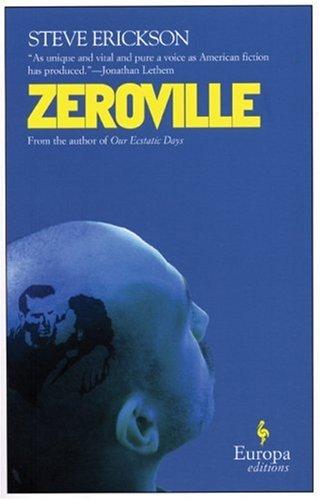
Zeroville
Steve Erickson · 2007
Production crisis A film-obsessed outsider enters Hollywood in 1969 and becomes an editor while the studio system gives way to a more chaotic era
Closest The Studio connection Devotion to cinema collides with an industry whose decisions are arbitrary, commercial, and occasionally transcendent
Main difference A surreal pilgrimage follows an eccentric craftsman rather than an executive attempting to run a studio
Best for Readers who want New Hollywood, editing, cinephile references, dream logic, eccentric characters, and a novel structured like a cut-up film history.
Vikar arrives in Los Angeles with Montgomery Clift and Elizabeth Taylor tattooed on his shaved head. He moves through parties, sets, editing rooms, and the turbulent transition into New Hollywood. His gift for montage leads to professional success, but his belief that a hidden film exists inside all films pushes the story toward mystery and metaphysics.
Erickson captures a business in which pretension and genuine vision cannot be neatly separated. Absurd people sometimes create beautiful work; sensible decisions can produce lifeless images. It ranks fourth because Vikar's outsider gaze reveals the irrational ecosystem Matt Remick is trying to manage from the top.
Know before you start. The chronology is fractured and surreal; the book includes cult behavior, violence, sexual exploitation, death, and dense references to cinema.
3
The Day of the Locust
Nathanael West · 1939
Production crisis Artists, extras, hopefuls, and spectators gather around a Hollywood that sells dreams while leaving most people bored and furious
Closest The Studio connection Entertainment depends on a reservoir of humiliation that polished publicity can never entirely conceal
Main difference A bleak social apocalypse with almost none of the affectionate workplace camaraderie of the series
Best for Readers who want a short American classic, corrosive satire, Depression-era Hollywood, grotesque characters, and an unforgettable ending.
Tod Hackett works as a studio artist while planning a painting called The Burning of Los Angeles. He becomes entangled with aspiring actress Faye Greener, awkward Homer Simpson, and a community of people drawn west by promises the industry has no intention of fulfilling. Their frustrations accumulate beneath theatrical surfaces.
West's Hollywood is grotesque because performance has escaped the set. Houses imitate other places, funerals become spectacles, and spectators feel cheated by lives that cannot match advertising. It ranks third as the most merciless novel here, a warning about the audience anger beneath the comic crises of production.
Know before you start. The novel includes racism, misogyny, sexual violence, animal cruelty, mob violence, and dehumanizing period language.
2
What Makes Sammy Run?
Budd Schulberg · 1941
Production crisis A ruthless copy boy steals, lies, and climbs from a newspaper office into Hollywood power faster than anyone can stop admiring him
Closest The Studio connection Advancement rewards the person most willing to treat art, friendship, and loyalty as negotiable assets
Main difference Sammy Glick feels almost no conflict about his compromises; the narrator supplies the conscience Sammy lacks
Best for Readers who want rapid dialogue, show-business history, naked ambition, moral disgust mixed with fascination, and the classic Hollywood climber.
Screenwriter Al Manheim watches Sammy transform other people's work into his own opportunity. Sammy's energy is undeniable, his betrayals routine, and his ascent perfectly adapted to institutions that condemn his methods while benefiting from them. Al's fascination becomes part of the indictment: he wants to understand the monster because the monster keeps winning.
The novel remains potent whenever The Studio asks whether decent instincts are an executive handicap. Matt agonizes over choices Sammy would make before breakfast. It ranks second because it turns careerism into a complete worldview and refuses the comfort of blaming one uniquely bad workplace.
Know before you start. The book contains antisemitic and sexist language, ethnic stereotypes, exploitation, suicide, and social assumptions rooted in its period.
1
The Player
Michael Tolkin · 1988
Production crisis A studio executive receiving anonymous threats becomes convinced a rejected writer intends to kill him
Closest The Studio connection A frightened decision-maker navigates pitches, office alliances, corporate surveillance, and the gap between loving movies and approving them
Main difference The comedy is colder, the protagonist more culpable, and the consequences openly criminal
Best for Readers who want the closest studio-executive match, black comedy, pitch-room absurdity, Los Angeles paranoia, and a compact moral nightmare.
Griffin Mill decides which screenplays advance and which writers remain outside the gate. When threatening postcards arrive, he searches his memory for the rejected writer responsible—a difficult task because rejection is the bulk of his job. His attempt to regain control pulls violence, romance, and career maneuvering into the same development logic.
It ranks first because Tolkin places the executive's terror inside the ordinary systems of Hollywood employment. Meetings continue. Pitches reduce human experience to marketable hooks. Colleagues read crisis as weakness and weakness as opportunity. Griffin's moral collapse feels less like leaving the business than mastering its preferred narrative: eliminate the difficult middle, deliver a satisfying ending, and make sure the right person gets credit.
Know before you start. The novel includes murder, stalking, sexual manipulation, misogyny, workplace coercion, and a deliberately unsympathetic protagonist.
Which Hollywood Satire Should You Read First?
Where to start. Choose The Player for the closest match to The Studio: an executive protagonist, constant pitches, fragile status, and comedy generated by people converting fear into professional language. Read What Makes Sammy Run? for the purest portrait of careerist ambition, or The Day of the Locust for Hollywood at its most bitter and apocalyptic.
Start with The Making of Another Major Motion Picture Masterpiece if the series' affection for competent crews matters more than its executive panic. Beautiful Ruins and The Seven Husbands of Evelyn Hugo are the most emotionally generous choices. Interior Chinatown is the sharpest examination of representation and the roles an industry permits people to occupy.
For cinephile obsession, choose Zeroville or Flicker. The Last Tycoon remains essential for understanding the almost mystical authority later Hollywood stories grant the producer who can supposedly balance art and business through taste alone.
Hollywood novels keep returning to the executive because the position concentrates the industry's contradictions. The executive has power but answers to greater power, praises originality but needs predictability, and claims to protect artists while calculating whether their work can survive a release calendar. Panic is not an interruption of the job. Panic is the job performed behind a closed office door.
The Player ranks first because it turns that contradiction into a complete moral system. Griffin Mill evaluates threats, relationships, and violence as though they were screenplay problems. The Studio is warmer and more hopeful about the people inside the machine, but both recognize that the industry's most dangerous talent is its ability to make every compromise sound like a note for the good of the picture.