Small-town horror usually depends on a map. There is the road nobody takes after dark, the house children dare one another to approach, the church family, the old crime, and the adult who knows more than he admits. First-person narration replaces that map with a memory. Readers do not simply enter the town; they inherit one person's way of explaining it.
That distinction matters. An adult recalling a childhood summer can announce the survivor without explaining the survival. A newcomer can mistake exclusion for eccentricity. A lifelong resident can recognize every name and still misunderstand the community. First person makes local knowledge intimate but never complete.
Every ranked novel below is substantially narrated in first person and places a small town, village, or close rural community at the center of its horror. A few use alternating narrators or brief shifts, which are identified rather than quietly treated as exceptions.
10
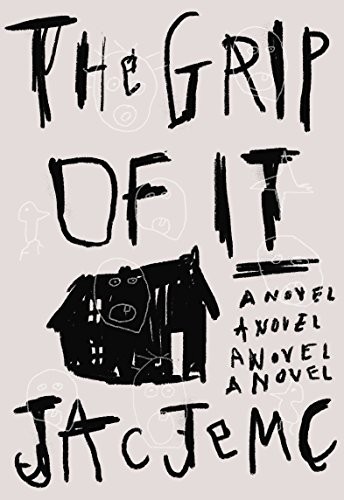
The Grip of It
Jac Jemc · 2017
Narration Alternating first-person accounts by Julie and James
Town An unnamed small community surrounding the couple's new house
Best for Readers who like psychological haunted houses, damaged marriages, and ambiguity that survives the ending.
Know before you start Gambling addiction, self-harm imagery, and bodily deterioration run through the book.
Julie and James leave the city after James's gambling destabilizes their life. Their new house offers the familiar promise of financial and emotional reset. It also contains unexplained stains, hidden spaces, shifting sounds, and a relationship to the strange neighbor whose stories make the property less intelligible rather than more.
Jac Jemc lets the two narrators contaminate each other's testimony. Julie and James notice different evidence, conceal different fears, and cannot determine whether the house is attacking their marriage or their marriage is teaching them how to experience the house. The town outside remains indistinct, which makes every interaction feel like a clue withheld by people who already know the genre of the newcomers' mistake.
The novel is purposefully unresolved. Readers seeking a history of the haunting, a named entity, or a final diagram will find its repetition frustrating. Its achievement is formal: first person usually promises intimacy, but alternating intimacy can make certainty even less available.
9
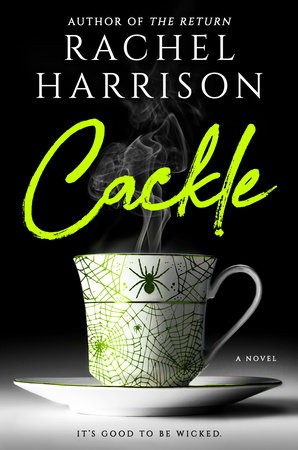
Cackle
Rachel Harrison · 2021
Narration First person by Annie Crane
Town Rowan, an inviting small town in upstate New York
Best for Readers who want autumn atmosphere, female friendship, witchcraft, and a narrator rebuilding her identity.
Know before you start The book balances genuine horror imagery with humor and emotional comfort.
After a breakup, Annie leaves Manhattan for a teaching job in Rowan. She expects loneliness and professional retreat. Instead, she meets Sophie, a beautiful, confident woman who lives in an extraordinary house and appears beloved—or carefully appeased—by everyone in town. Sophie's friendship offers Annie a version of life not organized around winning back the man who left her.
The first-person voice allows Rachel Harrison to make personal reinvention and supernatural seduction almost indistinguishable. Annie's insecurity is funny because she recognizes much of it, painful because recognition has not freed her, and dangerous because Rowan supplies a powerful alternative before she understands its terms.
This is horror with warmth, spiders, wine, and comic social observation. Readers wanting sustained terror may find it too cozy, while readers expecting uncomplicated empowerment will encounter sharper questions about control and dependency. The town's compliance with Sophie is both a running joke and a warning.
8
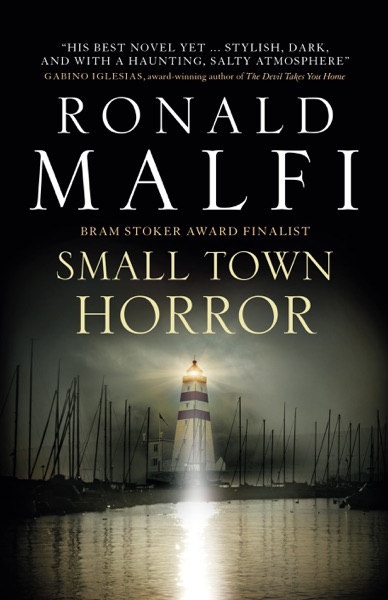
Small Town Horror
Ronald Malfi · 2024
Narration Primarily first person through Andrew Larimer, with additional perspectives
Town Kingsport, Maryland
Best for Readers who like reunion horror, shared guilt, coastal Maryland atmosphere, and supernatural revenge.
Know before you start The story includes child death, infidelity, addiction, and harm reaching across families.
Andrew Larimer has constructed a successful life away from Kingsport when a phone call from an old friend pulls him home. The group he left behind shares responsibility for something that happened when they were teenagers. Now consequences appear to be reaching into their adult lives, and the town offers no clean boundary between haunting, guilt, and retaliation.
Ronald Malfi uses first person to show how a person edits his hometown after leaving it. Andrew remembers streets, friends, and class divisions while resisting the event that organizes all those memories. The return gives every ordinary landmark a double exposure: what it meant before the secret and what it means now.
The novel's title is almost aggressively generic, and some of its imagery draws from recognizable curse-and-homecoming traditions. Multiple perspectives slightly weaken the claustrophobia promised by a single confessional voice. The emotional mechanics are strong, however, especially when adult success proves to be a structure built around one locked room.
7
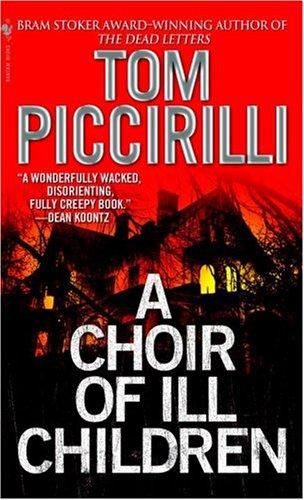
A Choir of Ill Children
Tom Piccirilli · 2003
Narration First person by Thomas
Town Kingdom Come, a decaying Southern community
Best for Readers who want hallucinatory Southern Gothic, family curses, and prose that behaves like weather.
Know before you start Expect sexual violence, disability rendered through Gothic imagery, religious extremity, and deliberate ambiguity.
Thomas cares for his three brothers, conjoined triplets who share an eerie collective presence. He has also inherited a mill and a family position that bind him to Kingdom Come, where preachers, witches, old feuds, illness, and grotesque local personalities gather around a landscape that seems to dream in public.
Tom Piccirilli does not build the town through realistic civic detail. Thomas narrates in a fevered Southern Gothic register, where metaphor may become event without filing the proper paperwork. First person makes the grotesquerie feel inherited. Thomas can leave a room, but he cannot step outside the language Kingdom Come has given him.
The prose is lush to the point of suffocation, women are sometimes rendered through the narrator's sexualized obsession, and the plot refuses the clean causal progression of conventional horror. Readers who need to know which events are literal may struggle. Readers willing to accept atmosphere as a form of knowledge will find one of the stranger town voices in modern horror.
6
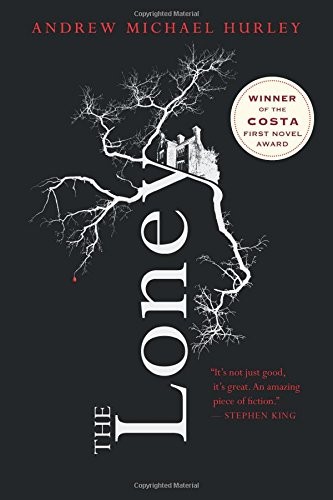
The Loney
Andrew Michael Hurley · 2014
Narration An unnamed man recalling his childhood
Community A remote Lancashire coast and a Catholic pilgrimage group
Best for Readers who prefer literary dread, religious tension, unreliable memory, and bleak coastal landscapes.
Know before you start The novel includes ableism, coercive attempts at healing, animal harm, and harm to children.
The narrator remembers traveling with his parents, his mute brother Hanny, their priest, and other parishioners to an isolated stretch of coast known as the Loney. The adults hope sacred water and devotion will cure Hanny. The landscape offers older stories, hostile residents, a discovered body, and forms of belief that do not fit safely inside the group's Catholic explanations.
Andrew Michael Hurley uses retrospective first person with exceptional control. The adult narrator knows an outcome that the boy cannot yet interpret, but he protects parts of the memory from both the reader and himself. Weather, mud, tides, abandoned buildings, and embarrassed family rituals accumulate until dread feels geological.
The book is slow and guarded. Readers who expect the explicit mechanisms of folk horror may find the climax too oblique. It is less interested in proving which faith is true than in asking what a family might accept as a miracle when love and desperation have become the same force.
5
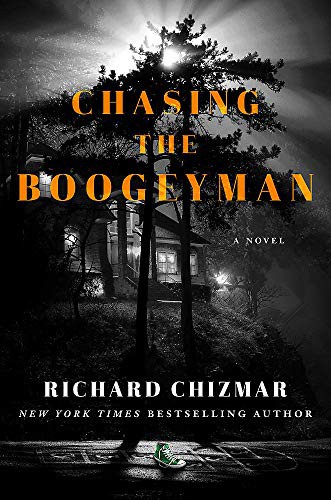
Chasing the Boogeyman
Richard Chizmar · 2021
Narration First person by a fictionalized Richard Chizmar
Town Edgewood, Maryland
Best for Readers who want small-town serial-killer horror presented as an illustrated memoir.
Know before you start This is fiction. The photographs and autobiographical details are deliberately used to blur that boundary.
In the summer of 1988, a young writer named Richard Chizmar returns to his parents' home in Edgewood just as girls begin disappearing and dying. The book presents his involvement through memoir-like narration, photographs, documentary material, and retrospective interviews, creating the impression of a true-crime account despite being a novel.
The first-person strategy turns familiarity into evidence. Richard knows shortcuts, families, schools, and neighborhood rhythms, so the killer's presence feels like a violation of a complete personal map. At the same time, the adult narrator can arrange memory with the authority of nonfiction. Readers must decide how much confidence that format deserves.
The simulation is extremely effective, though it produces an ethical unease: invented victims are framed with the textures of real suffering, and the marketing-adjacent true-crime sensation can feel exploitative. The final movement also becomes more conventional than the documentary spell suggests. As a study of how a town manufactures its "boogeyman," it remains gripping.
4
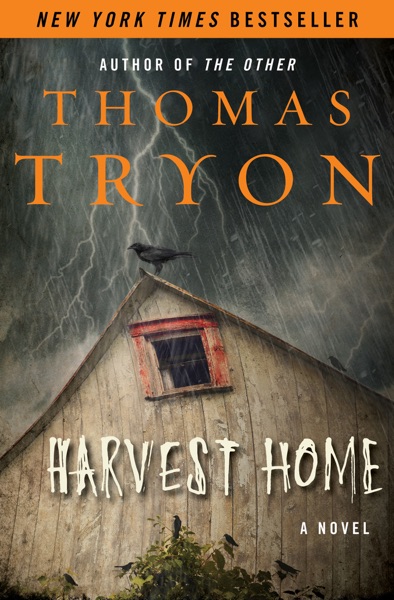
Harvest Home
Thomas Tryon · 1973
Narration First person by Ned Constantine
Town Cornwall Coombe, Connecticut
Best for Readers who want a classic village conspiracy, seasonal ritual, and a narrator whose certainty helps trap him.
Know before you start The book includes sexual rites, violence, reproductive coercion, and a famously bleak conclusion.
Ned moves from New York City to Cornwall Coombe with his wife and daughter, hoping to paint and participate in a slower rural life. The village's agricultural calendar, gendered traditions, local healer, and resistance to modern intrusion fascinate him. His desire to belong gradually changes into the conviction that belonging has allowed him to demand answers.
First person makes Ned both guide and problem. He notices secrecy accurately but interprets almost everything through his own entitlement. The village may be manipulating him, yet his family does not always experience Cornwall Coombe as he does. His investigation becomes a collision between genuine danger and the assumption that the outsider's curiosity has moral priority.
Thomas Tryon's pace is patient, sometimes excessively so, and the novel's treatment of women and fertility is designed to disturb rather than reassure. Its influence on American folk horror is deserved. Few narrators make the movement from enchanted newcomer to isolated dissenter feel so gradual.
3
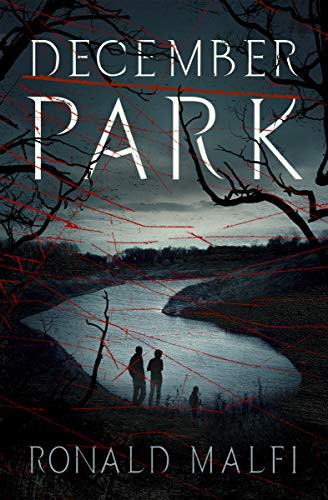
December Park
Ronald Malfi · 2014
Narration First person by Angelo Mazzone, remembering adolescence
Town Harting Farms, Maryland
Best for Readers who want a slow 1990s coming-of-age mystery with winter atmosphere and a strong friend group.
Know before you start The story includes missing children, murder, domestic instability, bullying, and grief.
In 1993, children are disappearing around Harting Farms. Residents call the unknown predator the Piper, while fifteen-year-old Angelo and his friends begin an investigation shaped by rumor, trespassing, loyalty, and the thrilling belief that they can see connections adults have missed. The adult Angelo tells the story with the knowledge that their search will end childhood whether or not it catches a killer.
The Stephen King comparison is unavoidable, but Ronald Malfi gives the novel its own melancholy rhythm. Winter replaces the usual endless summer. The friends' freedom is already narrowing, and every clue competes with family instability, school violence, and their changing relationships. Angelo's retrospective voice turns ordinary afternoons into artifacts.
The length can feel indulgent, and certain coming-of-age beats arrive in familiar shapes. Horror readers should also expect a mystery whose human resolution matters more than supernatural spectacle. The novel succeeds because the Piper is not the only thing taking children from Harting Farms; time is doing the same work without needing a mask.
2
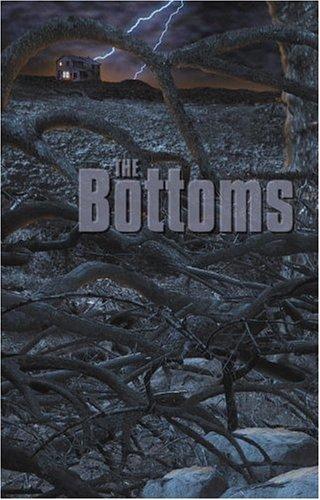
The Bottoms
Joe R. Lansdale · 2000
Narration Elderly Harry Collins recalling his childhood
Town The East Texas community of Marvel Creek during the Great Depression
Best for Readers who want Southern Gothic mystery, a morally serious father-son story, and horror grounded in American racism.
Know before you start The book contains lynching, racial slurs, sexual violence, child endangerment, and murder.
Young Harry discovers a murdered Black woman in the river bottoms. More bodies follow, while local stories blame the Goat Man and white authorities show little interest in justice for Black victims. Harry's father, the community constable, investigates despite social pressure and the threat of racial violence.
Joe R. Lansdale uses a child's perspective without pretending childhood is innocent. Harry understands local stories before he understands the systems that make those stories convenient. The Goat Man may be frightening, but the legend also provides cover for a human killer and for a community willing to decide whose death counts.
The mystery uses period vernacular and graphic racist language. Some characters risk dividing too cleanly into enlightened and monstrous roles, and the adult retrospective voice occasionally gives young Harry more narrative polish than strict realism would allow. The novel nevertheless binds folklore, crime, and historical terror with unusual force.
1
Boy's Life
Robert McCammon · 1991
Narration Adult Cory Mackenson recalling his twelfth year
Town Zephyr, Alabama, in 1964
Why it ranks first It is the fullest first-person portrait of a small town as a place where horror, memory, community, and imagination occupy the same streets.
Know before you start The novel includes racism, animal death, child danger, and violence, but its dominant emotional register is humane rather than nihilistic.
Cory accompanies his milkman father on a morning route when a car plunges into Saxon's Lake. His father attempts a rescue and finds a murdered man handcuffed to the steering wheel. That unsolved death runs through a year containing school bullies, local eccentrics, racial injustice, dinosaurs, floods, moonlit bicycles, and wonders that may be literal because childhood has not yet agreed to separate metaphor from fact.
Robert McCammon gives Zephyr the density of a remembered universe. Cory's first-person voice can hold murder and magic without forcing one to invalidate the other. The town contains cruelty, but it also contains people whose goodness is not merely preparation for tragedy. That emotional range separates the novel from small-town horror that mistakes relentless misery for depth.
The book is long, sentimental, and episodic. Its nostalgic treatment of boyhood occasionally smooths the period even as the story confronts racism and violence. Readers wanting a concentrated horror plot may be surprised by how much space goes to wonder. That generosity is the point: the murder matters because Zephyr feels larger than the murder.
Which Town Should You Enter?
Choose Boy's Life for the broadest emotional experience: murder mystery, horror, magical realism, and affection for a town capable of failure. Choose The Bottoms when you want the local legend exposed against historical violence. December Park is the best modern option for a friend-group investigation and remembered adolescence.
For folk horror, read Harvest Home if you want the outsider's increasingly desperate account or The Loney if you prefer implication and religious uncertainty. Chasing the Boogeyman is the choice for true-crime readers, while Cackle offers the list's warmest and funniest reinvention of small-town menace.
Third-person small-town horror can show every locked door. First person shows why the narrator did not try the handle. Shame, nostalgia, loyalty, childhood misunderstanding, and the desire to belong become part of the evidence.
Boy's Life ranks first because Cory's voice does not reduce Zephyr to either idyll or nightmare. A town can fail its children and still give them wonder; it can hide a murderer and still contain people worth remembering. That contradiction makes the horror more painful and the memory more convincing.