Occult detective fiction is built on a productive contradiction. A detective is supposed to make the world legible; the occult exists because some knowledge remains hidden. Put the investigation in first person and the tension becomes even sharper. Readers receive every clue through a mind that may be funny, frightened, compromised, or catastrophically confident.
This list is for readers who specifically want that voice. Plenty of excellent supernatural investigators—Charlie Parker, Repairman Jack, Rachel Morgan, and the agents of The Laundry Files among them—are narrated partly or primarily in third person. They are not included simply because the genre label fits. Every ranked series below gives its principal investigator a sustained first-person narration, even if a later book or occasional interlude changes the pattern.
The ranking considers the quality of the voice, the strength of the investigations, the usefulness of the supernatural rules, and the series' ability to grow beyond repeated monster-of-the-week cases.
10
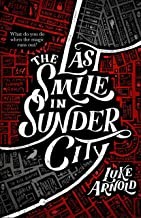
The Fetch Phillips Archives
Luke Arnold
Start With The Last Smile in Sunder City (2020)
Narrator Fetch Phillips, private investigator
Series Status Four novels published; the fourth arrived in 2025
Best for Readers who want fantasy noir with a finite ending and a narrator who is part of the crime scene.
Know before you start The mood is melancholy, and the mystery structure is less important than the consequences of lost magic.
Sunder City was once full of magic. Then the human victory in a catastrophic war broke the source of that magic, leaving supernatural species to survive diminished bodies, altered lifespans, and the collapse of identities built around powers they no longer possess. Fetch Phillips contributed to the disaster. Now he accepts cases only from nonhuman clients, a rule that functions as penance without becoming redemption.
Fetch's voice earns the series a place on this list. He is self-lacerating, observant, alcoholic, and just unreliable enough to turn a missing-person case into an excavation of guilt. The secondary-world setting lets Luke Arnold literalize the usual noir idea that a city has lost its soul: Sunder City can remember exactly when its soul went out.
The investigations sometimes yield ground to flashbacks, and the opening novel spends more time explaining Fetch's responsibility than developing its missing-vampire mystery. Readers wanting tight police procedure may find the emotional history dominant. The reward is a rare occult-detective series in which the supernatural is not returning. It has already been murdered.
9
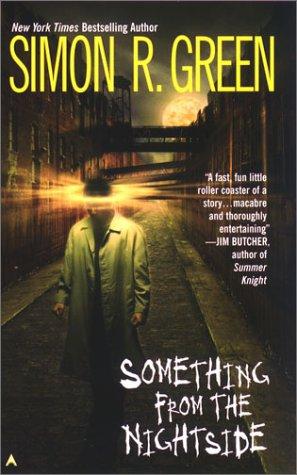
The Nightside
Simon R. Green
Start With Something from the Nightside (2003)
Narrator John Taylor, private eye
Series Status Complete in twelve novels
Best for Readers who want short, fast cases and a hidden world with no restraint.
Know before you start The series favors pulp spectacle and repetition over plausible procedure.
John Taylor can find anything. That gift makes him useful in the Nightside, a secret London where it is always three in the morning and every myth, vice, monster, and bad idea has found commercial premises. His cases begin with recognizable detective objectives—find a missing girl, protect a client, identify a killer—before sprinting through apocalyptic revelations and flamboyant confrontations.
Simon's first-person narration is not subtle. John repeats his credentials, describes impossible beings in capital-letter concepts, and tends to solve problems by revealing that the danger is even larger than advertised. The voice resembles a hard-boiled monologue delivered by someone walking through the world's most overstocked supernatural nightclub.
That excess is either the appeal or the obstacle. Setting often outruns character, threats escalate beyond meaningful scale, and recurring descriptions can become noticeable during a binge. Yet few series deliver such concentrated invention. The Nightside treats occult investigation as permission to put angels, time travelers, urban legends, mad science, and private-eye clichés in the same alley.
8

Twenty Palaces
Harry Connolly
Start With Child of Fire (2009)
Narrator Ray Lilly, expendable assistant and former criminal
Series Status Ongoing, with later books independently published
Best for Readers who prefer ruthless containment operations to witty consultations with friendly ghosts.
Know before you start The books are violent, and the secret organization is often nearly as frightening as its targets.
Ray Lilly works as the "wooden man" for Annalise Powliss, a member of the secretive Twenty Palace Society. The title means he is useful, disposable, and unlikely to understand the full plan. The Society fights predators from outside reality, but its methods often treat witnesses, hosts, and whole communities as acceptable losses.
Ray's first-person perspective is ideal for occult procedure because his ignorance is institutional, not artificial. He knows enough to recognize danger and too little to trust his employers. In Child of Fire, residents of a small town lose even the memory of children consumed by a supernatural threat. The investigation becomes a race against both a predator and the human temptation to use forbidden power.
Harry Connolly makes magic feel dangerous rather than picturesque. Spells are scarce, knowledge is controlled, and victory may mean selecting the least ruinous outcome. The series' publication history is less tidy than a traditionally completed sequence, and readers must be comfortable following it across publishing models. The moral and tactical pressure, however, remains unusually strong.
7
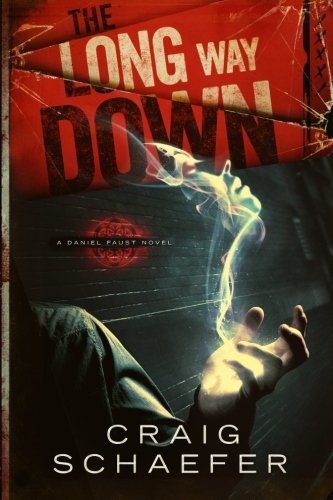
Daniel Faust
Craig Schaefer
Start With The Long Way Down (2014)
Narrator Daniel Faust, Las Vegas sorcerer and con man
Series Status Ongoing within a larger connected universe
Best for Readers who want an investigator comfortable among criminals and willing to win through deception.
Know before you start Publication order becomes important once the wider First Story universe begins crossing over.
Daniel Faust is not a police officer who happens to know magic. He is a career criminal with a talent for sorcery, a private code, and relationships on several sides of the law. When he investigates a young woman's death, Las Vegas opens into demonic contracts, organized crime, rival occult powers, and schemes that continue across multiple series.
The first-person voice distinguishes Daniel from the cleaner heroic investigators. He reads rooms like a grifter, measures favors like a bookkeeper, and understands that information is valuable only if the other party does not know you possess it. His cases therefore involve cons and leverage as often as spellcasting.
The connected-universe architecture is both strength and complication. Long-term readers receive crossovers and large payoffs, but newcomers may eventually feel that a private-eye series has become homework across adjacent books. Early volumes also show their independent-publishing origins in occasional roughness. At its best, though, the series combines noir momentum with careful continuity.
6
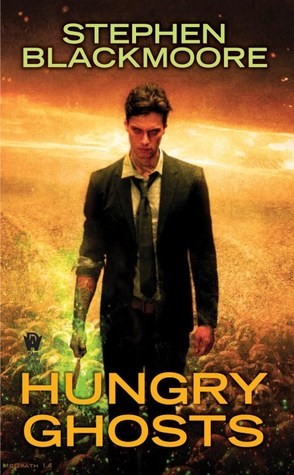
Eric Carter
Stephen Blackmoore
Start With Dead Things (2013)
Narrator Eric Carter, necromancer
Series Status Nine novels published
Best for Readers who want lean supernatural noir, Mexican death mythology, and a narrator with almost no instinct for self-preservation.
Know before you start Expect gore, addiction, grief, and a hero who makes destructive decisions knowingly.
Eric Carter can see and command the dead, which has not improved his personality or his life. After years away from Los Angeles, he returns when his sister is murdered. The homecoming pulls him through ghosts, gang loyalties, death magic, and divine powers with plans that make a bad family reunion seem manageable.
Stephen Blackmoore gives Eric a clipped, profane voice built for momentum. Necromancy is not decorative atmosphere; it changes what evidence means. The dead can be witnesses, dangers, tools, and people whom Eric has failed. Los Angeles feels hot, hostile, and layered with cultures that the series uses more directly than many generic urban-fantasy cities.
Eric's aggression can become monotonous, and the books often move so quickly that emotional consequences receive only the time available between attacks. Readers who dislike self-destructive tough men will not be converted merely because this one speaks to ghosts. The series succeeds by making that abrasiveness part of an accumulating debt rather than a substitute for character.
5
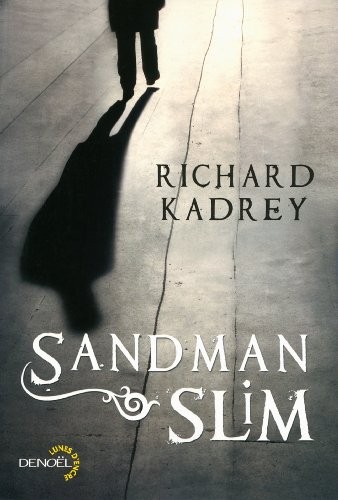
Sandman Slim
Richard Kadrey
Start With Sandman Slim (2009)
Narrator James Stark, magician and escaped gladiator
Series Status Complete in twelve novels
Best for Readers who want hard-boiled occult action, blasphemous cosmology, and a complete long series.
Know before you start Investigation shares the stage with revenge, horror, and large-scale supernatural warfare.
James Stark returns to Los Angeles after eleven years in Hell, where he survived as a gladiator. He wants revenge on the magical circle that sent him there and killed the woman he loved. The opening is closer to an occult revenge thriller than a conventional detective story, but later books repeatedly make Stark investigate supernatural crimes, conspiracies, missing entities, and failures in the machinery of Heaven and Hell.
Stark's first-person voice is the attraction: furious, funny, pop-culture saturated, and allergic to reverence. Richard Kadrey turns cosmology into damaged urban infrastructure. Angels are political, Hell is bureaucratic, and Los Angeles is the only setting vulgar enough to make the arrangement feel natural.
The series changes scope and identity several times, which prevents stagnation but produces uneven volumes. Stark's invulnerability and contempt can reduce suspense, while the relentless one-liners occasionally crowd out grief. Still, the completed arc permits real transformation. The voice that begins as a weapon gradually becomes capable of admitting what revenge cannot repair.
4
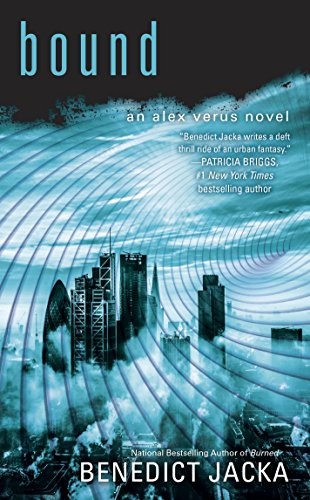
Alex Verus
Benedict Jacka
Start With Fated (2012)
Narrator Alex Verus, probability mage and shopkeeper
Series Status Complete in twelve novels
Best for Readers who enjoy clever magical tactics, faction politics, and a finished character arc.
Know before you start The series becomes more continuous after its early case-shaped installments and should be read in order.
Alex Verus runs a magic shop in London and can see possible futures. He cannot throw fire or crush buildings. He survives by examining branching outcomes, finding the narrow path on which a stronger opponent misses, and understanding what people are likely to choose. When rival factions need access to an ancient relic, his supposedly minor power becomes strategically invaluable.
First person lets Benedict Jacka explain divination without freezing the action. Alex narrates rapid possibility checks as practical reasoning: if he opens one door, speaks one sentence, or reaches for one object, which futures end in death? Investigations become puzzles of positioning rather than contests of magical force.
The early books can look like lighter urban fantasy, and some supporting characters initially occupy familiar roles. The completed series grows darker and more political as Alex discovers that neutrality often protects the most powerful faction. His narration also acquires an important tension: a man who sees choices clearly can become very skilled at justifying his own.
3
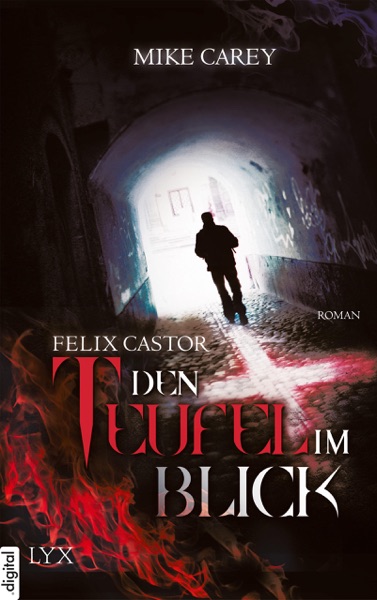
Felix Castor
Mike Carey
Start With The Devil You Know (2006)
Narrator Felix Castor, freelance exorcist
Series Status Five published novels; the larger story remains dormant rather than neatly concluded
Best for Readers who want noir investigation first and urban-fantasy power progression a distant second.
Know before you start The final published volume resolves its immediate case but not every major series question.
In Felix Castor's London, ghosts have become an increasingly visible fact of life. Castor can exorcise them through music, but he has tried to leave the work after a disastrous decision involving his friend Rafi. Financial pressure draws him into one more case at an archive, where a haunting proves inseparable from violence among the living.
Mike Carey offers perhaps the purest occult-detective construction on the list. Castor interviews witnesses, tests stories, follows money, revises hypotheses, and uses supernatural ability as one instrument rather than a universal answer. His first-person voice is weary and funny without concealing how often professional detachment becomes moral evasion.
The world is ethically complicated. Exorcism may destroy a continuing consciousness rather than release it, demons exploit the legal and emotional categories humans create, and a solved case can expose a worse system beneath it. The principal warning is publication status: five excellent novels exist, but readers who require a fully closed long arc should choose another series.
2
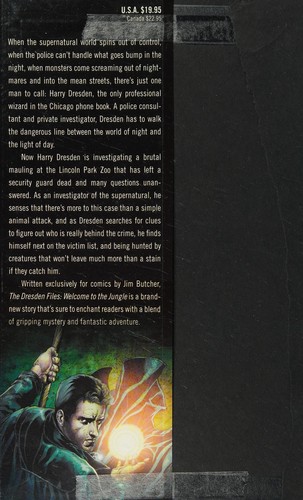
The Dresden Files
Jim Butcher
Start With Storm Front (2000)
Narrator Harry Dresden, professional wizard and private investigator
Series Status Ongoing
Best for Readers who want the foundational wizard-PI series, escalating continuity, and blockbuster magical action.
Know before you start The series is unfinished, and its early gender writing is a common barrier.
Harry Dresden advertises in the Chicago phone book under "Wizards." In Storm Front, police consult him after a double murder appears magically impossible, while another client asks him to locate a missing husband. Those threads establish the series' durable structure: a professional case opens onto Harry's past, supernatural politics, and a threat much larger than the fee.
The first-person narration made Harry the genre's defining voice. He is resourceful, theatrical, self-mocking, stubborn, and capable of explaining magical mechanics while a building burns around him. Long-term continuity turns apparent case details into consequences many books later, and the scale expands from private investigation to war without entirely abandoning mystery.
The qualification is substantial. Early Harry describes women through a dated male-gaze lens and treats chivalry as both virtue and permission. The first two books are rougher than the series at its best. Readers can begin with Storm Front for continuity or sample Dead Beat later if they need evidence of how much the craft develops.
1
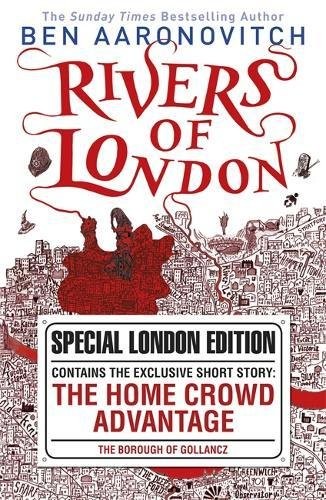
Rivers of London
Ben Aaronovitch
Start With Rivers of London (2011), published in the United States as Midnight Riot
Narrator Peter Grant, Metropolitan Police officer and apprentice wizard
Series Status Ongoing
Best for Readers who want credible police texture, a curious narrator, civic history, and magic embedded in a changing city.
Know before you start The U.K. and U.S. titles of the first novel differ; they are the same book.
Probationary constable Peter Grant takes a witness statement from a ghost after a murder near Covent Garden. That encounter diverts him from an expected administrative posting into the Folly, the Metropolitan Police unit responsible for magic. He becomes both investigator and apprentice, applying scientific curiosity to a tradition whose surviving representative has not felt much pressure to modernize it.
Peter's voice earns the top ranking because it joins character, method, and setting. He notices architecture, demographics, police procedure, jazz, river systems, and whether a supernatural claim can be tested. His humor rarely requires him to be the most impressive person in the room. London is not a backdrop with magical shops added; its buried rivers, migrations, estates, institutions, and jurisdictional arguments generate the cases.
Ben Aaronovitch also allows police work to remain work. Forms, evidence, command structures, community relations, and legal constraints survive contact with magic. The mysteries are not equally tidy, and the larger arc sometimes advances between slower installments. Yet the series has the strongest balance of first-person pleasure and actual investigation on this list.
Which Investigator Should You Hire?
Choose Rivers of London when you want magic to complicate recognizable police work. Choose The Dresden Files for the largest escalation and most influential wizard-PI voice. Felix Castor is the sharpest option if you want every supernatural event treated as a case with witnesses, motives, and moral evidence.
For a completed arc, try Alex Verus, Sandman Slim, or Nightside. They range from tactical magic to infernal action to maximalist hidden-city pulp. Choose The Fetch Phillips Archives for secondary-world grief and a series that has continued beyond its original three-book movement. Readers who want danger without comfort should begin with Twenty Palaces; readers who want criminal ingenuity should choose Daniel Faust.
First person does more than give the occult detective a supply of jokes. It restricts the evidence. Harry Dresden's confidence, Felix Castor's guilt, Alex Verus's calculations, and Fetch Phillips's self-hatred all determine which parts of a case reach the reader cleanly. Solving the mystery therefore means learning how the investigator distorts it.
Rivers of London ranks first because Peter Grant's curiosity works in both directions. He brings modern tests to old magic, but he also allows the supernatural to expose blind spots in modern institutions. His city remains stranger than his explanations, which is exactly where an occult detective series should leave it.