Star Trek: Strange New Worlds began its fourth season on Paramount+ on July 23, 2026—the day this list was researched—and is releasing new episodes weekly. Searches around a live Star Trek premiere are immense, yet results for what to read next are dominated by franchise novels and viewing-order guides. This article targets the less crowded question: which independent novels recreate the intellectual and moral pleasure of an exploratory crew meeting life it does not yet understand?
These books are not merely set in space. Each centers observation, translation, scientific disagreement or the ethics of intervention. Several deliberately challenge a Prime Directive–style rule; others show why restraint exists in the first place. The highest-ranked choices make contact a team problem in which biologists, linguists, diplomats, engineers and religious thinkers perceive different pieces of the same encounter.
The ranking favors discovery joined to responsibility. Optimism helps, but it is not mandatory; some of the finest first-contact novels are tragedies precisely because they expose the cost of good intentions. Official Star Trek tie-ins are excluded so that every recommendation opens a genuinely new universe.
Selection note. Books are ranked for exploratory wonder, credible alien difference, collaborative problem-solving and sustained ethical conflict. Military space opera without meaningful inquiry was excluded.
10
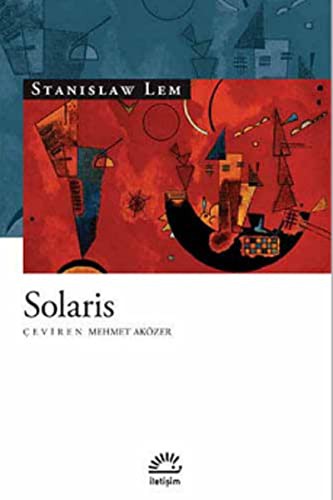
Solaris
Stanisław Lem · 1961
Story engine Researchers orbit a sentient ocean that responds by creating embodied figures from their memories
Closest Star Trek: Strange New Worlds connection A scientific station confronts an intelligence that may be communicating in a form humans are constitutionally unable to interpret
Main difference Philosophical, claustrophobic and intentionally resistant to the mutual understanding promised by Trek
Best for Readers who want philosophical science fiction, psychological haunting and a genuinely unknowable alien.
Psychologist Kris Kelvin arrives at Solaris Station to find its crew disordered and secretive. He soon encounters a physical replica of Harey, a woman whose death has defined his guilt. Similar visitors haunt the other scientists. Decades of Solaris studies have produced vast classifications of the ocean’s forms without establishing whether any human experiment has approached its mind.
Lem dismantles the fantasy that better instruments automatically produce better understanding. The researchers can measure the visitors and theorize about the ocean, but their own shame determines what they see. The station resembles an Enterprise mission after confidence in translation has collapsed. That refusal makes Solaris a productive boundary case: ethical contact begins by admitting that another intelligence may not exist for human comprehension.
The book takes position #10 because it closes the list because it withholds collaborative resolution, not because its encounter is less important.
Know before you start. The novel includes suicide, grief, depression and emotionally disturbing replicas; translations vary significantly.
9

The Book of Strange New Things
Michel Faber · 2014
Story engine A missionary joins a corporate colony to serve an alien community requesting religious instruction
Closest Star Trek: Strange New Worlds connection Language, faith and distance complicate an encounter in which the visitors’ apparent openness may hide basic misunderstanding
Main difference An intimate marriage-and-faith novel whose corporate mission is lonely rather than ensemble-driven
Best for Readers who want literary science fiction, marriage under extreme distance, religion and quiet alien contact.
Peter Leigh leaves his wife Bea on an increasingly unstable Earth to work at a base on Oasis. The native Oasans ask him to teach from what they call the Book of Strange New Things. While Peter becomes absorbed in their needs and in translating scripture, messages from Bea reveal disasters and emotional abandonment he cannot repair from another world.
Faber treats translation as a physical and relational problem. Oasan mouths reshape human sounds; familiar theological words may not carry familiar concepts; the colony’s smooth logistics conceal what its employer chooses not to discuss. Peter’s eagerness to find purpose risks turning contact into self-confirmation. The novel therefore supplies the cautionary underside of Trek’s cultural missions: listening is harder than delivering a message.
The book takes position #9 because it ranks lower because the crew is thin, but its treatment of language and projection is exacting.
Know before you start. The story includes disaster reports, grief, marital collapse, isolation and religious uncertainty.
8
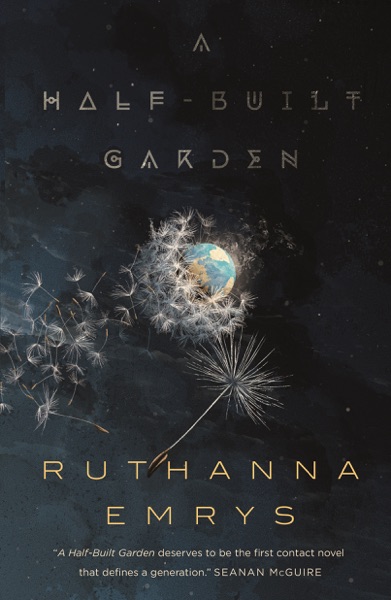
A Half-Built Garden
Ruthanna Emrys · 2022
Story engine Aliens arrive to evacuate humanity from an ecologically damaged Earth that local networks are repairing
Closest Star Trek: Strange New Worlds connection Diplomacy requires translating not just language but incompatible ideas about family, governance and planetary responsibility
Main difference A near-future negotiation novel with dense social world-building and little physical exploration
Best for Readers who want queer families, climate recovery, community governance and extended diplomatic problem-solving.
Judy Wallach-Stevens encounters alien diplomats along the Chesapeake watershed. The visitors believe planetary civilizations must leave their birth worlds or destroy them, while Judy’s decentralized community has evidence that Earth can recover. Corporate remnants pursue their own access to alien technology, turning the meeting into a contest among different human futures as well as species.
Emrys builds contact around the right to refuse rescue. No delegation can honestly speak for all humanity, and the aliens’ apparently generous offer carries assumptions about maturity and ownership. Parenting structures, pronouns, ecological monitoring and meeting procedure become meaningful diplomatic facts. It is Trek at its most conference-room intensive, where patient explanation prevents a superior power from mistaking consensus for convenience.
The book takes position #8 because it most directly examines the politics hidden inside a benevolent first-contact offer.
Know before you start. The book includes ecological crisis, corporate coercion and complex terminology; its pace is discussion-driven.
7
Contact
Carl Sagan · 1985
Story engine A radio astronomer helps decode an extraterrestrial message that contains plans for a machine
Closest Star Trek: Strange New Worlds connection Science, diplomacy, engineering and belief collide around evidence that cannot be owned by one nation or discipline
Main difference Earthbound for much of its length and more interested in institutions than a standing exploratory crew
Best for Readers who want radio astronomy, global politics, philosophical debate and an optimistic standalone.
Ellie Arroway has spent her career listening for intelligence beyond Earth. When a signal from Vega repeats prime numbers and then reveals layered instructions, governments and scientists race to understand it. The resulting machine requires international cooperation while raising questions about who should represent humanity and what counts as proof after an unprecedented journey.
Sagan understands that first contact would be an organizational event as much as a scientific one. Committees, budgets, religious responses and media pressure complicate the signal without making curiosity foolish. Ellie remains an appealing Trek-like professional: skeptical, persistent and capable of awe. The novel’s strongest ethical question is not whether humanity should explore, but who receives authority to define the encounter.
The book takes position #7 because it offers the most accessible bridge between scientific procedure and cosmic wonder.
Know before you start. The novel contains death, sexism, religious conflict and extensive scientific or institutional discussion.
6
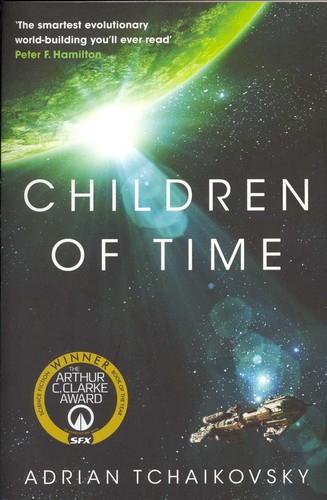
Children of Time
Adrian Tchaikovsky · 2015
Story engine A failed terraforming project accelerates the evolution of intelligent spiders while human survivors seek a new home
Closest Star Trek: Strange New Worlds connection Two civilizations must recognize intelligence across radically different bodies, histories and communication systems
Main difference A centuries-spanning evolutionary epic rather than an episodic crew adventure
Best for Readers who want evolutionary world-building, generation ships, intelligent animals and a large completed story with sequels.
A human ark ship travels toward a terraformed world guarded by the recorded personality of scientist Avrana Kern. On the planet, a nanovirus intended for primates instead lifts generations of spiders into language, technology, religion and social conflict. The human crew deteriorates through repeated awakenings as the two trajectories approach unavoidable contact.
Tchaikovsky earns wonder by building the alien society from sensory and biological premises rather than disguising humans in another shape. Contact is difficult because each side’s reasonable survival plan threatens the other. Scientists, engineers, commanders and artificial minds all propose partial answers. The final movement achieves a Trek-like belief in communication, but only after showing how unlikely it is.
The book takes position #6 because its alien civilization is the most fully imagined on the list.
Know before you start. The book includes arachnids, mass death, war, mutiny and long chronological jumps.
5
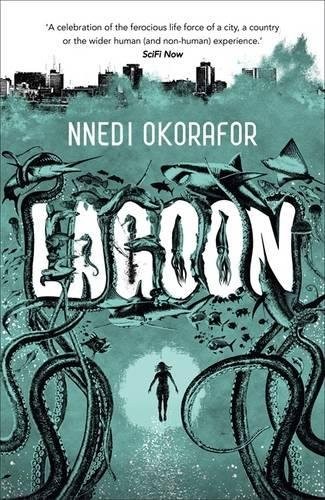
Lagoon
Nnedi Okorafor · 2014
Story engine An alien ambassador arrives in the waters off Lagos and transforms the city’s human and nonhuman life
Closest Star Trek: Strange New Worlds connection Contact becomes a citywide negotiation among scientists, soldiers, artists, animals, spirits and frightened crowds
Main difference Earthbound, polyphonic and mythic, with deliberate chaos instead of a disciplined exploratory crew
Best for Readers who want Nigerian science fiction, many voices, marine transformation, folklore and political energy.
Marine biologist Adaora, soldier Agu and Ghanaian rapper Anthony are on Bar Beach when a wave carries them into an encounter with Ayodele, an alien able to change form. As news spreads, religious leaders, officials, opportunists and sea creatures respond. Lagos itself becomes the contact zone rather than a backdrop for one authorized delegation.
Okorafor refuses to let government or science speak for an entire city. Every observer perceives the arrival through different knowledge, and even the ocean’s animals have claims on the change being offered. Ayodele is powerful enough to inspire hope and panic at once. The result complements Trek by asking how ethical contact can proceed when there is no bridge crew, no neutral meeting room and no single humanity.
The book takes position #5 because it is the strongest community-scale contact novel, even though its structure is intentionally unruly.
Know before you start. The novel includes mob violence, religious extremism, abuse, death and rapid shifts in viewpoint.
4
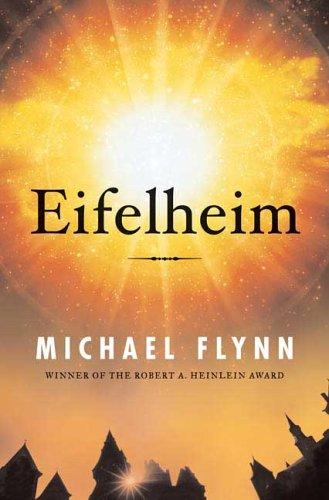
Eifelheim
Michael Flynn · 2006
Story engine An alien ship crashes near a German village during the Black Death
Closest Star Trek: Strange New Worlds connection A learned local priest uses observation, theology and language to encounter strangers without reducing them to monsters
Main difference Historical science fiction split between medieval contact and a modern academic investigation
Best for Readers who want medieval history, theology, physics and an emotionally serious alien relationship.
In 1349, Father Dietrich encounters insectlike aliens stranded outside the village of Oberhochwald as plague approaches. In the present, a historian and physicist investigate why the settlement vanished from later maps. Dietrich’s effort to understand the visitors’ technology and spiritual capacity unfolds alongside the modern attempt to reconstruct an event erased by catastrophe.
The novel creates a convincing first-contact officer without a uniform. Dietrich brings the conceptual tools available to him—Latin, Aristotelian thought, pastoral responsibility—and revises them when evidence demands it. Villagers respond with fear, trade, compassion and opportunism rather than one collective reaction. Flynn’s modern sections make historical interpretation another form of contact across distance.
The book takes position #4 because its fusion of intellectual generosity and cultural limits makes the encounter exceptionally humane.
Know before you start. The story includes plague deaths, religious persecution, xenophobia and grief; its explanatory passages can be dense.
3
The Sparrow
Mary Doria Russell · 1996
Story engine A privately organized Jesuit mission travels to Rakhat after receiving alien music
Closest Star Trek: Strange New Worlds connection Linguists, scientists and friends approach contact with generosity, yet cultural misunderstanding produces catastrophe
Main difference A devastating theological tragedy structured around the broken survivor’s testimony
Best for Readers who want literary first contact, linguistics, faith, friendship and moral aftermath rather than simple adventure.
When radio astronomers detect songs from Alpha Centauri, the Society of Jesus assembles an expedition before governments can act. Priest and linguist Emilio Sandoz travels with friends whose skills range from medicine to engineering. The novel alternates between the hopeful mission and Emilio’s return as its sole known survivor, injured, accused and unwilling to explain what happened.
Russell takes the exploratory ensemble seriously enough to make every loss matter. The team is intelligent, affectionate and careful; disaster does not occur because someone behaves like a disposable horror character. It grows from mistaken assumptions about language, trade, sexuality and social hierarchy. That makes the book a severe but valuable companion to Trek’s confidence that ethical contact is possible when curiosity is joined to institutional power.
The book takes position #3 because it is the list’s most profound examination of good intentions failing across cultures.
Know before you start. The book includes sexual violence, captivity, torture, child death, grief and a deliberately painful nonlinear structure.
2
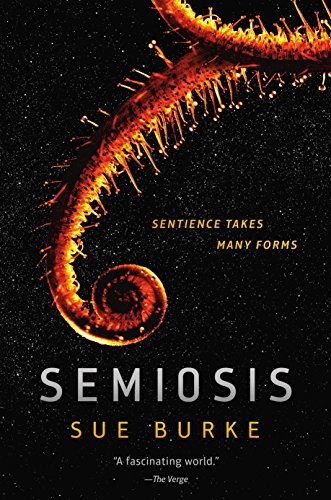
Semiosis
Sue Burke · 2018
Story engine Human colonists on Pax discover that the planet’s dominant intelligence may be botanical
Closest Star Trek: Strange New Worlds connection Survival depends on recognizing personhood in a life-form whose timescale, body and motives do not resemble humanity’s
Main difference A multigenerational colony novel told across decades rather than a continuing starship mission
Best for Readers who want ecological science fiction, colony building, intelligent plants and a completed two-book arc.
Idealists leave Earth to build a peaceful settlement on Pax, only to find that plants manipulate animals and shape the environment around them. Across generations, colonists learn to read patterns in fruit, poison and growth. Their relationship with the intelligent rainbow bamboo Stevland becomes cooperation, dependence and political negotiation at once.
Burke refuses the convenient assumption that first contact begins when humans hear a voice. The settlers must first notice that they are already being observed and managed. Botanists, farmers and later translators contribute different evidence, while Stevland’s viewpoint prevents the humans from owning the interpretation. The result is an unusually material version of contact ethics in which food and shelter can be both gifts and leverage.
The book takes position #2 because it expands first contact into a durable social relationship without sacrificing alien strangeness.
Know before you start. The novel includes violence, death, reproductive pressure and generational conflict; the changing narrators create deliberate distance.
1
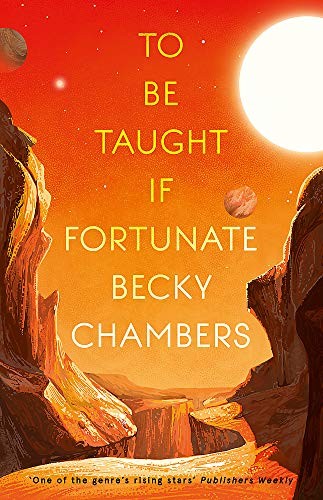
To Be Taught, If Fortunate
Becky Chambers · 2019
Story engine Four astronauts survey exoplanets using technology that adapts their bodies to local conditions
Closest Star Trek: Strange New Worlds connection A small professional crew treats discovery as patient work and repeatedly asks what explorers owe untouched life
Main difference A contemplative novella with no recurring shipboard society, villains or episodic combat
Best for Readers who want humane hard science fiction, queer representation, ecological wonder and a complete story under 200 pages.
Ariadne O’Neill writes home from the Lawki 6 mission, where she and three colleagues study four very different worlds. Somatic alterations prepare them for gravity, radiation and atmosphere, while years pass on Earth. Their observations range from microbial ecologies to enormous creatures, but the mission’s deepest uncertainty becomes whether the people who sent them still possess the will or resources to answer.
Chambers captures the texture of responsible exploration: sample protocols, shared meals, fatigue, delight and the discipline of not turning every discovery into property. The crew members have specialties and disagreements without becoming stock roles. Scientific wonder remains inseparable from consent and funding, making the novella feel like a lost Strange New Worlds episode written for adults who want fewer phasers and more reflection.
The book takes position #1 because it is the purest expression of hopeful, team-based exploration on the list.
Know before you start. The novella includes isolation, grief, uncertainty about Earth and an unresolved but purposeful ending.