Season three of HBO's House of the Dragon moves the Dance of the Dragons from threatened conflict into open dynastic war. That transition explains why the series feels different from a conventional struggle between a kingdom and an external enemy. The people burning fleets and cities share ancestors, childhood memories, marriages and claims to the same family legacy. Every military decision is also an argument about who was loved, recognized or humiliated inside one house.
Dragons make that family dispute catastrophic, but they are not the complete appeal. The deeper engine is contested succession. A ruler dies without leaving an uncontested future. Law, custom, gender, rumor and personal loyalty point toward different heirs. Great houses choose sides for reasons that include principle but rarely exclude advantage. Once blood is spilled, compromise begins to look less like peace than permission for the other branch of the family to strike later.
This ranking therefore favors fantasy in which royal relatives, inherited power and rival political stories generate civil war. Dragons help, but they are not required. The closest matches use several viewpoints, allow every faction to explain itself and make the cost of succession visible far below the throne room. Some begin with an assassination; others with a marriage, disinheritance or ruler who divides a kingdom before dying. All understand the central tragedy of House of the Dragon: a dynasty can survive its enemies and still be destroyed by the question of which member embodies it.
Selection note. The ranking rewards divided ruling families rather than court intrigue alone. The strongest matches turn disputes among heirs into wars that recruit entire regions, faiths or noble houses. Several lower entries focus on the unstable period before full civil war, when succession rules are still being manipulated and every family relationship can become a political weapon.
10
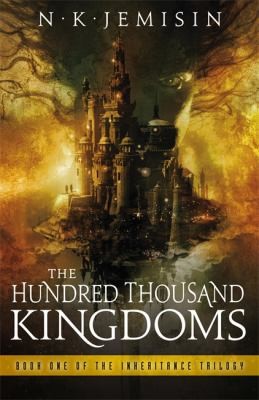
The Hundred Thousand Kingdoms
N. K. Jemisin · 2010
Dynastic crisis A young provincial ruler is summoned to the imperial capital and unexpectedly named as one of three heirs
Closest House of the Dragon connection Succession is presented as a family matter while the ruling house quietly makes the whole world absorb its violence
Main difference Enslaved gods and an intimate first-person mystery outweigh battlefield campaigning
Best for Readers who want a fast standalone-feeling first volume, first-person narration, enslaved gods, family secrets and imperial politics with a strong emotional center.
Yeine Darr grows up in the northern land of Darr after her mother abandons the powerful Arameri family. When Yeine's grandfather summons her to the city of Sky, he names her an heir alongside two cousins raised at the center of power. The designation does not grant safety. It places Yeine inside a ritualized contest controlled by relatives who regard nations, gods and descendants as property.
Jemisin makes the palace a machine for converting kinship into hierarchy. Yeine's mother, cousins and grandfather become political evidence, while the gods bound to the Arameri introduce an older family conflict beneath the mortal succession. It ranks tenth because the contest is more concentrated than the Dance, but it offers the sharpest short treatment of a dynasty that insists private cruelty is legitimate world government.
Know before you start. The novel includes slavery, coercion, incest in the dynasty's history, sexual threat, murder, torture and deliberate uncertainty in the narration.
9
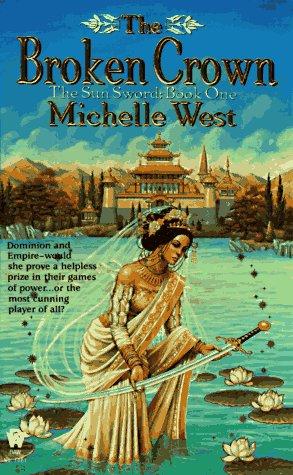
The Broken Crown
Michelle West · 1997
Dynastic crisis Rival powers seek to exterminate the Leonne ruling bloodline and seize the Dominion of Annagar
Closest House of the Dragon connection Noble houses turn succession into a long war shaped by marriages, heirs, old clan loyalty and hidden supernatural allies
Main difference A much denser epic whose politics extend across two nations and six large volumes
Best for Readers who want an enormous completed series, court politics, powerful women working inside restrictive systems, demons and interlocking noble houses.
The Dominion's peace rests on the authority of clan Leonne and the Sun Sword. Treachery at Tor Leonne threatens that order, while Serra Diora di'Marano and other women constrained by the Dominion's patriarchal court exercise influence through information, family and ritual. Beyond human schemes, demonic forces recognize the succession struggle as an opening.
West's politics are patient and granular. Households, servants, wives and hostages matter as much as generals because power is maintained through access long before armies move. It ranks ninth because the world and cast demand more orientation than House of the Dragon, but readers who want noble factions and a civil conflict that grows across several books will find an unusually deep commitment to consequence.
Know before you start. The opening is slow and terminology-heavy; the series includes misogyny, sexual violence, child death, war, enslavement and rigid gender hierarchies.
8
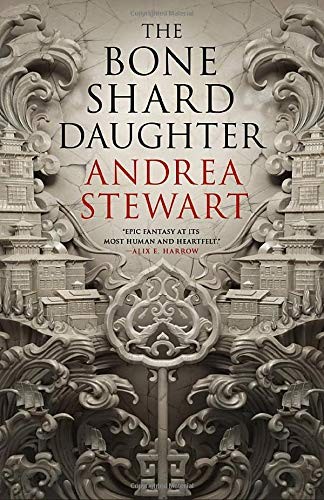
The Bone Shard Daughter
Andrea Stewart · 2020
Dynastic crisis An emperor's daughter struggles to recover her memories and claim succession while rebellion spreads across an island empire
Closest House of the Dragon connection A ruler's refusal to create a trustworthy succession leaves heirs and subjects competing inside a failing system
Main difference Construct magic, moving islands and a puzzle-box structure give the conflict a more adventurous tone
Best for Readers who want modern epic fantasy, multiple viewpoints, strange animal companions, construct magic, mysteries and a completed trilogy.
Emperor Shiyen protects the Phoenix Empire with bone-shard magic taken from citizens and used to animate obedient constructs. His daughter Lin is confined within the palace, competing with an adopted rival for access to locked rooms and to the magic her father withholds. Elsewhere, smuggler Jovis searches for his missing wife as revolutionaries challenge the dynasty's right to rule.
Stewart links succession to the hidden physical cost of imperial power. Lin wants recognition from the emperor before she fully understands what inheriting his system would require. It ranks eighth because the central family is smaller and the rebellion initially matters more than rival royal branches, yet the trilogy develops exactly the kind of collision House of the Dragon dramatizes: bloodline legitimacy becomes fragile when subjects can see what the dynasty consumes.
Know before you start. The series includes forced bodily extraction, memory loss, child death, animal and human experimentation, war and parental emotional abuse.
We reviewed this: read our full review of The Bone Shard Daughter →
7
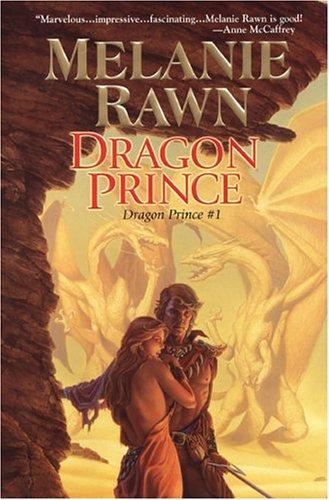
Dragon Prince
Melanie Rawn · 1988
Dynastic crisis Prince Rohan must secure his desert realm through marriage, alliances and control of the dragons' breeding grounds
Closest House of the Dragon connection Dragons, aristocratic marriages and inherited claims are strategic resources within a multigenerational political struggle
Main difference Romantic partnership and idealistic state-building receive more emphasis than a family destroying itself
Best for Readers who want classic epic fantasy, dragons, magical light-weavers, political marriages, romance within a larger war and a completed original trilogy.
After his father's death, Rohan inherits the Desert and faces High Prince Roelstra, whose many daughters are instruments in a plan to dominate rival princedoms. Rohan's relationship with the Sunrunner Sioned combines affection, magical power and political necessity. The fate of dragons matters because rulers see land, succession and the creatures themselves as assets to be controlled.
Rawn treats marriage negotiations as high politics rather than pauses between battles. Fertility, inheritance and the public image of a ruling couple affect every alliance. It ranks seventh because Rohan and Sioned are more cooperative than the Targaryens and the tone reflects an earlier era of epic fantasy, but few series combine dragons and dynastic planning so directly.
Know before you start. The series includes sexual violence, reproductive coercion, war, torture, dated gender assumptions and plotlines involving pregnancy and succession.
6
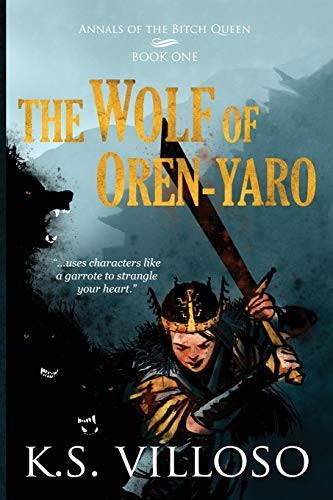
The Wolf of Oren-Yaro
K. S. Villoso · 2018; revised international edition published in 2020
Dynastic crisis A queen from one powerful clan attempts to reunite with the husband whose departure left their recently unified kingdom vulnerable
Closest House of the Dragon connection A broken royal marriage allows old clan divisions to become national claims
Main difference A first-person survival journey stays close to one queen rather than moving among many factions
Best for Readers who want first-person epic fantasy, a flawed queen, Southeast Asian-inspired settings, marital betrayal and a completed trilogy with escalating politics.
Queen Talyien Aren dar Orenar travels to a foreign city to meet Rayyel, her estranged husband and fellow heir to the union that ended years of war. The meeting becomes an ambush, leaving Talyien cut off from her guards and uncertain whether the danger originated abroad or inside her own divided court. Every personal betrayal has constitutional consequences because the marriage was meant to hold the nation together.
Villoso gives Talyien the kind of compromised authority often denied to women in dynastic fantasy. She can be decisive, proud, politically perceptive and catastrophically wrong without the narrative reducing her to a symbol. It ranks sixth because the first volume spends substantial time away from the throne, but the trilogy's family wounds, rival clans and disputed legitimacy make it a strong match for readers invested in Rhaenyra's isolation.
Know before you start. The books include misogyny, violence, torture, sexual threat, child endangerment, war and a protagonist whose decisions can be frustrating by design.
5
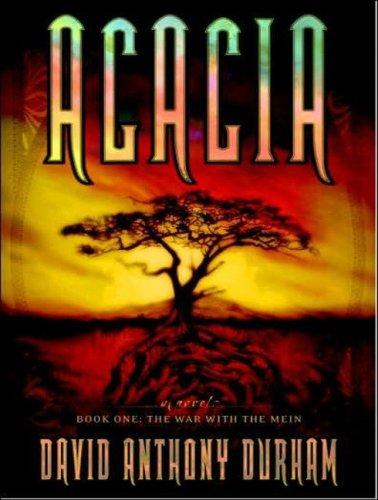
Acacia: The War with the Mein
David Anthony Durham · 2007
Dynastic crisis An invasion kills the king of Acacia and scatters his four heirs across the empire they were raised to inherit
Closest House of the Dragon connection A royal family's competing ideas about legacy determine whether reconquest can produce anything better than the old dynasty
Main difference External invasion begins the war, though the deeper conflict concerns the family's imperial inheritance
Best for Readers who want a large completed trilogy, scattered royal siblings, imperial critique, warfare and a setting that expands beyond medieval Europe.
King Leodan Akaran rules an apparently prosperous empire whose stability depends on slavery, tribute and a hidden trade in children. The Mein, descendants of a defeated people, invade to avenge an ancient grievance. Leodan's children—Aliver, Corinn, Mena and Dariel—are separated and transformed by exile, resistance, captivity and power.
Durham refuses to let restoration function as automatic justice. The heirs love their family, but each encounters a different truth about the empire carrying its name. Their eventual choices create conflicts no shared blood can resolve. It ranks fifth because the initial enemy comes from outside the dynasty, yet the trilogy becomes a serious examination of siblings inheriting both a throne and the violence that sustained it.
Know before you start. The series includes slavery, trafficking of children, war crimes, sexual violence, addiction, colonial exploitation and major character deaths.
4
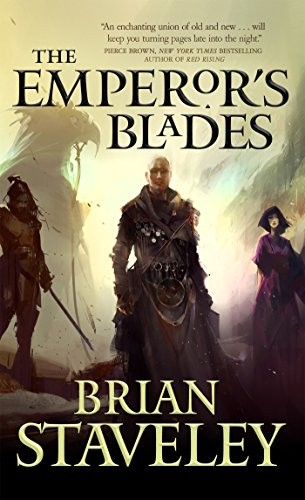
The Emperor's Blades
Brian Staveley · 2014
Dynastic crisis An emperor is assassinated while his three adult children are separated across institutions that have taught them incompatible forms of power
Closest House of the Dragon connection Royal siblings face a succession emergency in which every adviser, military order and religious faction may prefer a different future
Main difference The siblings begin as allies threatened by conspiracy rather than rival claimants already at war
Best for Readers who want assassin training, warrior birds, monastic mystery, multiple royal siblings, conspiracy and a completed main trilogy.
Kaden, heir to the Annurian Empire, trains in a remote monastery. Valyn endures the lethal preparation of the Kettral airborne forces. Adare remains in the capital as a minister and is the only sibling positioned to investigate their father's murder directly. Distance and secrecy make coordination nearly impossible just as the empire needs a credible transfer of power.
Staveley designs each sibling's education as a political worldview. Kaden is taught to empty the self, Valyn to trust a unit and Adare to maneuver within law and court. The question is not only who inherits, but which institution will define what rulership means. It ranks fourth for strong pace, military spectacle and a family crisis that expands across a trilogy.
Know before you start. The series includes brutal training, torture, war, sexual violence, religious extremism, fratricidal pressure and graphic death.
3
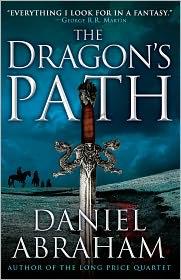
The Dragon's Path
Daniel Abraham · 2011
Dynastic crisis The death of a prince and manipulation of a weak successor allow ideology, grievance and noble ambition to convert regional conflict into war
Closest House of the Dragon connection Multiple viewpoints show how court decisions recruit bankers, soldiers, refugees and ordinary towns into a conflict few of them chose
Main difference Dragons belong mostly to ancient history, while economics and religious certainty drive the present war
Best for Readers who want a completed five-book series, ensemble viewpoints, banking, propaganda, slow political escalation and morally complex character development.
The opening volume of The Dagger and the Coin follows orphaned banker Cithrin bel Sarcour, veteran Marcus Wester, conservative noble Dawson Kalliam and insecure minor aristocrat Geder Palliako. Their paths intersect as a kingdom's politics destabilize and a priesthood offers simple certainty to people eager for an explanation of their humiliation.
Abraham's great strength is causal breadth. A bad decision at court changes credit, food, military movement and the stories people tell about enemies. Geder is especially frightening because private resentment becomes state power without ever feeling majestic. It ranks third because it captures the social anatomy of civil war better than nearly any modern epic, even though readers seeking active dragons must look elsewhere.
Know before you start. The series includes genocide, war, torture, abuse, authoritarian religion, sexual violence and a gradual opening that rewards long-term investment.
2
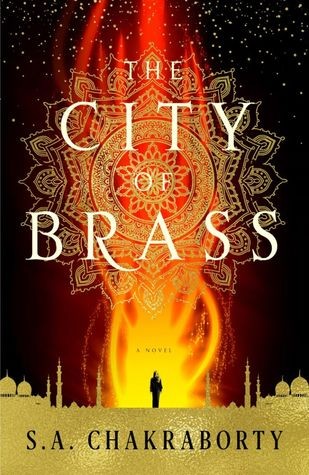
The City of Brass
S. A. Chakraborty · 2017
Dynastic crisis A human con artist enters a djinn capital ruled by a family whose old conquest still divides tribes, faiths and descendants
Closest House of the Dragon connection A ruling house's marriages, children and competing claims become fault lines for a city already preparing to choose sides
Main difference Islamic history and djinn mythology shape a more urban, religiously divided conflict
Best for Readers who want a completed trilogy, djinn, court intrigue, divided brothers, religious and ethnic politics, magical cities and strong character relationships.
Nahri survives in eighteenth-century Cairo by reading people and pretending at powers she does not understand. A ritual summons the djinn warrior Dara, who brings her to Daevabad and the Qahtani court. King Ghassan's sons—careful heir Muntadhir and idealistic warrior Ali—occupy different positions within a dynasty ruling communities that remember the conquest very differently.
Across the trilogy, Chakraborty makes family affection politically dangerous. Parents conceal history, siblings love one another across incompatible loyalties and marriage can stabilize one faction by humiliating another. It ranks second because the books deliver the same pleasure of watching a magical royal family discover that private compromises no longer contain public grievances.
Know before you start. The trilogy includes sectarian violence, genocide in the past, slavery, torture, forced marriage pressure, war and morally compromised rulers.
1
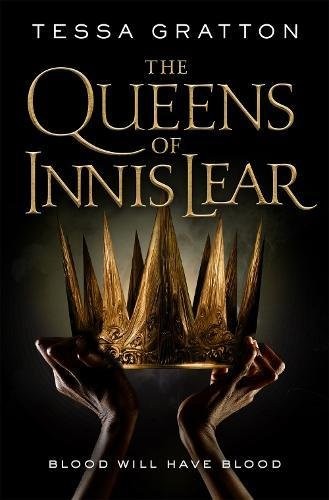
The Queens of Innis Lear
Tessa Gratton · 2018
Dynastic crisis An aging king divides his island among three daughters whose love, marriages and claims have already become political factions
Closest House of the Dragon connection A royal parent converts unresolved family wounds into a succession crisis that the entire realm must fight
Main difference A Shakespearean standalone with earth-and-star magic rather than dragon warfare across several seasons
Best for Readers who want the closest family-destruction match, a standalone, Shakespearean tragedy, three complicated sisters, nature magic and lyrical prose.
King Lear trusts prophecies written in the stars and has weakened the island's older root magic. His daughters carry different injuries and visions of rule: Gaela is a warrior determined to break the order that diminished her; Regan navigates marriage, fertility and ambition; Elia, the favored youngest, returns to a home that has turned affection into evidence against her sisters.
Gratton earns first place by making civil war feel like family language spoken with armies. Every daughter can explain what was taken from her. Their spouses, lovers and allies amplify rather than create the division, and the land itself records the consequences of a king mistaking preference for policy. The novel is lush, tragic and complete, offering the closest single-volume equivalent to watching one royal household turn a kingdom into the stage for its grievances.
Know before you start. The novel includes infertility, pregnancy loss, self-harm, parental abuse, incestuous implications, war, murder and an intentionally tragic structure.
Which Dynastic Fantasy Should You Read First?
Where to start. Choose The Queens of Innis Lear for the closest single-book match to the emotional structure of the Dance: a failing father, rival daughters, politically loaded marriages and a kingdom forced to enact family resentments. Choose The City of Brass if you want a completed trilogy with a magical capital and a ruling family divided across faith, friendship and conquest.
Read The Dragon's Path for the broadest account of how civil war spreads through a society. The Emperor's Blades is faster and more action-driven, while Acacia is strongest on royal siblings inheriting the moral debt of empire. The Wolf of Oren-Yaro keeps the experience closest to one embattled queen.
For dragons and political marriage, start with Dragon Prince. Choose The Bone Shard Daughter for modern puzzle-box fantasy, The Broken Crown for the deepest long-form court politics or The Hundred Thousand Kingdoms for a shorter, more intimate succession contest involving gods.
Dynasties promise continuity by treating blood as a political technology. The weakness is obvious: family memory does not obey succession law. A ruler can declare an heir, but cannot order siblings to remember childhood in the same way. A marriage can join claims on paper while multiplying the number of people entitled to feel betrayed.
The Queens of Innis Lear ranks first because it places that weakness at the center of every magical and military consequence. The City of Brass best matches the pleasure of a supernatural royal family splitting along political lines, and The Dragon's Path most fully shows what happens to everyone beyond the palace. Dragons make the Dance spectacular. These books demonstrate that the family story beneath it is combustible without them.