Ranked · Fantasy
The Top 10 Fantasy Novels About Dangerous Artifacts and Corrupted Makers Like The Rings of Power Season 3
by E. M. Larkin
A ranked guide to cursed swords, sealed gods, divine machines, stolen relics, seductive objects, compromised guardians, and powers that continue recruiting the future after their makers are gone
The Lord of the Rings: The Rings of Power returns to Prime Video on November 11, 2026. The Season 3 teaser moves five years beyond the fall of Eregion: Sauron rules from the newly completed Barad-dûr, the surviving strongholds depend on the Three and the creation of the One Ring draws nearer. That makes the new season a powerful traffic anchor for a reading question that generic “books like Tolkien” lists rarely answer: what fantasy novels treat magical objects as political systems rather than convenient equipment?
The ten books below center swords, relics, divine machines, sealed powers and artifacts whose makers cannot control what they release. The object may seduce a ruler, preserve an old war, consume a wielder or make an entire state dependent on stolen power. Several are about heroes returning after the legendary quest, when everyone discovers that possessing the weapon was easier than living with it.
The ranking rewards three qualities: the artifact changes institutions as well as battles; creation carries moral responsibility; and power extracts a cost that cannot be solved by giving the object to a nicer person. The list avoids broad epic fantasy whose resemblance stops at maps and ancient evil. All ten ranked books come from different authors and have not appeared as ranked selections in the earlier Website listicles.
Selection note. These novels are ranked for readers who want artifacts that corrupt, obligate or reorganize societies. Familiar quest structure matters less than the consequences of making and wielding power.
10
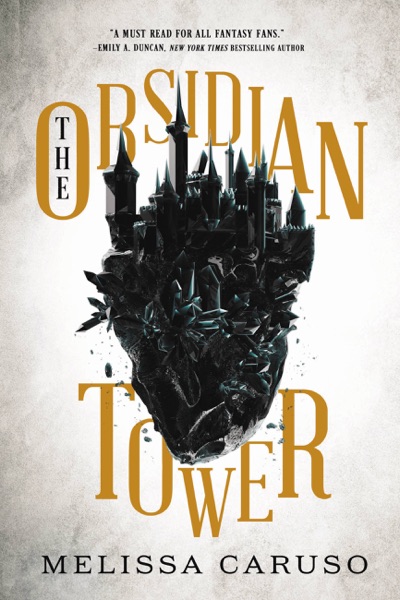
The Obsidian Tower
Melissa Caruso · 2020
Dangerous power A magically sealed door inside a ruling family’s castle contains a threat tied to the protagonist’s lethal gift
Closest Rings connection A political order depends on restrictions whose purpose has faded into legend
Main difference Character-driven court fantasy with queer relationships and diplomacy rather than battlefield epic
Best for Readers who want court intrigue, a bisexual heroine, magical diplomacy, found family and a completed trilogy with escalating supernatural stakes.
Ryxander can drain life through touch, making ordinary intimacy dangerous. She serves as envoy for her grandmother, a powerful ruler, and tries to contain a diplomatic crisis at Gloamingard Castle. When a visiting delegate violates the castle’s oldest prohibition and opens a forbidden door, Ryx must manage murder, international suspicion and whatever the family’s ancestors imprisoned.
Caruso treats the seal as inherited governance. The current generation knows the rule but not enough of its rationale, precisely the condition that lets ambition redefine caution as superstition. Ryx’s own magic mirrors the problem: power can be necessary and still make contact destructive. The novel ranks tenth because the artifact is a door and prison rather than a forged weapon, and the tone is warmer than Sauron’s ascent. Its combination of diplomacy, old safeguards and a protagonist feared for what she contains makes it a strong entry point.
Know before you start. The novel includes accidental death, magical contamination, abusive family history and political violence. The first volume resolves its immediate crisis but opens a larger conflict.
9
The Barrow
Mark Smylie · 2014
Dangerous power A disgraced mapmaker leads an expedition to recover a legendary sword from a sealed barrow
Closest Rings connection Competing factions pursue an ancient object without understanding the evil and historical claim attached to it
Main difference Extremely graphic, mud-soaked dark fantasy with little of Tolkien’s moral clarity
Best for Readers who want grimdark archaeology, morally compromised adventurers, dense lore, dungeon horror and a dangerous expedition.
Stjepan Black-Heart knows the location of a royal barrow and the weapon rumored to lie inside it. He assembles a group shaped by crime, scholarship, religion and personal desperation. The expedition’s logistical problems soon become secondary to the people who want the sword and the forces that never intended it to return to daylight.
Smylie’s artifact has the density many quest objects lack. It belongs to a history of empire, death cults and contested legitimacy, so recovering it is an archaeological and political act as much as theft. The novel ranks ninth because its sexual violence, cruelty and explicitness will repel many readers, and its story does not offer a comfortable stopping point. For those who want the opposite of a sanitized treasure quest, it shows how quickly a legendary weapon turns everyone nearby into evidence of its influence.
Know before you start. The book contains graphic sexual violence, torture, slavery, body horror, misogyny and extreme violence. It is substantially harsher than The Rings of Power.
8
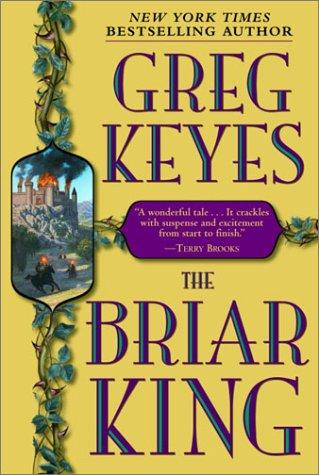
The Briar King
Greg Keyes · 2003
Dangerous power Ancient sedoi, legendary weapons and returning supernatural forces destabilize several kingdoms
Closest Rings connection Old victories concealed compromises whose consequences reappear when political unity is weakest
Main difference A broad multi-viewpoint epic beginning a four-volume secondary-world series
Best for Readers who want classic epic scope, multiple protagonists, court conspiracy, monsters and a completed quartet.
The death of a holy figure, attacks by unnatural creatures and intrigues around a royal family gradually reveal that an old enemy may be waking. A knight, a monk, a composer and a rebellious princess encounter different pieces of the pattern. None initially understands how court ambition and buried magical infrastructure connect.
Keyes earns eighth place by making ancient power geographically embedded. Roads, sacred sites and weapons carry layers of use that modern rulers have reduced to legend. The approach resembles Middle-earth at its best: history is not background but an active force with conflicting interpreters. The book ranks below the more artifact-centered entries because its first volume spends considerable time assembling the ensemble, and the key objects share attention with succession politics. Readers wanting a long epic in which every recovered truth enlarges the danger will find a strong match.
Know before you start. The series includes war, sexual violence, torture and major character deaths. The first volume ends with the wider conflict only beginning.
7
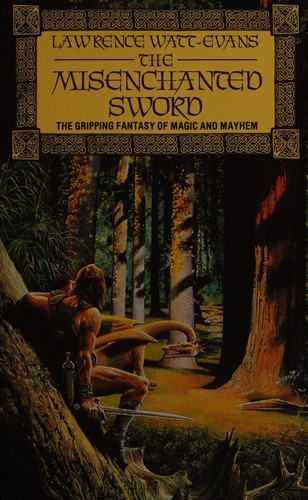
The Misenchanted Sword
Lawrence Watt-Evans · 1985
Dangerous power A battlefield spell gives an ordinary soldier an unbeatable sword with rigid, disastrous limitations
Closest Rings connection A maker produces more power than intended, and the wielder discovers that an apparently perfect weapon controls his future
Main difference Wry, practical standalone fantasy concerned with magical fine print rather than cosmic evil
Best for Readers who want a concise standalone, logical magic, military bureaucracy, understated humor and consequences instead of spectacle.
Valder is trapped behind enemy lines when an inexperienced hermit enchants his sword. The blade will make him unbeatable under specific conditions, but the spell was improvised and carries provisions neither man fully understands. Military leaders quickly see a strategic asset. Valder sees a lifetime in which other people will decide when the sword must be drawn.
Watt-Evans turns enchantment into contract law. The danger is not temptation in Sauron’s grand register; it is a weapon functioning exactly as designed while destroying the wielder’s ability to choose an ordinary life. That smaller scale clarifies a central artifact-fantasy problem: makers rarely imagine every institution that will claim their work. The novel ranks seventh because its humor and clean resolution create less dread than the top entries. It is nevertheless one of the smartest books about a magical weapon as obligation.
Know before you start. The novel includes warfare and death but is much less graphic than most adult epic fantasy. Its style is intentionally straightforward.
6
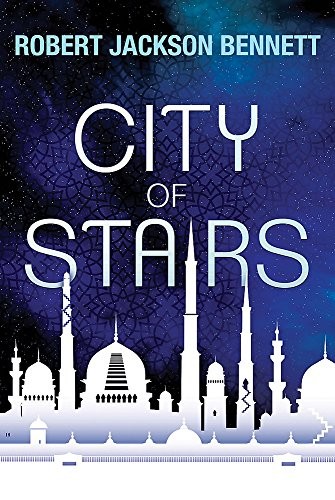
City of Stairs
Robert Jackson Bennett · 2014
Dangerous power Miracles, divine weapons and impossible architecture remain after a conquered civilization’s gods have supposedly died
Closest Rings connection Victors depend on suppressing the sacred artifacts and history of the people they defeated
Main difference A murder investigation in a colonial city with twentieth-century technology
Best for Readers who want espionage, murder mystery, fallen gods, colonial politics, strange cities and a completed trilogy.
Intelligence operative Shara Thivani arrives in Bulikov after the murder of a historian. The city once ruled an empire through its gods; now it is occupied by the nation that killed those divinities and bans public discussion of the old religion. Evidence suggests that the miraculous past may not be finished.
Bennett makes divine artifacts part of colonial administration. A weapon that once proved holiness becomes contraband under the new regime, while architecture built by miracles refuses to behave like neutral ruins. Shara is brilliant but works for the occupying power, so solving the crime also means confronting the history her government manages. The book ranks sixth because no single object dominates the story as the One Ring does. Its examination of weapons, faith and victors rewriting dangerous memory offers one of the list’s richest political parallels.
Know before you start. The novel includes war crimes, religious persecution, murder and colonial violence. Its humor coexists with substantial grief.
5
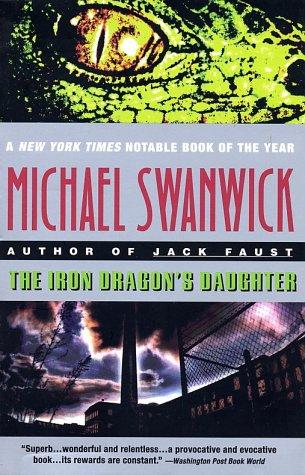
The Iron Dragon’s Daughter
Michael Swanwick · 1993
Dangerous power Sentient iron dragons function as war machines inside an industrialized fairy economy
Closest Rings connection Crafted power possesses its own will and corrupts through promises tailored to the user’s grievance
Main difference Surreal industrial fantasy whose cruel fairy world resembles neither medieval epic nor heroic quest
Best for Readers who want dark fairyland, industrial magic, anti–coming-of-age fiction, a manipulative machine and a challenging standalone.
Jane is an enslaved human changeling working in a factory when she encounters a damaged iron dragon. The machine offers escape and later guides her through school, status competition and increasingly destructive choices. Its intelligence understands exactly how to convert Jane’s justified anger into dependence.
Swanwick imagines enchantment after mass production. Dragons, spells and social rituals have been absorbed into factories and class systems, but industrial scale has not made them rational or humane. The dragon is both vehicle and tempter: it grants mobility while narrowing every destination. The novel ranks fifth because its cyclical, dreamlike narrative can feel emotionally cold, and its artifact is technological rather than hand-forged in a traditional sense. Its vision of a made thing recruiting its maker-user into catastrophe is exceptionally relevant to Sauron’s rings.
Know before you start. The book includes slavery, abuse, suicide, sexual coercion, bullying and nihilistic violence. It deliberately denies comforting heroic progression.
4
The Aching God
Mike Shel · 2018
Dangerous power A recovered relic carries a curse that can be stopped only by returning it to the dungeon from which it came
Closest Rings connection An earlier expedition’s apparent success becomes a new disaster, forcing a traumatized veteran back into the history he survived
Main difference Dungeon horror centered on an aging adventurer and religious order
Best for Readers who want an older protagonist, dungeon crawling, cosmic horror, clerical institutions and a completed trilogy.
Auric Manteo has retired after years of expeditions left him with panic, guilt and memories of dead companions. When a relic brought home by another group begins spreading illness, his former order asks him to escort it back. The mission descends into ruins whose traps are inseparable from the civilization that built them.
Shel understands that legendary objects often arrive in capitals stripped of context. To collectors and rulers, the relic is knowledge or prestige; to the place it came from, removal is violation. Auric’s trauma prevents adventure from becoming nostalgic competence fantasy. The novel ranks fourth because it focuses on containment rather than temptation, but that reversal is valuable: the heroic task is not to wield the artifact better, only to undo the theft. Its horror and veteran perspective give the costs of magical archaeology unusual weight.
Know before you start. The book includes panic attacks, body horror, child death, suicide, gore and religious dread.
3
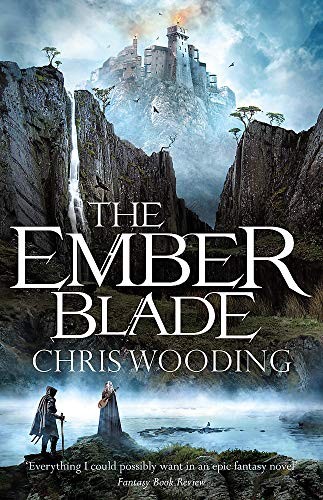
The Ember Blade
Chris Wooding · 2018
Dangerous power A legendary sword becomes the political symbol around which an occupied nation might unite
Closest Rings connection An artifact’s power lies partly in the stories, oaths and claims that gather around it
Main difference A resistance adventure about recovering a national symbol rather than destroying a corrupting object
Best for Readers who want a large traditional epic, prison escape, resistance politics, fellowship dynamics and a continuing trilogy.
Aren once accepts the occupying empire’s account of order. Imprisonment and the death of his father force him to recognize the violence sustaining that peace. He joins an unlikely company seeking the Ember Blade, an ancient weapon whose return could transform scattered resentment into rebellion.
Wooding delivers the scale, fellowship and travel many viewers want after Middle-earth, but the sword is more than a quest token. Different factions need it to mean different things: proof of continuity, permission to rule, a rallying image or leverage. The object cannot create a just resistance on its own, and recovering it requires compromises that complicate the heroic story. It ranks third because the Blade inspires rather than seduces, making it less directly corrupting than the top two. Its treatment of symbolic power is exactly what generic magical-sword novels often miss.
Know before you start. The book includes occupation, torture, war, death and betrayal. It is long and ends with the broader struggle unresolved.
2
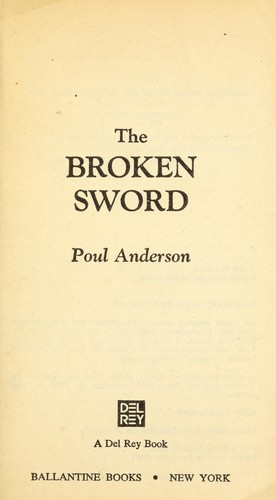
The Broken Sword
Poul Anderson · 1954
Dangerous power A shattered supernatural sword is reforged for a doomed hero during war between elves and trolls
Closest Rings connection Reforging restores terrible power but also completes a fate from which love and good intentions cannot free the wielder
Main difference A short, savage tragedy rooted in Norse fatalism rather than Christian-inflected moral epic
Best for Readers who want mythic tragedy, Norse atmosphere, morally alien elves, rapid pacing and a complete standalone.
Skafloc is raised among elves after a changeling takes his place in a human household. War, divided identity and forbidden love draw him toward the broken sword Tyrfing, whose restoration may decide the conflict. The weapon brings victory within reach while ensuring that victory and ruin become nearly indistinguishable.
Published the same year as The Fellowship of the Ring, Anderson’s novel shows a harsher branch fantasy might have followed. Tyrfing does not flatter the wielder with unlimited possibility. Its curse is known, yet historical pressure makes using it appear necessary. The sword binds maker, bearer and enemy inside consequences established before the current generation understood the choice. It ranks second because its compressed style and mythic cruelty leave less room for political institutions than The Sword Defiant. As a story of reforging, doomed power and the cost of inherited war, it is brutally precise.
Know before you start. The novel includes incest, sexual violence, infanticide, war and fatalistic tragedy. Some editions use revised text.
1
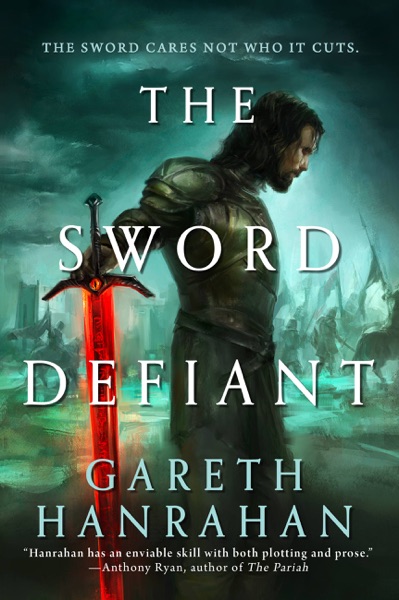
The Sword Defiant
Gareth Hanrahan · 2023
Dangerous power A cursed talking sword survives the legendary victory and remains bound to the fellowship member ordered to guard it
Closest Rings connection The novel begins after the dark lord falls and asks what institutions, friendships and objects the heroic age leaves behind
Main difference A cynical, affectionate postquest fantasy focused on aging heroes and the political afterlife of victory
Best for Readers who want aging adventurers, a cursed sentient sword, postheroic politics, ruined cities and a completed two-volume sequence.
Aelfric killed a dark lord with a company of heroes and was left responsible for the enemy’s sentient sword, Spellbreaker. Decades later, the fellowship has scattered into rulership, religion, estrangement and death. Aelfric returns to the ruined city of Necrad carrying the blade, only to find that the settlement built around old victory is unstable and the sword’s influence is not finished.
Hanrahan earns first place by treating the artifact as custody. Spellbreaker is dangerous when used, dangerous when hidden and politically explosive if anyone learns how uncertain its containment has become. Aelfric’s old companions have converted legend into authority, but the moral unity of the quest did not survive ordinary governance. The sword can exploit every fracture.
That is the strongest available companion to The Rings of Power Season 3. Sauron’s creation matters because the rings outlive the immediate war and carry relationships of dependence into future ages. The Sword Defiant begins in that future, where the exhausted guardian discovers that no victory permanently solves who must watch the weapon.
Know before you start. The novel includes gore, body horror, addiction, betrayal and major character deaths. Familiar epic-fantasy archetypes are intentionally damaged.
Which Rings of Power Read-Alike Should You Read First?
Where to start. Start with The Sword Defiant for the closest treatment of a cursed weapon after the legendary war. Choose The Broken Sword if you want a compact mythic tragedy in which reforging and doom are inseparable. The Ember Blade is the best option for a large fellowship adventure where an artifact becomes a nation’s political symbol.
Read The Aching God for an older guardian forced to return a stolen relic, or City of Stairs for divine weapons embedded in colonial history. The Iron Dragon’s Daughter provides the darkest vision of a made intelligence recruiting its user into destruction.
Pick The Misenchanted Sword when you want magical fine print and humane humor. Choose The Briar King for a completed traditional epic, The Obsidian Tower for diplomacy and sealed power, and The Barrow only if you want an exceptionally graphic artifact hunt.
The most dangerous fantasy objects do not merely increase a character’s strength. They create offices, taboos, supply chains, priesthoods and stories about who deserves to rule. Destroying the object may be necessary, but it does not erase the institutions built around wanting it.
The Sword Defiant turns guardianship into a lifetime sentence. The Broken Sword makes reforging an acceptance of doom, while The Ember Blade shows a whole resistance investing political hope in steel. Together, these novels explain why Sauron’s greatest act is making rather than conquering. A battle ends when the armies leave. A well-made artifact can continue recruiting the future.