Silo season three premiered on Apple TV on July 3, 2026, and is unfolding weekly through early September. That active run gives the title enormous search momentum, but most recommendation pages still settle for any post-apocalyptic novel with a bunker. The more useful reading need is narrower: enclosed societies whose physical systems, political rules and official histories are parts of the same mystery.
Every ranked book here combines at least two of the qualities that make Silo distinctive: a population confined below ground or inside a tightly controlled refuge, technical routines treated as sacred law, an outside world that may not match what authorities claim, forbidden records, or a protagonist whose practical job gives access to institutional secrets. A few entries leave the bunker for caves, islands or biological facilities, but each makes enclosure a method of government rather than simple scenery.
The ranking rewards mystery structure before generic apocalypse. Higher positions make the reader learn the rules alongside someone who can test them; lower positions may emphasize survival, social experiment or claustrophobic exploration. The original Wool sequence is deliberately excluded because viewers already know where to find it. These ten books offer genuinely separate systems to investigate.
Selection note. Books are ranked for the overlap among enclosure, institutional deception, material survival and investigative discovery. They are not ranked by how literally they reproduce the staircase, generator or cleaning ritual of Silo.
10
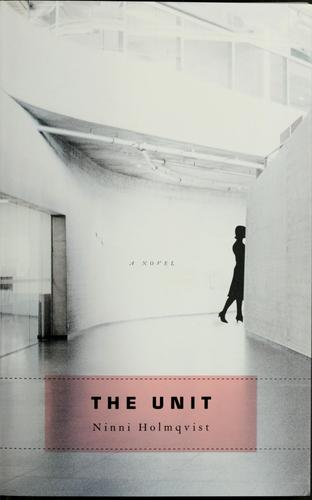
The Unit
Ninni Holmqvist · 2006
Story engine Citizens deemed socially dispensable are moved to a comfortable facility where their bodies become state resources
Closest Silo connection A humane-looking institution hides coercion inside routine, care and language about the collective good
Main difference No apocalypse or underground machinery; the enclosure is biomedical and bureaucratically ordinary
Best for Readers who prefer literary dystopia, intimate relationships and bureaucratic horror to action or engineering.
On her fiftieth birthday, unmarried and childless Dorrit Weger enters the Second Reserve Bank Unit. Residents receive excellent food, art classes and companionship while participating in drug trials and donating organs until a final donation kills them. Dorrit’s relationship with another resident creates a future the system did not plan to recognize.
Holmqvist offers the quietest version of Silo’s core terror: people can adapt to an enclosure because daily life remains recognizable and because every cruelty has an administrative name. Dorrit learns the institution’s true shape gradually, not through a hidden video but through what happens to friends. The system survives by making gratitude and fear coexist.
The book takes position #10 because it closes the ranking because the setting is not subterranean, yet its institutional logic is exceptionally close.
Know before you start. The novel includes medical experimentation, organ harvesting, reproductive control, death and grief.
9
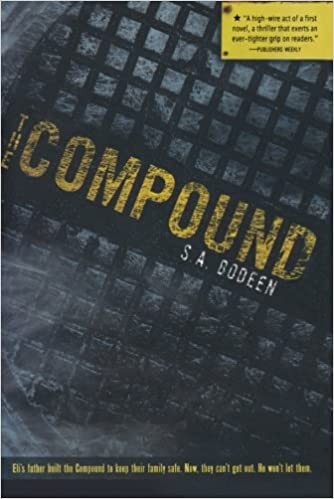
The Compound
S. A. Bodeen · 2008
Story engine A wealthy family has spent six years in a private bunker after an apparent nuclear attack
Closest Silo connection A teenager notices inconsistencies in supplies, communications and the father’s account of why the doors must remain closed
Main difference A young-adult family thriller with a smaller cast and a more personal conspiracy
Best for Readers who want a quick bunker mystery centered on siblings, parental control and a potentially false apocalypse.
Eli entered the Compound with his parents and sisters, leaving his grandmother and twin brother behind. Their billionaire father designed the refuge for fifteen years of isolation, but food production is failing and family life has become increasingly controlled. A signal on a forbidden laptop suggests that the destruction outside—and the reason they were brought below—may have been misrepresented.
The book turns domestic authority into bunker government. Because the father owns the shelter, controls information and defines scarcity, challenging him appears identical to endangering the family. Eli’s investigation begins with mundane failures rather than ideology, a useful echo of Juliette noticing what machinery says about official history. The answers are more melodramatic, but the causal chain remains satisfying.
The book takes position #9 because it is accessible and tightly plotted, though less socially ambitious than the adult novels above it.
Know before you start. The story includes child endangerment, reproductive coercion, emotional abuse and disturbing plans involving children.
8
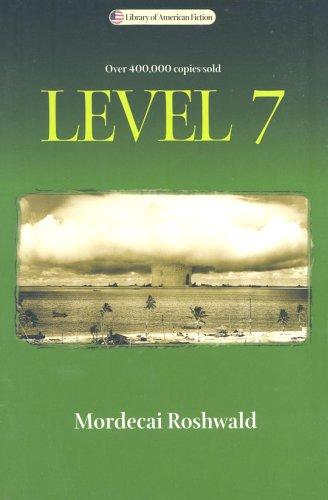
Level 7
Mordecai Roshwald · 1959
Story engine A military officer records life in the deepest level of an underground nuclear complex
Closest Silo connection A sealed hierarchy reduces people to assigned functions while officials insist that procedure can master catastrophe
Main difference Bleak allegory without a mystery-box payoff or a hopeful rebel narrative
Best for Readers who want a short, devastating Cold War classic about bureaucracy, deterrence and false security.
Known only as X-127, the narrator is selected to operate a nation’s retaliatory weapons from Level 7, a bunker designed to remain sealed after nuclear war. Residents receive numbers, roles and controlled recreation. Their confidence in rational planning erodes as the machinery performs exactly as intended and the consequences move downward through supposedly protected levels.
Roshwald’s horror comes from perfect compliance. No secret faction needs to sabotage the bunker; the system’s stated purpose is already monstrous. The diary form captures how institutional language can narrow moral thought until annihilation becomes a technical task. Silo readers will recognize the layered architecture and occupational identities, though here discovering the truth cannot provide an exit from it.
The book takes position #8 because its starkness makes it a foundational bunker novel, but its allegorical characters create emotional distance.
Know before you start. The novel centers nuclear annihilation, radiation sickness and mass death, and it offers little relief from its pessimism.
7
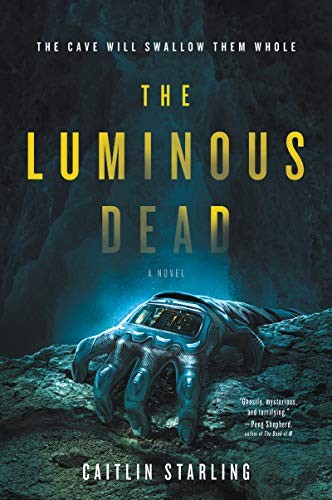
The Luminous Dead
Caitlin Starling · 2019
Story engine A cave explorer depends on a remote handler who controls her suit, supplies and information
Closest Silo connection Technical competence becomes the only defense against a guide who edits reality while the environment closes in
Main difference A two-character psychological survival story rather than a populated dystopian society
Best for Readers who want extreme claustrophobia, unreliable communication, queer tension and methodical cave survival.
Gyre Price falsifies her credentials to secure a lucrative expedition into a dangerous cave system. She expects a support team; instead, only Em monitors her suit and speaks through the headset. Em can change Gyre’s medication, read her body and withhold maps. As equipment fails and signs suggest another presence underground, Gyre must determine which dangers are physical and which have been engineered.
The novel reduces Silo’s institutional mistrust to one intimate channel of authority. Every breath and battery reading arrives through technology controlled by someone with a private objective. Gyre’s caving knowledge lets her challenge the story she is being told, yet survival still requires cooperation with the liar. That dependency produces a sharper version of the fear behind forbidden doors: the person protecting you may also be designing your panic.
The book takes position #7 because it ranks lower only because its enclosure is personal rather than civic.
Know before you start. The book includes panic attacks, medical manipulation, death, body horror, confinement and an emotionally abusive relationship.
6
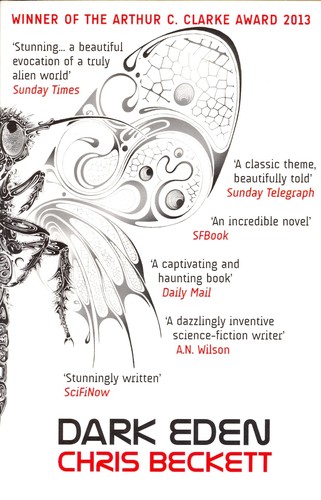
Dark Eden
Chris Beckett · 2012
Story engine A small human colony lives in permanent darkness on a sunless world and treats its origin story as law
Closest Silo connection Young people challenge a closed society whose survival customs have hardened into unquestionable tradition
Main difference The community is stranded on an alien planet rather than deliberately buried, and its language is highly stylized
Best for Readers who want anthropological science fiction, invented dialect, social fracture and exploration into literal darkness.
Generations after two astronauts were stranded on Eden, their descendants remain gathered around geothermal trees that provide heat and light. John Redlantern believes the Family’s insistence on waiting in one place will eventually destroy it. His decision to break taboo and seek new territory fractures the community and turns a practical disagreement into a struggle over sacred history.
Beckett shows how a survival instruction becomes religion when no one can verify its original context. Scarcity shapes courtship, authority and vocabulary, while darkness makes distance almost unimaginable. John’s rebellion has the investigative energy of Silo without a single hidden control room: he tests the world by walking into it, and the evidence he returns with cannot be separated from the harm caused by his ambition.
The book takes position #6 because it best captures the generational moment when safety rules stop protecting a community and begin imprisoning it.
Know before you start. The story includes sexual coercion, violence, ableist social structures and a deliberately repetitive dialect.
5

The Future
Naomi Alderman · 2023
Story engine Technology billionaires build private bunkers while their employees and critics prepare a different kind of survival plan
Closest Silo connection Elite knowledge about catastrophe becomes the dividing line between who receives shelter and who becomes expendable
Main difference A globe-spanning corporate thriller with several locations, social media feeds and a faster satirical register
Best for Readers who want corporate satire, technology criticism, survivalism and a plot driven by women outmaneuvering founders.
Three founders who control the world’s dominant technology companies possess elaborate escape systems for the collapse their businesses help accelerate. Martha Einkorn, an executive assistant raised in a survivalist cult, and Lai Zhen, an internet-famous preparedness expert, become connected through a crisis that may not be what it appears. Their choices expose the assumptions built into billionaire apocalypse planning.
The bunkers matter less as rooms than as moral diagrams. Alderman asks what powerful people imagine servants, security staff and strangers will do once money loses meaning. The result complements Silo by shifting attention from inherited enclosure to the moment enclosure is designed. Codes, platform control and privileged forecasts become modern equivalents of forbidden manuals and sealed server rooms.
The book takes position #5 because it is the best contemporary account of who gets to plan the refuge and write its first rules.
Know before you start. The book includes cult upbringing, mass-casualty threats, corporate abuse and online harassment; its tone moves between suspense and polemic.
4
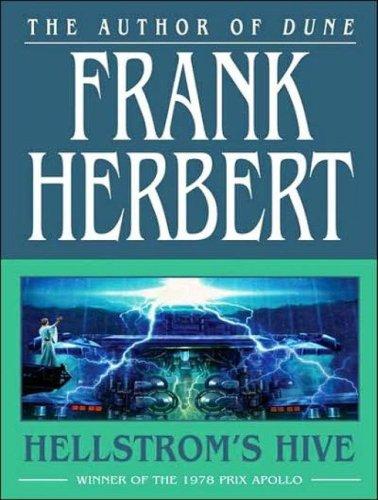
Hellstrom’s Hive
Frank Herbert · 1973
Story engine A secret underground community has reorganized human life around insect-colony efficiency
Closest Silo connection Architecture, reproduction, work and education form one total system hidden beneath an ordinary rural surface
Main difference Told partly from the institution’s perspective and far more sexually disturbing than Silo
Best for Readers who want a morally disorienting classic about collective survival, surveillance and biological planning.
Government agents investigate Nils Hellstrom, a documentary filmmaker whose rural property may conceal stolen technology. Beneath it lies the Hive, a multigenerational society bred and trained for specialized functions. Its members share resources, suppress individual attachment and prepare for a future in which their collective design will outlast unstable surface civilization.
Herbert treats an underground society as an evolutionary argument. Food, ventilation, reproduction and security are not background details but evidence offered in favor of the Hive’s morality. The agents who enter believe they are exposing a cult; the Hive regards them as poorly coordinated organisms. That double perspective creates the same unsettling question Silo raises: how much cruelty can a system normalize if it genuinely keeps people alive?
The book takes position #4 because its social engineering is the list’s most complete and unnerving.
Know before you start. The novel includes sexual coercion, eugenics, murder, dehumanization and dated gender assumptions.
3
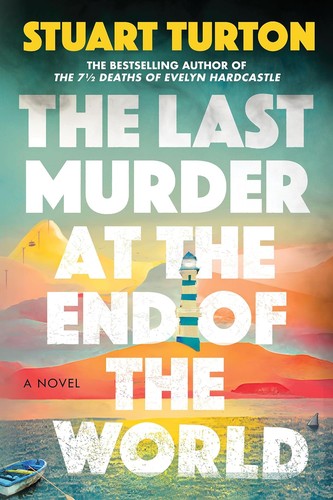
The Last Murder at the End of the World
Stuart Turton · 2024
Story engine A protected island community faces extinction unless it solves a murder erased from everyone’s memory
Closest Silo connection A final refuge is governed by technical rules, restricted knowledge and an authority whose benevolence cannot be assumed
Main difference The enclosure is an island and the mystery is explicitly puzzle-box rather than industrial dystopia
Best for Readers who want an ingenious closed-circle investigation, artificial-intelligence narration and escalating revelations.
A deadly fog has consumed the world except for an island where 122 villagers live under the guidance of three elder scientists and an omnipresent artificial intelligence. When one scientist is murdered, the island’s protective system begins a countdown. Everyone’s memory of the night has been removed, leaving the community only hours to identify a killer it cannot remember.
Turton links survival technology to social hierarchy with unusual precision. The villagers accept curfews, assigned roles and limits on inquiry because those systems appear to keep the fog away. The murder forces them to examine whether obedience and safety are still aligned. Information arrives as evidence rather than lore, giving readers the same pleasure as watching a repair-minded Silo character turn a rule into a testable hypothesis.
The book takes position #3 because it offers the strongest conventional mystery while preserving the last-community stakes.
Know before you start. The book contains murder, coercive social design, memory manipulation and existential threat; its solution depends on several large twists.
2
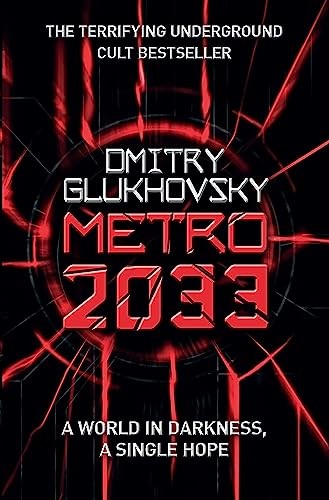
Metro 2033
Dmitry Glukhovsky · 2002
Story engine Survivors occupy Moscow’s metro, where stations have become rival states after nuclear war
Closest Silo connection A young resident must cross a sealed civilization whose geography, rumors and political factions determine reality
Main difference More episodic, militarized and supernatural, with a journey through many micro-societies rather than one vertical city
Best for Readers who want immersive tunnel geography, factional politics, survival horror and a long post-apocalyptic series.
Artyom has grown up at VDNKh, one station among the communities that survive beneath ruined Moscow. When an expanding threat endangers his home, he carries a warning through tunnels controlled by fascists, communists, traders, cults and frightened independents. The trip reveals how quickly a transport network has become a map of competing histories and beliefs.
The metro is both shelter and epistemology: few people can safely travel far enough to compare stories, so every station treats local survival as proof that its ideology is correct. Glukhovsky repeatedly turns ventilation, ammunition, light and tunnel access into political power. Like Juliette, Artyom discovers that what a society calls impossible may simply be what its rulers or fears prevent it from testing.
The book takes position #2 because its inhabited infrastructure feels more socially complete than any other underground world on the list.
Know before you start. The novel includes war atrocities, fascism, racism, animal death and sustained dread; English editions can feel digressive.
1
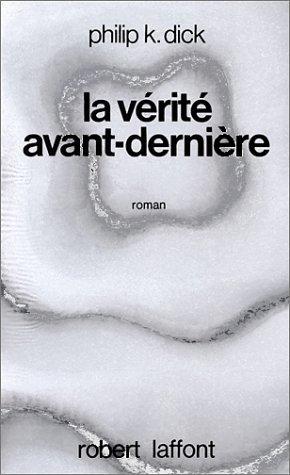
The Penultimate Truth
Philip K. Dick · 1964
Story engine Workers live in underground tanks and manufacture war machines for a conflict they believe still rages
Closest Silo connection A maintenance-dependent population is controlled through fabricated broadcasts and fear of the surface
Main difference A compact Cold War satire whose conspiracy is broader and stranger than Silo’s municipal realism
Best for Readers who want a short, idea-dense classic about bunker labor, media manipulation and a surface reserved for elites.
Nicholas St. James is president of an underground tank whose residents labor to supply an apparently endless nuclear war. When the community’s chief mechanic becomes dangerously ill, Nicholas risks the surface to find an artificial organ. He discovers that the war ended years ago and that the people above have preserved the tank system because its captive workforce supports their privileged lives.
Dick makes propaganda a piece of infrastructure. Daily production quotas, televised speeches and the residents’ terror of open air all reinforce one another, so exposing the truth requires more than showing someone a document. The novel also understands why a useful worker becomes an investigator: Nicholas knows what his community actually needs, and that practical knowledge lets him recognize when official necessity is counterfeit.
The book takes position #1 because it is the most exact ancestor of Silo’s central bargain—safety below in exchange for accepting a manufactured world.
Know before you start. Its sexual politics and satirical caricatures show their 1960s origin, and the plot favors destabilizing ideas over emotional realism.