Ranked · Horror
The Top 10 Dark Christmas and Winter Ghost Books Like Ebenezer
by E. M. Larkin
A ranked guide to Christmas spirits, snowbound houses, winter folklore, buried guilt, returned loved ones, haunted celebrations, supernatural judgment, and second chances that begin when the dead refuse to leave
Ti West’s Ebenezer opens in theaters on November 13, 2026, with Johnny Depp as Scrooge in a darker adaptation of A Christmas Carol. The first trailer emphasizes the story as a gothic supernatural reckoning rather than a cozy period celebration. That combination gives the film an obvious seasonal audience and creates a useful low-competition reading angle: adult books in which Christmas or deep winter makes haunting, judgment and second chances more dangerous.
The ranked selections include novels, novellas and curated story collections. Restricting the list to ten Christmas novels would produce a great deal of romance and very little of the fear Dickens built from darkness, isolation and the dead demanding attention. Every book here uses winter as pressure. Roads close, daylight contracts, families return to old houses and the past gains enough silence to speak.
The ranking rewards gothic atmosphere, supernatural consequence and a meaningful connection between haunting and moral memory. Some books offer redemption; others show what happens when recognition arrives too late. All ten ranked titles come from different author or editor lines and have not appeared as ranked selections in earlier Website lists.
Selection note. The list ranks books for darkness, winter confinement, supernatural reckoning and the return of buried memory. It is not a roundup of comforting holiday fiction.
10
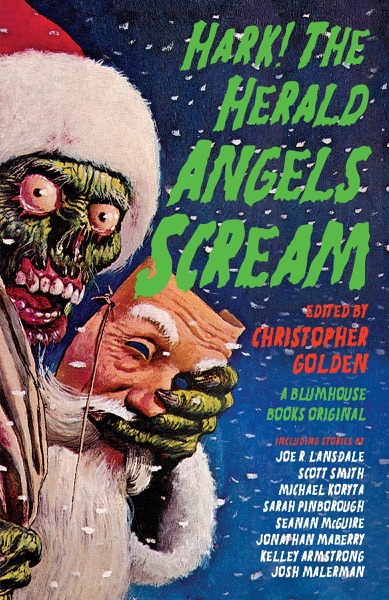
Hark! The Herald Angels Scream edited
Christopher Golden · 2018
Seasonal haunting An anthology of Christmas horror ranging from monsters and ghosts to domestic dread
Closest Ebenezer connection Familiar holiday rituals become invitations for fear, punishment and unwelcome visitors
Main difference Many voices and tones rather than one sustained redemptive narrative
Best for Readers who want short pieces, contemporary horror writers, multiple subgenres and a holiday book that can be read one story at a time.
Golden’s anthology gathers stories by writers including Scott Smith, Sarah Pinborough, Josh Malerman and Kelley Armstrong. The settings move from family gatherings to isolated winter spaces, and the threats range from darkly comic to genuinely bleak.
The collection ranks tenth because anthologies necessarily vary in tone and intensity. That variety is also useful for readers testing how far they want to travel from Dickens. Some stories treat Christmas as an emotional amplifier; others recover the older tradition in which midwinter belongs to spirits and things outside the warm house. The book’s strongest connection to Ebenezer is structural: celebration creates expectations of generosity and reunion, making selfishness, resentment and absence more visible.
Know before you start. Content varies widely and includes child endangerment, violence, grief and body horror. Not every story is supernatural.
9
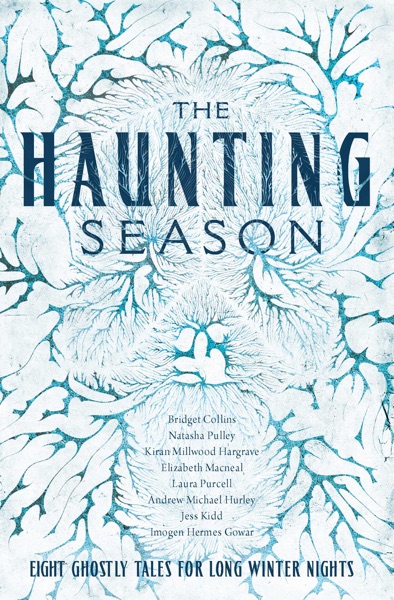
The Haunting Season
Bridget Collins and others · 2021
Seasonal haunting Eight original ghost stories set around winter estates, theaters, schools and private rituals
Closest Ebenezer connection Victorian and Edwardian settings use cold, class and repression to make the past physically present
Main difference Literary historical anthology with restrained chills rather than one overt horror plot
Best for Readers who want elegant prose, historical settings, queer stories, candlelit atmosphere and suggestive rather than graphic horror.
Writers including Bridget Collins, Imogen Hermes Gowar, Kiran Millwood Hargrave, Elizabeth Macneal and Natasha Pulley contribute stories designed for winter reading. The collection’s houses and institutions are beautiful because they have been maintained through rules that also conceal harm.
It ranks ninth because Christmas is atmosphere rather than the subject of every story, and the level of terror is generally measured. The strongest pieces understand the ghost story as social memory. Servants, wives, children and outsiders notice what respectable households attempt to suppress. That mechanism connects closely to Marley and the Christmas spirits, whose supernatural authority comes from revealing the human consequence excluded from Scrooge’s account of himself.
Know before you start. The anthology includes death, abuse, misogyny, class exploitation and grief. Its tone is more melancholy than shocking.
8
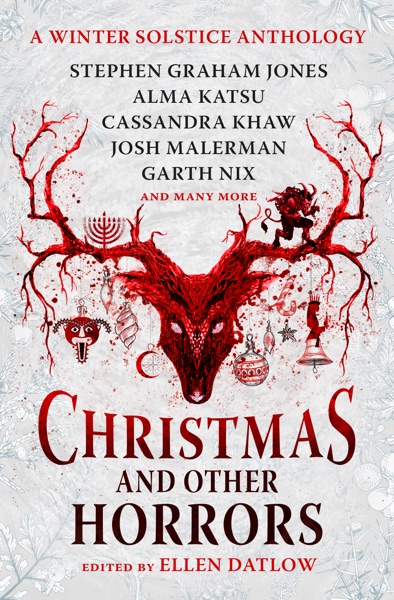
Christmas and Other Horrors edited
Ellen Datlow · 2023
Seasonal haunting Original stories draw on Christmas, solstice, Krampus, Mari Lwyd and other winter traditions
Closest Ebenezer connection The civilized holiday sits on top of older supernatural customs that still expect observance
Main difference International folk-horror anthology with little emphasis on redemption
Best for Readers who want contemporary literary horror, global winter folklore, short fiction and a mix of famous and less familiar traditions.
Datlow collects stories by Glen Hirshberg, Stephen Graham Jones, Tananarive Due, Cassandra Khaw and other major horror writers. The anthology moves beyond a single Anglo-American Christmas, exploring winter beings and rituals from several traditions.
This book ranks eighth because its breadth makes it less tonally unified than the top novels. Its advantage is historical depth. Dickens did not invent the Christmas ghost story; he gave one form of it a moral architecture. These selections reopen the darker seasonal landscape in which hospitality, gift exchange and remembrance can be obligations enforced by something inhuman. Readers interested in Ti West’s horror sensibility may find the sharper folk material especially appealing.
Know before you start. The collection includes violence, child death, body horror, racism and animal harm. Story intensity varies.
7
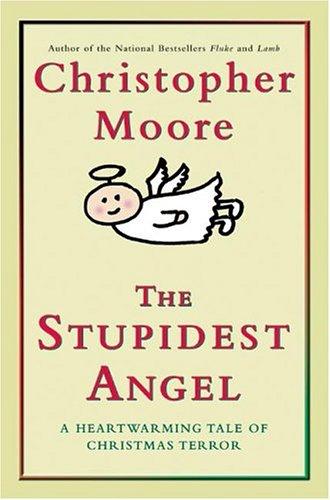
The Stupidest Angel
Christopher Moore · 2004
Seasonal haunting A well-meaning angel answers a child’s Christmas wish by raising the dead in a California town
Closest Ebenezer connection Supernatural intervention arrives at Christmas to correct human distress and exposes an entire community’s moral absurdity
Main difference Profane zombie comedy rather than gothic tragedy
Best for Readers who want a fast comic novel, zombies, eccentric townspeople, profanity and holiday satire.
The angel Raziel misunderstands a request and produces a holiday resurrection with consequences the residents of Pine Cove are spectacularly unprepared to manage. Familiar characters from Moore’s other novels gather for what becomes a chaotic undead Christmas.
Moore ranks seventh because the book shares Dickens’s willingness to mix ghosts, social satire and broad comedy, even though its humor is far more vulgar. The returned dead are not wise moral guides. They remember petty grievances and bring them back to the party. Beneath the jokes, the novel recognizes that forced reunion is not reconciliation. It is lower than the gothic entries because fear rarely lasts long before another absurdity interrupts it.
Know before you start. The book includes gore, drug use, sexual humor, mental-illness jokes and characters from earlier Pine Cove novels, though it can be read alone.
6
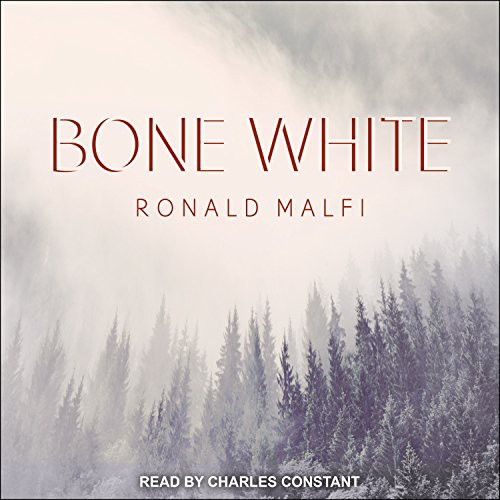
Bone White
Ronald Malfi · 2017
Seasonal haunting A man travels to an isolated Alaskan town after a killer confesses and a clue suggests his missing twin may have lived there
Closest Ebenezer connection Snowbound investigation forces a protagonist to confront family guilt and a place where the dead remain active
Main difference Contemporary wilderness horror without Christmas ritual or redemptive spirits
Best for Readers who want isolated towns, missing-person mystery, fraternal guilt, folk horror and a bleak standalone.
Paul Gallo sees his missing brother’s necklace in news coverage of a mass murderer. He travels to Dread’s Hand, Alaska, where residents distrust outsiders and the surrounding woods carry stories no one explains plainly. The confession that drew attention to the town proves to be only the visible layer of its history.
Malfi ranks sixth because winter is an antagonist rather than decoration. Distance, snow and limited trust strip away Paul’s ability to leave before understanding what happened. The book’s connection to Ebenezer lies in sibling memory: grief has shaped Paul’s life, but the journey reveals how much of that grief rests on assumptions convenient to the survivor. It lacks a holiday framework, yet its cold, ghosts and moral unease suit viewers seeking sustained novel-length dread.
Know before you start. The novel includes murder, suicide, child death, body horror and family trauma.
5
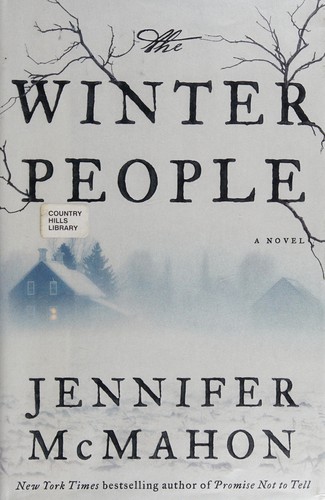
The Winter People
Jennifer McMahon · 2014
Seasonal haunting Two timelines reveal a Vermont family’s attempt to bring the dead back during a brutal winter
Closest Ebenezer connection Grief invites supernatural return, but the living cannot control what form remembrance takes
Main difference Rural domestic horror centered on mothers and daughters rather than moral visitation
Best for Readers who want dual timelines, Vermont winter, mother-daughter relationships, missing people and accessible supernatural suspense.
In 1908, Sara Harrison Shea loses her daughter and turns toward forbidden knowledge. In the present, nineteen-year-old Ruthie searches for her missing mother and discovers the old farmhouse contains evidence connected to Sara’s story. Winter closes both timelines around the same desire.
McMahon ranks fifth because resurrection functions as grief refusing sequence. Like Scrooge, the characters want time to become negotiable, but their motivation is love rather than regret over selfishness. The novel moves quickly and makes strong use of diaries, hidden spaces and the fear of a familiar person returning wrong. Some revelations rely on genre convention, yet the emotional logic remains persuasive.
Know before you start. The book includes child death, grief, murder, animal harm and reanimated loved ones.
4
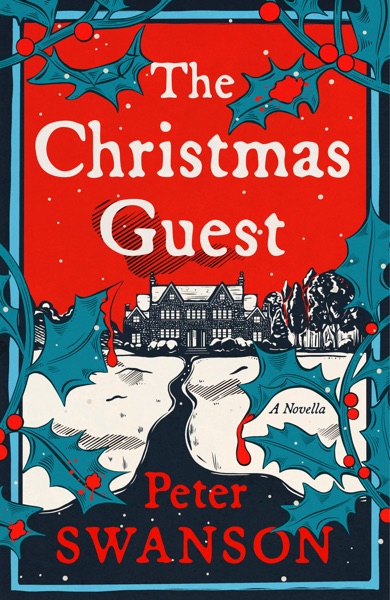
The Christmas Guest
Peter Swanson · 2023
Seasonal haunting A lonely American student spends Christmas at an English manor where attraction, murder and memory reshape the holiday
Closest Ebenezer connection A traditional Christmas house becomes the setting for a later reckoning with the story one person told about the past
Main difference Psychological suspense novella with ambiguity around haunting
Best for Readers who want a one-sitting thriller, country-house Christmas, diaries, murder and a sharp final reversal.
Ashley Smith accepts a classmate’s invitation to Starvewood Hall and becomes fascinated by the family, especially the classmate’s twin brother. A recent murder hangs over the village. Diary entries create a seductive record of the visit, but the frame surrounding them warns that nostalgia is being curated.
Swanson ranks fourth because he uses the ideal English Christmas as misdirection. Fires, church, food and snow offer belonging to someone who has little of it, which makes Ashley vulnerable to the people who own the scene. The novella’s connection to A Christmas Carol is less supernatural than moral: a later perspective reopens the past and asks whether recognizing guilt produces change or merely a better private story.
Know before you start. The novella includes murder, manipulation, class snobbery and sexual obsession. Readers wanting an unambiguous ghost story should choose another entry.
3
Maynard’s House
Herman Raucher · 1980
Seasonal haunting A Vietnam veteran inherits an isolated Maine house and spends a punishing winter confronting what may live inside and around it
Closest Ebenezer connection Isolation forces a damaged man into involuntary confrontation with memory, guilt and a supernatural history
Main difference Psychological haunted-house novel with war trauma and no Christmas celebration
Best for Readers who want an isolated haunted house, unreliable perception, deep snow, war trauma and slow psychological dread.
Austin Fletcher returns from Vietnam after inheriting a remote house from a fellow soldier. The building offers shelter but not peace. Snow deepens, practical explanations weaken and stories of witchcraft attach themselves to Austin’s own unstable memories.
Raucher earns third place because the house and winter operate like the three spirits: they deny the protagonist his preferred chronology. Vietnam, the recent death and older violence occupy the same rooms. The novel keeps the supernatural uncertain long enough that isolation itself becomes evidence. Its portrayal of trauma reflects its era and may feel rough to current readers, but the emotional atmosphere is formidable. This is the choice for viewers who want Ebenezer’s gothic cold without any promise of holiday warmth.
Know before you start. The book includes PTSD, suicide, animal death, sexual material and violence. Ambiguity is central to the ending.
2
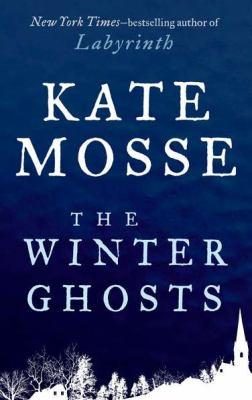
The Winter Ghosts
Kate Mosse · 2009
Seasonal haunting A grieving Englishman stranded in the Pyrenees attends a mysterious gathering and meets a woman tied to an older persecution
Closest Ebenezer connection A spectral encounter makes personal grief a doorway into historical responsibility and renewed life
Main difference Quiet literary ghost story set after World War I rather than a Victorian moral fable
Best for Readers who want a short literary novel, historical ghosts, the Pyrenees, grief and a hopeful current beneath melancholy.
Freddie Watson has never recovered from his brother’s wartime death. A car accident and snowstorm leave him in a remote French village, where he is invited to a feast and meets Fabrissa. By morning, the gathering’s reality is uncertain, but the history she represents demands investigation.
Mosse ranks second because this is the list’s purest story of haunting as moral reawakening. Freddie does not need punishment for greed; he needs to understand that private grief has enclosed him. The ghost leads him beyond himself toward a community’s buried dead. The novel’s restraint may disappoint readers expecting Ti West–style horror, and its central historical revelation is signaled early. Its snow, feast and compassionate reckoning make it an unusually close emotional companion to Dickens.
Know before you start. The book includes war grief, religious persecution, mass death and isolation. Horror is atmospheric rather than graphic.
1
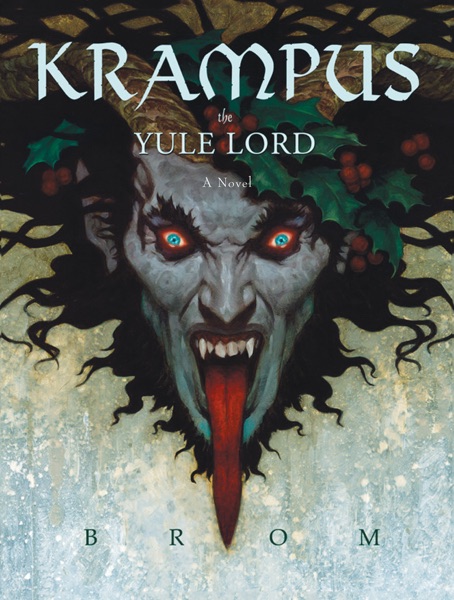
Krampus: The Yule Lord
Brom · 2012
Seasonal haunting Krampus returns to reclaim Yuletide from Santa and draws a desperate musician into an ancient seasonal war
Closest Ebenezer connection Christmas supernatural beings judge human conduct while offering a compromised man one last chance to act differently
Main difference Violent American dark fantasy built from pagan folklore, crime and monstrous spectacle
Best for Readers who want a complete novel, dark folklore, illustrations, Appalachian setting, violent fantasy and a redemption arc with teeth.
Jesse Walker is broke, separated from his wife and in danger from a local drug dealer. A strange encounter leaves him with an object belonging to Santa Claus and makes him useful to Krampus, who has escaped long imprisonment. The Yule Lord wants revenge, restored worship and Jesse’s help.
Brom earns first place because the novel combines the article’s three strands more fully than any other selection: Christmas mythology, frightening visitation and genuine possibility of moral change. Jesse is not simply shown visions. He is forced into choices involving family, cowardice and what kind of man he will be when supernatural power makes revenge easy.
The book also refuses a simple Santa-good/Krampus-evil division. Both figures carry histories, appetites and self-serving versions of Christmas. That ambiguity suits a darker Ebenezer: redemption matters most when the spirit demanding it is not morally pure. The violence is far beyond Dickens, but the seasonal architecture is exact.
Know before you start. The book includes graphic violence, drug crime, child endangerment, animal death and religious conflict.
Which Ebenezer Read-Alike Should You Read First?
Where to start. Start with Krampus: The Yule Lord for the fullest mixture of Christmas mythology, horror and a compromised man seeking another chance. Choose The Winter Ghosts if you want a quieter, more compassionate spectral reckoning.
Read Maynard’s House for prolonged snowbound dread, The Winter People for resurrection and family grief, or Bone White for a missing-person investigation in an isolated northern town. The Christmas Guest is the quickest choice and the least supernatural.
Pick The Stupidest Angel when you want profane comedy. Choose Christmas and Other Horrors for folklore, The Haunting Season for elegant historical ghosts and Hark! The Herald Angels Scream for a broad contemporary sampler.
Christmas ghost stories work because the season creates an account. Families count who returned, communities repeat rituals and individuals compare what they have with what they once promised to become. A ghost enters where that account has been falsified.
Krampus turns seasonal judgment into violent dark fantasy. The Winter Ghosts lets haunting connect private sorrow to forgotten public death, while Maynard’s House makes winter an enclosure from which memory cannot be evicted. These books preserve the unsettling engine beneath Dickens’s warmth: a second chance begins with the dead refusing to leave us alone.